

Property Development Process Flowchart Powerpoint Presentation Slides




Try Before you Buy Download Free Sample Product
 Impress Your
 Audience
 100%
100% Editable
 Save Hours
 of Time


Want to demonstrate your property expansion process to potential investors? SlideTeam provides you predesigned and content ready property development process flowchart PowerPoint presentation slides for reference. Our complete presentation slides are the perfect combination of expert subject matter and fabulous designs. This real estate expansion PPT presentation covers wide range of topics like a market snapshot, executive summary, market activity, asset trends and demand, opportunities, market summary, mortgage loan, buying and selling land, short sale, investment, leaseholder etc. You can use the same landmark development PowerPoint graphics for topics like real estate development process, land expansion, housing development, real estate & property development flow chart etc. Clinch your business deal with our property development process flowchart PowerPoint presentation templates. Download our stunning PowerPoint presentations that will win over the clients and the audience!. Acquaint the forum with the current circumstances with our Property Development Process Flowchart Powerpoint Presentation Slides. Give them the information they ask for.
People who downloaded this PowerPoint presentation also viewed the following :
Content of this Powerpoint Presentation
Slide 1: This slide introduces Property Development Process Flowchart. State your company name and begin.
Slide 2: This slide presents Table Of Contents. You can add your content in table.
Slide 3: This slide displays Agenda. You can add your agenda in these boxes.
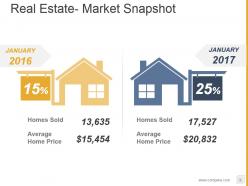
Slide 4: This slide presents Real Estate- Market Snapshot that also includes Average Home Price and Homes Sold.
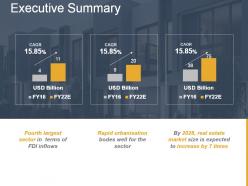
Slide 5: This slide shows Executive Summary that also includes three financial year which you can use for executive summary.
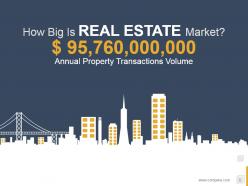
Slide 6: This slide shows How Big Is REAL ESTATE Market . You can add Annual Property Transactions Volume
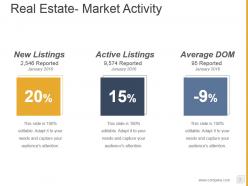
Slide 7: This slide showcases Real Estate- Market Activity. With this you can also add your New Listings, Active Listings, Average DOM.
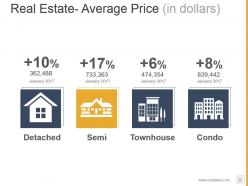
Slide 8: This slide shows Real Estate- Average Price. This also includes- Detached, Semi, Townhouse, Condo.
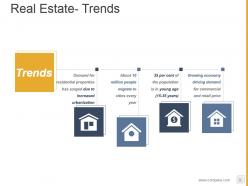
Slide 9: This slide showcases Real Estate- Trends. You can add your Trends accordingly as per your requirement.
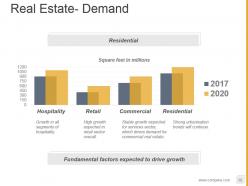
Slide 10: This slide showcases Real Estate- Demand. You can compare in this for two years and can use it for hospitality, retail, commercial, residential.
Slide 11: This slide presents Real Estate Opportunities. You can add your opportunities as per your requirement.
Slide 12: This slide shows Real Estate Major Investments. State major investment here.
Slide 13: This slide showcases Real Estate Policy Support. You can add as per your requirement.
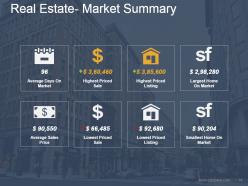
Slide 14: This slide presents Real Estate- Market Summary and you can add your summary by using this- Highest Priced Sale, Highest Priced Listing, Average Sales Price, Smallest Home On Market, Average Days On Market, Largest Home On Market, Lowest Priced Sale, Lowest Priced Listing.
Slide 15: This slide shows Real Estate Market Analysis Infographic with a background image.
Slide 16: This slide shows up Real Estate Market Outlook and you can utilises to add on your requirement.
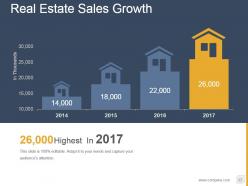
Slide 17: This slide showcases real estate sales growth with four four years of growth.
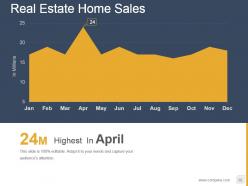
Slide 18: This slide displays Real Estate Sales Growth chart showing with respect to months.
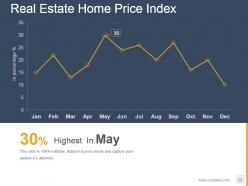
Slide 19: This slide displays Real Estate Home Price Index line chart. You can use for your price index showcase.
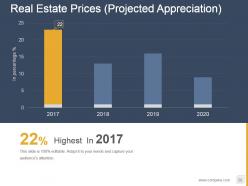
Slide 20: This slide showcase Real Estate Prices . You can project your prices with different financial year.
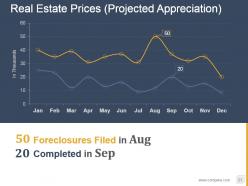
Slide 21: This slide Real Estate Foreclosures Filed VS Completed line chart. You can add as per your requirement.
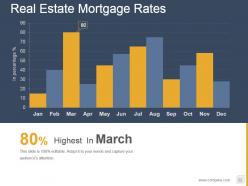
Slide 22: This slide shows Real Estate Mortgage Rates. You can create your own rate chart by using our editable slide.
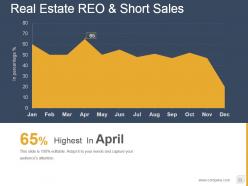
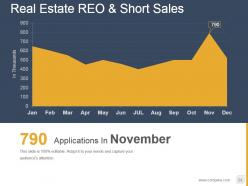
Slide 23: This slide showcase Real Estate REO & Short Sales line chart. You can add your sales data and make the best use of it.
Slide 24: This slide presents Real Estate New Home Loan Applications. You can modify and make it usable for you.
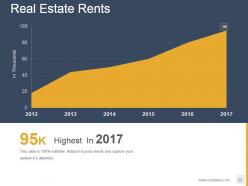
Slide 25: This slide displays Real Estate Rents graph. You can add your data or information as per your requirement.
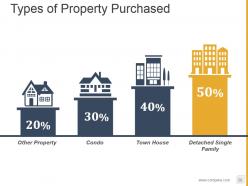
Slide 26: This slide is Types of Property Purchased and compare these properties like- Condo, Town House, Detached Single Family, Other Property.
Slide 27: This slide showcases Real Estate- Porter's Five Forces Model which includes- Threat Of New Entrants, Bargaining Power Of Buyers, Bargaining Power Of Suppliers, Threat Of Substitute Products, Rivalry Among Existing Competitors.
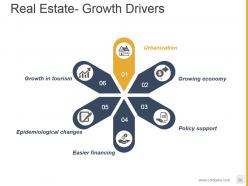
Slide 28: This slide shows Real Estate- Growth Drivers with six drivers as follows- Growth in tourism, Epidemiological changes, Easier financing, Policy support, Growing economy, Urbanization.
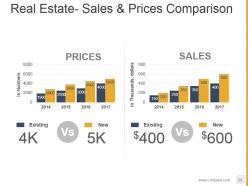
Slide 29: This slide showcase Real Estate- Sales & Prices Comparison. You can show your comparision between sales and prices.
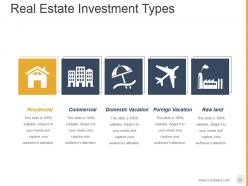
Slide 30: This slide shows Real Estate Investment Types And these are as follows- Residential, Commercial, Domestic Vacation, Foreign Vacation, Raw land. You can add your data and make it usable for you.
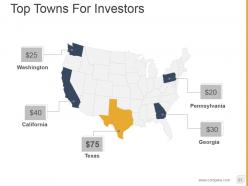
Slide 31: This slide presents Top Towns For Investors showing globally. You can use it for your business requirements.
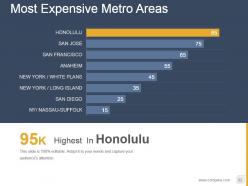
Slide 32: This slide showcase Most Expensive Metro Areas showing a bar chart with various companies.
Slide 33: This slide represent Real Estate Infographic Layout. You can make it usable as per your requirement.
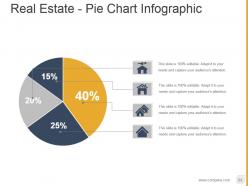
Slide 34: This slide shows Real Estate - Pie Chart Infographic. You can use according to your need.
Slide 35: This slide showcase Estate Icon Set. Use as per your need.
Slide 36: This slide is titled Additional Slides to move forward.
Slide 37: This is Our Mission slide with Vision, Mission, Goal and respective imagery.
Slide 38: This is Meet Our team slide with backgraound image.
Slide 39: This is an About Us showing Values Client, Preferred By Many and Target Audiences.
Slide 40: This is an Our Goal slide. State your goals here.
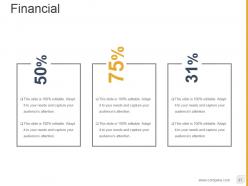
Slide 41: This slide showcase Financial comparison. You can add and compare your company growth.
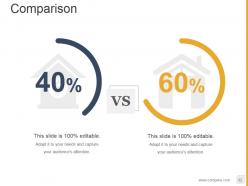
Slide 42: This slide displays Comparison with percentage.
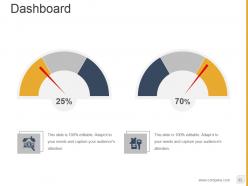
Slide 43: This slide Dashboard with comparison of two. You can modify and make it usable.
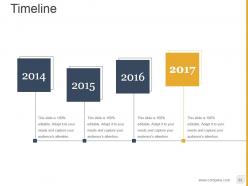
Slide 44: This slide showcase Timeline with four financial years.
Slide 45: This slide presents Post it. You can add Your posted notes.
Slide 46: This slide displays Newspaper. You can add as per your requirement.
Slide 47: This slide showcases a Puzzle with imagery.
Slide 48: This slide shows circular imagenry.
Slide 49: This slide displays a Venn diagram image.
Slide 50: This slide shows a Mindmap for representing entities.
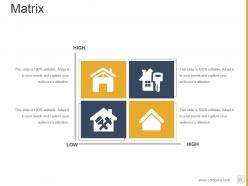
Slide 51: This slide present a matrix from high to low and vice versa.
Slide 52: This slide displays Lego. You can make the best use of it.
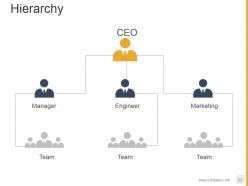
Slide 53: This slide shows Hierarchy chart . You can provide your chart and edit it accordingly.
Slide 54: This slide displays a Bulb or idea image.
Slide 55: This is a Magnifying Glass slide. You can edit as per Your requirement.
Slide 56: This slide displays the title Bar Graph.
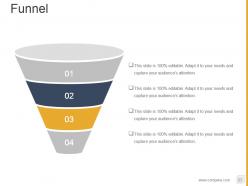
Slide 57: This slide presents Funnel with four steps.
Slide 58: This is a Thank You image slide with Address, Email and Contact number.
Property Development Process Flowchart Powerpoint Presentation Slides with all 58 slides:
Build a fabulous career with our Property Development Process Flowchart Powerpoint Presentation Slides. Get ahead as fast as you can.










FAQs for Property Development Process Flowchart
So you've got site acquisition first, then feasibility studies - seriously don't skip this part, it'll save your ass or show you you're about to lose your shirt. Planning permission comes next and takes forever, but get that locked down before throwing real money at it. Securing finance happens around the same time. Construction's actually pretty straightforward once you get there. Oh, and start marketing while you're still building - I learned that one the hard way. Waiting until it's done just costs you sales.
Dude, you gotta do market research and feasibility studies before dropping serious cash on development. Look at who lives there, what comparable properties sold for, rental rates - all that stuff. Maybe luxury condos are everywhere but families can't find decent housing, you know? Then crunch those numbers against what it'll actually cost to build and finance. I learned this the hard way watching my uncle skip the research phase. Trust me, even if you think you know the market inside and out, run the studies first. The math doesn't lie.
Planning permission comes first, then building regs before you can actually start building. But honestly, that's just the beginning - you might need environmental permits, highways approval if roads are involved, maybe even archaeological surveys. It's kind of ridiculous how many hoops there are sometimes. Your local council handles most of it, though bigger projects might need county or national sign-offs too. Get a planning consultant on board early because this stuff takes forever. Like, months. Map out what permits you'll need during feasibility - don't wait until you've already locked in your timeline or you'll be screwed.
Start with a feasibility study - compare your total development costs against what you'll make from sales or rent. Include everything: land costs, construction, permits, financing, marketing, all of it. Most developers want 15-20% profit minimum, but honestly that depends on your risk tolerance. The big number you need is residual land value - what you can actually afford to pay for the site after covering costs and profit. Does that work with the asking price? Then maybe you've got something. Oh, and definitely run a few different scenarios to see how sensitive your numbers are.
So architects handle the actual building design - they'll turn your ideas into real blueprints that work and won't get you in trouble with building codes. Urban planners are more big-picture people. They make sure your whole project fits the zoning rules and community plans. Honestly, both are total lifesavers for navigating city approvals (which is a nightmare otherwise). Getting them involved early saves you from expensive screwups later. They'll spot issues with your site or design that you'd never think of. Trust me, their upfront costs are way cheaper than fixing problems halfway through construction.
So basically you want to bake this stuff in right from the start - solar panels, energy-efficient everything, lots of natural light. Rainwater collection is pretty cool too. Try to use recycled materials or whatever you can source locally. LEED certification is huge right now if you're into that. Oh, and don't bulldoze all the trees like some developers do - work around what's already there. Plan for people to actually walk places or use transit. Honestly, just set your green goals upfront and budget for them from day one. Makes everything way easier later.
So zoning laws are huge - they control what you can build, how tall, how dense, residential vs commercial, all that stuff. Honestly, some zones are crazy restrictive, especially historic areas. Others give you more room to work with. You'll want to check the zoning before buying land because if it doesn't match your plans, you're looking at a rezoning process. That can drag on for months and there's no guarantee it'll work out. I learned this the hard way on my first project - always do your homework first.
So basically you're looking at three main things - market demand, whether the money works out, and what the zoning/regulatory stuff allows. Population growth and income data tell you if people actually want to live there. Then you gotta crunch the numbers on land costs, construction, projected sales to see if there's profit left over. Zoning laws can totally screw you if you don't check early - learned that one the hard way! Infrastructure matters too since buyers want good schools and easy highway access. I'd start with growing markets first, then narrow down to specific neighborhoods. Oh and don't forget to look at what's actually selling, not just what's listed.
So you've got a few routes here. Most people go with traditional construction loans first - banks usually cover like 70-80% and roll it into permanent financing after. Way cheaper than private money, but honestly the approval process is kind of a pain. Hard money lenders move faster if you're in a rush, just expect to pay through the nose for it. Joint ventures work too, especially when you're still building your track record. Some folks get creative with seller financing or mezzanine stuff to fill gaps. I'd probably start by seeing what a couple construction lenders will actually offer you terms-wise.
Honestly, using something like Agile or Waterfall will save your sanity. Clear timelines and roles mean everyone knows what they're doing when. You catch problems early instead of when they cost a fortune to fix later. These frameworks keep architects, contractors, and regulatory folks actually talking to each other - no more stuff slipping through cracks. Stakeholders stay in the loop, budgets don't go crazy, and you won't have electricians and plumbers showing up the same day ready to fight. Start simple with a Gantt chart. Seriously changed how I think about projects.
Honestly, you're looking at four big headaches: market swings, costs spiraling, planning nightmares, and money problems. Construction budgets always blow out - I've never seen one that didn't. Market conditions shift while you're building, so your exit prices might tank. Planning can drag on for months, bleeding money the whole time. Build in 15-20% contingencies minimum. Get pre-sales locked in if you can. Do proper feasibility work upfront - boring but crucial. Oh, and line up backup financing before you need it. Run your numbers through worst-case scenarios too. Better to walk away early than get stuck halfway through.
Honestly, market trends control everything you build. Remote work blows up? Suddenly you're cramming home offices and co-working spaces into every unit. Sustainability gets trendy and boom - solar panels everywhere. I've watched developers totally flip their amenity plans halfway through projects when buyer preferences changed overnight. It's crazy how quick things move. Don't just follow national trends though - what kills it in Seattle might totally bomb in Miami. Your local market is what actually matters. Track buyer surveys and see what competitors are doing every few months, or you'll get blindsided when tastes shift.
Start reaching out way before you finalize anything - seriously, this saves so much headache later. Coffee chats work great, or just show up to town halls where people are already gathered. I'd definitely hit up community events with an info booth too. Facebook groups are useful but honestly, nothing beats talking face-to-face. Listen first, then explain how you're addressing what they actually care about. Make sure someone's always available as their go-to contact person. Oh, and actually use their feedback in your design - people can tell when you're just going through the motions.
Timing can totally make or break your whole project - honestly, it's scary how fast things can shift. You've got to watch market conditions, interest rates, construction costs, all that stuff. Miss the peak by even six months and your profits just disappear. I watched a guy start building right before everything tanked in 2018... brutal. Build extra time into everything because delays always happen. Track your local supply pipeline and absorption rates - sounds boring but it's your best heads up when things are about to turn. Those indicators don't lie.
Honestly, tech can cut your timeline way down if you pick the right stuff. Project management apps help you track everything without losing your mind. Drones are clutch for site surveys - way faster than the old methods. BIM catches those annoying design conflicts early instead of discovering them when it's expensive to fix. The digital permitting thing is huge though - beats waiting around for city hall to move at glacier speed. Your crews can use construction apps to report issues right away too. Don't go crazy trying to digitize everything at once. Just grab one or two tools that'll fix your worst headaches first.
-
Unique research projects to present in meeting.
-
Enough space for editing and adding your own content.