


Solution proposée pour un défi commercial Exemples Ppt





Try Before you Buy Download Free Sample Product
 Impress Your
 Audience
 100%
100% Editable
 Save Hours
 of Time


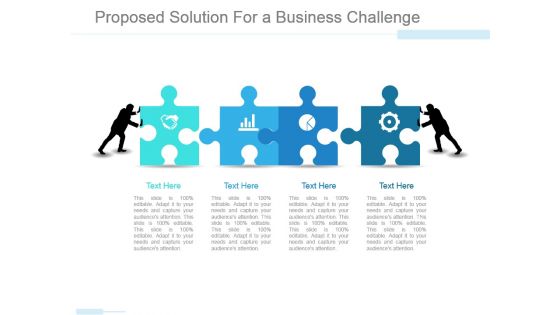
Aujourd'hui, les entreprises sont chargées de nombreux défis. Par conséquent, nous avons proposé une solution prête à l'emploi pour une diapositive d'exemples PPT de défi commercial. Cela peut être utilisé pour recenser les difficultés courantes rencontrées par une entreprise et les solutions proposées pour celles-ci. Les petites et les grandes organisations sont confrontées à des défis, mais la nature de ces adversités varie dans une large mesure. Ce modèle PPT de solution d'entreprise sera utile pour concevoir une présentation pour les deux cas. Vous pouvez utiliser ce visuel pour faire votre propre présentation sur des sujets tels que les défis opérationnels, les défis auxquels sont confrontées les petites entreprises, les défis auxquels sont confrontés les gestionnaires, les défis et solutions commerciaux et la recherche de solutions commerciales. Les problèmes peuvent être nombreux, tels que l'organisation du capital, le maintien des flux de trésorerie, les relations avec les concurrents, la recherche de clients, etc. Que vous soyez novice ou expert du marché, téléchargez immédiatement la solution proposée pour un slide de présentation de challenge business. Activez la jubilation avec nos exemples de solution proposée pour un défi commercial Ppt. Inspirez les gens pour garantir des réalisations importantes.
People who downloaded this PowerPoint presentation also viewed the following :
Solution proposée pour un défi commercial Exemples de ppt avec les 5 diapositives :
Créez une culture collaborative avec nos exemples de solution proposée pour un défi commercial Ppt. Ils génèrent un climat propice.



FAQs for Proposed solution for a business
Cash flow's brutal - that's the big one. Finding customers who actually want your stuff is harder than it sounds too. Everyone's doing like five different jobs so nothing gets done properly. Honestly, the "fixing a plane while flying" thing is so real lol. Product-market fit will destroy you if you're not careful - doesn't matter how much you love your idea if nobody's buying. Limited runway means you're always stressed about money running out. Pick one problem and attack it hard instead of spreading yourself thin. And seriously, don't be stubborn about pivoting when things aren't clicking.
Honestly, most team drama comes down to people not knowing what the hell is going on. Set up regular check-ins where everyone can actually speak up about blockers - that alone fixes like 70% of problems. Make sure roles and deadlines are crystal clear, and document stuff properly. The big thing is listening to concerns instead of just waiting to respond. Oh, and don't wait until everything's on fire to start doing this - be consistent from the start. One weekly sync meeting will save you so many headaches, trust me.
Tech is basically your secret weapon for getting more done. Automates all the boring stuff, helps you spot problems early, and keeps workflows smooth. I'm talking inventory systems, automated reports, project management tools - whatever keeps your team aligned. Companies throw away hours on manual work that could literally be automated overnight (wild, right?). Start by figuring out what's eating up most of your time. Then find tech that actually fixes those problems. Don't just buy fancy software because it looks impressive - that's how you end up with expensive tools nobody uses.
Okay so here's what I'd do - start collecting feedback through different ways. Surveys, checking what people say on social media, actually talking to customers. Then dig into what you're hearing instead of just hoping problems disappear (guilty of that myself lol). Look for patterns that keep showing up. Fix the stuff that's hitting the most people first or costing you money. Here's the thing though - you gotta tell customers you heard them and what you're gonna do about it. Otherwise they think you don't care. Pick one method this week and go from there. Don't try to do everything at once.
Honestly, start with your invoicing - send those bills out immediately and chase down late payments like your life depends on it. Negotiate longer payment terms with suppliers while pushing customers to pay faster. Cash flow forecasting sounds super boring but trust me, do a 13-week rolling forecast. Saved my ass more times than I can count. Check your current receivables first though - bet there's money just sitting there uncollected. Maybe get a line of credit for backup, and yeah, sometimes you gotta pump the brakes on growth so your cash can catch up.
Honestly, start small with a pilot program - don't dump everything in at once. Research the hell out of local competition and regulations first. Political stability matters way more than people think, I've seen companies completely screwed by random policy shifts. Find local partners who actually know what they're doing there. The economic situation can change overnight too, so have clear exit rules ready before you even start. Oh and customer preferences might be totally different than what you expect - that research part isn't optional.
Honestly, start by just asking your team what's bugging them - anonymous surveys work great. Three big things usually help: giving people real feedback (not just annual reviews, but actually telling them when they do good work), showing them where they can grow through training or new projects, and keeping communication flowing both ways. That whole "people quit managers, not jobs" thing is painfully accurate. Oh, and flexible work stuff matters way more now than it used to. Pick whatever seems like the biggest problem from your survey and fix that first instead of trying to solve everything at once.
Honestly, don't wait until you're scrambling to figure out compliance - build it in from the start. Figure out which regulations actually hit your business (guessing wrong here can cost you big time). Get yourself a lawyer or compliance person who really knows your space. Document everything so your team isn't constantly asking "wait, what do we do here?" Most companies I know swear by compliance software that handles the tracking automatically. Oh, and make it part of how you operate day-to-day. You don't want compliance to feel like some annoying thing you have to check off.
Honestly, spreading out your suppliers is huge - that whole "eggs in one basket" thing bit everyone hard during COVID. Get some visibility tools so you're not flying blind about what's actually happening with your shipments. Multiple suppliers across different regions helps a ton. Stock up on buffer inventory for the stuff you absolutely can't run without. Map out where you're most vulnerable right now and hit those spots first. Having backup plans ready beats scrambling when things go sideways. Trust me, being ahead of problems instead of chasing them makes all the difference.
Honestly, data analytics is a game-changer for catching performance problems early. Instead of flying blind, you'll see clear patterns in all that messy business data you've got sitting around. Real-time tracking shows you exactly where things are breaking down - could be sales dropping, operations getting clogged up, whatever. The predictive stuff is pretty neat too since it spots trouble before it actually hits you. I'd start simple though: pick maybe 3-5 metrics that actually matter to your business and set up some automated dashboards. Way better than just guessing what's going wrong.
Get your managers some cultural competency training first - seriously game-changing for everyday stuff. Also be smart about meeting times and language barriers when you're scheduling. Mentorship programs work great if you pair people from different backgrounds. Honestly? Just ask your team what they actually prefer instead of guessing. I know it sounds obvious but so many people skip this step. Different holidays, work styles - your policies should cover that stuff. Stay curious rather than assuming you know what everyone needs.
Oh dude, Agile is perfect for this! You break everything into these short sprints, so when stuff goes wrong (and it will), you find out in like 2 weeks instead of 6 months later. The real magic happens in retrospectives though - your team sits down and actually talks through what bombed without anyone getting defensive about it. Honestly, it's weird how well it works. Each screw-up just becomes info for the next round. You're basically failing your way to success instead of building toward one giant disaster. Definitely start doing weekly retros if you aren't - total game changer for handling setbacks.
Honestly, the best sign is when people stop complaining to HR about everything. You'll also notice meeting participation goes up, and - this might sound obvious but - projects actually finish on time for once. Employee engagement scores are worth tracking too; they should stay steady or improve. The real win though? When your team starts defending the changes to other departments without you asking them to. That's when you know it's actually working. Oh, and people will use new processes without you having to remind them constantly. Check these things monthly - if nothing's better after three months, switch up your approach.
Honestly, most companies are such hypocrites about this - they say they want innovation but then freak out when someone makes a mistake. First thing is making sure people aren't scared to fail. Give teams actual time and budget for experimenting, not just piling it on top of everything else. Mix people from different departments together because silos kill creativity. Oh, and don't just wait around hoping innovation magically happens. Maybe try monthly "innovation sprints" where teams can mess around with real problems? The whole point is creating space where taking risks feels safe instead of career suicide.
Think of strategic planning as your crystal ball, but actually useful. You're not just putting out fires anymore - you see them coming. Map out your biggest potential headaches this quarter and have backup plans ready. Your team gets way better at catching problems early when they know where you're headed. Honestly, most people skip this step and then wonder why they're always scrambling. It's like... you wouldn't road trip without checking the route first, right? Start simple: pick your top 3-5 challenges that could pop up and sketch out what you'd do.
-
Awesome presentation, really professional and easy to edit.
-
The Designed Graphic are very professional and classic.