


Purchase Requisition Powerpoint PPT Template Bundles




Try Before you Buy Download Free Sample Product
 Impress Your
 Audience
 100%
100% Editable
 Save Hours
 of Time


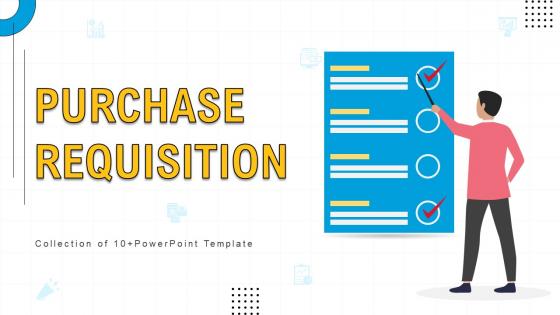
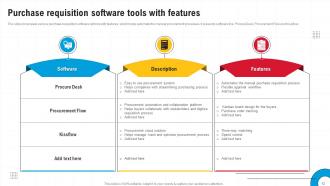
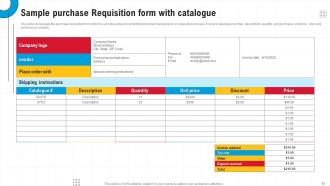
Introducing our comprehensive Purchase Requisition PowerPoint presentation, designed to streamline and optimize the procurement process for businesses. This informative deck explores the power of Purchase Requisition forms and software tools, providing practical insights into creating and managing requisition documents. Discover how our presentation guides organizations in efficiently handling resource requisitions and equipment requirements. With visually engaging slides and expertly curated content, our PPT equips professionals with the knowledge and strategies to improve purchasing efficiency, enhance budget control, and minimize errors. Gain a competitive edge by implementing streamlined purchase requisition processes that save time and resources. Whether you are a procurement professional or a manager overseeing purchasing decisions, this presentation is a valuable resource for improving operational effectiveness and maximizing cost savings.
People who downloaded this PowerPoint presentation also viewed the following :
Purchase Requisition Powerpoint PPT Template Bundles with all 22 slides:
Use our Purchase Requisition Powerpoint PPT Template Bundles to effectively help you save your valuable time. They are readymade to fit into any presentation structure.






FAQs for Purchase Requisition Powerpoint
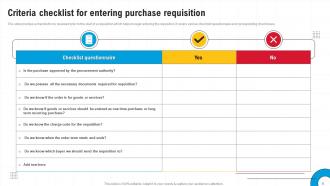
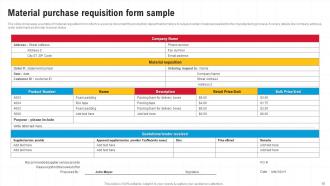
So definitely get the basics down first - requestor info, item specs, quantities, and your budget codes. Vendor details are honestly where people mess up the most, so spend time on that section. Add fields for delivery dates and shipping addresses (obvious but forgotten surprisingly often). Justification boxes help too, especially if your approval process is picky about reasoning. Multiple line items are clutch for bigger requests. Oh, and tracking approval status saves everyone from those "where is this?" emails. Start simple though - you can always make it fancier once you see what's actually getting used.
Honestly, purchase requisition templates are a game changer for cutting down on all that annoying back-and-forth. Your team won't be able to submit those half-done requests anymore since the template forces them to include everything upfront - vendor details, budget codes, delivery dates, approvals. No more endless email chains asking for missing info. Processing gets way faster too. Your procurement folks can actually focus on important stuff instead of constantly chasing down account numbers and whatever else people forgot to include. I'd start simple with your most common purchases - you'll probably see approval times drop pretty fast once everyone gets used to it.
Yeah there's a bunch of different ones depending on what you do. Manufacturing has templates for raw materials and equipment, healthcare focuses on medical supplies plus all that regulatory stuff, IT covers software licenses and hardware. Construction ones track materials by project phases - honestly that makes sense since their workflows are so different. Most templates have the same basic stuff though like vendor details, quantities, approval chains. I'd just grab a basic one for your industry first, then tweak it for however your company actually does things. Way easier than starting from scratch.
Honestly, the best thing about digital templates is they won't let you submit incomplete stuff - no more "damn, forgot the cost center again" situations. Built-in validation catches bad vendor codes and budget issues instantly. You get dropdown menus that prevent typos, and everything auto-populates so your formatting stays consistent. Here's the kicker though - it all feeds straight into approval workflows without anyone having to re-type data. No lost paperwork either, which is huge. I'd start with whatever requisition types you use most and template those first.
Keep it standard but flexible for different purchase types. Include the basics - vendor details, item descriptions, quantities, budget codes, approval workflows. Don't add a million unnecessary fields though, people hate that. The approval chain needs to be super clear or stuff just sits there forever. Dropdowns and auto-calculations are your friend for cutting down errors. Honestly, the worst part is when forms are confusing and everyone starts calling you. Test it with a few departments first before going company-wide - you'll definitely miss something otherwise and then you're stuck fixing it later.
Ugh, default templates are the worst - they never fit what you actually need. Here's the thing: when you customize requisition templates, your team stops having to jump through weird hoops just to buy stuff. Add fields for whatever matters to YOUR department - budget codes, who needs to sign off, preferred vendors, whatever. The whole point is making it work for your actual process instead of some generic setup. You'll cut down on all those annoying back-and-forth emails asking for missing info. Start by writing down what details you're always scrambling to find later. Trust me, people will actually use a system that makes sense.
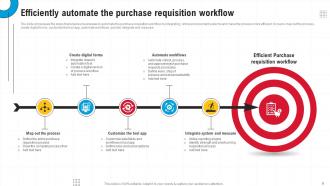
So integrating with your ERP basically kills all that annoying manual data entry stuff. Someone fills out the requisition template and boom - it flows straight into procurement workflows, approvals, budget tracking, whatever. No more copy-pasting nonsense. Your finance people can actually see spending requests in real-time, managers approve faster since everything routes automatically. Honestly the error reduction alone makes it worth it. Everything stays connected from that first requisition all the way to the final PO. I'd start by mapping out your current approval mess - you'll probably find tons of time-wasting handoffs.
Oh man, you've gotta train people properly or those templates will backfire hard. People skip required fields, fill stuff out wrong, or just give up and create their own messy spreadsheets - honestly, some of the Excel disasters I've seen would make you cry. Show them the why behind each section, not just the what. Hands-on practice with real examples works best. Also make quick reference sheets because nobody remembers training details months later. Trust me on this - bad training turns helpful templates into total chaos.
Okay so purchase requisition templates are actually pretty smart - they make you slow down and think before you spend money. You can't just randomly charge stuff to whatever department because there are mandatory fields for budget codes and cost centers. The approval workflows catch things early too, which honestly saves so much drama later. I love that everything gets standardized, so finance can spot problems way before month-end when it's too late to fix anything. Oh and the paper trail thing is huge for tracking where money actually goes. Set spending thresholds in your templates and you'll catch budget issues before they blow up.
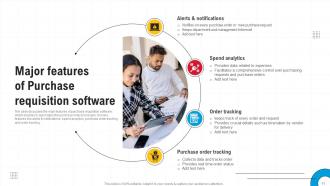
So you'll want approval routing that sends requests to the right people automatically - like based on dollar amount or which department it's coming from. Status tracking is huge too, saves you from all those annoying "where's my request?" follow-ups. Don't forget space for budget codes and vendor info, plus delivery dates if that matters. Oh, and justification comments are clutch for the bigger purchases. The smart move? Set up conditional logic so expensive stuff gets extra eyeballs while routine orders just zip through. Honestly, I'd map out your most common requests first and build the whole thing around those workflows.
So basically you're building the rules right into the process itself. People can't even submit a request without filling out the mandatory stuff - budget codes, approvals, vendor info, all that. It's actually pretty smart because nobody has to guess what they need anymore. Dropdown menus work great too - just list your pre-approved vendors and spending categories right there. Honestly saves me so much back-and-forth with people asking what they forgot to include. Set it up once and your team just follows along without even realizing they're staying compliant.
Honestly, the worst thing you can do is make templates either crazy rigid or way too loose. Like, people either can't use them for actual purchases or you get zero consistency - it's annoying either way. Don't skip training people though (trust me on that one). Your approval workflows need to match how decisions really happen, not whatever's on the org chart. Oh and test different purchase types first - office supplies templates will totally bomb for software licensing. I'd start with maybe two template types, get those running smooth, then add more later.
Honestly, templates are a lifesaver for this stuff. They stop all the confusion between departments when people need to buy things. Finance gets the info they actually need, procurement doesn't have to chase people down for missing details, and managers can review requests without playing twenty questions. You know how it goes - someone submits a vague request and then it's just email ping-pong forever. Templates fix that by making everyone include budget codes, vendor details, justifications, all that boring but necessary stuff upfront. Get everyone using the same format and watch those approval delays basically disappear. Trust me on this one.
Honestly, templates are a game-changer for supplier relationships. Your vendors get all the info they need upfront, so no more annoying email chains asking "wait, what's the delivery date again?" They can quote faster and more accurately. Suppliers start trusting you because they know what to expect every time - consistency builds credibility, you know? Also helps you track who's actually performing well over time. I'd start with whatever you order most frequently first. Way easier to spot the good suppliers from the flaky ones when you're comparing apples to apples.
So I've been diving into our purchase req data lately and it's wild what you can see! Your templates basically show you everything - which departments keep ordering the same stuff, what products fly off our shelves, even seasonal buying patterns. The cost tracking over time is probably the most useful part though. You can catch suppliers trying to sneak in price hikes and use the data to negotiate way better contracts. Plus once you know your high-frequency items, you can set up bulk deals and auto-reordering. Honestly saves so much hassle down the road.
-
Like always a great experience with you guys. Always there on the drop of hat to help.
-
SlideTeam never fails to surprise me with its amazing PPT designs. Thanks team for providing me with your constant support!