

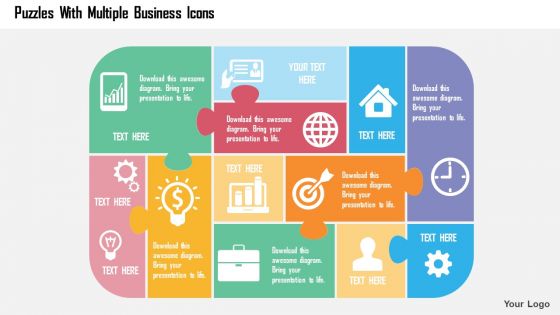
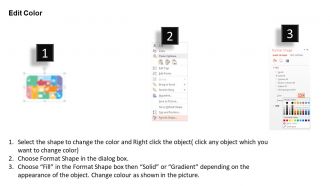
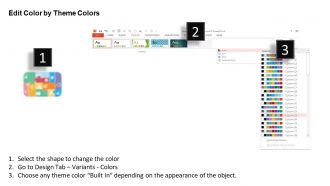
Puzzles with multiple business icons flat powerpoint design





Try Before you Buy Download Free Sample Product
 Impress Your
 Audience
 100%
100% Editable
 Save Hours
 of Time


Bite the bullet with our Puzzles With Multiple Business Icons Flat Powerpoint Design. Your sharp ideas will pierce through.
People who downloaded this PowerPoint presentation also viewed the following :
Puzzles with multiple business icons flat powerpoint design with all 5 slides:
Get on the foghorn with our Puzzles With Multiple Business Icons Flat Powerpoint Design. Announce your arrival loud and clear.
FAQs for Puzzles with multiple business icons
Honestly, doing puzzles regularly is like going to the gym but way more fun. Your memory gets sharper and you'll focus better on stuff. Problem-solving becomes easier too. The stress relief is real - something about fitting pieces together just melts tension away. I always get this little dopamine rush when I solve something tricky. Builds patience since you can't rush through the frustrating parts. Maybe try doing puzzles for like 15-20 minutes each day? Crosswords, sudoku, jigsaw - whatever you're into works.
Think of puzzles like hitting the gym, but for your brain. They're amazing for boosting problem-solving skills, memory, and focus all at the same time. Kids get huge benefits since their brains are still forming those connections. I swear my attention span got way better after I started doing crosswords on my lunch breaks - though maybe that's just because I'm not scrolling Instagram instead lol. For adults, there's research showing they might help prevent cognitive decline later on. Just don't jump into expert-level stuff right away. Start easier than you think you need, then level up gradually.
Word games are solid - crosswords, word searches, that kind of stuff. Jigsaw puzzles and Sudoku work great too since they hit your working memory and pattern recognition. Oh, and number puzzles! I'm weirdly into KenKen lately, don't judge me. Honestly though, being consistent matters way more than picking super hard ones. You don't want to get so frustrated you quit after three days. Mix it up throughout the week so you're not doing the same thing every time. Start with maybe 10-15 minutes daily, then bump it up as you get better at it.
So puzzle traditions totally vary by culture and it's wild how they reflect different thinking styles. China gave us tangrams, Japan does those crazy mechanical puzzles - both focus on spatial stuff and patterns. Meanwhile we're over here obsessed with crosswords and word games. Nordic countries? They're masochists with their impossible logic puzzles, I swear. Latin cultures mix in storytelling which is actually pretty cool. If you're making puzzles for everyone, maybe blend a few approaches? Different people just think differently and their puzzles show it.
Digital puzzles are having a huge moment - Monument Valley totally changed the game, and don't get me started on how Wordle got everyone obsessed with daily challenges. AR/VR stuff is getting wild too. Mobile games now have these crazy social features that regular puzzles obviously can't do. But honestly? Physical puzzle makers are getting creative instead of just giving up. They're doing hybrid experiences and app-connected jigsaws now. Pretty smart if you ask me. I'd say focus on mixing digital and physical rather than choosing one - that's where the real opportunity is.
Honestly, puzzles are perfect for this! They make kids actually think through problems instead of just memorizing stuff. Logic puzzles work great, or even those mystery box activities where students guess what's inside - sounds cheesy but kids love it. Escape rooms are huge right now too. The trick is picking ones that actually connect to what you're teaching. Also, don't just focus on getting the right answer - make them explain HOW they figured it out. That's where the real learning happens. Start easy though, then ramp up the difficulty once they get the hang of it.
Dude, strategy makes such a huge difference with puzzles! I used to just randomly fill in Sudoku squares and it was a nightmare. Now I actually scan rows and use elimination - way less frustrating. With crosswords, tackle the easy clues first to get momentum going. Honestly, starting with the hardest ones is just masochistic lol. Find your entry points, then work outward from there. It's like... having a game plan vs just winging it. You'll save yourself so much time and those moments where you want to throw the puzzle across the room.
Honestly, puzzles are perfect for this stuff. People have to actually talk to each other and figure out who's doing what. You'll see the natural leaders emerge, plus who's detail-oriented when things get stressful. Way better than those awkward trust exercises, right? Everyone brings something different to the table when you're trying to solve an escape room together. The best part? That feeling when you finally crack it as a group. Oh, and here's a random tip - throw a quick 10-minute puzzle at the start of your next meeting. Gets everyone's brain going and breaks the ice without being weird about it.
Logic puzzles are all about analytical thinking - you're spotting patterns and working through problems step by step. Word puzzles hit different though, they boost your vocabulary and keep your language skills on point. I'm totally team logic puzzles because there's nothing like that moment when everything clicks! But honestly? You should probably do both since they work different parts of your brain. The systematic thinking from logic puzzles pairs really well with the verbal stuff from word games. Mix them up and you've got yourself a solid brain workout.
Dude, puzzle apps are honestly kind of crazy now. They'll track everything you do and throw you hints when you're completely stuck. The AR ones are insane - you can point your camera at your table and see digital pieces, or watch your finished puzzle come alive with little animations. Some adjust difficulty based on how good you are, which is pretty smart. Oh, and there's all this social stuff too where you can work on puzzles with friends or compete against random people online. I was skeptical at first, but the way they mix real and digital puzzles is actually seamless. Download one this week - it's so different from regular cardboard pieces.
Oh man, there are some really cool ones! The Rubik's Cube obviously - that thing became huge and actually helped computer science develop better algorithms. Tower of Hanoi is great for learning how to think recursively, programmers still use it. Euler's solution to the Seven Bridges of Königsberg basically created graph theory from scratch. The 15-puzzle influenced AI search methods too. It's crazy how these "simple" puzzles ended up shaping entire academic fields, right? I got obsessed with the 15-puzzle last year - definitely try some classics if you want to work your brain differently.
Yeah, getting older does mess with puzzle-solving a bit. Processing speed slows down and your working memory isn't what it used to be - like, you'll struggle more to juggle multiple clues at once. Takes longer to spot those tricky patterns too. But honestly? The experience you've built up over the years actually helps counter some of that decline. All the knowledge you've accumulated (what researchers call crystallized intelligence) stays pretty solid even when your raw brainpower dips. I swear my dad's gotten better at crosswords as he's aged, probably for this exact reason. Keep doing puzzles though - think of them as brain exercise that helps you stay sharp.
Oh man, lighting is everything - you'll strain your eyes otherwise. I need complete silence but my sister swears by coffee shop sounds, so that's totally personal. Temperature's weirdly important too; when it's too hot I just can't think straight. Get a decent chair because nothing kills the vibe like your back screaming at you after an hour. Make sure you've got enough table space to actually spread pieces out. Honestly? I spent way too much money on a puzzle mat and zero regrets there. Just try different setups until something clicks.
Honestly, puzzles are amazing for anxiety! I do sudoku when I'm stressed and it totally works - forces your brain to focus on something else entirely. My therapist actually mentioned that some of her colleagues use crosswords in sessions, which is pretty cool. Jigsaw puzzles work too, anything that gets your problem-solving mode going. Try making it part of your routine, maybe with coffee in the morning or before bed. Even 10-15 minutes helps. Way easier than traditional meditation if you're someone who can't sit still.
Honestly, the sweet spot is making people think without wanting to throw their phone across the room. Clear rules are everything - nobody wants to play "guess what's in my brain." Test different entry points so beginners aren't totally lost while experts stay engaged. I always run puzzles by friends first because what makes perfect sense to me usually confuses everyone else. Short sentences work. Longer ones need actual flow when you're explaining complex mechanics. Give subtle nudges when players hit real walls, but don't make it too easy. The worst puzzles rely on luck instead of logic - super annoying.
-
Perfect template with attractive color combination.
-
Easily Editable.