


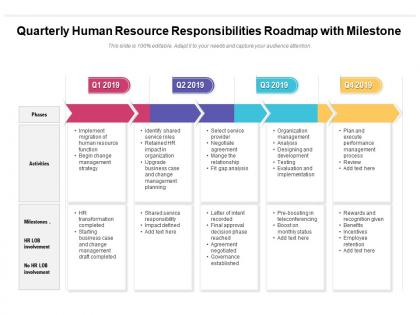
Quarterly human resource responsibilities roadmap with milestone




Try Before you Buy Download Free Sample Product
 Impress Your
 Audience
 100%
100% Editable
 Save Hours
 of Time


Utilize our pre build Quarterly Human Resource Responsibilities Roadmap With Milestone to present your plan of action in the most effective way. Reduce the paperwork and showcase how different activities are linked to each other by incorporating this attention grabbing PowerPoint theme. This completely editable roadmap PPT layout is suitable to fit all your needs and to have a structured outline of the entire process flow using color coding. Provide guidelines to your teammates about the progression process by employing our PPT theme. Team members can easily be designated into teams by accessing the work milestones to be accomplished within the timeframe. You can easily modify the PowerPoint slide according to real time situations. Download our stunning Quarterly Human Resource Responsibilities Roadmap With Milestone, and you are good to go to prove your expertise in strategic planning.
People who downloaded this PowerPoint presentation also viewed the following :
Quarterly human resource responsibilities roadmap with milestone with all 2 slides:
Use our Quarterly Human Resource Responsibilities Roadmap With Milestone to effectively help you save your valuable time. They are readymade to fit into any presentation structure.

FAQs for Quarterly human resource responsibilities
So the HR roadmap has three big things: better onboarding and career development to keep people from leaving, faster hiring for all those open roles, and finally launching that performance management system we've all been waiting for. Thank god - the current review process is ancient. They're also doing diversity training and updating remote work policies, which honestly makes sense since half of us are still figuring out the hybrid thing. Oh, and check those deadlines they sent for department feedback. Don't be like me and miss them!
So quarterly HR roadmaps are basically how you chop up your company's big goals into bite-sized, people-focused chunks every 90 days. Way less overwhelming than annual planning, honestly. Let's say your company wants to expand - your Q2 roadmap might cover hiring for new regions, skills training, keeping your top talent happy. The flexibility is huge too. You can actually pivot when things change instead of being stuck with some plan from January that makes zero sense anymore. Oh, and definitely start by looking at what the business actually needs first, then figure out which HR stuff will move the needle most.
Track your leading and lagging indicators - that's the sweet spot. Employee engagement scores and retention rates are obvious ones, but don't sleep on time-to-fill metrics either. Training completion rates? Super underrated for catching problems early. Manager effectiveness scores matter too, plus whatever themes keep coming up in exit interviews. Here's the thing though - pick maybe 5-7 metrics tops or you'll go crazy with all the data. I'd set up a monthly dashboard so you can actually fix stuff before the quarter's over. Internal mobility percentages are another good one if you have the bandwidth.
Honestly, ditch those massive annual surveys - nobody fills them out properly anyway. Quick pulse surveys work way better, like 3-4 questions max. I'd also do focus groups by department and casual coffee chats with team leads. Digital suggestion boxes are clutch for getting the real tea people won't say to your face. Here's the thing though - you actually have to show you're listening. Share what you heard and how it's changing your plans, otherwise people stop participating. Oh, and start collecting feedback at least 6 weeks before you finalize anything.
Honestly, the worst part is when everything feels like it's on fire at once. Leadership's pushing strategic stuff while managers desperately need people hired yesterday. Meanwhile compliance deadlines are breathing down your neck - they literally don't care about your other chaos. Business needs change every five minutes too, which is super fun when you're trying to plan anything. Oh, and you're doing all this with basically no budget while guessing at headcount needs based on sales projections that might be total fantasy. My take? Always pad your timelines and make a simple ranking system for when the next crisis hits.
Honestly, start with whatever's driving you crazy right now - hiring chaos? Go with applicant tracking. Review season nightmare? Performance management tools first. Don't try to fix everything at once though, that's a recipe for disaster. One new system per quarter max. HRIS platforms can handle goal tracking automatically, and those survey tools for feedback are lifesavers. Data dashboards will stop you from drowning in spreadsheets (though we're all guilty of that). I swear the reporting alone will give you back hours each week. Just pick your biggest current headache and automate that first.
Look, engagement data is honestly everything when you're planning your quarterly HR stuff. Pull those survey results and retention numbers first - they'll show you exactly where things are falling apart. I've watched so many teams just wing it without checking what employees actually think, and it never works out well. Maybe your scores point to crappy managers or people wanting better career paths. Could be compensation issues too. Short sentences work here: Start with your latest engagement scores. Map your initiatives right to those problem areas. Otherwise you're basically throwing darts blindfolded and hoping something sticks.
Look, you gotta bake D&I right into your quarterly planning from day one. Don't let it become an afterthought when budgets get squeezed - I've watched that happen way too many times. Set concrete goals like boosting your diverse candidate pipeline by 30% or getting all managers through bias training. Track your numbers monthly and pivot if things aren't working. Here's the thing though - you need to tie these initiatives to business results that leadership actually gives a damn about. Next planning session, start by asking how each priority moves the inclusion needle forward.
Start with the boring compliance stuff - harassment training, safety protocols, all that fun paperwork. But here's where it gets interesting: survey your people first to see what they actually want to learn. Leadership development for managers is huge, plus department-specific technical skills. Soft skills training works well too - communication, project management basics. Lunch-and-learns are surprisingly popular (free food helps). Oh, and set up mentorship programs if you can swing it. The key is mixing mandatory training with growth opportunities people will genuinely use.
Honestly, I'd check your HR roadmap every couple weeks if you can swing it. Monthly at the very least. HR moves so damn fast - regulations change, priorities shift, someone suddenly needs to hire 20 people. Your quarterly plan becomes useless pretty quick. Short check-ins help you spot problems before they blow up. Look at what's actually working, what's falling behind, whether your priorities still make sense. Oh, and definitely set a recurring calendar reminder or you'll totally forget to do this regularly. Trust me on that one.
Don't wait until you have a finished roadmap to show people - that's where most folks mess up. Get leadership on board first with your priorities, then bring department heads into the conversation early. They'll catch resource issues you totally missed. Honestly, frequent quick check-ins beat those painful quarterly meetings every time. Set up ways for managers to tell you what's really happening versus what your spreadsheet says is happening. The whole point is making them feel like they helped build this thing, not like you're just dumping another plan on their desk.
Think of quarterly planning like a sandwich - urgent stuff gets the bread spots, strategic work goes in the middle. I'd do maybe 60/40 split: most of your time on fires (hiring, compliance, employee drama), but protect that 40% for bigger picture stuff. Honestly, I used to push all the strategic work to "next quarter" and it never happened. Now I literally block calendar time for long-term projects like they're actual meetings. Otherwise urgent requests will bulldoze everything. Pick one strategic thing you won't budge on each quarter and guard it like your life depends on it. Trust me on this one.
Look at your Q3 feedback like a reality check for what actually happened vs what you planned. Pull all the employee surveys, manager notes, and program metrics first. Some of our "genius" ideas from earlier this year? Total disasters, honestly. But those failures are gold - they show you which priorities to shift and what timelines need tweaking. Maybe that expensive training program isn't worth continuing if nobody's using it. Get all your stakeholder input together before you even start mapping out Q4. Trust me, it'll save you from repeating the same mistakes.
Honestly, data analytics is your best friend for quarterly planning - I'd start pulling turnover rates, engagement scores, and performance stuff monthly. Recruitment data is clutch too because it'll tell you if your hiring timelines are actually doable or total fantasy. Watch for patterns that could mess with your goals before they blow up into real problems. I learned this the hard way last year when our engagement dropped for three months straight and we didn't catch it until people started leaving. Short version: spot the shifts early, adjust your roadmap accordingly.
Try doing "appreciation cycles" each quarter - like peer nominations one quarter, manager shoutouts the next. People actually love getting picked by their coworkers, it's weirdly motivating. You could also do quarterly skill swaps where everyone teaches something random (my old team did this and learned everything from Excel tricks to origami lol). Or maybe "innovation Fridays" once a month for passion projects. Just don't make it feel corporate and fake - that's the kiss of death. Start with one thing this quarter and see if people actually engage before piling on more stuff.
No Reviews