

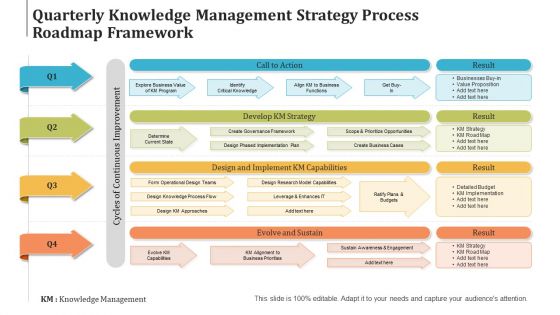
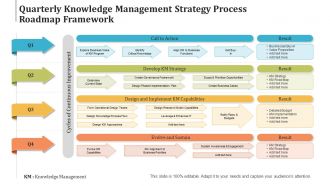
Quarterly knowledge management strategy process roadmap framework





Try Before you Buy Download Free Sample Product
 Impress Your
 Audience
 100%
100% Editable
 Save Hours
 of Time


A well thought out action plan makes execution easier and increases the possibility of success significantly. Ensure hitting all the milestones within the deadlines by introducing our fully customizable Quarterly Knowledge Management Strategy Process Roadmap Framework. Streamline the work related information, budget, timeframe, key deliverable, landmarks, and major steps involved, all in one place to give an organized overview of the project by utilizing our PowerPoint theme. Minimize time lag and increase work efficiency by providing insight into the process with our comprehensively researched roadmap PowerPoint layout. Color coding helps in highlighting the process and grabs the attention of the audience. Download our handy Quarterly Knowledge Management Strategy Process Roadmap Framework to identify the possible problem areas in a much shorter time and propose solutions. Have a productive brainstorming session with your workforce by utilizing our action plan visualization tool.
People who downloaded this PowerPoint presentation also viewed the following :
Quarterly knowledge management strategy process roadmap framework with all 2 slides:
Use our Quarterly Knowledge Management Strategy Process Roadmap Framework to effectively help you save your valuable time. They are readymade to fit into any presentation structure.
FAQs for Quarterly knowledge management strategy
Okay so you'll need four main things: somewhere central to dump all your info, decent search (this is where most systems die a horrible death), solid processes for getting knowledge in and keeping it updated, plus ways to actually get people using it. Start by figuring out what knowledge is already floating around your company - probably more than you think. Pick one area to tackle first instead of trying to boil the ocean. Make sure it plays nice with tools people already use, otherwise they'll just ignore it. Oh, and don't forget someone needs to own keeping everything current.
Honestly, start with Slack or Teams - set up channels where people can share stuff they've learned. Internal wikis work too, but only if people actually use them (which is always the tricky part). AI search tools are pretty solid now for helping people find answers quickly instead of bugging everyone with the same questions. Oh, and definitely record your senior people explaining processes - seriously saves so much time later when they're not around. The whole thing only works if it's dead simple to add info and find it again. Pick one team first, get them hooked on whatever system you choose, then roll it out. Way easier than trying to get everyone on board at once.
Honestly, culture is everything when it comes to knowledge management. People either hoard info or they share it - and that's totally on the company vibe. I've seen teams where everyone's super secretive versus others who tell you everything over coffee. Leadership has to actually walk the walk here, not just talk about collaboration. Reward sharing instead of competition. Make it safe for people to say "I don't know" without looking stupid. Oh, and definitely check if your current culture even supports what you're trying to build first.
Dude, knowledge management is basically your company's collective memory bank. You get access to all the stuff people figured out before you - past project wins, failures, expert tips, whatever. Makes decision-making way less stressful since you're not flying blind. Quick searches through documented decisions save tons of time too. No more reinventing solutions that already exist somewhere in a folder nobody checks. Honestly, most teams are terrible at actually using this stuff though. Start simple - just document your team's big decisions and how they turned out. You'll thank yourself later when similar situations pop up.
Honestly, people just need to feel safe sharing stuff without looking stupid. Coffee chats work way better than formal meetings - something about caffeine makes everyone more honest. When someone shares something useful, actually acknowledge it instead of just nodding. Don't make people write essays either. Quick videos or throwing stuff in a shared doc is fine. Here's what really works though: share your own screw-ups first. Once you admit you don't know everything, others will too. Maybe start with just one weekly thing?
Dude, when people quit, they take ALL their knowledge with them. I've watched entire projects fall apart because some guy left and nobody else knew how anything worked. Clients get pissed, new people are lost, everything just stops. You don't realize how screwed you are until it happens. Honestly, most companies think they're fine until their star employee walks out the door with five years of unwritten processes in their brain. Write stuff down now - how decisions get made, why things work the way they do. Future you will thank me.
Explicit knowledge is the easy stuff - documents, processes, anything you can write down and share. Tacit knowledge? That's all the experience sitting in people's heads that's nearly impossible to transfer. Most companies obsess over digitizing the explicit side because it's straightforward. But honestly, the tacit stuff is where you'll find real competitive edge. You need mentoring programs and communities of practice for that - can't just throw it in a database. Here's what I'd do: find your key knowledge holders first. Then build formal transfer processes around them before they bail or retire. Don't wait on this one.
Look, the biggest problem is when all your good ideas get stuck in people's heads or locked away in different departments. You want to capture the smart stuff - lessons learned, what worked before, all that good intel - so teams can actually build on it instead of starting from scratch every time. Honestly, the magic happens when people can connect dots between different knowledge areas. That's where the breakthrough moments come from. Set up systems where info flows between teams easily. Oh, and definitely figure out what knowledge might disappear when Bob from accounting retires next year. Create simple ways to document and share that stuff before it's gone.
Honestly, start with what people actually click on - search queries, downloads, page views. That stuff's easy to track. Survey responses and how often folks contribute give you the engagement picture. The ROI side is annoying to measure but worth it if you can track faster problem-solving or shorter training times. Oh, and definitely check exit interviews for knowledge gaps - that's usually eye-opening. Don't go crazy with metrics though. Pick 2-3 that match what you're trying to achieve. Way easier to spot trends when you're not drowning in data.
Your brain just loves stories way more than boring lists of facts. When you tell someone a story with the lesson baked in, they'll actually remember it months later. I've watched entire rooms of people check out during slide presentations, then suddenly everyone's listening when someone tells a real story about screwing something up. Stories capture all that unspoken stuff too - like how decisions really get made or what the culture's actually like (not the official version). Honestly, next time just pick one specific example instead of explaining concepts in the abstract.
Honestly, just make it feel like actual conversations instead of some corporate knowledge dump. Set up Slack channels for different topics - people will actually use those. Confluence or Notion work great for the more detailed stuff that needs documenting. But here's the thing: nobody wants to write formal reports about what they learned. They'll totally share a quick tip in chat though, especially if others are doing it too. I'd start with just one small project and see how it goes. Once people get used to casually dropping helpful insights, it kind of spreads naturally from there.
Honestly, just get your categories sorted first and stick to naming things the same way every time. You'll hate yourself later if you don't. Keep everything current too - old info is basically useless. Oh, and don't make people dig through tons of random stuff to find what they need. The permissions thing matters more than you'd think. Make it stupid easy for your team to actually add their knowledge instead of hoarding it. Those repositories that never get updated? Total waste. The good ones evolve because people actually want to use them.
So basically each industry just focuses on what'll actually make or break them. Hospitals are all about patient safety protocols and clinical stuff - makes sense since people's lives are on the line. Tech companies? They're obsessed with code repos and getting innovations shared fast. Manufacturing is totally different though - they document every process and maintenance detail because broken machines = no money. Oh, and financial services document everything compliance-related since regulations are insane there. The trick is figuring out what knowledge actually moves the needle for your specific industry, then build around that. Don't try capturing everything - you'll go crazy.
Okay so first thing - audit what knowledge you're already collecting and check if you actually have consent for it all. Privacy's huge here. Don't share sensitive stuff without permission, obviously. Who owns the knowledge matters too, especially from employees or outside partners. I'd create clear policies about what gets shared and with who. People should be able to opt out easily. Honestly, the worst thing is when someone feels like their ideas got ripped off without credit. Be upfront about how you'll use their contributions. Short version: get consent, respect ownership, stay transparent.
Honestly, knowledge management saves your butt when working remote. Can't just walk over and ask Dave about that client anymore, right? Start by figuring out what critical stuff only lives in people's brains - then get it documented somewhere everyone can find it. Set up searchable wikis or shared drives. Record your meetings too since you're missing all those random conversations by the coffee machine. The hard part isn't setting it up, it's actually keeping everything current. But seriously, do this before someone quits and takes half your institutional knowledge with them.
No Reviews