


Research Design For Clinical Trials Powerpoint Presentation Slides





Try Before you Buy Download Free Sample Product
 Impress Your
 Audience
 100%
100% Editable
 Save Hours
 of Time


Clinical trial phases involve various steps that are followed to ensure the safety and efficacy of the newly developed drug by testing it on targeted individuals in a controlled environment. Check out our efficiently designed Research Design for Clinical Trials PowerPoint template. In this presentation, we have covered the process flow of clinical trial phases along with significant milestones. It also includes primary and secondary goals, the number and type of patients, dosage details, and outcomes of each corresponding phase of the clinical trial. This PPT also covers graphs through which the success rate of the trial and the cost involved in each phase can be visually represented. Build a powerful template like this for yourself and book a free demo with our research team now.
People who downloaded this PowerPoint presentation also viewed the following :
Content of this Powerpoint Presentation
Slide 1: This slide displays the title Research Design for Clinical Trials.
Slide 2: This slide shows the various steps involved in the clinical trial process.
Slide 3: This slide indicates the key steps involved in the clinical drug investigation process.
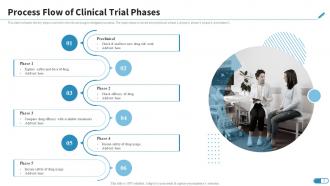
Slide 4: This slide highlights the process flow of clinical study for the new drug investigation.
Slide 5: The mentioned slide depicts the steps of the clinical research process.
Slide 6: This slide covers the clinical research trial steps for the successful investigation and launch of the new drug.
Slide 7: This slide highlights the framework for the clinical research trial.
Slide 8: This slide indicates the complete flow of the new drug testing process depicted via multiple steps.
Slide 9: This slide depicts the research process for new drug development.
Slide 10: This slide shows the multiple steps of the clinical trial process with the results of each phase.
Slide 11: This slide covers the different phases of research trial for the testing of new medicine for human consumption.
Slide 12: This slide tabulates the multiples phases of the drug testing process in clinical research trials.
Slide 13: This slide depicts the key and derived goals of multiple phases of the clinical trial process for the synthesis of the new drug.
Slide 14: This slide depicts the primary goal of each phase of the clinical research trial.
Slide 15: This slide shows the tabulation of key objectives of multiple phases of the clinical research process.
Slide 16: This slide indicates the information regarding the multiple stages of the clinical trial process.
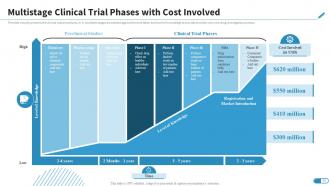
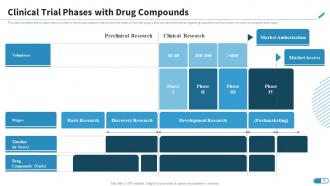
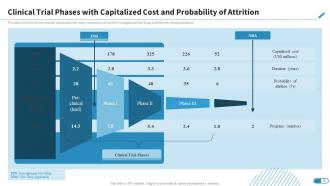
Slide 17: This slide covers the costing involved in multiple steps of the new drug investigation in the clinical trial.
Slide 18: This slide covers the detailed description of the multiple stages of the clinical research process to check new drug efficacy.
Slide 19: In this slide, tabulation is done of key objectives of each step of clinical research trials.
Slide 20: This slide shows the multiple steps of the clinical trial to determine if the new drug is safe and effective for human consumption.
Slide 21: This slide tabulates the characteristics of each step of the clinical trial process.
Slide 22: The slide covers the costs involved in each step of the clinical trial procedure.
Slide 23: The slide visually presents the clinical trial procedures.
Slide 24: This slide depicts the framework for the successful completion of the clinical trial to investigate the efficacy of the new drug.
Slide 25: This slide illustrates the multiple steps involved in the clinical research trial to check the safety of the new drug.
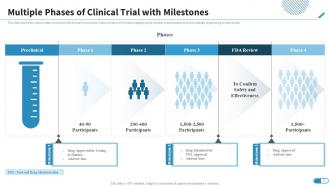
Slide 26: This slide covers the clinical research trial phases with major milestones such as IND (Investigational New Drug) and NDA (New Drug Application).
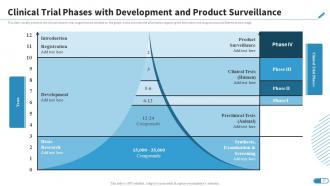
Slide 27: This slide visually presents the clinical research trial stages that are plotted on the graph.
Slide 28: This slide visually presents the success rate of multiple stages of the clinical trial procedure.
Slide 29: This slide showcase Graph Indicating Clinical Trial Phases Probability of Success.
Slide 30: This slide showcase Graph highlighting Cost involved in Multiple Clinical Trial Phases.
Slide 31: This slide depicts the process flow of the clinical trial procedure.
Slide 32: This slide showcase Specialist Giving Medicine Dose in Clinical Trial Phases.
Slide 33: This slide showcase Researcher Working on New Drug Compound in Clinical Trial Phases.
Slide 34: This slide showcase Medicine Compounds in Multiple Phases of Clinical Trial.
Slide 35: This slide showcase Clinical Trial Phases Conduced by Technician in Laboratory.
Slide 36: This slide showcase Drug Specialist Working with Microscope in Clinical Trial Phases.
Slide 37: This slide showcase Clinical Trial Phases Performed by Pharmacist.
Slide 38: This slide showcase Clinical Trial Phases Depicted Via DNA and Patients.
Slide 39: This slide showcase Phase Endpoint Report of New Drug in Clinical Trial.
Slide 40: This slide showcase Medical Reports with Injection for Clinical Trial Phases.
Slide 41: This slide showcase Microscope with Medical Solution in Clinical Trial Phases.
Slide 42: This slide showcase Clinical Trial Phases Poster with Medicines and Health Monitor.
Slide 43: This is the icons slide.
Slide 44: This slide presents title for additional slides.
Slide 45: This slide exhibits yearly timeline of company.
Slide 46: This slide shows puzzle for displaying elements of company.
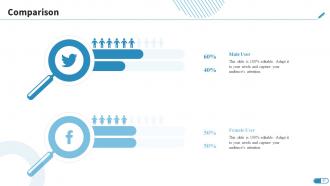
Slide 47: This slide shows Comparison of male and female user.
Slide 48: This slide shows roadmap of company.
Slide 49: This slide shows Magnifying Glass.
Slide 50: This slide shows Our target.
Slide 51: This slide depicts posts for past experiences of clients.
Slide 52: This slide displays Venn.
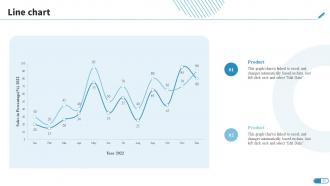
Slide 53: This slide exhibits yearly profits stacked line charts for different products. The charts are linked to Excel.
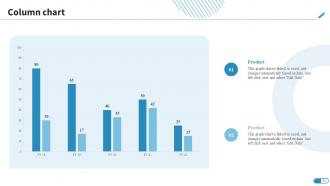
Slide 54: This slide exhibits yearly profits stacked coloumn charts for different products. The charts are linked to Excel.
Slide 55: This is thank you slide & contains contact details of company like office address, phone no., etc.
Research Design For Clinical Trials Powerpoint Presentation Slides with all 60 slides:
Use our Research Design For Clinical Trials Powerpoint Presentation Slides to effectively help you save your valuable time. They are readymade to fit into any presentation structure.
-

Research Design for Clinical Trials
-
Multiple Phases of Clinical Trial with Milestones
-
Process Flow of Clinical Trial Phases
-
Clinical Trial Phases with Objective and Timeline
-
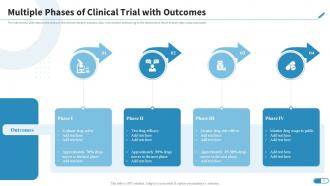
Multiple Phases of Clinical Trial with Outcomes
-
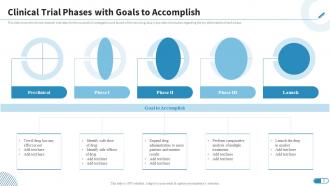
Clinical Trial Phases with Goals to Accomplish
-
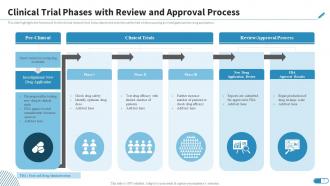
Clinical Trial Phases with Review and Approval Process
-

Clinical Trials Phases with Discovery Science
-
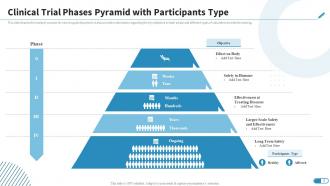
Clinical Trial Phases Pyramid with Participants Type
-
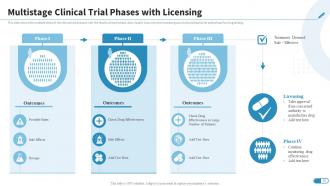
Multistage Clinical Trial Phases with Licensing
-
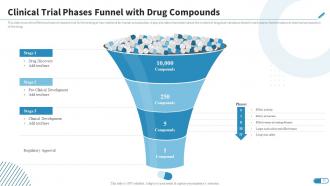
Clinical Trial Phases Funnel with Drug Compounds
-
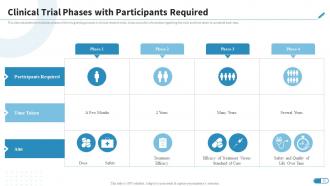
Clinical Trial Phases with Participants Required
-

Clinical Trial Phases with Primary and Secondary Goals
-
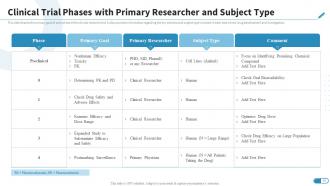
Clinical Trial Phases with Primary Researcher and Subject Type
-
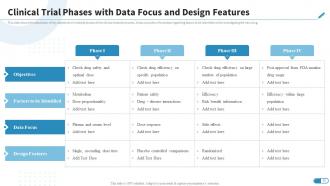
Clinical Trial Phases with Data Focus and Design Features
-
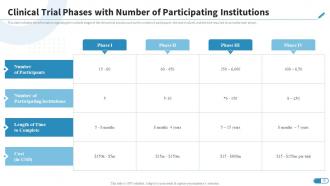
Clinical Trial Phases with Number of Participating Institutions
-
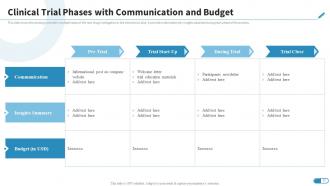
Clinical Trial Phases with Communication and Budget
-
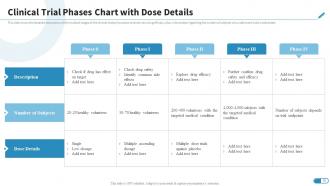
Clinical Trial Phases Chart with Dose Details
-
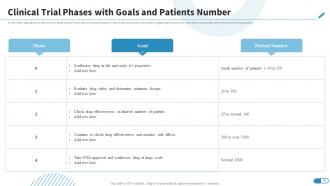
Clinical Trial Phases with Goals and Patients Number
-
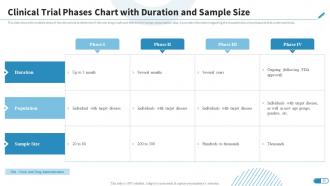
Clinical Trial Phases Chart with Duration and Sample Size
-
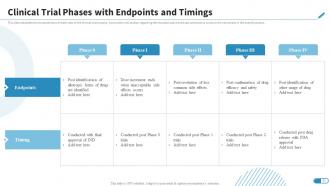
Clinical Trial Phases with Endpoints and Timings
-
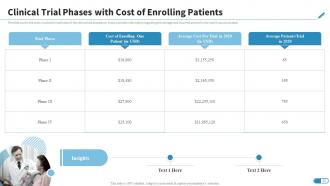
Clinical Trial Phases with Cost of Enrolling Patients
-
Multistage Clinical Trial Phases with Cost Involved
-

Clinical Trial Phases Timeline with NDA Review
-
Clinical Trial Phases with Drug Compounds
-
Clinical Trial Phases with Capitalized Cost and Probability of Attrition
-
Clinical Trial Phases with Development and Product Surveillance
-
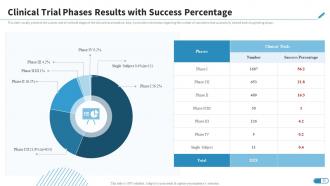
Clinical Trial Phases Results with Success Percentage
-
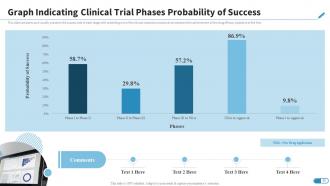
Graph Indicating Clinical Trial Phases Probability of Success
-
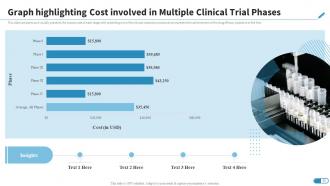
Graph highlighting Cost involved in Multiple Clinical Trial Phases
-
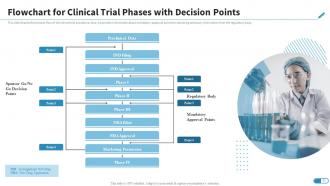
Flowchart for Clinical Trial Phases with Decision Points
-
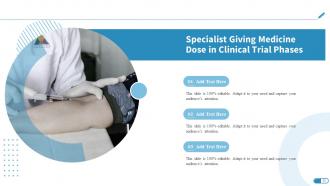
Specialist Giving Medicine Dose in Clinical Trial Phases
-
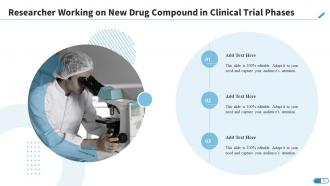
Researcher Working on New Drug Compound in Clinical Trial Phases
-

Medicine Compounds in Multiple Phases of Clinical Trial
-
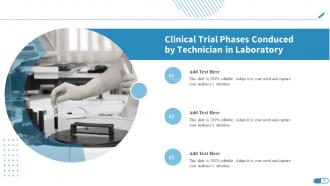
Clinical Trial Phases Conducted by Technician in Laboratory
-
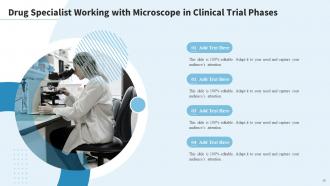
Drug Specialist Working with Microscope in Clinical Trial Phases
-
Clinical Trial Phases Performed by Pharmacist
-
Clinical Trial Phases Depicted Via DNA and Patients
-
Phase Endpoint Report of New Drug in Clinical Trial
-
Medical Reports with Injection for Clinical Trial Phases
-
Microscope with Medical Solution in Clinical Trial Phases
-
Clinical Trial Phases Poster with Medicines and Health Monitor
-

Icons Slide for Research Design for Clinical Trials
-
Additional Slides
-
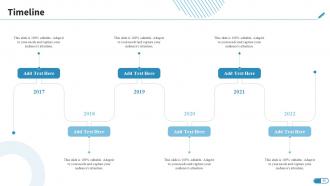
Timeline
-
Puzzle
-
Comparison
-
Roadmap
-
Magnifying Glass
-
Our target
-
Post it notes
-
Venn
-
Line chart
-
Column chart
-

Thank You
-

-

-

-

-

FAQs for Research Design For Clinical Trials
Ok so you need five main things: clear endpoints, good randomization, control groups, right sample size, and solid data collection. Honestly, endpoints are where most people screw up - make them measurable and actually meaningful to patients. For randomization, pick simple or stratified blocks depending on your study. Don't skip the power calculations when figuring out sample size (and yeah, factor in dropouts because people will bail). Oh and definitely pilot test your data collection first. I learned that the hard way on my second trial - what a mess that was.
Okay so sample size depends on four main things: effect size, statistical power (80-90% is standard), significance level (usually 0.05), and how many people you think will drop out. The math gets messy fast tbh. For basic comparisons, online calculators or G*Power work fine. Complex trials though? Get a biostatistician involved early - trust me on this one. Also always pad your numbers for dropouts. I typically bump mine up 10-20% because people flake more than you'd expect.
Hey! So randomization is basically your lifesaver against selection bias. You randomly assign people to groups instead of letting your own preferences (or patient factors) decide who gets what treatment. Think of it like shuffling cards before you deal - both the obvious stuff like age and disease severity AND the hidden variables you don't even know about get spread evenly across groups. That way, if you see different outcomes, you can actually trust that your intervention caused them. Oh, and definitely write down exactly how you randomized everything because reviewers will grill you on that later. Trust me on this one.
So first thing - match your controls to your treatment group on stuff that matters. Age, how sick they are, other conditions they have. Random assignment is great but honestly gets messy with smaller groups. Placebo controls are your best bet when you can do them ethically. Sometimes though you'll have to use active comparators or dig into historical data instead (bit of a pain but whatever works). Make sure you're powering the study right for what you're actually comparing. Oh and seriously - nail down those inclusion/exclusion criteria early. Saves you headaches later when you're trying to recruit controls that'll actually give you useful results.
Okay so the main things are informed consent, risk-benefit ratios, and fair participant selection. Participants need to actually get what they're agreeing to - not just sign papers they don't understand. The benefits have to outweigh the risks too. Watch out for vulnerable populations because you don't want to exclude people unfairly OR take advantage of them. Equipoise matters a lot - there should be real uncertainty about which treatment works better. Oh and honestly? Loop in your IRB from day one. Way easier than trying to fix ethics issues after the fact.
So here's the deal - Phase I is just safety testing with like 20-100 people, figuring out dosing and catching any scary side effects. Then Phase II bumps up to a few hundred participants to see if it actually works (still watching for problems obviously). Phase III is where things get intense - thousands of people in those big randomized trials comparing your treatment to whatever's standard now. Honestly, this is where most drugs either make it or die. Phase IV comes after approval, just tracking how things go in the real world. The key is matching your study size to what you're trying to prove at each stage.
So you'll mostly be dealing with t-tests and chi-square for group comparisons. ANOVA when you've got multiple treatment arms. Survival analysis is big too - Kaplan-Meier curves for time-to-event stuff. Regression models are your friend here - logistic for yes/no outcomes, Cox for survival data. The intention-to-treat vs per-protocol decision is honestly make-or-break for your results. Mixed-effects models come up with complex designs, sometimes Bayesian methods too (though that gets messy). I always tell people to start with their primary endpoint first, then figure out which test actually makes sense for what they're trying to prove.
Yeah, recruitment problems are a nightmare - they'll totally screw up your study. When you can't get enough participants, you end up relaxing your criteria or dragging out timelines, which brings in all sorts of bias. Sites get antsy waiting around, costs pile up, and people start cutting corners on protocols. Honestly, I've seen studies fall apart because of this. Your sample might not even represent who you're actually trying to study, so good luck applying those results to the real world. Just plan for realistic numbers from the start and have backup plans ready.
Honestly, you'll want solid real-time tracking systems first - automated alerts are a lifesaver for serious events. Train your team properly on documentation (can't stress this enough) and set up regular safety reviews. The trick is spotting patterns before they blow up - I've watched trials crash and burn from delayed reporting. Standardized forms help, plus you need direct lines to investigators. Oh and build in time for root cause analysis when bad stuff happens. Create a culture where people actually want to report things, then follow up on everything religiously.
Your criteria basically determine who gets in your study and how useful your results will be later. Too strict? Sure, you'll get clean data and maybe stronger effects, but good luck applying that to real patients with diabetes AND heart problems. I've watched so many trials kick out anyone over 65, then act shocked when their miracle drug flops in the real world. Cast the net too wide though and you might miss finding anything meaningful. The trick is documenting why you're excluding certain groups - and honestly thinking about whether your fancy new treatment will actually help the 70-year-old with three conditions sitting in clinic.
So adaptive trials are pretty sweet - you can actually change things mid-study based on what the data's showing you. Like if one treatment arm is clearly winning, you can shift more patients there. Or stop early if something's obviously not working (saves everyone time honestly). You might tweak sample sizes, switch up patient groups, whatever makes sense. The catch is you have to plan all these decision points upfront in your protocol. Can't just make random changes and pretend it was always the plan, you know? Way more flexible than traditional trials where you're stuck no matter what happens.
Dude, definitely get your protocol registered on ClinicalTrials.gov before you even think about recruiting people. It locks everything down so you can't mess with your methods later - which honestly saves you from yourself sometimes. Document your inclusion criteria, randomization, analysis plans, all that stuff. Yeah it's tedious but whatever. Try to share your raw data and code when you can. Stick with your original endpoints too, don't go changing things halfway through. Oh and publish the negative results! I know nobody wants to but they're actually super useful for other researchers.
Dude, the whole clinical trial world is getting flipped upside down right now. Machine learning can actually predict how fast you'll recruit patients and simulate outcomes before you even start - it's wild. Those wearables and smartphone apps are giving you constant data instead of making people show up every few weeks (seriously, the old way was brutal for patients). Remote monitoring means less site visits too. Oh, and adaptive designs let you tweak protocols mid-study based on what you're seeing. Even blockchain's creeping in for data security stuff. You really should start playing around with these tools because honestly? Traditional trial setups are gonna look ancient pretty soon.
So regulatory requirements basically run the whole show when you're designing trials. FDA and EMA guidelines determine your endpoints, safety protocols, patient criteria - all of it. Super constraining at first, honestly. But there's logic behind the madness, I guess. You'll need statistical power calcs, stopping rules, analysis plans mapped out before enrolling anyone. Oh, and get reg affairs looped in early! Learned that one the hard way - they'll catch stuff that saves you from expensive protocol changes down the road. Trust me on that.
Patient feedback is honestly like gold for trial design. Their input helps you fix protocols, tweak visit schedules, and spot barriers you'd never think of. Some of my best protocol changes happened because patients said "wait, this makes zero sense" or "nobody can make it at that time." You'll catch issues with burden and comprehension before they torpedo your recruitment - which is way better than scrambling later. The key is building in feedback loops from the start, not crossing your fingers and hoping everything works out during the actual trial.
-
This visual representation is stunning and easy to understand. I like how organized it is and informative it is.
-
Love how there are no boring templates here! The design is fresh and creative, just the way I like it. Can't wait to edit and use them for my extended projects!