


Geschäftsplan für den Einzelhandel Powerpoint-Präsentationsfolien




Try Before you Buy Download Free Sample Product
 Impress Your
 Audience
 100%
100% Editable
 Save Hours
 of Time


Der Einzelhandelssektor ist eine der am schnellsten wachsenden Branchen der Welt und erlebt viele Newcomer. Holen Sie sich unseren aufschlussreichen Geschäftsplan für den Einzelhandel, um Ihr Geschäft effektiv und effizient zu starten. Es wird Ihnen helfen, die notwendigen Voraussetzungen für ein erfolgreiches Geschäft zu implementieren. Unser Businessplan-Deck für Einzelhandelsgeschäfte umfasst Abschnitte wie die Zusammenfassung, die Entität und die Branchenanalyse. Es umfasst verschiedene Sektoren für die Einzelhandelsbranche, Herausforderungen und Lösungen, denen sich eine Person während des Geschäftsbetriebs stellen kann. Die Präsentation zeigt außerdem SWOT-, PESTEL- und Porters-Fünf-Kräfte-Analysen zur Messung der Risiken und Chancen. Es hilft Ihnen bei der Bestimmung der Marktgröße und der regionalen Analyse, um die Branche besser zu verstehen. Darüber hinaus zeigt unser Einzelhandelsmodul die prognostizierte Finanzanalyse, um einer Organisation zu helfen, ihre Finanzlage zu kennen. Schließlich enthält es die Management Summary, einschließlich der Anzahl der erforderlichen Mitarbeiter, ihrer Bezeichnungen und kritischen Rollen für das reibungslose Funktionieren des Unternehmens. Laden Sie diese zu 100 Prozent bearbeitbare Präsentation herunter und erhalten Sie Zugriff auf unser hoch recherchiertes und gekonnt gestaltetes Produkt.
People who downloaded this PowerPoint presentation also viewed the following :
Inhalt dieser Powerpoint-Präsentation
Folie 1 : Diese Folie stellt den Geschäftsplan für den Einzelhandel vor. Beginnen Sie mit der Angabe Ihres Firmennamens.
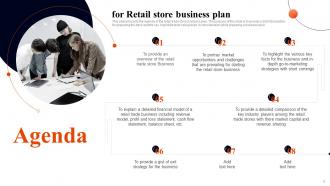
Folie 2 : Diese Folie zeigt die Agenda der Präsentation.
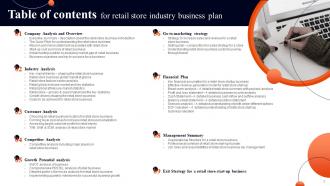
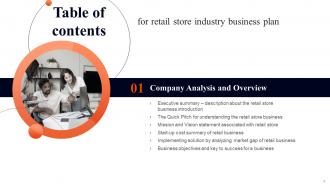
Folie 3 : Diese Folie enthält das Inhaltsverzeichnis.
Folie 4 : Diese Folie hebt den Titel für die Themen hervor, die in der kommenden Vorlage behandelt werden sollen.
Folie 5 : Diese Folie bietet einen kurzen Einblick in das, was das Unternehmen dem Kunden mit Marktinformationen anbieten wird.
Folie 6 : Diese Folie befasst sich mit dem Quick Pitch zum Verständnis des Einzelhandelsgeschäfts.
Folie 7 : Diese Folie erläutert die Mission und Vision eines Einzelhandelsgeschäfts.
Folie 8 : Diese Folie bietet einen Überblick über die Unternehmensgründung.
Folie 9 : Diese Folie enthält detaillierte Informationen zu den Geschäftszielen und den wichtigsten Erfolgstreibern zum Zwecke der Geschäftsausweitung.
Folie 10 : Diese Folie zeigt den detaillierten Überblick über das Einzelhandelsgeschäft.
Folie 11 : Diese Folie konzentriert sich auf die Implementierung einer Lösung durch die Analyse der Marktlücke des Einzelhandelsgeschäfts.
Folie 12 : Dies ist eine weitere Folie, die die Implementierungslösung fortsetzt.
Folie 13 : Diese Folie enthält die Überschrift für die weiter zu diskutierenden Komponenten.
Folie 14 : Diese Folie hebt die gründliche Bewertung eines Marktes innerhalb des Lebensmittelgeschäfts oder Supermarkts zusammen mit den wichtigsten Statistiken hervor.
Folie 15 : Diese Folie gibt einen Einblick in den Branchenüberblick über die Geschäftstrends im Einzelhandel.
Folie 16 : Diese Folie betont die Geschäftstrends der Modeeinzelhandelsbranche.
Folie 17 : Diese Folie zeigt die gründliche Bewertung eines Marktes innerhalb der Hautpflegeindustrie.
Folie 18 : Diese Folie zeigt die gründliche Bewertung eines Marktes innerhalb des Athleisure-Marktes.
Folie 19 : Diese Folie enthält die gründliche Bewertung eines Marktes innerhalb des Lebensmittelgeschäfts oder Supermarkts zusammen mit den wichtigsten Statistiken.
Folie 20 : Diese Folie zeigt Informationen über die Wachstumstreiber, die das Einzelhandelsgeschäft prägen.
Folie 21 : Dies ist eine weitere Folie, die die Wachstumstreiber fortsetzt.
Folie 22 : Diese Folie gibt die Ziele an, die für das Einzelhandelsgeschäft erreicht werden müssen.
Folie 23 : Diese Folie zeigt den Titel für die Ideen, die in der nächsten Vorlage behandelt werden sollen.
Folie 24 : Diese Folie hebt die gründliche Bewertung eines Unternehmensstandorts innerhalb eines Landes hervor.
Folie 25 : Diese Folie konzentriert sich auf die Bildung von Käuferpersönlichkeiten, um die Personalisierung von Einzelhandelsgeschäften zu verbessern.
Folie 26 : Diese Folie zeigt die Bewertung des Zielkundenprofils für Einzelhandelsgeschäfte.
Folie 27 : Zweck dieser Folie ist es, das Marktpotenzial von Einzelhandelsgeschäften in Bezug auf TAM, SAM und SOM darzustellen.
Folie 28 : Diese Folie zeigt die Überschrift für die als nächstes zu diskutierenden Ideen.
Folie 29 : Diese Folie zeigt die Wettbewerbsanalyse einschließlich der wichtigsten Akteure im Einzelhandelsgeschäft.
Folie 30 : Diese Folie erläutert den Titel für die weiter zu behandelnden Komponenten.
Folie 31 : Diese Folie zeigt die umfassende SWOT-Analyse des Einzelhandelsgeschäfts.
Folie 32 : Die Folie beleuchtet das Fünf-Kräfte-Modell von Porter und seine Auswirkungen auf die Einzelhandelsbranche.
Folie 33 : Der Zweck dieser Folie besteht darin, die politischen, wirtschaftlichen, sozialen, technologischen, ökologischen und rechtlichen Auswirkungen der Branche zu identifizieren, die das Wachstum des Unternehmens beeinflussen können.
Folie 34 : Diese Folie betont die Implementierung vierteljährlicher Meilensteine für ein erfolgreiches Wachstum des Einzelhandelsgeschäfts.
Folie 35 : Diese Folie zeigt die Überschrift für die Themen, die in der kommenden Vorlage besprochen werden sollen.
Folie 36 : Diese Folie beschreibt die Strategie zur Steigerung von Umsatz und Umsatz für ein Einzelhandelsgeschäft.
Folie 37 : Der Zweck dieser Folie ist die Umsetzung einer effektiven Markteinführungsstrategie, um die Produkte oder Dienstleistungen des Unternehmens unter Berücksichtigung verschiedener Elemente an einen Endkunden zu bringen.
Folie 38 : Diese Folie konzentriert sich auf das Verstehen der Kundenreise durch den Trichter im Einzelhandel.
Folie 39 : Diese Folie zeigt den Titel für die Themen, die als nächstes besprochen werden sollen.
Folie 40 : Diese Folie stellt die finanziellen Annahmen des Geschäftsplans des Bekleidungsgeschäfts dar.
Folie 41 : Diese Folie zeigt das Umsatzmodell des Einzelhandelsgeschäfts.
Folie 42 : Diese Folie zeigt die Break-Even-Analyse.
Folie 43 : Diese Folie zeigt das Breakeven-Diagramm.
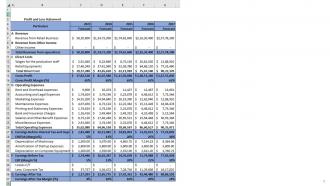
Folie 44 : Diese Folie erläutert die Gewinn- und Verlustrechnung.
Folie 45 : Dies ist eine weitere Folie, die die Gewinn- und Verlustrechnung fortsetzt.
Folie 46 : Diese Folie ist eine Erweiterung der Gewinn- und Verlustrechnung.
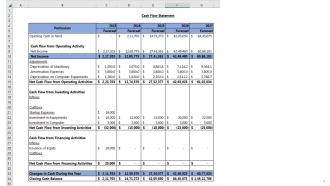
Folie 47 : Diese Folie erläutert die Kapitalflussrechnung der Organisation.
Folie 48 : Diese Folie setzt die Kapitalflussrechnung fort.
Folie 49 : Diese Folie zeigt die Bilanz.
Folie 50 : Diese Folie ist die Fortsetzung der Bilanz.
Folie 51 : Diese Folie zeigt die verschiedenen Szenarien zur Ableitung des Jahresendgewinns nach Steuern auf Basis von Best Case, Nominal Case und Worst Case.
Folie 52 : Diese Folie präsentiert eine Szenarioanalyse der jährlichen Gewinnschwelle, des jährlichen Gewinns nach Steuern und der Break-even-Analyse.
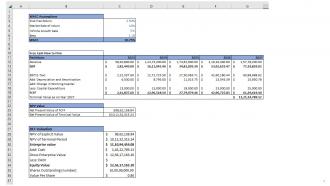
Folie 53 : Diese Folie hebt die DCF-Bewertungsanalyse der Finanzdaten eines Unternehmens hervor, die auf dem freien Cashflow des Unternehmens basiert.
Folie 54 : Diese Folie erwähnt die Überschrift für die weiter zu diskutierenden Inhalte.
Folie 55 : Diese Folie repräsentiert die Organisationsstruktur des Unternehmens.
Folie 56 : Diese Folie betont die berufliche Zusammenfassung des Gründers eines Einzelhandelsunternehmens.
Folie 57 : Diese Folie listet die Jobrollen und Verantwortlichkeiten des Schlüsselmanagements im Einzelhandelsgeschäft auf.
Folie 58 : Diese Folie ist eine Erweiterung der Job-Rollen und -Verantwortlichkeiten.
Folie 59 : Diese Folie enthält den Titel für die Ideen, die als nächstes behandelt werden.
Folie 60 : Diese Folie zeigt die Ausstiegsstrategie für Interessengruppen im Einzelhandelsgeschäft.
Folie 61 : Dies ist die Symbolfolie, die alle im Plan verwendeten Symbole enthält.
Folie 62 : Diese Folie dient der Darstellung einiger zusätzlicher Informationen.
Folie 63 : Diese Folie enthält das Säulendiagramm.
Folie 64 : Dies ist die 30 60 90-Tage-Planfolie für eine effiziente Planung.
Folie 65 : Diese Folie erläutert Informationen zum Thema Finanzen.
Folie 66 : Dies ist die Folie des Venn-Diagramms.
Folie 67 : Dies ist die Folie „Unser Team“, auf der Informationen zu den Teammitgliedern präsentiert werden.
Folie 68 : Diese Folie enthält die Haftnotizen für Erinnerungen und Fristen.
Folie 69 : Diese Folie enthält die Mission und Vision der Organisation.
Folie 70 : Dies ist die Folie zur Ideengenerierung, um neue Ideen zu fördern.
Folie 71 : Dies ist die Dankesfolie für die Bestätigung.
Geschäftsplan für den Einzelhandel Powerpoint-Präsentationsfolien mit allen 76 Folien:
Verwenden Sie unsere Powerpoint-Präsentationsfolien zum Geschäftsplan für den Einzelhandel, um Ihnen effektiv dabei zu helfen, wertvolle Zeit zu sparen. Sie sind gebrauchsfertig und passen in jede Präsentationsstruktur.










FAQs for Retail Business Plan
So for your retail business plan, hit the basics first - market research, who you're selling to, what competitors are doing. Financial stuff is huge too, like startup costs and cash flow projections. Don't skip the boring operational parts either (staffing, inventory management) - I swear that's where most people mess up because it's not as fun as brainstorming marketing campaigns. Also cover your product mix, pricing, location strategy. Oh, and marketing approach obviously. Honestly? Just grab a template online and work through it piece by piece instead of staring at a blank page forever.
Honestly, start with surveys and focus groups - they're boring but super helpful for understanding what customers actually want. Then go spy on your competitors lol. Walk around their stores, check prices, see what's buzzing. Social media's where it's at though - Facebook groups and Instagram will show you real conversations people are having. Oh, and if you can swing it, track foot traffic at potential spots. Don't put all your eggs in one research basket - mix online stuff with actually getting out there. Give yourself like 2-3 weeks minimum before you commit to anything big.
Dude, you absolutely have to nail down your target audience first - everything else flows from there. Like, are you selling to college kids or soccer moms? Totally different worlds. Your location, pricing, inventory, marketing... it all hinges on knowing your customer inside and out. I learned this the hard way when I helped my cousin with her boutique - we were all over the place until we focused on who we actually wanted to serve. Create those detailed customer profiles with real demographics and shopping habits. Trust me, it'll save you from making expensive guesses later on.
Dude, financial projections are honestly a game-changer for your retail proposal. Investors want to see actual numbers - revenue forecasts, costs, when you'll turn a profit. Can't just wing it with "trust me, this'll work." Going through the math also helps you catch problems early, like those brutal winter sales slumps that always seem to surprise new retailers. I'd definitely run three scenarios: realistic, optimistic, and the dreaded worst-case situation. Oh, and be conservative with your estimates - I've seen too many people get burned by overly rosy projections.
Honestly, experiential stuff is where it's at right now. Pop-up events, workshops where people can actually touch your products - that kind of thing. Micro-influencers are crushing it way more than celebrities too, which is kinda wild but makes sense. Oh, and gamification! People love earning points and doing challenges - makes shopping feel less transactional. You can also do location-based targeting when customers are near your competitors (sneaky but effective). I'd probably start with whatever fits your budget best and see how it goes before trying everything at once.
Dude, location is everything - seriously can't stress this enough. Walk around at different times, check out foot traffic, see who's already there competing with you. The cheapest rent might seem tempting but it's usually cheap for a reason, you know? Talk to other business owners nearby, they'll give you the real scoop. Demographics matter too - make sure your target customers actually live/work in that area. Oh and don't forget practical stuff like parking and transit access. I've watched so many good businesses tank just because they picked a dead zone.
Start by checking out who you're up against - both brick-and-mortar shops and online competitors. I'd make a simple spreadsheet (yeah, I know, boring but helpful) comparing maybe 5-10 of them. Look at their prices, what they're selling, who they're targeting, where they're located. The big chains are obvious, but honestly? Those little local boutiques might teach you more about your specific area. Figure out what they're doing right and where they're screwing up. Then find those gaps where you can do something different. Trust me, there's always something they're missing that you can jump on.
Honestly, inventory is make-or-break for retail - it hits your cash flow, storage costs, everything. Hold too much? You're stuck with dead stock eating your money (trust me on this one). Not enough and customers get pissed when you're out of what they want. You've gotta match your buying to sales forecasts and seasonal stuff. Investors will definitely look at your working capital needs here. Lead times from suppliers matter too - some take forever. I'd start by checking turnover rates for different product categories. That'll tell you what's actually moving and what isn't.
Hey! So for the legal stuff - start with your business structure (LLC or corp) and grab all the basic licenses like retail and sales tax permits. Food handling too if you're doing that. Lease terms are honestly where people mess up the most, so really dig into those details. You'll want liability insurance for sure, plus product coverage. Employment law gets complicated fast if you hire anyone. Oh and don't skip the consumer protection stuff - return policies, data privacy, all that. Definitely worth paying a lawyer upfront to review everything.
Dude, start small - pick like a good POS system and maybe inventory software first. Don't try to do everything at once or you'll go crazy. Real-time sales tracking is clutch, and anything that stops you from running out of popular stuff pays for itself pretty quick. Mobile payments are basically expected now (learned that the hard way). Customer relationship tools are solid too for figuring out what people actually buy vs what you think they want. The setup can be a pain initially but honestly the ROI usually makes sense once you're past that phase. Automated reordering is amazing if you can swing it.
Track sales per square foot first - it's weirdly one of the most telling metrics. Inventory turnover shows if stuff's actually moving or just sitting around forever. Gross margin's obvious but crucial since it shows real profit after your costs. Oh, and customer acquisition cost will save you from burning cash on bad marketing. Average transaction value matters too. Honestly, conversion rates sound fancy but start with these basics first - you can always dive deeper into foot traffic analysis once you've got these down. Customer lifetime value's the other big one I'd focus on.
Okay so for staffing, figure out your basic roles first - managers, sales people, maybe cashiers depending on your setup. Map this against your store hours and how busy you think you'll be. Honestly, everyone underestimates how insane retail gets during holidays, so build in extra help for those periods. You'll want to budget for training costs and benefits too. Oh, and people quit retail jobs ALL the time, so factor in turnover when you're doing your numbers. Just make sure you can actually afford the payroll while having enough bodies to keep the place running smoothly. Check your local minimum wage laws too obviously.
So funding a retail startup - there's actually tons of options. Bank loans are solid if your credit doesn't suck and you've got a decent business plan. Angels and VCs might bite if you're doing something that can scale big, though honestly VCs are kinda snobby about retail lately. Kickstarter's perfect for unique products - I've seen some crazy success stories there. Your own savings, family money, even equipment financing for inventory all work too. Oh, and figure out your exact number first. That'll help you pick which route makes sense for your timeline. Some are way faster than others.
Look, customers are super into this sustainability thing now - way more than even a few years back. Start with your sourcing - find vendors who actually do eco-friendly stuff, not just greenwashing. Cut down packaging waste where you can. Energy-efficient store ops help too, though that's kinda boring. Set actual numbers like "30% sustainable products" or whatever makes sense for your budget. The tricky part? Making it profitable while staying legit green. Yeah, upfront costs suck, but loyal customers and lower energy bills down the road usually balance it out. Oh, and definitely use it in your marketing - people eat that up.
So basically you need to nail down who's actually gonna buy your stuff and why they'd choose you. Digital marketing is huge - social media, email lists, all that. But don't ignore old school methods if your customers are older. Investors eat up that omnichannel thing where you're everywhere at once (though honestly it can get expensive fast). Retention stuff like loyalty programs are gold since keeping customers costs way less than hunting for new ones. Just make sure you back everything up with real numbers and timelines - nobody wants to see pie-in-the-sky projections.
-
They saved me a lot of time because they had exactly what I was looking for. Couldn’t be happier!
-
Use of icon with content is very relateable, informative and appealing.