


Execution Of Shopping Mall Product Segmentation And Analysis In Shopping Mall MKT SS




Try Before you Buy Download Free Sample Product
 Impress Your
 Audience
 100%
100% Editable
 Save Hours
 of Time


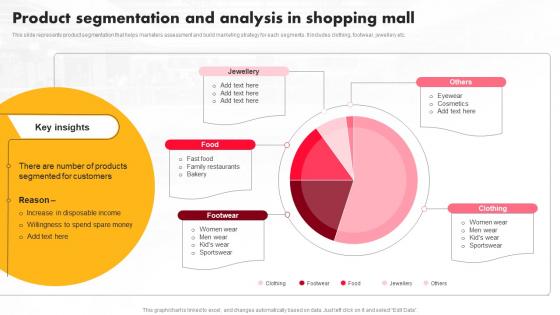
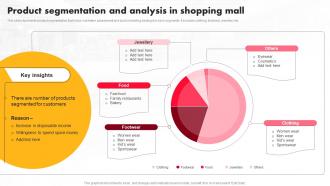
This slide represents product segmentation that helps marketers assessment and build marketing strategy for each segments. It includes clothing, footwear, jewellery etc.
People who downloaded this PowerPoint presentation also viewed the following :
Execution Of Shopping Mall Product Segmentation And Analysis In Shopping Mall MKT SS with all 7 slides:
Use our Execution Of Shopping Mall Product Segmentation And Analysis In Shopping Mall MKT SS to effectively help you save your valuable time. They are readymade to fit into any presentation structure.





FAQs for Execution Of Shopping Mall Product Segmentation And Analysis In Shopping
Key factors influencing shopping mall product segmentation include demographic analysis, foot traffic patterns, seasonal demand fluctuations, tenant mix optimization, and spatial layout considerations. These strategic approaches enable mall operators to enhance customer experiences, maximize rental revenues, and improve operational efficiency by positioning complementary retailers together, ultimately delivering higher profitability and competitive advantage in increasingly dynamic retail environments.
Demographic data significantly influences shopping mall product mix by revealing age preferences, income levels, lifestyle patterns, and cultural needs of the surrounding population. Malls analyzing local demographics can strategically position retailers like family stores in suburban areas or luxury brands in affluent neighborhoods, ultimately optimizing tenant selection, enhancing customer satisfaction, and maximizing revenue potential.
Consumer behavior fundamentally shapes product categories in shopping malls by revealing shopping patterns, spending preferences, demographic trends, and seasonal demands that guide strategic tenant placement. Through analyzing foot traffic data, purchase frequency, and dwell times, mall operators can optimize category placement, enhance cross-shopping opportunities, and maximize revenue per square foot, ultimately delivering improved customer experiences and competitive advantage.
Seasonal trends significantly reshape shopping mall product segmentation by driving retailers to adjust inventory mix, promotional strategies, and space allocation based on cyclical consumer demands. Malls strategically rotate seasonal categories like winter apparel, holiday décor, and summer merchandise, while retailers enhance targeted marketing campaigns and optimize floor layouts, ultimately delivering improved inventory turnover and increased seasonal revenue opportunities.
Successful malls employ demographic targeting, experience-based zoning, strategic anchor tenant placement, flexible leasing models, and data-driven personalization to attract diverse segments. These strategies work by creating distinct shopping environments, offering varied price points and brand experiences, and leveraging customer analytics, with many retail centers finding that mixed-use development and experiential retail ultimately deliver higher foot traffic and tenant satisfaction.
Data analytics improves mall product placement and segmentation by analyzing foot traffic patterns, purchase behaviors, demographic data, and seasonal trends to optimize tenant positioning. Through heat mapping and customer journey analysis, mall operators can strategically cluster complementary retailers, position anchor stores for maximum flow, and adjust layouts based on real-time performance metrics, ultimately enhancing visitor experiences and increasing revenue per square foot.
Online shopping significantly transforms physical mall product segmentation by driving focus toward experiential retailers, premium brands, services, and entertainment venues that cannot be easily replicated digitally. Malls increasingly curate tenant mixes featuring fitness centers, restaurants, beauty services, and luxury retailers, while many traditional commodity-based stores migrate online, ultimately creating more destination-focused shopping environments.
Brand positioning significantly influences product variety by determining target demographics, price points, and complementary service offerings that align with the mall's overall market strategy. Premium-positioned malls typically feature luxury retailers, high-end dining, and exclusive boutiques, while value-oriented centers focus on discount chains, family entertainment, and convenience stores, ultimately creating cohesive shopping experiences that attract specific customer segments.
Innovative product categories include experiential retail spaces, tech integration zones, wellness centers, co-working areas, and personalized service hubs. These categories enhance customer experience by creating immersive environments, offering convenience-driven services, and fostering community engagement, with many shopping centers finding that blending retail with lifestyle experiences drives longer visits and increased spending.
Shopping malls leverage local culture and trends by analyzing regional preferences, cultural celebrations, seasonal patterns, and demographic behaviors to curate relevant product mixes. Through targeted vendor selection, cultural event programming, and localized marketing campaigns, malls create authentic community connections while enhancing customer engagement, increasing foot traffic, and ultimately delivering stronger tenant performance and competitive differentiation in their markets.
Implementing effective product segmentation in multi-brand shopping malls presents challenges including coordinating diverse brand requirements, managing varying lease terms, balancing competing tenant interests, optimizing foot traffic flow, and maintaining cohesive customer experiences. While these complexities require strategic planning, successful segmentation ultimately delivers enhanced customer satisfaction, improved sales performance, and competitive advantage, with many retail centers finding that thoughtful brand clustering and strategic tenant placement significantly boost overall mall performance.
Cross-promotion enhances segmentation by creating synergistic customer journeys between complementary stores, sharing customer insights across retailers, and amplifying targeted messaging through coordinated campaigns. This strategic collaboration enables malls to deliver more personalized shopping experiences, increase customer lifetime value, and drive higher conversion rates, with many retail centers finding that integrated promotional strategies significantly boost both individual store performance and overall mall traffic.
Technology revolutionizes shopping mall product segmentation through AI-powered customer analytics, VR showrooms, smart retail displays, predictive inventory systems, and personalized navigation apps. These innovations enable malls to deliver targeted tenant placement, dynamic product positioning, and customized shopping experiences by analyzing foot traffic patterns, purchase behaviors, and demographic preferences, ultimately enhancing operational efficiency and customer satisfaction.
Shopping malls can effectively segment products for different age groups by analyzing purchasing patterns, creating dedicated zones like teen fashion districts or family entertainment areas, and using demographic data to optimize store placement. Through strategic floor planning, targeted marketing campaigns, and age-appropriate amenities, malls enhance customer experiences while maximizing foot traffic and sales across all generations.
Key metrics include foot traffic analysis by segment, conversion rates per product category, average transaction values, dwell time in specific zones, and cross-category purchase patterns. These measurements enable mall operators to optimize tenant placement, enhance customer flow, and maximize revenue per square foot, with many retail centers finding that data-driven segmentation strategies significantly improve both tenant satisfaction and overall profitability.
-
Thank you for offering such helpful pre-designed templates. They are really beneficial to me in my job.
-
“The presentation template I got from you was a very useful one.My presentation went very well and the comments were positive.Thank you for the support. Kudos to the team!”