

Reverse supply chain management powerpoint presentation slides




Try Before you Buy Download Free Sample Product
 Impress Your
 Audience
 100%
100% Editable
 Save Hours
 of Time


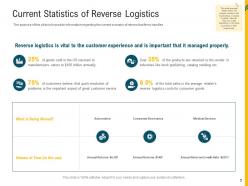
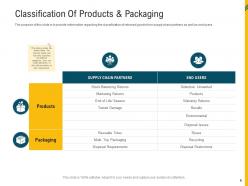
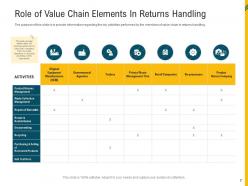
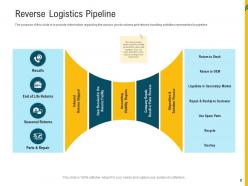
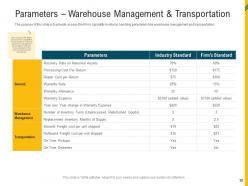
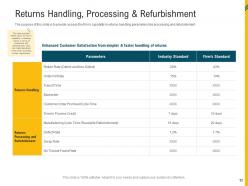
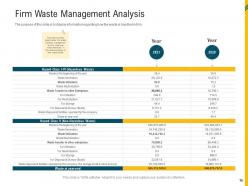
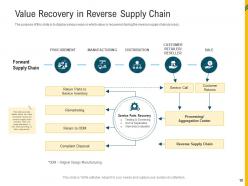
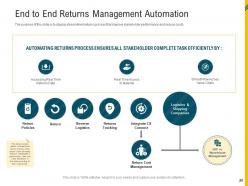
Introducing Reverse Supply Chain Management PowerPoint Presentation Slides. Provide information regarding the current scenario of returns that the firm handles by using this PPT slideshow. The reverse logistics PPT slide deck presents the classification of return goods from supply chain partners and end-users. Discuss the role of value chain elements in returns handling with the help of easy-to-use PowerPoint templates. Showcase details of various return conducting activities by using this PowerPoint slide deck. You can assess the firm’s capability in returns handling parameters with the help of this reverse logistic in supply chain PPT slide design. Information on return handling, processing, refurbishment can be easily demonstrated with the use of PowerPoint layouts. The presentation also depicts waste management analysis of the firm, and ways by which value is recovered during the reverse supply chain process. Download our readily available supply chain management ppt presentation to display a streamlined returns process that can improve stakeholder’s performance and reduce costs.
People who downloaded this PowerPoint presentation also viewed the following :
Reverse supply chain management powerpoint presentation slides with all 39 slides:
Use our Reverse Supply Chain Management Powerpoint Presentation Slides to effectively help you save your valuable time. They are readymade to fit into any presentation structure.






FAQs for Reverse supply chain management
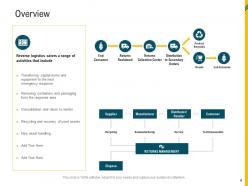
So basically it's everything that happens when products come back to you - returns, fixing stuff up, recycling, disposal. You need collection networks to grab the returned items, then inspection to see what shape they're in. From there, some get refurbished and resold, others get stripped for parts or materials. Think of it as your normal supply chain but backwards (which honestly makes it way trickier than it sounds). The real challenge is setting up systems that can handle all these different paths without going crazy. I'd start by tracking where your current returns actually end up - bet you're losing money somewhere in there.
So basically, regular supply chains push new stuff from manufacturers to customers. Reverse supply chains do the opposite - they pull used products back for returns, recycling, whatever. It's like running your normal ops backward (hence the name, duh). Instead of getting products out efficiently, you're figuring out how to get them back in and what to do with them. Your whole process flips. Metrics change. Even your partnerships shift around. Honestly, most companies already have some reverse chain happening - they just don't realize it. Start by tracking where your returned products actually end up right now.
Honestly? You're probably leaving money on the table right now. Map out your current return process first - I bet you'll find stuff you can salvage through refurb or resale instead of just writing it off. Customers actually love when companies handle returns responsibly, so your brand rep gets a boost too. Compliance with environmental regs is obviously important, but the real win is the data you collect. That feedback loop helps you catch quality problems before they become bigger headaches. It really does pay for itself faster than you'd think.
Honestly, tech is a game-changer for reverse supply chains. RFID tags and IoT sensors give you real-time tracking of returned stuff, which is huge. AI jumps in to assess condition and decide if items get refurbished, recycled, or resold again. Machine learning even predicts return patterns - saves you money in the long run. You can connect directly with secondary markets through digital platforms too, skip the middlemen entirely. I'd start with basic tracking tech first though. Build up from there once you see what's missing. The data insights alone make it worth it.
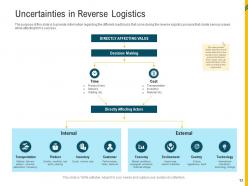
Ugh, reverse logistics is such a mess. Returns show up randomly - no predictable patterns like regular shipments. You're constantly dealing with damaged stuff that's impossible to sort efficiently. Half the time you can't tell what's worth fixing vs just tossing into recycling. Your costs go crazy because everything's so unpredictable. Then there's contaminated materials, old tech nobody wants, plus compliance rules that change depending where you are. Most companies honestly just make it up as they go since there's no real playbook. My advice? Set up a solid grading system first, then find reverse logistics partners who actually specialize in this stuff.
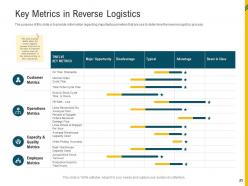
Track your return processing time and how much each return costs you first - those are pretty straightforward. Recovery rates matter way more than most people realize though. Like, how much value are you actually getting back from returned stuff through fixing it up or reselling? Customer satisfaction with returns is massive too since nobody wants to deal with a nightmare return process. Honestly, I'd just pick 2-3 metrics that align with what you're trying to accomplish and focus on those consistently. You can always add more later once you get the hang of it.
Honestly, customer feedback is like gold for your reverse supply chain. Track why people are returning stuff - wrong size, broken, whatever. Those patterns will show you exactly where to focus. If everyone's returning the same batch, you've got a quality control issue. Too many "didn't match description" returns? Your product pages probably suck. I'd start simple though - just categorize return reasons systematically first. Then you can tackle the biggest problem areas. The feedback basically tells you whether you need better descriptions, faster repairs, or completely different processes.
Hey! So basically start with the 3 Rs - reduce, reuse, recycle. Design your products so they're easy to take apart later (saves you so much headache). Set up collection networks to get returned stuff back efficiently. Refurbishing beats throwing things away every time - way more profitable too. Finding decent recycling partners is honestly the hardest part, but you need certified ones for materials you can't reuse. Track metrics like waste diversion rates and carbon reduction. The whole point is making money from returned products instead of treating them like garbage. Makes the sustainability thing actually work financially.
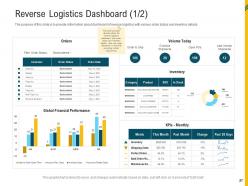
Focus on recovery rate first - like what percentage of returns you're actually getting back and processing. Processing time matters too (how fast stuff becomes sellable again). Cost per return is obvious but tons of companies ignore it somehow. Track your refurbishment success rates and defect rates. Customer satisfaction with refurb items is clutch. Oh and honestly? Most places totally skip the environmental metrics, but carbon footprint stuff is getting more important for reporting. Start with recovery rate and processing costs though. Those two will tell you the most about whether your program actually works.
Regulations totally control your reverse supply chain setup. Electronics have environmental disposal rules, pharma has its own return laws, auto parts need compliance checks - it's a mess but you can't ignore it. Map out what rules apply to your specific products first. A returned medical device? Super strict requirements. Returned clothing? Way more chill. Don't try to slap compliance on later - that never works well. Build your whole reverse process around those constraints from the start. The rules change constantly too, which is honestly just part of the headache you'll deal with.
Honestly, a smooth return process is a game-changer for keeping customers happy. People hate buying stuff online because they're worried about getting stuck with something that sucks. But when returns are super easy? That anxiety just disappears. Handle exchanges quickly, don't make warranty claims a nightmare, and customers will trust you way more. Oh, and if you're smart about refurbishing returned items instead of trashing them, people see you as the responsible choice. I've noticed customers stick around longer when they know you've got their back. Basically just make returns as painless as regular shipping.
Tech companies and car manufacturers kill it with reverse supply chains - those components are expensive to replace. Fashion brands are also jumping on this hard because everyone's calling them out for being wasteful. Healthcare and packaging do well too, mostly because regulations force them to. Honestly, I think any industry dealing with sustainability backlash should consider it. Just look at three things: are your products valuable enough to recover? Do regulators care? Are customers demanding greener practices? If you're checking those boxes, it's probably worth the investment.
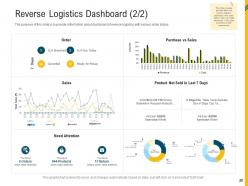
So basically, data analytics shows you patterns in what's coming back and why. You can predict return volumes instead of just getting slammed randomly. Track which products keep failing - seriously helps you figure out if suppliers are sending junk. Plus you'll see what's worth fixing vs tossing in the trash. Start simple though, just log your return reasons and volumes first. Once you have that baseline data, you can optimize routing and actually plan for returns instead of scrambling. The predictive stuff is pretty cool - turns the whole reactive mess into something manageable.
Honestly, reverse supply chains are getting a total makeover right now. AI and IoT are making returns processing way less of a headache - automated sorting, predictive stuff, you know the drill. Companies can't just greenwash anymore either since sustainability regs are actually getting teeth. The old take-make-waste thing is pretty much toast at this point. Customers expect Amazon-level return experiences everywhere now, which is pushing innovation hard. There's serious money in refurb and resale programs too if you do it right. I'd say start by mapping out what you've got currently - probably find some easy automation wins pretty quick.
Honestly, you've gotta move fast on returns or you'll hemorrhage money. Sort everything right away - what's sellable as-is, what needs fixing, and what's basically trash. Speed matters more than you think! Get your inspection process automated if possible. Line up refurb partners and liquidation companies before you need them - trust me on this one. Your customer service people should be tracking why stuff comes back too. That data's gold for stopping returns before they happen. I'd start by mapping your current process and finding where things get stuck. Those bottlenecks are killing you.
-
Easy to edit slides with easy to understand instructions.
-
Top Quality presentations that are easily editable.
-
Great designs, really helpful.
-
Very unique and reliable designs.
-
Much better than the original! Thanks for the quick turnaround.