


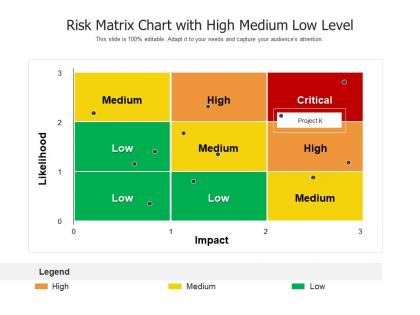
Risk matrix chart with high medium low level




Try Before you Buy Download Free Sample Product
 Impress Your
 Audience
 100%
100% Editable
 Save Hours
 of Time


Our Risk Matrix Chart With High Medium Low Level are topically designed to provide an attractive backdrop to any subject. Use them to look like a presentation pro.
People who downloaded this PowerPoint presentation also viewed the following :
Risk matrix chart with high medium low level with all 2 slides:
Use our Risk Matrix Chart With High Medium Low Level to effectively help you save your valuable time. They are readymade to fit into any presentation structure.
FAQs for Risk matrix chart with high
So you'll want to start by figuring out what could actually go wrong - like really think through your whole process. Then rate each risk by how likely it is and how badly it'd mess things up. I always do this matrix thing where you plot them out, super helpful for seeing the big picture. Focus your energy on the scary high-impact stuff first and figure out who's gonna own each one. Oh and don't forget the monitoring part! Most people set this up then never look at it again, which is honestly pointless. Check in regularly to see if anything's changed or if new risks popped up. Document it all so your team can actually follow the same approach.
So basically, quantitative uses actual numbers and data to figure out exact risk percentages. Qualitative just groups things into "high/medium/low" categories - way less precise but honestly so much faster. Go quantitative when you've got solid historical data and need exact figures for insurance stuff. For newer risks or when data's sketchy, qualitative works better. Most companies mix both approaches since they cover each other's weaknesses. Quick tip: start with qualitative to get the big picture, then dive deeper with numbers on your biggest risks. Makes the whole process way more manageable.
You definitely need stakeholders involved in risk assessment - they'll spot stuff you'd never think of. Operations people know where systems actually fail, finance sees the money side, customers feel the real impact. Honestly, if people help create the risk plan, they're way more bought in later. Get them involved early when you're identifying risks, ask for their take on how serious things are. I'd map out who's affected by what risks first - saves time later. Keep checking in with them regularly too. Different perspectives make all the difference.
Honestly, tech makes risk assessments so much faster and way more accurate. AI can crunch through massive datasets and catch patterns you'd miss completely doing it by hand. Plus automated monitoring gives you real-time updates instead of those quarterly reports that are already outdated. Data viz tools are a lifesaver for presentations - trust me, executives' eyes glaze over at spreadsheets. Start by figuring out where you're getting bogged down most. Then find tools that actually play nice with whatever systems you're already using. Otherwise you'll just create more headaches for yourself.
Honestly, the biggest mistake is treating it like some checkbox you tick off once and forget about. Teams rush through it or only look at obvious stuff. Don't get stuck analyzing forever either - I've watched companies obsess over perfect risk charts while real problems pile up. Historical data helps but won't catch new threats emerging. Oh, and definitely don't let just one department handle everything. You need different people weighing in regularly. Keep updating your assessments too. The whole thing should actually drive action, not just create more paperwork that sits in a drawer somewhere.
Quarterly reviews are your baseline, but honestly that's pretty conservative for most situations. Fast-moving industries? You'll want monthly check-ins, maybe even after big events. New regulations or market changes are huge triggers - same with launching products or entering markets. I always think of it like updating your GPS when the road conditions change. The crazier things get, the more you need to stay on top of it. Oh, and set up automatic triggers for major shifts so you're not scrambling later.
OK so first off, you'll need to hit the big regulatory stuff - OSHA for safety risks, GDPR if you're dealing with data, SOX for financial things. The main legal thing is showing "due diligence" basically that you actually tried to find and fix problems. Document literally everything because auditors are obsessed with paper trails (learned this the hard way). Try following ISO 31000 standards when you can - makes you look legit. Get your key people involved and leadership to sign off on stuff. Oh and keep detailed records of your whole process, what you found, how you fixed it. That documentation will save your butt if things go sideways later.
So basically you want a risk matrix - plot probability vs impact on a grid. High likelihood stuff goes on one axis, how much damage it'd cause on the other. Focus on the top-right corner first since that's your worst-case scenario territory. The math helps, but honestly you also gotta factor in your company's risk tolerance and any compliance headaches that might push certain things higher up the list. Oh and don't forget regulatory stuff can totally change priorities even if the numbers don't look as scary. Start with your red-zone risks and work down from there.
Honestly depends on how big your org is and what you're willing to spend. Big companies usually go with GRC platforms - MetricStream, ServiceNow, stuff like that. But if you're on a smaller team? Excel templates work fine, or maybe RiskLens if you want something fancier. Monte Carlo simulation is cool for number-heavy analysis, though it's probably way more than you need for basic risk stuff. Oh, and Monday.com has some decent risk features if you're already using it for project management. My take: don't overthink it. Pick whatever your team will actually stick with, not the shiniest tool. You can always upgrade later.
Honestly, risk assessment is like having a heads-up before things go sideways. You can actually see what might tank your plans and how probable that is – way better than just winging it. Sure, gut instinct matters, but this gives you real data to work with. Plus you'll catch opportunities hiding in plain sight. I always tell people to start small though – just map out risks for your top 3 priorities this quarter. Then use what you find to figure out where to spend your time and money. Having backup plans doesn't hurt either.
So there's a few ways to tell if your risk assessment actually worked. First thing - compare what risks you spotted versus the ones that blindsided you later. That detection rate tells you a lot. Also check if your risk ratings were accurate when stuff actually went down. Response time matters too because honestly, what's the point if you're too slow to act? Track whether people are actually using your findings to make real decisions - not just filing them away. But the ultimate test? Did it help prevent or reduce actual incidents when they hit? Start measuring this stuff now and you'll figure out what needs fixing pretty fast.
Your home country's risk playbook won't work everywhere - trust me on this one. What seems risky to you might be totally normal business practice somewhere else. Take relationship building - in some places you'll look like an amateur if you rush things instead of spending months getting to know people first. Infrastructure quality matters too, plus how often natural disasters hit and what the regulatory scene actually looks like. Communication styles are huge. Don't wing it though - find local experts who can spot the blind spots you'd never catch.
Dude, skipping risk assessment is like driving blindfolded - you're gonna hit something eventually. Financial losses, regulatory penalties, safety issues... all stuff that could've been avoided. Your stakeholders will roast you when they find out (and they always do). Without knowing what could go wrong, you can't figure out where to spend your limited time and money. Oh, and auditors hate this more than anything. Look, if you're swamped just throw together a basic risk matrix. Takes like an hour but it's way better than winging it completely.
Honestly, you've gotta weave risk assessment into your project planning right from the start - none of this "we'll figure it out later" stuff. Figure out what could go wrong during your initial scoping, then score each risk by how likely it is and how much damage it'd do. I've watched so many projects completely implode because teams thought they could wing it! Make risk check-ins part of your regular meetings and keep updating that list as things change. Oh, and actually plan for the big risks upfront - budget time and money for contingencies instead of pretending everything will go perfectly.
Honestly, just stick to a standard template - likelihood, impact, who's handling what, and when. I've seen way too many risk docs that are total garbage because people get vague about everything. Be specific with your timelines and back up those risk ratings with actual evidence. Don't just send reports to management either, everyone who needs to act on this stuff should see it. Update things as they change (which they will). The whole point is that someone should read your doc and immediately know what their next move is. Otherwise you're just creating paperwork nobody cares about.
-
Presentation Design is very nice, good work with the content as well.
-
Helpful product design for delivering presentation.
-
Excellent work done on template design and graphics.