

Sales Development Representative Playbook Powerpoint Presentation Slides





Try Before you Buy Download Free Sample Product
 Impress Your
 Audience
 100%
100% Editable
 Save Hours
 of Time


A playbook serves as a blueprint for your organization as it helps the organization by efficiently guiding them and optimizing the process. Here is a professionally designed Sales Development Representative Playbook that helps you with new SDRs onboarding process. The following playbook is helpful for organizations and Sales Managers intending to help their sales development representative come on board and learn about the organizations sales process. This playbook is divided into four major parts these parts serve as a step by step guide for the organization as they guide your organization by mapping out a blueprint for the organization. The first part includes the introduction, which provides an overview of the SDR playbook. The second part displays the entire process of sales, which highlights the onboarding process, ideal customer profile identification process, client journey, etc. The third part of the playbook displays the essential tools that enable the sales process; these tools are assessed on various metrics. In the end, the best practices for sales are shown along with a case study. Download our 100 percent editable and customizable template.
People who downloaded this PowerPoint presentation also viewed the following :
Content of this Powerpoint Presentation
Slide 1: This slide introduces Sales Development Representative Playbook. State Your Company Name and begin.
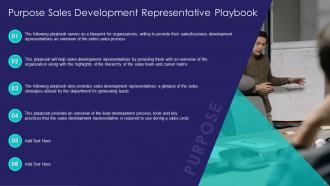
Slide 2: This slide shows Purpose of Sales Development Representative Playbook.
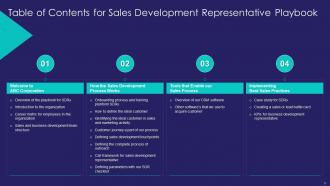
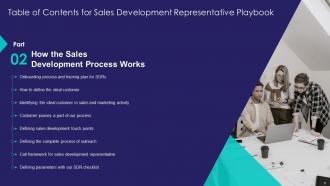
Slide 3: This slide presents Table of Content for the presentation.
Slide 4: This slide highlights title for topics that are to be covered next in the template.
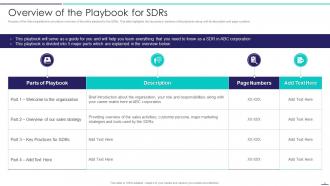
Slide 5: This slide displays overview of the entire playbook to the SDRs.
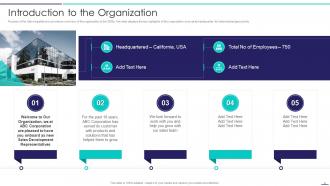
Slide 6: This slide represents key highlights of the organization such as its headquarter, its historical background etc.
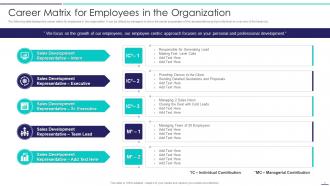
Slide 7: This slide showcases Career Matrix for Employees in the Organization.
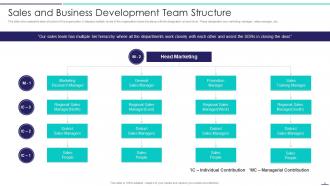
Slide 8: This slide shows Sales and Business Development Team Structure.
Slide 9: This slide highlights title for topics that are to be covered next in the template.
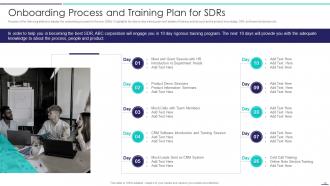
Slide 10: This slide presents Onboarding Process and Training Plan for SDRs.
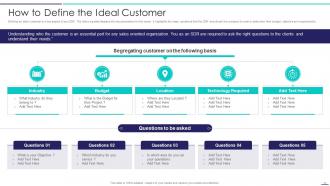
Slide 11: This slide displays major questions that the SDR should ask the prospect in order to determine their budget, objective and requirements.
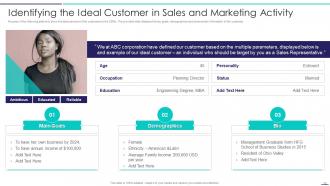
Slide 12: This slide represents Identifying the Ideal Customer in Sales and Marketing Activity.
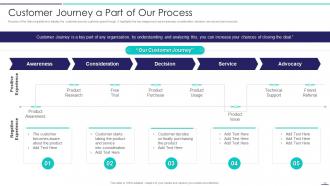
Slide 13: This slide showcases Customer Journey a Part of Our Process.
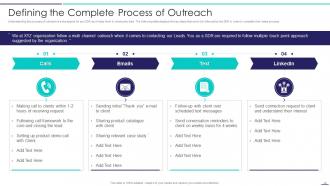
Slide 14: This slide shows Defining the Complete Process of Outreach.
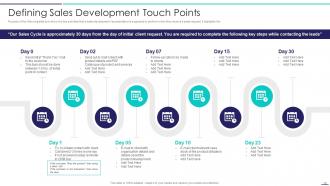
Slide 15: This slide presents key activities that a sales development representative is supposed to perform when they receive a sales request.
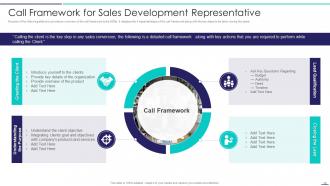
Slide 16: This slide displays Call Framework for Sales Development Representative.
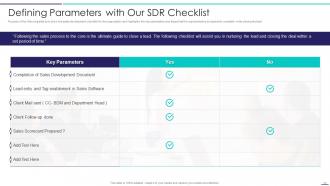
Slide 17: This slide represents Defining Parameters with Our SDR Checklist.
Slide 18: This slide highlights title for topics that are to be covered next in the template.
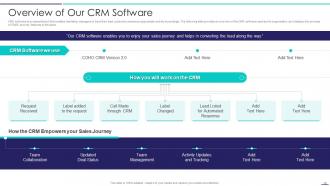
Slide 19: This slide showcases Overview of Our CRM Software that enables marketing managers to track their lead cycle.
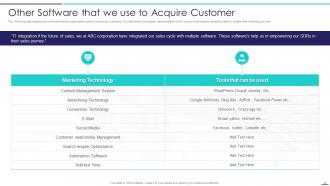
Slide 20: This slide shows Other Software that we use to Acquire Customer.
Slide 21: This slide highlights title for topics that are to be covered next in the template.
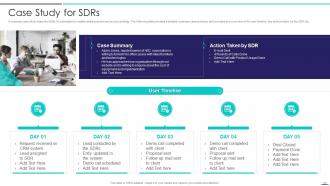
Slide 22: This slide presents case study that helps the SDRs to understand a realistic sales scenario.
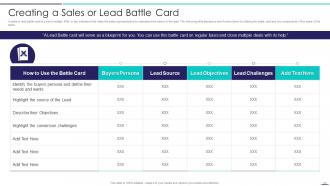
Slide 23: This slide showcases Creating a Sales or Lead Battle Card.
Slide 24: This slide highlights title for topics that are to be covered next in the template.
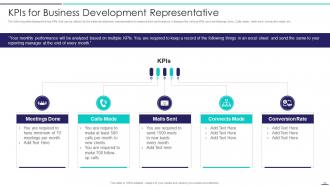
Slide 25: This slide represents KPIs for Business Development Representative.
Slide 26: This slide displays Icons for Sales Development Representative Playbook.
Slide 27: This slide is titled as Additional Slides for moving forward.
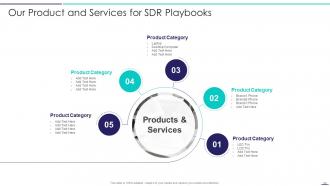
Slide 28: This slide shows Our Product and Services for SDR Playbooks.
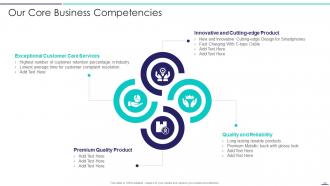
Slide 29: This slide presents Our Core Business Competencies.
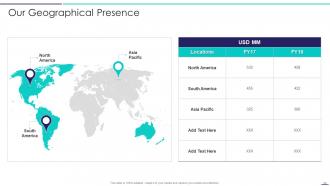
Slide 30: This slide showcases Our Geographical Presence.
Slide 31: This slide is titled as Welcome to ABC Corporation.
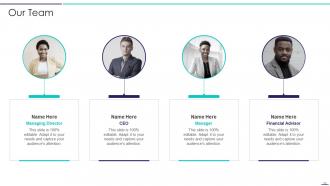
Slide 32: This is Our Team slide with names and designation.
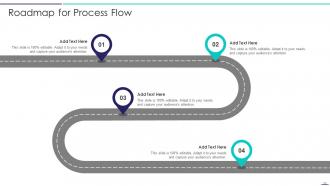
Slide 33: This slide shows Roadmap for Process Flow.
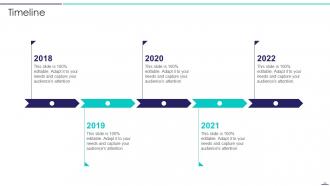
Slide 34: This is a Timeline slide. Show data related to time intervals here.
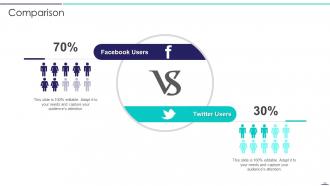
Slide 35: This is a Comparison slide to state comparison between commodities, entities etc.
Slide 36: This slide shows Post It Notes. Post your important notes here.
Slide 37: This slide depicts Venn diagram with text boxes.
Slide 38: This is a Thank You slide with address, contact numbers and email address.
Sales Development Representative Playbook Powerpoint Presentation Slides with all 43 slides:
Use our Sales Development Representative Playbook Powerpoint Presentation Slides to effectively help you save your valuable time. They are readymade to fit into any presentation structure.







FAQs for Sales Development Representative Playbook
So as an SDR, you're basically finding and qualifying leads for your sales team. Most of your day is cold calling, emailing prospects, and following up on inbound stuff. Research takes up way more time than you'd think too. You're not actually closing deals - which is honestly a relief because that's a lot of pressure. Instead, you figure out who has budget, decision-making power, and actually needs what you're selling. Getting good at asking the right qualifying questions upfront will save you from chasing people who were never gonna buy anyway. You're like the bridge between marketing interest and actual sales.
Honestly, lead qualification comes down to asking smart questions and actually listening to the answers. I used to way overthink this when I was starting out - classic mistake. Focus on their pain points, budget, who makes decisions, and timeline. Basically BANT but without sounding like a robot about it. The real trick? Figure out if they're just window shopping or if they've got a legit problem that's actually costing them. Don't do all the talking. And here's something I learned the hard way - always end with clear next steps. If someone won't even commit to a quick 15-minute follow-up call, they're probably not serious anyway.
Dude, log everything in your CRM right after it happens - don't wait until end of day when you've forgotten half the stuff. I made this mistake once and completely lost track of a really promising lead because my notes were trash. Use the same naming format for all your accounts, and actually update lead status after every call or meeting. Set those automated follow-up reminders too (seriously, use them). Oh and review your pipeline weekly - you'll start seeing patterns in what's actually working vs what isn't. Trust me, you'll be so grateful when you can find that random conversation from weeks ago instead of panicking about what you discussed.
Focus on call volume, email open rates, meetings booked, and pipeline generated. Conversion rates are huge too - track how many calls become qualified convos and how many turn into actual meetings. Activity metrics? Sure, but they're pretty useless if nothing's converting. What really matters is figuring out which activities and messaging actually work with your prospects. Honestly, I'd start with just 3-4 metrics so you don't go crazy trying to track everything. Review weekly and you'll start seeing patterns that help you tweak your approach.
Honestly, you've gotta dig into what each type of person actually cares about first. Like, a CEO just wants to hear ROI and strategic stuff in maybe 2 sentences max. But your actual users? They want to know how this helps their daily grind and don't mind longer explanations. I used to send identical messages to everyone - such a waste. Switch up your channels too: hit executives on LinkedIn, email the managers, maybe even call technical buyers since half of them ignore written stuff anyway. Build 3-4 templates per type of person, then customize based on what you know about their company. Start with your top 2-3 personas and figure out what makes them tick.
Dude, social media is clutch for prospecting. I spend like 30% of my research time scrolling through prospects' profiles before I even think about calling them. LinkedIn's the obvious choice, but honestly Twitter's goldmine for tech people - they're always sharing hot takes about their industry. Check out what they're posting about recent job moves, company news, whatever. Then when you reach out, mention something specific they shared instead of sending the same boring template to everyone. Makes such a difference. Way better than cold calling blind, you know?
Honestly, the biggest game-changer is doing like 2-3 minutes of research before you call. Check their LinkedIn, company news, whatever - so you can actually open with something that matters to them. Don't sound like a robot reading a script because people can smell that BS immediately. Ask if it's cool to chat for a few minutes early on. When they object (and they will), acknowledge it first, then pivot. Oh, and here's what most people mess up - you're not trying to close anything on that first call. Just book the next conversation with a specific time. Way less pressure for everyone.
Actually listen to what they're saying instead of just waiting for your turn to speak. Start by acknowledging their concern - like "I hear you're worried about budget" - then ask follow-up questions to get to the real issue. Here's the thing: most objections aren't actual rejections, they're just asking for more info or reassurance. When someone says "we don't have time," they usually mean they don't see the value yet. So dig deeper with stuff like "what would need to change for this to become a priority?" Then hit their specific concern with examples that actually matter to them.
Honestly, start with a solid CRM like Salesforce or HubSpot - keeps all your leads organized. Email automation is huge too, something like Outreach will save your sanity with follow-ups. LinkedIn Sales Navigator is basically mandatory for prospecting, I don't know how people do this job without it. Gong's great for call recording if you want to actually improve your pitch. Oh and get Calendly or something similar - cuts down on all that "what time works for you" back-and-forth nonsense. Just don't go crazy adding everything at once though, you'll end up more confused than productive.
Definitely follow up within 24-48 hours - you want to stay fresh in their mind. Reference something specific from your chat, like that project or problem they brought up. Generic "checking in" emails are the worst, honestly. Nobody wants those sitting in their inbox. After that, space things out about a week apart. Always bring something useful to the table - maybe an article they'd find interesting or connect them with someone who could help. Oh, and if you don't hear back after 3-4 attempts? Time to put them in your longer nurture sequence and focus on people who are actually engaging.
Ditch those pointless "checking in" emails - nobody cares. Instead, send stuff that actually helps solve their problems. Industry insights, case studies, useful tools. I'm talking 6-8 solid touches over 2-3 months, mixing emails with LinkedIn activity and maybe throw in a quick video. Honestly, timing matters way more than people think. Hit them when they're already thinking about their challenges. Watch for signals like email opens or website visits to see if they're interested. Oh, and build your sequences around their buying process, not when YOU need to hit quota. That's backwards thinking.
Honestly, stop just throwing leads over the fence and hoping for the best. Give your AEs the full story - what's bugging the prospect, their timeline, who makes decisions, everything you talked about. I do quick weekly check-ins with mine to talk strategy and upcoming deals. Also? Stay in touch after the handoff since you'll probably still be involved anyway. The SDRs crushing it at my company have shared Slack channels with their AEs and actually work together on messaging. Makes a huge difference. Help them win and they'll return the favor.
Get solid on product knowledge and your ideal customer profile first. Role-playing feels super cringey but honestly it's the best prep you'll do. Learn whatever sales framework your team uses - BANT, MEDDIC, whatever. Master your CRM and tech stack early or you'll hate yourself later. Shadow the top reps right away and record everything for review. Don't blow off the soft skills training either. Active listening and email workshops actually matter way more than you'd think. Oh, and nail down those objection handling scripts - you'll need them.
Honestly, just tackle your best leads when you've got the most energy - that's usually morning for me. Block out chunks of time for specific stuff like calls, follow-ups, admin crap. Otherwise you'll bounce around all day and get nothing done (been there). The 80/20 thing is real - most of your time should go toward actually closing deals, not busy work. Track your numbers daily so you're not just guessing what works. Each morning, I'd look at my pipeline and pick three must-dos for the day. Sounds super basic but it actually keeps you focused instead of just winging it and feeling scattered by 3pm.
Honestly, most people just blast the same boring template to everyone and wonder why nobody responds. Do like 2-3 minutes of research first - check their LinkedIn, company news, whatever. Makes a huge difference. Your follow-up timing matters too. Wait 3-5 business days between messages and actually reference what you said before. Oh, and stop talking about your product features - nobody cares. Talk about their problems instead. I'd definitely start tracking open rates by message type. You'll figure out what actually works pretty fast, and it's kind of addictive once you see the patterns.
-
Their templates are super easy to edit and use even for the one like me who is not familiar with PowerPoint. Great customer support.
-
This PowerPoint layout is very helpful from a business point of view, and it's visually stunning too! I'm so happy with this product because it has helped me understand and deliver great presentations.