


Sales Funnel Management For Better Lead Generation Powerpoint Presentation Slides





Try Before you Buy Download Free Sample Product
 Impress Your
 Audience
 100%
100% Editable
 Save Hours
 of Time


Sales pipeline management is a technique that allows you to monitor and direct the opportunities in your sales pipeline. At present, the company wants to determine the current issues in the sales pipeline and identify suitable strategies. Grab our professionally designed template on Sales Funnel Management for Better Lead Generation. It provides details on best practices to manage sales pipeline, actions for smooth functioning of the sales pipeline, key focus areas at each sales pipeline stage, a successful pipeline review structure, and ways to clean up the sales pipeline. This presentation also covers details on the challenges of the sales pipeline, the impact of sales pipeline challenges on business, and practical strategies to eliminate the obstacles. Additionally, this PowerPoint presentation provides details on various sales pipeline management tools, critical features of pipeline management tools, and critical sales management effectiveness priorities. Also, this presentation provides details on statistics of sales pipeline after strategy implementation, a dashboard showing effective management of sales pipeline, and a dashboard showing sales pipeline opportunities. Download it now.
People who downloaded this PowerPoint presentation also viewed the following :
Content of this Powerpoint Presentation
Slide 1: This slide introduces Sales Funnel Management for Better Lead Generation. State Your Company Name and begin.
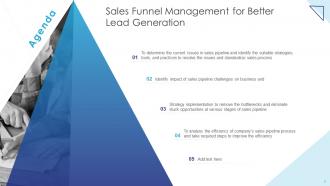
Slide 2: This slide states Agenda of the presentation.
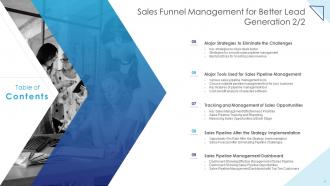
Slide 3: This slide presents Table of Content for the presentation.
Slide 4: This is another slide continuing Table of Content for the presentation.
Slide 5: This slide highlights title for topics that are to be covered next in the template.
Slide 6: This slide shows Key Pipeline Stages Aligned with Sales Process.
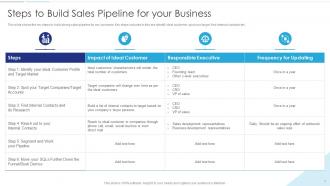
Slide 7: This slide presents Steps to Build Sales Pipeline for your Business.
Slide 8: This slide displays Best Practices to Manage your Sales Pipeline.
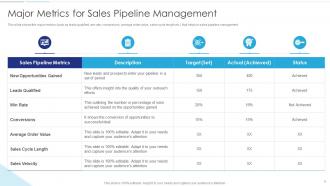
Slide 9: This slide represents Major Metrics for Sales Pipeline Management.
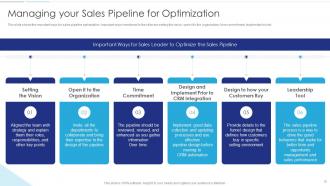
Slide 10: This slide showcases Managing your Sales Pipeline for Optimization.
Slide 11: This slide shows Review and Improve Pipeline Management.
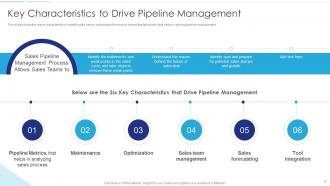
Slide 12: This slide presents Key Characteristics to Drive Pipeline Management.
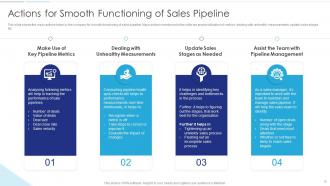
Slide 13: This slide displays Actions for Smooth Functioning of Sales Pipeline.
Slide 14: This slide highlights title for topics that are to be covered next in the template.
Slide 15: This slide represents the graph of number of deals at each stage of the funnel.
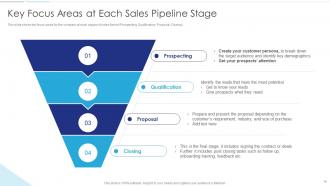
Slide 16: This slide showcases Key Focus Areas at Each Sales Pipeline Stage.
Slide 17: This slide shows Key Challenges Faced by the Company at Each Stage.
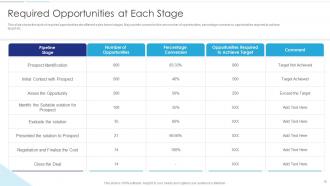
Slide 18: This slide presents Required Opportunities at Each Stage.
Slide 19: This slide shows various ways to clean up sales pipeline for smooth operations.
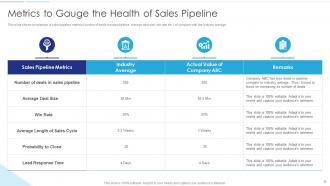
Slide 20: This slide displays Metrics to Gauge the Health of Sales Pipeline.
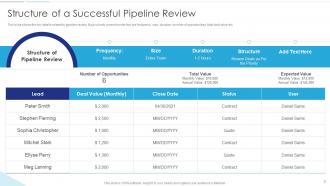
Slide 21: This slide represents Structure of a Successful Pipeline Review.
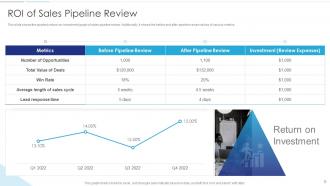
Slide 22: This slide shows the quarterly return-on-investment graph of sales pipeline review.
Slide 23: This slide highlights title for topics that are to be covered next in the template.
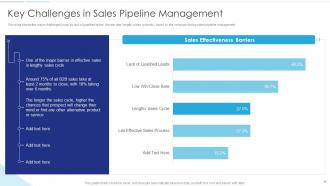
Slide 24: This slide presents Key Challenges in Sales Pipeline Management.
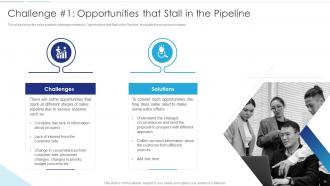
Slide 25: This slide shows the sales pipeline challenges related to ‘Opportunities that Stall in the Pipeline.
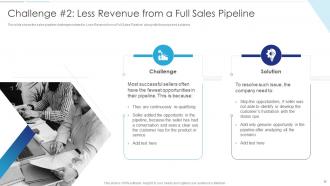
Slide 26: This slide shows the sales pipeline challenges related to ‘Less Revenue from a Full Sales Pipeline.
Slide 27: This slide displays the sales pipeline challenges related to ‘Involvement of Multiple Decision-makers.
Slide 28: This slide highlights title for topics that are to be covered next in the template.
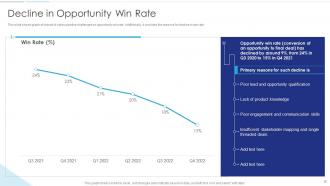
Slide 29: This slide shows graph of impact of sales pipeline challenges on opportunity win rate.
Slide 30: This slide presents graph of impact of sales pipeline challenges on overall sales of the company.
Slide 31: This slide displays Key Impacts of Poor Sales Pipeline Management.
Slide 32: This slide highlights title for topics that are to be covered next in the template.
Slide 33: This slide represents Key Strategies to Close Deals Faster.
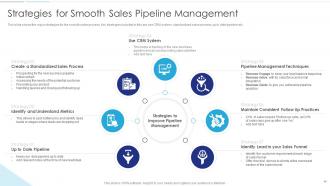
Slide 34: This slide showcases Strategies for Smooth Sales Pipeline Management.
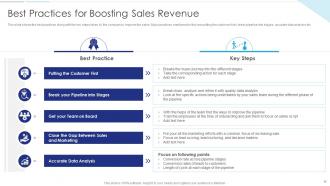
Slide 35: This slide shows Best Practices for Boosting Sales Revenue.
Slide 36: This slide highlights title for topics that are to be covered next in the template.
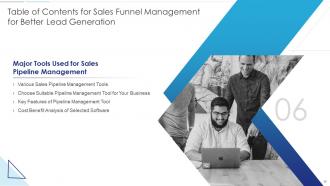
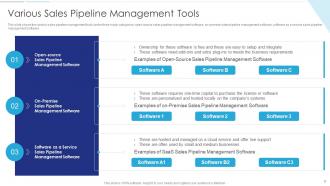
Slide 37: This slide presents Various Sales Pipeline Management Tools.
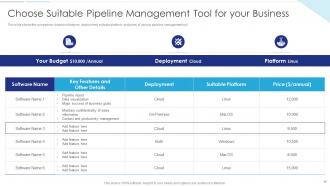
Slide 38: This slide displays Choose Suitable Pipeline Management Tool for your Business.
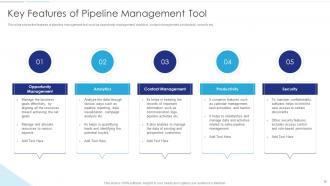
Slide 39: This slide represents Key Features of Pipeline Management Tool.
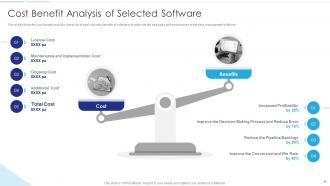
Slide 40: This slide showcases Cost Benefit Analysis of Selected Software.
Slide 41: This slide highlights title for topics that are to be covered next in the template.
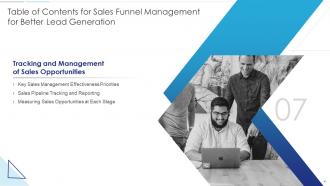
Slide 42: This slide shows Key Sales Management Effectiveness Priorities.
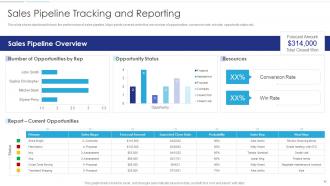
Slide 43: This slide presents Sales Pipeline Tracking and Reporting.
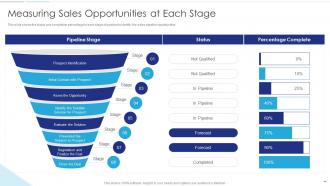
Slide 44: This slide displays Measuring Sales Opportunities at Each Stage.
Slide 45: This slide highlights title for topics that are to be covered next in the template.
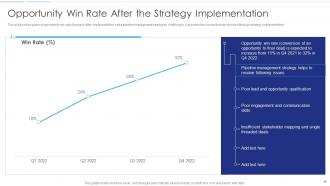
Slide 46: This slide represents Opportunity Win Rate After the Strategy Implementation.
Slide 47: This slide showcases Sales Forecast After Eliminating Pipeline Challenges.
Slide 48: This slide highlights title for topics that are to be covered next in the template.
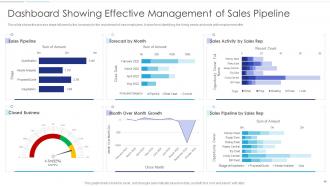
Slide 49: This slide shows Dashboard Showing Effective Management of Sales Pipeline.
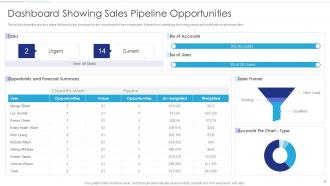
Slide 50: This slide presents Opportunity and Forecast Summary.
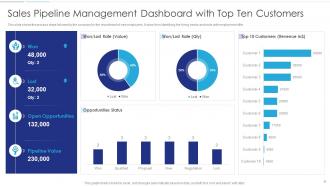
Slide 51: This slide displays Sales Pipeline Management Dashboard with Top Ten Customers.
Slide 52: This slide showcases Icons for Sales Funnel Management for Better Lead Generation.
Slide 53: This slide is titled as Additional Slides for moving forward.
Slide 54: This slide shows Post It Notes. Post your important notes here.
Slide 55: This slide contains Puzzle with related icons and text.
Slide 56: This slide showcases Magnifying Glass to highlight information, specifications, etc.
Slide 57: This is Our Target slide. State your targets here.
Slide 58: This is a Comparison slide to state comparison between commodities, entities etc.
Slide 59: This is a Timeline slide. Show data related to time intervals here.
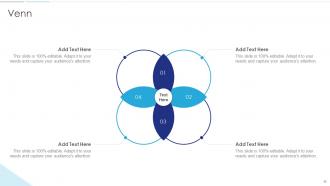
Slide 60: This slide depicts Venn diagram with text boxes.
Slide 61: This is a Thank You slide with address, contact numbers and email address.
Sales Funnel Management For Better Lead Generation Powerpoint Presentation Slides with all 66 slides:
Use our Sales Funnel Management For Better Lead Generation Powerpoint Presentation Slides to effectively help you save your valuable time. They are readymade to fit into any presentation structure.


























FAQs for Sales Funnel Management For Better Lead Generation
Sales funnels typically include awareness, interest, consideration, intent, evaluation, and purchase stages, each representing decreasing prospect volumes but increasing conversion likelihood. These stages impact conversion rates by enabling targeted messaging and resource allocation, with companies like SaaS providers and e-commerce retailers finding that optimizing each transition point significantly improves overall conversion rates, ultimately delivering higher revenue and better customer acquisition efficiency.
Businesses identify ideal customers through comprehensive data analysis, demographic profiling, behavioral tracking, purchase pattern evaluation, and customer feedback assessment. This strategic combination enables organizations to segment prospects effectively, personalize messaging at each funnel stage, and optimize resource allocation, with many companies finding that targeted approaches significantly increase conversion rates and customer lifetime value.
Content marketing educates prospects at each funnel stage through targeted blogs, whitepapers, case studies, webinars, and personalized email sequences that address specific pain points and objections. This strategic approach builds trust, demonstrates expertise, and guides leads from awareness to decision, with many organizations finding that quality content significantly shortens sales cycles while enhancing conversion rates.
Automation tools improve sales funnel efficiency by streamlining lead scoring, automating follow-up sequences, and tracking prospect behavior across multiple touchpoints. These technologies enable sales teams to prioritize high-value opportunities, reduce manual administrative tasks, and maintain consistent communication, with many organizations finding that automated workflows increase conversion rates while freeing representatives to focus on strategic relationship-building activities.
Key sales funnel metrics include conversion rates at each stage, lead velocity rate, customer acquisition cost, average deal size, and sales cycle length. These metrics enable businesses to identify bottlenecks, optimize resource allocation, and enhance performance across departments, with many organizations finding that tracking these indicators delivers improved forecasting accuracy and ultimately accelerates revenue growth.
Lead quality significantly determines funnel success by improving conversion rates, reducing sales cycles, and maximizing resource efficiency throughout each stage. High-quality leads progress faster through awareness to purchase phases, while poor leads create bottlenecks, increase acquisition costs, and drain sales team productivity, ultimately impacting revenue generation and competitive positioning.
Common sales funnel pitfalls include overcomplicating the customer journey, neglecting mobile optimization, failing to align content with buyer stages, inadequate lead nurturing sequences, and poor tracking mechanisms. These missteps often result in prospect drop-off and missed conversions, with many organizations finding that streamlined funnels focusing on clear value propositions and seamless user experiences ultimately deliver higher conversion rates.
Customer feedback optimizes sales funnels by identifying conversion bottlenecks, revealing messaging gaps, and highlighting pain points throughout the buyer journey. Through surveys, interviews, and behavioral analytics, organizations streamline their approach, refine value propositions, and enhance touchpoint experiences, with many companies finding that systematic feedback integration increases conversion rates and reduces sales cycle duration.
A/B testing enables sales teams to optimize funnel performance by comparing different approaches to messaging, pricing, landing pages, and call-to-action strategies across identical audience segments. Through systematic testing, organizations can identify which variations drive higher conversion rates, reduce drop-off points, and accelerate prospect movement, ultimately delivering improved sales outcomes and enhanced revenue generation.
Segmentation enables personalized sales funnel experiences by categorizing prospects based on demographics, behavior, purchase history, and engagement patterns, allowing tailored messaging and content delivery. Through targeted approaches, companies can deliver relevant product recommendations, customized email sequences, and stage-appropriate communications, with many organizations finding that segmented campaigns generate significantly higher conversion rates and customer satisfaction.
Re-engagement strategies include personalized email campaigns, retargeting ads, exclusive offers, educational content delivery, and direct outreach through multiple touchpoints. These approaches work by addressing specific pain points, providing additional value, and creating urgency, with many sales teams finding that strategic follow-up sequences combined with fresh messaging ultimately recovers 15-25% of dormant leads.
Social proof and testimonials enhance trust by addressing specific concerns at each funnel stage, with awareness-stage case studies building credibility, consideration-stage reviews reducing purchase anxiety, and decision-stage testimonials providing final validation. Financial services companies, healthcare providers, and SaaS businesses increasingly leverage targeted testimonials matching prospect demographics and use cases, ultimately accelerating conversions while reducing sales cycle length.
Essential sales funnel management tools include CRM platforms like Salesforce, marketing automation software such as HubSpot, analytics tools like Google Analytics, email marketing platforms, and lead scoring systems. These technologies streamline prospect tracking, automate nurturing sequences, and provide actionable insights, with many organizations finding that integrated platforms ultimately deliver higher conversion rates and enhanced sales team productivity.
Sales and marketing alignment significantly influences funnel success by ensuring consistent messaging, coordinated lead nurturing strategies, and seamless handoff processes between teams. This strategic collaboration enables organizations to deliver unified customer experiences, reduce lead conversion times, and maximize revenue potential, with many companies finding that aligned teams generate 32% higher revenue growth and improved pipeline visibility.
Bottom-funnel conversion practices include personalized outreach, addressing specific objections, offering limited-time incentives, providing social proof, and ensuring seamless purchase processes. These strategies work by building trust through testimonials, creating urgency with exclusive offers, and removing friction points, with many organizations finding that combining multiple touchpoints and follow-up sequences significantly increases closing rates.
-
Thank you for offering such helpful pre-designed templates. They are really beneficial to me in my job.
-
Mesmerized with the fantastic collection! Super sleek, relevant infographics.