


Senior management team ppt powerpoint presentation model professional





Try Before you Buy Download Free Sample Product
 Impress Your
 Audience
 100%
100% Editable
 Save Hours
 of Time


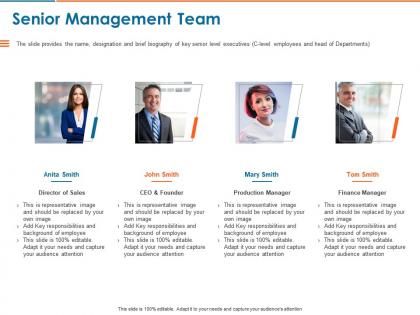
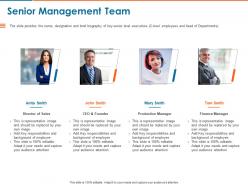
The slide provides the name, designation and brief biography of key senior level executives C level employees and head of Departments.
People who downloaded this PowerPoint presentation also viewed the following :
Senior management team ppt powerpoint presentation model professional with all 2 slides:
Don a badge of authority with our Senior Management Team Ppt Powerpoint Presentation Model Professional. It is akin to any insignia.
FAQs for Senior management team ppt powerpoint
Strategic thinking is huge - your executives need to see the whole forest, not just trees. They'll be translating big vision into actual work across teams, so communication skills are non-negotiable. Decision-making ability matters because nothing kills progress like endless meetings where nobody chooses a direction. Don't overlook emotional intelligence either - managing people and conflicts is half the job. Financial skills keep you solvent (obviously), and adaptability saves you when markets go sideways. Honestly, the best ones are those rare people who dream big but actually get stuff done.
Break down your big strategy into concrete goals each department can actually hit. Marketing's lead targets should match up with what sales needs to close - that kind of thing. Check in way more than you think you need to, trust me on this. Department heads need to see their puzzle piece AND how it fits with everyone else's. Don't assume they'll connect the dots themselves because honestly, they won't. I'd do quarterly reviews to catch when stuff starts going sideways. The whole thing falls apart if people are just doing their own thing in isolation.
Honestly? Communication makes or breaks senior teams. I've watched so many C-suites fall apart because everyone's doing their own thing in silos. Weekly leadership syncs are a must - sounds boring but trust me on this one. Fast decisions happen when people actually talk to each other regularly. Same with conflict resolution before things blow up. Your team needs to feel safe disagreeing without it getting weird or personal. Transparent discussions about real challenges, not just the sanitized version. Otherwise you'll keep wondering why nothing moves forward despite having all these smart people in the room.
First thing - people won't innovate if they're scared of messing up, so you gotta make it safe to fail. Give them actual time to experiment (Google does that 20% thing for a reason). Celebrate the smart failures, not just wins. I swear, most managers say they want innovation then freak out over every mistake! Mix up your brainstorming too - don't just ask the same people every time. Cut through red tape that kills ideas before they start. Oh, and model it yourself! Next meeting, try saying "what if we..." instead of "we've always done it this way." That shift alone changes everything.
So you'll want to set up a proper risk management system - basically identify problems, figure out how bad they could get, and keep tabs on everything. Cross-functional committees help tons (yeah, boring meetings but whatever). Assign actual people to own each risk and create clear escalation paths. Update your risk register every quarter and stress-test different scenarios. Oh and dashboards are clutch for tracking indicators in real-time. The trick is weaving this into daily ops instead of making it some separate thing nobody wants to deal with.
Look, mixed senior teams just perform better - there's tons of research backing this up. Different backgrounds mean people actually challenge bad ideas instead of everyone agreeing with the loudest person (which happens way too often tbh). You'll catch problems earlier when someone's like "wait, have we thought about this?" Plus diverse teams understand customers better and come up with more creative solutions. The financial results speak for themselves. Just don't hire for diversity then ignore those different viewpoints in meetings - that's pointless.
Honestly, start by walking the walk - if you want transparency, be transparent yourself and actually listen when people talk. Those quarterly marathon meetings? Scrap them for regular quick check-ins instead. Make sure everyone knows their role and who's calling the shots so you don't have people tripping over each other. Your team needs to feel safe disagreeing with you without getting their head bitten off. Set goals that actually make sense to everyone, not just leadership. Oh, and next meeting, ask each person what they need from the team to do their job well.
Data analytics will help you spot market trends and track the metrics that actually matter for your business. Don't get sucked into vanity metrics though - I've watched so many teams waste time on stuff that looks impressive but doesn't move the needle. Focus on understanding customer behavior and making budget calls based on real evidence instead of just winging it. Set up dashboards that give you actionable insights, not just fancy-looking charts. Honestly, half the analytics tools out there are way too complicated anyway. Start simple - pick 3-5 metrics that truly drive your business forward and track those religiously.
Honestly, most people wait way too long on this stuff. Start planning 2-3 years out from any departures you can see coming. Pick your critical roles first, then find 2-3 internal people for each spot. Build development plans around their weak areas - not just for executives but directors and VPs too. The trick is making it regular, not some annual thing you forget about. Do talent reviews quarterly where you're brutally honest about who's actually ready. Oh, and audit your current bench strength next quarter if you haven't already.
Start with whatever's driving you crazy right now - maybe it's tracking projects across teams? Monday.com or Asana are solid for that. Tableau and Power BI give you those real-time dashboards everyone talks about (honestly took me forever to set up but worth it). Slack cuts down on email hell, and Zapier connects your existing tools so they actually talk to each other. Oh, and SharePoint keeps all your docs in one place instead of scattered everywhere. Don't try to fix everything at once though - pick one pain point first.
Look, stakeholder engagement matters way more than most leaders think. Map out who actually affects your business - employees, customers, investors, that annoying regulatory body. Each group wants different communication styles too. Some love formal reports, others just want a quick coffee chat. Honestly, the worst thing you can do is only reach out when everything's on fire. Be proactive about it instead. Pick your top 3 groups and set up monthly check-ins. Trust me, it'll save you headaches later and your decisions won't fall flat.
Honestly? Your biggest headaches will be communication breakdowns and ego wars in meetings. I've watched executives act like actual children over turf battles - it's wild. Authority gets messy too when nobody knows who makes the final call. Departments love hoarding info instead of sharing, which creates these annoying silos. Fix it by setting clear communication rules and defining decision ownership upfront. Ground rules for debates are huge - enforce them or things get toxic fast. Try weekly check-ins where everyone shares their top three priorities. Sounds basic but it actually works really well for keeping people aligned.
Start with pulse surveys and regular one-on-ones - that's where you'll get the real tea about what's broken. Check your retention rates and see who's actually participating in optional stuff too. But honestly? The numbers only tell you so much. People need to feel safe calling out problems without getting burned later. Get the basics right first: decent communication, growth paths that aren't BS, and managers who don't suck the life out of everyone. Once you spot the biggest issues, fix them one by one. Oh, and definitely loop back with updates - people get cynical fast when feedback disappears into a black hole.
Honestly, CSR isn't optional anymore for senior leadership - it's built into pretty much every major decision they make. When execs are looking at new investments or partnerships, they're automatically thinking about stakeholder impact and reputation stuff alongside the numbers. Environmental impact, community relations, employee welfare - all that matters because it affects whether the business survives long-term. Some old-school leaders still drag their feet on this (you probably know the type). But if you're pitching anything to senior management, lead with how your idea handles the CSR piece. Don't just tack it on at the end.
Look, you'll want both the obvious stuff (revenue, margins) and the forward-looking signals - employee satisfaction, customer retention, market share changes. Honestly, quarterly reports are just the start since your board will obsess over those anyway. Every 6 months, do a real strategy check where you can actually admit what's broken. Pick maybe 3-5 metrics that connect to your bigger goals, not just numbers that make pretty slides. The whole point is tracking things that predict where you're headed, not just where you've been.
No Reviews