


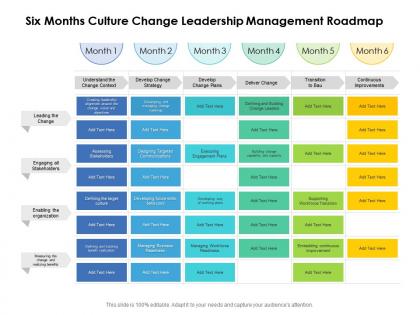
Six months culture change leadership management roadmap




Try Before you Buy Download Free Sample Product
 Impress Your
 Audience
 100%
100% Editable
 Save Hours
 of Time


A cohesive work plan is essential for achieving the desired target. Communicate your vision and lay a firm ground in front of your audience with our PowerPoint layout. Align your project milestones, budgets, deliverables, deadlines, and all the requisite information for a dynamic presentation by employing this amazingly designed Six Months Culture Change Leadership Management Roadmap. Maximize team efficiency and streamline a work plan efficiently by introducing our ready made roadmap PowerPoint theme. You can quickly establish coordination between different activities across the organization and present an insight to your colleagues by utilizing this useful business tool. Color code specific tasks, prioritize, and keep a close eye on the deadlines with the help of our eye catchy PowerPoint template. Download our Six Months Culture Change Leadership Management Roadmap for excelling at productive management.
People who downloaded this PowerPoint presentation also viewed the following :
Six months culture change leadership management roadmap with all 2 slides:
Give your audience a fulfilling experience. They will find our Six Months Culture Change Leadership Management Roadmap elevating.
FAQs for Six months culture change
Honestly, start by figuring out where you actually are vs where you want to be - most people skip this step and wonder why nothing sticks. Leadership buy-in is absolutely critical (like, if your executives aren't on board, just don't bother). You'll need clear vision, solid employee engagement, and ways to measure progress. Build your timeline backwards from your end goal. Find culture champions in different teams who can push things forward naturally. Oh, and skip the generic playbook stuff - what works at Google probably won't work at your company. Focus on communication touchpoints, training that doesn't suck, and reinforcing behaviors through your actual systems.
Start with surveys and focus groups - gotta get the real scoop from your people. Exit interviews are goldmines too since people leaving actually tell the truth. Look at formal policies vs what's really happening day-to-day because they're usually totally different stories. Check how decisions get made, communication flows, all that stuff. Don't just ask leadership what they think collaboration looks like - observe it yourself. Once you've got all this data, group it into themes and figure out the biggest gaps. Honestly, the informal behaviors will probably surprise you more than the official stuff.
Dude, leadership makes or breaks this stuff completely. If your leaders aren't actually living the new values daily, forget about it - employees can smell fake from a mile away. They watch what you DO, not what you say in meetings. Your leaders need to explain WHY things are changing and get excited about small wins along the way. I've seen too many culture changes die because leadership just paid lip service to it. Honestly? Get your leaders walking the walk first, or you're just wasting everyone's time with another corporate initiative that'll be forgotten in six months.
Build feedback loops into your roadmap from the start. Pulse surveys, focus groups, town halls - whatever captures what's really happening (not what leadership thinks is happening). Here's the thing though - collecting feedback means nothing if you ignore it. I've seen that backfire badly. Close the loop by showing how their input actually shaped decisions. Monthly cycles work well: gather input, spot the themes, adjust your approach, then tell people what changed and why. Oh and make sure you're genuinely listening, not just going through the motions. This keeps everyone engaged and shows it's their culture change, not something you're forcing on them.
Track the basics first - engagement scores, retention, and how many people actually get promoted internally. Participation rates are huge too (honestly, empty town halls tell you everything). But don't just rely on numbers. Exit interviews and pulse surveys give you the real story behind why people stay or bail. The 360 reviews help but they can be kinda political sometimes. My advice? Pick maybe 3-4 things to watch so you don't go crazy with data. Oh, and definitely get your baseline measurements before changing anything, otherwise you're flying blind when trying to see if stuff actually worked.
Figure out who's gonna get hit hardest by the changes first - that's your starting point. Look at their roles, how long they've been around, what they're scared of losing. Here's the thing though: the people complaining loudest aren't always your real problem. Watch out for the quiet ones who just smile and nod. Get the skeptics involved in planning stuff, don't just steamroll them. Be straight about what's happening and why it actually helps THEM, not just the company. Oh, and celebrate small wins early - people need to see it's working. Create ways for them to complain without feeling stupid about it.
Honestly, you've gotta get super specific about what those values actually mean day-to-day. Like, don't just say "integrity" - spell out the exact behaviors you want to see. Then weave that stuff into everything: who you hire, how you review people, what gets rewarded. Oh, and skip the motivational posters - nobody cares about those. Your leadership team needs to walk the walk because people notice everything they do. I've seen too many companies where the CEO preaches teamwork then throws people under the bus in meetings. Celebrate the good stuff when it happens and call out specific examples.
You've gotta match your communication to where people are emotionally. Early on, it's all about the "why" - town halls, leadership speeches, repeating the message until you're sick of it. The middle phase is brutal (this is where most companies totally mess up) because now you're getting pushback. Two-way conversations become critical here. People need to vent, ask questions, feel heard. Once you hit the later stages, flip to celebration mode - success stories, recognizing wins, reinforcing what's working. Don't just blast the same message for months. That's communication malpractice, honestly.
Kotter's 8-Step Process is probably your best bet - breaks things down into clear phases from building urgency to making new behaviors stick. The Culture Map by Erin Meyer is solid too, especially if you're working with international teams (seriously changed how I think about global projects). Journey mapping works great for visual people. Sometimes though? Just grab a whiteboard and hash it out with everyone in the room. Gantt charts can help track milestones if you're into that. Pick whatever clicks with your team and don't overthink it - consistency matters more than finding the "perfect" tool.
Build your change team with people from everywhere - different departments, backgrounds, seniority levels. When designing new stuff, always ask "who are we leaving out?" and run ideas by your employee resource groups first. I've watched so many projects crash because they only talked to the same leadership circle. Use different communication channels so everyone actually gets the message. Oh, and create safe ways for people to point out your blind spots as you go - trust me, you'll have them. The key is baking this thinking into every step, not slapping it on at the end like an afterthought.
Ugh, it's because everyone's stuck in their own bubble now. Those random coffee chats and hallway bumps? That's where culture actually happens - not in scheduled meetings. When people work from home, everything gets so formal and planned out. Hard for new vibes to catch on that way. Plus without seeing faces, everyone interprets stuff differently. Trust builds way slower over video calls too, which honestly makes sense. You've gotta talk more during changes - like, way more than feels normal. Set up casual hangout times where people can actually digest what's happening together instead of just getting announcements.
Honestly, it's pretty simple - people stick around when they actually feel connected to where they work. If your culture shift makes employees feel heard and valued, engagement goes way up. But screw it up by ignoring what your team wants? They'll mentally check out first, then bail completely. The psychology makes sense though - you're literally changing someone's daily experience at work. Start by getting your people involved in shaping what this new culture should look like. Don't just tell them what's changing. Authentic leadership matters way more than most companies realize, and when values actually align, people genuinely care about their work again.
Look at Netflix - they could've just stuck with mailing DVDs but completely reinvented themselves around streaming instead. Microsoft did something similar under Satella, ditching their whole "we know everything" vibe for more of a learning culture (sounds corporate but it actually worked). Then there's Adobe switching from one-time purchases to subscriptions by focusing everyone on keeping customers happy, not just making sales. Honestly, the key thing isn't just saying you have new values. You've gotta actually change how people get promoted and what behaviors you reward every day.
Honestly, tech can make or break culture change - I've watched it go both ways. Slack, feedback apps, all that stuff? Game changers when done right. But just throwing new platforms at people without context is asking for trouble. Had a friend whose team basically staged a quiet rebellion over some forced system rollout. Made everything worse for months. Pick tools that actually fit what you're trying to build culture-wise. Get people pumped about how it'll genuinely help them, not just because leadership says so. The "why" matters way more than the "what."
You've gotta stay consistent with reinforcement - check-ins, feedback loops, celebrating when people actually do the new stuff. Leadership can't stop modeling it even when it feels like you're beating a dead horse. Make your performance reviews, team meetings, recognition programs all line up with what you're trying to build. Honestly, I've watched so many of these things crash and burn because leaders get bored after six months and chase something shiny. Build it into your regular stuff - monthly meetings, quarterly reviews, annual planning. Don't treat culture like a side project.
No Reviews