

Smart contracts blockchain powerpoint presentation slides





Try Before you Buy Download Free Sample Product
 Impress Your
 Audience
 100%
100% Editable
 Save Hours
 of Time


Showcase the working of a distributed ledger with our content ready Smart Contracts Blockchain PowerPoint Presentation Slides. This topic-specific ledger technology and blockchain presentation deck is also useful to present the uses of a distributed ledgers such as create and transfer ownership of the assets. Make your team aware of how smart contracts are changing the foundation of accounting with the help of peer to peer network PowerPoint graphics. The blockchain technology presentation deck includes a set of visually appealing PowerPoint templates such as agenda, introduction, distributed ledger introduction & working, smart contract, privacy, use cases- letter of credit, corporate debt & bond, industrial blockchain benefits, limitations, etc. Our great collection of topic-specific blockchain technology PPT visuals will help you to create an effective business PowerPoint presentation. Accounting professionals can use this ready to use distributed ledger technology PPT visuals to demonstrate the digital system of recording transactions. So, download the visually appealing digital ledger PowerPoint presentation deck now to attract the attention of your audience. Direct their focus with our Smart Contracts Blockchain Powerpoint Presentation Slides. Get all forces acting in harmony.
People who downloaded this PowerPoint presentation also viewed the following :
Content of this Powerpoint Presentation
Slide 1: This slide introduces Smart Contracts Blockchain. State Your Company Name and begin.
Slide 2: This is an Agenda slide. State your agendas here.
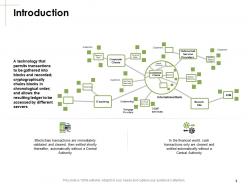
Slide 3: This slide shows Introduction with related diagram.
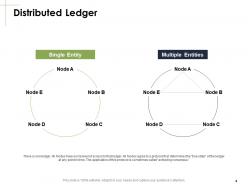
Slide 4: This slide presents Distributed Ledger with single and multiple entities.
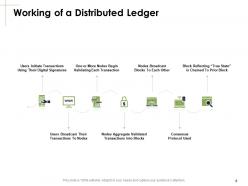
Slide 5: This slide displays Working of a Distributed Ledger with related icons and text.
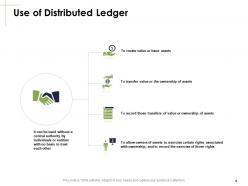
Slide 6: This slide represents Use of Distributed Ledger to- Create Value Or Issue Assets, Transfer Value Or The Ownership Of Assets, Record Those Transfers Of Value Or Ownership Of Assets, Allow Owners Of Assets To Exercise Certain Rights Associated With Ownership, And To Record The Exercise Of Those Rights.
Slide 7: This slide showcases Smart Contract with related imagery.
Slide 8: This slide shows Privacy with related icons.
Slide 9: This slide presents Use cases– Letter of Credit with Intro, benefits etc.
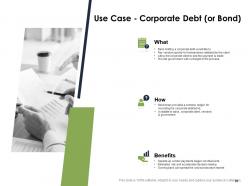
Slide 10: This slide represents Use Case - Corporate Debt (or Bond) with categories as- What, How, and Benefits.
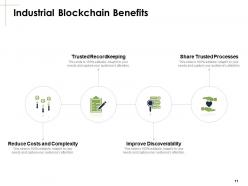
Slide 11: This slide showcases Industrial Blockchain Benefits as- Reduce Costs and Complexity, Trusted Recordkeeping, Improve Discoverability, Share Trusted Processes.
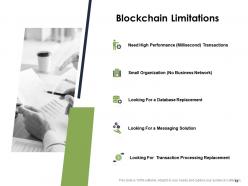
Slide 12: This slide shows Blockchain Limitations describing- Need High Performance (Millisecond) Transactions, Small Organization (No Business Network), Looking For A Database Replacement, Looking For A Messaging Solution, Looking For Transaction Processing Replacement.
Slide 13: This slide displays Smart Contracts Blockchain Icons.
Slide 14: This slide is titled as Additional Slides for moving forward.
Slide 15: This is Our Mission slide with related imagery and text.
Slide 16: This is About Us slide to show company specifications etc.
Slide 17: This is Our Team slide with names and designation.
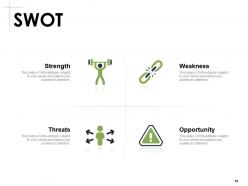
Slide 18: This is a SWOT slide. Show your firm's Strength, Weakness, Opportunity, and Threats here.
Slide 19: This is a Financial slide. Show your finance related stuff here.
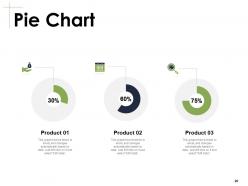
Slide 20: This slide displays Pie Chart with data in percentage.
Slide 21: This is a Thank You slide with address, contact numbers and email address.
Smart contracts blockchain powerpoint presentation slides with all 21 slides:
Use our Smart Contracts Blockchain Powerpoint Presentation Slides to effectively help you save your valuable time. They are readymade to fit into any presentation structure.










FAQs for Smart contracts blockchain
Dude, smart contracts cut out all the middleman BS and just run automatically when conditions hit. No more waiting for approvals or chasing people down for payments. Everything's transparent too - like, everyone sees the exact same terms so there's way less "wait, that's not what we discussed" drama. Once they're live, nobody can mess with them either. I'd honestly start with something simple like automated invoicing before going crazy with it. They're perfect for payments, supply chain stuff, basically anything that repeats. Total game-changer once you get the hang of it.
So smart contracts cut out all the middlemen and remove human error from deals. Once conditions are met, they execute automatically - no "oops I forgot" or sketchy manipulation. The code can't be changed after deployment, which is honestly pretty reassuring. Everything gets recorded on the blockchain too, creating this permanent record that's super hard to fake or mess with. Think of it like having a robot lawyer that never sleeps or gets bribed lol. Just make sure your contract logic is rock solid before you deploy it, because there's no going back after that.
So basically you write your code, compile it, then send it to the blockchain with some transaction fees. Network validators will process everything and give your contract a unique address - like its permanent home. Once it's confirmed, boom, your contract's live and can't be changed. Definitely test on a testnet first though, mainnet mistakes are expensive and pretty much permanent. You'll need some crypto for gas fees obviously. Honestly I'd start super simple and maybe use Hardhat or Truffle to make your life easier. Those frameworks handle a lot of the annoying setup stuff for you.
Solidity's your best bet to start with - it's everywhere on Ethereum and reads like JavaScript, so not too bad to pick up. Rust is getting huge on faster chains like Solana, but honestly that's more advanced stuff. There's also Vyper if you like Python vibes, though barely anyone uses it compared to Solidity. Go and JavaScript show up depending on what blockchain you're working with. I'd just focus on Solidity first though - way more tutorials and people to help when you inevitably get stuck on something dumb.
You can build compliance checks right into the smart contract code - stuff like KYC verification or transaction limits get checked automatically before anything executes. It's like having a digital bouncer working 24/7. Pretty cool concept, honestly. The contract can pause sketchy transactions or generate reports without human intervention. Here's the catch though - regulations are different everywhere and they keep changing. So you'll need to update your contracts regularly. And definitely get a lawyer involved when you're writing the logic. I've seen too many people assume they're compliant when they're really not.
Finance and insurance are no-brainers - they're already automating everything anyway. Supply chain's massive too since you can ditch all that paperwork and track stuff end-to-end. Real estate's wild because there are so many middlemen taking cuts right now. Healthcare's tricky with all the privacy rules, but automated claims would be game-changing. Oh, and gaming's exploding with NFTs and royalty stuff - honestly didn't see that coming a few years ago. I'd focus on whatever you've got that uses tons of intermediaries or has messy multi-party deals.
Honestly, smart contracts don't replace regular legal contracts - they just handle specific automated parts. You'll still need traditional agreements for the big picture stuff, dispute resolution, all that. The smart contract is more like... an automated system that executes certain things when conditions are met. Like releasing payments automatically. Your legal contract still sets the overall rules. Courts are kinda scrambling to figure out what happens when these things break or get hacked though. Pretty messy situation right now. I'd definitely pair any smart contract with solid traditional legal docs to cover yourself.
Smart contracts are basically stuck once deployed - bugs and all. Security holes happen way more than you'd think, and hackers are always prowling for weak spots. No flexibility either, which honestly gets annoying fast. Disputes? Forget about getting help from anyone. Gas fees can randomly skyrocket too (learned that one the hard way). Regulations are still a mess, so legal issues pop up. My take: audit everything multiple times, test with small amounts first, and have an exit strategy ready. Trust me on the backup plan thing.
So smart contracts are like the engine that makes DeFi work - no banks needed. They automatically handle lending, borrowing, trading, all that stuff when certain conditions hit. Picture a vending machine but for finance (weird analogy but it works lol). Interest calculations, liquidity pools, trades on decentralized exchanges - they manage everything. You keep control of your money the whole time though, which is honestly the best part. Check out Uniswap or Aave if you want to see how they actually work in practice.
So oracles are like data messengers for smart contracts. Blockchains can't access outside info on their own - no stock prices, weather updates, sports scores, whatever. That's where oracles come in. They grab this external data and deliver it to your contracts so everything actually works. Pretty essential stuff, but here's the thing - you're trusting these third parties with your data flow. That can get sketchy fast. If you're building something important, definitely use multiple oracle sources. Don't put all your eggs in one basket, you know?
Your contract won't execute if you skimp on gas fees - literally just gets rejected and you still lose the fee (which sucks). Higher gas prices get miners to prioritize your transaction faster. When the network's busy, expect to pay way more for decent execution times. Complex contracts eat more gas since they require more computations. Also your contract's code complexity matters a lot here. I'd definitely run gas estimation tools first before deploying anything. Trust me on this one - saves you from nasty surprises and failed transactions that'll make you want to throw your laptop.
Yeah absolutely get an audit if you're handling real money. Security firms go through your code hunting for bugs like reentrancy attacks, overflow problems, that kind of stuff. They use automated tools plus manual reviews to catch edge cases you missed. Takes longer than you think though - plan for it early because you'll need time to fix whatever they dig up. The report they give you breaks down issues by how serious they are. Honestly some of these vulnerabilities are pretty sneaky, so it's worth the cost if users are trusting you with their funds.
So there's a few ways to tackle this. Layer 2s like Polygon or Arbitrum are honestly your best shot - they process stuff off-chain then bundle it all together. Way more efficient. You could also clean up your contract code, use better data structures to cut gas costs. Sharding splits the network into chunks so more transactions happen at once, but that's more complicated. Most devs I know are just going straight to layer 2s these days since they actually work. I'd figure out which one matches what you're building first.
Dude, smart contracts have gotten SO much better since the early Ethereum days. Gas fees aren't completely insane anymore, thank god. Cross-chain stuff actually works now, and the dev tools don't make you want to throw your laptop out the window. AI integration is gonna be massive - I'm honestly more excited about that than the regulatory stuff everyone keeps talking about. Layer 2s like Polygon are way cheaper to mess around with if you wanna learn. IoT integration could be wild too, once they figure out the oracle problems. Start with Solana or Polygon though - mainnet Ethereum will still murder your wallet.
Look, there's actually some really solid examples out there. Uniswap's processed billions in automated trades without banks getting involved. AXA did this cool thing with flight insurance - delays trigger automatic payouts. Walmart uses smart contracts to track food from farms to stores, which is pretty smart when you think about contamination scares. OpenSea basically created the whole NFT art marketplace boom (wild times). Finance has definitely adopted them the most though. When you're pitching this to your team, stick to these real examples instead of just talking about potential benefits. The actual numbers are way more convincing than theoretical stuff.
-
Very well designed and informative templates.
-
Helpful product design for delivering presentation.