


Présentation PowerPoint de la proposition d'entreprise solaire




Try Before you Buy Download Free Sample Product
 Impress Your
 Audience
 100%
100% Editable
 Save Hours
 of Time


Afin de faire fonctionner une entreprise de manière fluide, il est obligatoire d'acquérir les meilleurs services qui aident à atteindre les objectifs et les objectifs souhaités. Il existe différents types de services dont un acheteur a besoin pour stabiliser l'entreprise et sa réputation sur le marché. Chaque autre enthousiaste des affaires veut amener son entreprise au niveau supérieur qui est reconnu par les parties prenantes ainsi que par les clients. Sur ce marché très concurrentiel, il est assez difficile de fixer une référence dans l'industrie, et pour y faire face, une entreprise a besoin de meilleures ressources et fournitures. Il n'est pas facile de construire l'entreprise et d'exécuter le projet sans utilisation appropriée des services. Pour que cela se produise facilement, l'organisation fait appel au meilleur fournisseur de services qui s'engage à leur fournir les solutions qui remplissent leurs objectifs prédéterminés de l'entreprise. Rendez vos services bénéfiques pour l'organisation du client en utilisant nos diapositives de présentation PowerPoint de proposition de services commerciaux spécifiques au sujet. Présentez l'équipe de vos professionnels dédiés qui soutiennent le client dans la gestion efficace de leur projet. Pour faire une première excellente impression sur les clients, vous pouvez concevoir une lettre de couverture époustouflante qui inclut un résumé de la présentation de votre entreprise et de ses services. Présentez les services que vous offrez aux clients, comme le conseil, la recherche, les PDF de conception, le référencement et la gestion des comptes de médias en ligne. Avec l'aide de cette mise en page de proposition de service d'entreprise PPT attrayante, vous pouvez dépeindre les problèmes critiques auxquels votre client est confronté. En plus de cela, vous pouvez mettre en évidence vos solutions qui aident les clients à résoudre ces problèmes. Lors de la mention des détails du projet, assurez-vous de ne pas vous écarter du sujet. Au lieu de cela, gardez les informations simples et facilement compréhensibles par vos clients potentiels. Par conséquent, téléchargez notre jeu complet de propositions d'entreprise PPT prêt à l'emploi pour votre entreprise et ses stratégies à l'intention des clients d'entreprise potentiels afin de saisir une nouvelle opportunité d'affaires.
People who downloaded this PowerPoint presentation also viewed the following :
Contenu de cette présentation Powerpoint
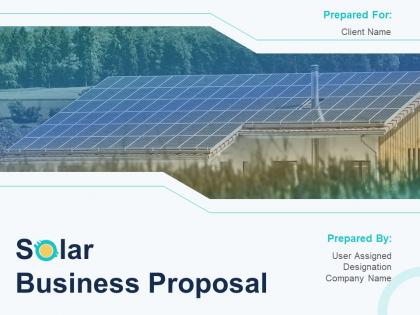
Diapositive 1 : Cette diapositive présente la proposition commerciale solaire. Indiquez le nom de l'entreprise, l'utilisateur assigné, le nom du client.
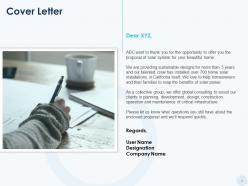
Diapositive 2 : Cette diapositive affiche la lettre de présentation.
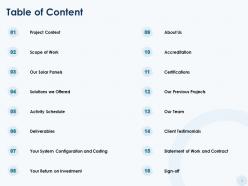
Diapositive 3 : Cette diapositive montre la table des matières de la présentation.
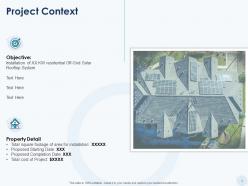
Diapositive 4 : Cette diapositive affiche le contexte du projet.
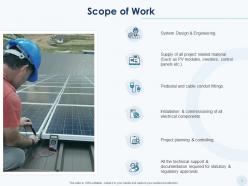
Diapositive 5 : Cette diapositive décrit la portée des travaux.
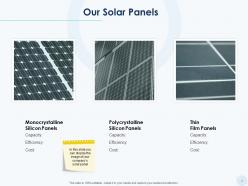
Diapositive 6 : Cette diapositive affiche nos panneaux solaires avec leur capacité, leur efficacité et leur coût.
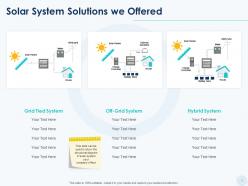
Diapositive 7 : Cette diapositive présente les solutions de système solaire que nous avons proposées. Cette diapositive peut être utilisée pour montrer le diagramme structurel du système solaire proposé par votre entreprise.
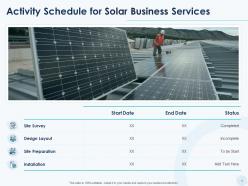
Diapositive 8 : Cette diapositive décrit le calendrier d'activité pour les services d'installation de panneaux solaires.
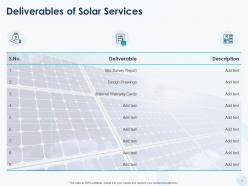
Diapositive 9 : Cette diapositive présente les livrables des services solaires.
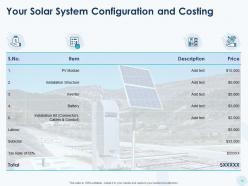
Diapositive 10 : Cette diapositive décrit la configuration et le coût de votre système solaire.
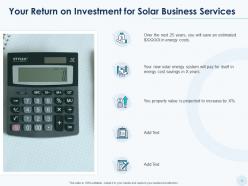
Diapositive 11 : Cette diapositive montre votre retour sur investissement pour les services d'installation de panneaux solaires.
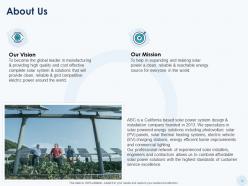
Diapositive 12 : C'est la diapositive À propos de nous pour présenter les spécifications de l'entreprise.
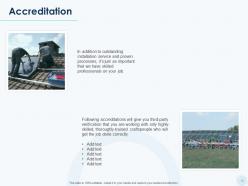
Diapositive 13 : Cette diapositive présente les accréditations.
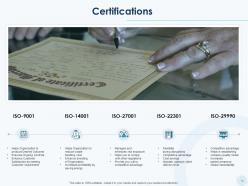
Diapositive 14 : Cette diapositive montre les certifications.
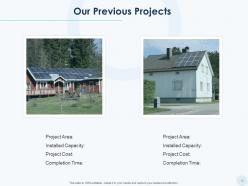
Diapositive 15 : Cette diapositive décrit nos projets précédents.
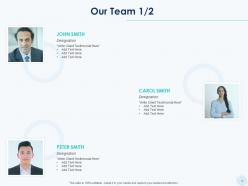
Diapositive 16 : C'est la diapositive Notre équipe avec les noms et les désignations.
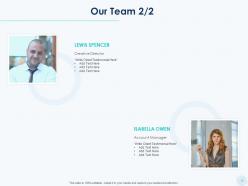
Diapositive 17 : C'est la diapositive Notre équipe avec les noms et les désignations.
Diapositive 18 : Cette diapositive affiche les témoignages clients.
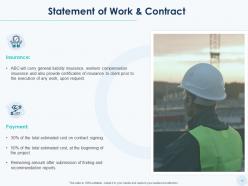
Diapositive 19 : Cette diapositive affiche l'énoncé des travaux et le contrat.
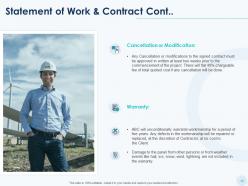
Diapositive 20 : Cette diapositive est la suite de l'énoncé des travaux et du contrat.
Diapositive 21 : C'est la diapositive de signature.
Diapositive 22 : C'est la diapositive Contactez-nous avec l'adresse, le numéro de contact et l'adresse e-mail.
Diapositive 23 : Cette diapositive est intitulée Diapositives supplémentaires pour aller de l'avant.
Diapositive 24 : C'est la diapositive Notre mission avec la mission, la vision et les objectifs.
Diapositive 25 : Cette diapositive montre le processus de feuille de route.
Diapositive 26 : Cette diapositive montre également le processus de feuille de route.
Diapositive 27 : Cette diapositive décrit le processus de feuille de route.
Diapositive 28 : C'est la diapositive du plan 30 60 90 jours.
Voici la présentation PowerPoint de la proposition d'entreprise solaire avec les 28 diapositives : 1. Titre de la présentation 2. Qui sommes-nous ? 3. Notre mission 4. Nos services 5. Nos produits 6. Nos clients 7. Nos partenaires 8. Nos réalisations 9. Notre équipe 10. Notre expertise 11. Nos avantages concurrentiels 12. Nos objectifs 13. Notre plan d'action 14. Notre modèle d'affaires 15. Notre stratégie de marketing 16. Notre stratégie de vente 17. Notre stratégie de financement 18. Notre plan de développement 19. Notre plan de croissance 20. Notre plan d'expansion 21. Notre plan de durabilité 22. Notre plan de gestion des risques 23. Notre plan de gestion des ressources humaines 24. Notre plan de gestion des opérations 25. Notre plan de gestion financière 26. Notre plan de gestion de la qualité 27. Notre plan de gestion de l'innovation 28. Conclusion
Utilisez nos diapositives de présentation PowerPoint de proposition d'entreprise solaire pour vous aider efficacement à économiser votre temps précieux. Elles sont prêtes à s'intégrer dans n'importe quelle structure de présentation.

 Click here to view PDF
FAQs for Solar business proposal
For your solar proposal, start with a solid site assessment - check their energy usage and see what they actually need. Then map out the system design with panel layout and capacity specs. Cost breakdown is crucial - break down equipment, installation, the whole thing. Most people care about financing options and projected savings more than the tech specs, honestly. Timeline matters too. Oh, and permits and warranties - clients always circle back to ask about those if you don't mention them upfront. Strong ROI calculations usually close the deal. Toss in some local references if you've got them.
Look, market analysis basically shows clients you actually know your stuff instead of just winging it. I always include local energy costs, what competitors are charging, regional solar adoption rates - all that good data. Shows you've done the homework, you know? It's honestly like showing your work in math class but way more profitable. You can then customize your whole pitch around whatever specific problems they're dealing with in their area. Use all that research to back up your pricing and timeline. Makes your solution look like the obvious smart move given what's happening in their market right now.
Okay so investors always want to see three main financial models. Cash flow projections are huge - show monthly revenue and expenses for 5 years because they'll tear apart your numbers. Build an IRR and NPV analysis too. Here's the thing though - create best case, realistic, and conservative scenarios since they already think you're being way too optimistic anyway lol. Your break-even analysis and payback period matter a lot. Oh and make sure you can actually defend all your assumptions when they start grilling you during the pitch!
Look into three key things: permits, interconnection stuff, and zoning rules. City/county sites usually have their solar permitting info - though some are way easier to navigate than others, which is honestly annoying. Check what your utility charges for hooking up to the grid and their net metering rules too. Those fees can really mess with payback timelines. HOAs are another headache if they apply. I'd make a quick checklist for each area you're working in. Makes it easier to spot problems early instead of getting surprised later. Nothing worse than thinking a project's good to go and then hitting some random local restriction.
Honestly, most solar companies sound identical when they pitch - it's annoying as hell for customers. Pick one thing you're actually better at than your competitors and hammer that home. Maybe it's faster installs, better financing, or top-tier equipment. I'd think about specializing too - like historic homes or commercial stuff where you can build real expertise. Your local rep matters way more than flashy marketing anyway. Oh, and referrals will be your bread and butter. Don't try to be everything to everyone. Just nail whatever makes you different.
Definitely add an environmental section with hard numbers - CO2 saved, equivalent trees planted, cars off the road. Clients eat that stuff up. I'd compare it to whatever energy they're using now since the difference is usually pretty dramatic. Oh, and if you're doing ground-mount, mention any land/wildlife stuff upfront. Better to address it yourself than have them bring it up later. Being honest about small downsides actually makes you look more credible anyway. The data really sells itself once people see those comparisons.
Dude, customer education literally makes or breaks solar deals. Most people don't know jack about how solar works or the financing stuff. They hear "solar panels" and either think it's too expensive or get lost in all the technical BS. I've watched so many good leads just disappear because the salesperson assumed they knew way more than they actually did. You need to build education right into your process - like actually explain things step by step. Oh and make sure you've got simple calculators they can mess around with to see their savings. Trust me, if they can't explain it to their spouse later, you're screwed.
Dude, battery storage changes everything for solar sales. Your customers get actual energy independence now, not just cheaper bills. Systems work during blackouts and store extra power for nighttime - way stronger selling point. Battery prices have dropped like crazy too, so your ROI numbers look amazing compared to 2022. The smart inverter tech is pretty sweet for energy management stuff. Honestly, I'd probably oversell this angle a bit because most basic solar guys can't compete with full storage solutions. Makes you stand out big time.
Track your ROI and payback period first - those numbers matter most when people ask how it's going. Energy cost savings compared to what you paid before is huge too. For the actual system, watch your energy production vs what they promised, plus uptime and maintenance costs. Oh and carbon reduction looks good in reports if your company's into that stuff. Honestly, just set up a monthly dashboard so you're not digging for data every time your boss asks. Way easier than scrambling around later.
Dude, you NEED to team up with local government or NGOs for your solar thing. Seriously makes all the difference. They've got the regulatory know-how and community connections you don't have. Plus people actually trust them, which helps a ton. When the mayor's office backs you? Permitting becomes way easier. You'll also get access to grants you probably didn't even know existed. Oh and the community buy-in is huge - nobody wants to fight city hall, you know? Just figure out which groups care about the same stuff - jobs, environment, whatever. Then pitch them on what's in it for them too.
Start with the federal ITC - that's 30% back until 2032, which is honestly insane. Your state probably has rebates too, plus net metering so you can sell power back to the grid. Don't sleep on utility company incentives either, though those change all the time so you gotta check regularly. Property tax exemptions are another thing to look into depending where you live. Oh, and make a simple sheet showing all the stacked savings together - the combined numbers look way better than individual ones. Trust me on that.
Dude, stories are everything with solar sales. Don't lead with all the technical crap - nobody cares about kilowatts upfront. Start with something like "my last client went from $300 electric bills to $50" and watch their eyes light up. That's when it clicks for them. Our brains are just wired to connect with stories first, then we'll actually listen to your numbers. Help them picture opening that tiny utility bill, or honestly just feeling good about helping the planet (if they're into that). *Then* hit them with your ROI data once they're already sold emotionally.
Don't go generic - that's the kiss of death. Actually customize everything for their specific house and energy situation, not just a copy-paste job. Be honest about the money stuff too. If you oversell those payback numbers, they'll see right through it and you're done. Most people don't care about all the technical specs anyway - they just want to know it works and saves cash. Oh, and whatever timeline you give them, make sure it's real. Nothing worse than promising something you can't deliver. Focus hard on that site assessment part and throw in actual photos of their roof if you can swing it.
Start with the money stuff - show them the savings and when they'll break even. That's literally all they care about at first. Tell it like a story: here's what you're spending now, here's my solution, here's how much you'll save, then when we can get it done. I always stick the ROI calculation right at the top because executives will skip everything else anyway. Throw in some visuals for the system layout and use bullet points to break things up - these proposals get crazy wordy. Oh, and definitely add a "what's next" section at the end so there's no confusion about next steps.
You want case studies that actually match your prospects' situation - same region, similar energy usage, that kind of thing. Manufacturing companies are perfect if they've got solid ROI numbers, like that 40% energy cost reduction I saw from a solar install (timeline data is clutch too). Retail chains work really well since everyone gets how they operate. Honestly though, don't just grab whatever success stories you can find. Business size matters, location matters, energy needs definitely matter. When everything lines up right, prospects can actually picture themselves getting the same results. Makes your job way easier.
-
Enough space for editing and adding your own content.
-
Easily Understandable slides.
-
Thanks for all your great templates they have saved me lots of time and accelerate my presentations. Great product, keep them up!
-
Qualitative and comprehensive slides.