


SPANCO Phases Of Sales Process Training Ppt




Try Before you Buy Download Free Sample Product
 Impress Your
 Audience
 100%
100% Editable
 Save Hours
 of Time


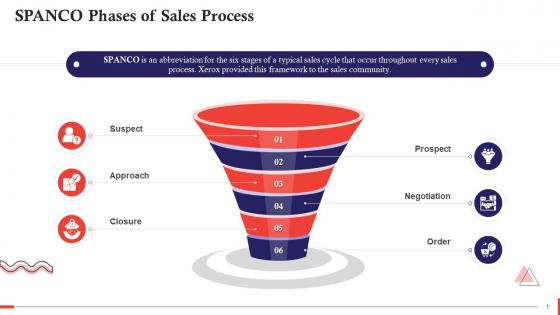
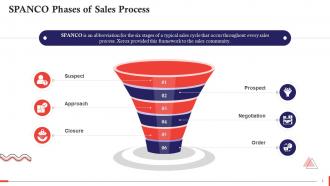
This slide describes the SPANCO Suspect Prospect Approach Negotiate Closure Order phases of the sales process. It emphasizes that SPANCO is an abbreviation for the six stages of a typical sales cycle, which occur throughout the entire sales process. Xerox provided this framework to the sales community.
People who downloaded this PowerPoint presentation also viewed the following :
SPANCO Phases Of Sales Process Training Ppt with all 16 slides:
Use our SPANCO Phases Of Sales Process Training Ppt to effectively help you save your valuable time. They are readymade to fit into any presentation structure.







FAQs for SPANCO Phases Of Sales
So SPANCO breaks down like this: Suspect, Prospect, Analysis, Negotiation, Close, Order. Basically your whole sales journey mapped out. Start with suspects - anyone who might actually buy your stuff. Then qualify them into real prospects, dig into what problems they're facing, hash out the terms, seal the deal, and handle the paperwork. Honestly, the negotiation part is where most people get stuck. Each stage shows you exactly where your deals are sitting and what you need to do next. Map your current opportunities to these stages and you'll spot the weak points in your pipeline pretty quick.
So basically you want to map out what each SPANCO stage actually means for your business. Suspects are your whole market, prospects are qualified leads, analysis is figuring out their pain points - you get the idea. Start simple though, don't go crazy with it right away. Look at where people are dropping off in your current funnel first. Most teams I know get the biggest bump by fixing that prospect-to-analysis conversion - that's where the real qualifying happens and honestly where most people mess up. Check your conversion rates between stages every week and tweak from there.
So SPANCO breaks your sales pipeline into these stages - Suspect, Prospect, Analysis, Negotiation, Close, Order. Pretty straightforward. You assign probability percentages to each stage based on what actually happened before, not just wild guesses. Honestly beats those awkward "um maybe Q3?" meetings we've all sat through. Track your conversion rates between stages over time and you'll start seeing patterns. Map your current deals to these stages first - might surprise you what comes up. The real magic happens when you can actually predict stuff instead of crossing your fingers.
So SPANCO actually follows how customers think instead of pushing them through your sales steps. Most frameworks have you doing "prospecting" and "closing" but SPANCO goes Suspects → Prospects → Analyze → Negotiate → Close, which just makes more sense honestly. You qualify way harder at each step rather than letting weak leads clog up your pipeline. I tried mapping my deals to it last month and found like 3 that were just sitting there doing nothing - needed way better qualification. It's more about their buying journey than your selling process, if that makes sense.
Honestly, the hardest part is getting your sales team to actually update where prospects are in each SPANCO stage. They're lazy about it - half the time they just skip documenting stuff. Authority conversations trip everyone up because asking "who's the real decision maker?" feels pushy. Most reps barely scratch the surface on competition analysis too. Need identification gets rushed when they should be digging way deeper, and don't get me started on Outcome - nobody defines what success actually looks like upfront. Make CRM updates non-negotiable and practice those uncomfortable authority questions in team meetings. Trust me on this one.
So CRMs basically handle all your SPANCO tracking automatically, which honestly saves so much time. You can set up follow-ups for suspects without thinking about it, score prospects based on whatever criteria you want, and see exactly where everyone sits in your pipeline. The data stuff is where it gets really useful though - you'll spot conversion patterns and figure out where leads are getting stuck. No more losing track of people either since it's all in one place. Oh, and definitely map out your current SPANCO stages first, then build the automated workflows around those transitions.
Definitely start with conversion rates at each SPANCO stage - that's where you'll catch bottlenecks fast. Time spent per phase matters too, plus win/loss ratios. The qualification piece is honestly where most people mess up, so track how many suspects turn into real prospects vs. just window shoppers. Your close rate from qualified opps and average deal size are key metrics. Oh, and set up dashboards showing drop-off rates by stage. Makes it super obvious where leads get stuck. I'd nail down these basics first before getting fancy with other tracking - you can always layer on more detail later.
Yeah totally! SPANCO works great for digital stuff. Cold traffic = Suspects, then when people engage with your content or sign up they become Prospects. Analysis is basically lead scoring, Negotiation is your email sequences and demos, Closing is conversion. The cool thing is you can actually track all this now (back in the day sales people were just guessing half the time). Set up analytics to see where people drop off at each stage. I'd start by looking at your current funnel through these five stages - bet you'll find some obvious holes right away.
Your team's gotta get better at actually knowing where prospects sit in SPANCO - like, really knowing, not just guessing. Most reps think they've got it figured out but they're usually wrong tbh. Focus training on qualification and objection handling first. Teach them the right discovery questions to separate real buying signals from people just being polite. Role-play with actual deals from your pipeline - that's where you'll see the gaps. Oh, and make them stop jumping between stages randomly. Deal progression should be systematic, moving through Suspect to Prospect to Analysis and so on. Sounds boring but it works.
SPANCO's actually pretty solid for building relationships - way better than just winging it. It breaks down your client journey into clear stages: Suspect, Prospect, Analysis, Negotiation, Close, Order. Each phase has specific goals so you're not randomly checking in. You can actually tailor how you approach people based on where they are in their decision-making. I mean, nobody likes feeling pushed into a sale, right? The whole thing keeps you focused on understanding clients instead of just chasing the close. It's basically a roadmap that stops you from getting stuck in those endless sales cycles.
Okay so SPANCO basically breaks down like this - Suspect stage, you're throwing everything at the wall with educational stuff and getting your name out there. Once they hit Prospect, time to get serious about qualifying and figuring out what's actually bugging them. Analysis is where you whip out the big guns - demos, case studies, those ROI calculators that make finance teams happy. Negotiation gets tricky but stay flexible without being a pushover. Close should be stupid simple, no weird hoops to jump through. Here's where most teams screw up though - Order stage, don't just disappear! Follow up right away and get onboarding started properly.
SPANCO plays nice with other sales methods since they tackle different parts of the process. I'd run BANT during your Suspect/Prospect stages - think of it as pre-screening before you go all-in. AIDA fits everywhere but really shines when you're moving from Prospect to Approach. Most good salespeople mix these without even thinking about it, honestly. Keep SPANCO as your main pipeline structure, then drop in BANT for qualifying and AIDA for your actual messaging. Just figure out where each one makes sense in your workflow and you're golden.
Look, customer feedback is like having a roadmap for SPANCO - it shows you exactly where your prospect is and what move to make next. Early on, their responses help you figure out if they're even worth chasing. Later stages? That's when you discover who really calls the shots and what problems keep them up at night. Most sales reps are terrible at this honestly - they just wing it instead of actually asking. But when someone says "we're still shopping around" or "budget's tight this quarter," you've got pure intel for timing your close. Oh, and always end calls with "what other questions do you have?" Works every time.
SPANCO works best for complex B2B sales - enterprise software, manufacturing equipment, professional services, that kind of stuff. Healthcare tech too. Basically anything where deals drag on for months and you're juggling multiple decision-makers. Your typical 3+ month sales cycle with big price tags. The whole point is tracking where prospects actually sit in your pipeline instead of just crossing your fingers they'll close. I mean, we've all done that guessing game before and it never ends well. It's honestly a game-changer for forecasting when your deals are that complicated.
Show them the money, seriously. Pull actual numbers - how much faster deals closed when reps used SPANCO vs. just winging it. PowerPoint death sessions don't work (learned that the hard way). Get them doing role-plays instead, practicing how to spot each stage. Make it fun with leaderboards tracking who's most accurate at SPANCO. Celebrate the wins too - like when someone realizes a deal's actually stuck in "Need" when it looked like pure "Authority." Competition drives adoption way better than boring training. Give them tools and recognition, and they'll actually use the damn thing.
-
They helped us design the pamphlets for our church’s food drive! The people loved the design, and I’m happy to say it was successful. Thank you, SlideTeam!
-
I had them make a presentation for an office retirement party. They were very helpful in understanding what we wanted and delivered the perfect presentation. Highly recommended!