


SPANCO Sales Mantra For Success Training Ppt




Try Before you Buy Download Free Sample Product
 Impress Your
 Audience
 100%
100% Editable
 Save Hours
 of Time


These slides in-depth cover the SPANCO Suspect Prospect Approach Negotiate Closure Order phases of the sales process.
People who downloaded this PowerPoint presentation also viewed the following :
Content of this Powerpoint Presentation
Slide 1
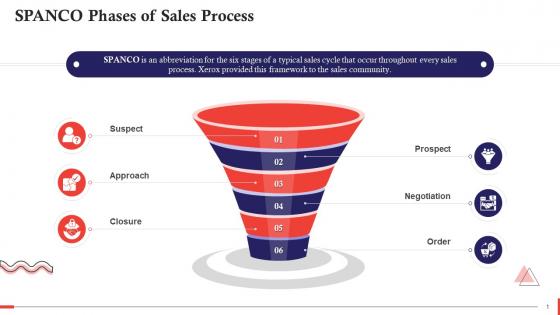
This slide describes the SPANCO (Suspect Prospect Approach Negotiate Closure Order) phases of the sales process. It emphasizes that SPANCO is an abbreviation for the six stages of a typical sales cycle, which occur throughout the entire sales process. Xerox provided this framework to the sales community.
Slide 2
This slide discusses the suspect phase of the SPANCO sales process. It emphasizes that lists of leads believed of being potential customers are identified as suspects. However, it is unclear whether the leads are interested in purchasing the product offered at this point in the sales cycle. It also states that during this phase, a salesperson must study a specific account or customer, gather information such as contact persons, authority, and the company's ability to pay, and conduct a needs-assessment of the customer.
Slide 3
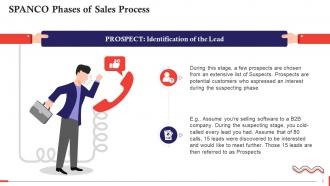
This slide explains the prospecting phase of the SPANCO sales process. It emphasizes that at this stage, only a few prospects are chosen from a large pool of suspects. Prospects are prospective customers who expressed an interest during the suspect phase.
Slide 4
This slide discusses the approach phase of SPANCO sales process. It emphasizes that you will meet with the clients identified during the prospecting phase, virtually or in person. At this stage, the salesperson attempts to identify the client's requirements, analyze these, qualify leads, and present a solution from their offerings. It also emphasizes that this occurs over a number of days, with multiple meetings for need identification, sales presentations, and so on.
Slide 5
This slide explains the negotiation phase of the SPANCO sales process and emphasizes that negotiation is a critical stage of the sales cycle because it can make or break a sale. Bargaining on product or service features, pricing, and so on begins at this stage. The salesperson must also consider his profit margin and which product would be most beneficial to the customer. By this point, the salesperson should be familiar with the competitor's products and details.
Slide 6
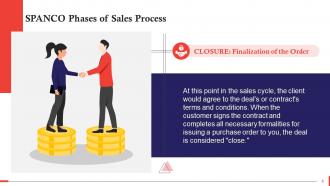
This slide mentions the closure phase of the SPANCO sales process, and it highlights that the client would agree to the deal's or contract's terms and conditions at this stage. When the customer signs the contract and completes all necessary formalities for issuing a purchase order to you, the deal is considered "close."
Slide 7
This slide explains the order phase of the SPANCO sales process. It emphasizes that the salesperson must pick up the order (Purchase Order) from the customer after agreeing on the terms and conditions, including payment and delivery schedule. Once a Purchase Order (PO) is issued, the salesperson must deliver it to the appropriate Operations Department or Delivery Team. The Delivery Team assumes the client's responsibilities. This is the end of the sales cycle for that specific deal. It also states that this stage also includes cross-selling, meaning promoting the purchase of anything besides the primary product.
SPANCO Sales Mantra For Success Training Ppt with all 23 slides:
Use our SPANCO Sales Mantra For Success Training Ppt to effectively help you save your valuable time. They are readymade to fit into any presentation structure.













FAQs for SPANCO Sales Mantra For
SPANCO breaks down like this: Suspect, Prospect, Analysis, Negotiation, Close, Order. First you find suspects (basically anyone who might buy), then figure out which ones are actually prospects worth your time. Analysis is where you really dig into what they need - honestly this part makes or breaks everything. Most people rush this and wonder why their deals fall apart later. After that comes negotiation, then closing, obviously. But seriously, don't skip the early stuff. I've seen way too many reps jump straight to pitching and their numbers suck because of it.
So first thing - map out what you're doing now against each SPANCO stage (Suspects, Prospects, Analysis, Negotiation, Close, Order). I bet you'll find some messy gaps where people are just vanishing. Your team probably jumps around instead of following the steps in order, which honestly drives me crazy when I see it happen. Set up clear rules for when someone moves from suspect to prospect, then to analysis, etc. Everyone needs to follow the same process or you can't tell what's actually working. Oh, and definitely test it with just one product line first - way easier to fix problems that way.
Look, lead tracking is what makes SPANCO actually work instead of being another sales buzzword. You can see where each prospect is - Suspect, Prospect, Analysis, whatever - and figure out your next move. Weekly updates show you patterns fast. Like if everyone's dying in the Analysis phase, you know something's broken there. Honestly, most people skip this part and wonder why their pipeline's a mess. It's the difference between knowing your conversion rates and just hoping deals close. Start tracking movement between stages and you'll spot bottlenecks right away.
SPANCO's pretty solid - way more structured than BANT or those other frameworks. It's basically Suspects → Prospects → Analysis → Negotiation → Close → Order, and you actually follow that sequence instead of just winging it. Most reps jump straight to negotiating without doing the analysis part, which is dumb. Each stage has clear exit criteria so you know when to move forward. Honestly think it's underrated because it's not as flashy as some newer methodologies. Quick tip - map your current deals to these stages. Bet you'll find some just sitting there with no real next steps. That's where SPANCO helps.
Track different metrics per SPANCO stage. Suspects - watch lead volume and source quality. For Prospects, focus on qualification rates and how fast you respond. Analyze needs discovery completion (honestly this is where most people mess up). Contacts need meeting-to-next-step conversion tracking. Opportunities get exciting - proposal win rates and deal velocity matter here since you're almost there. Orders should measure deal size and sales cycle length. Pick 2-3 metrics per stage max. Otherwise you'll drown in data and lose focus on what actually moves the needle.
So for each SPANCO phase, there's actually some solid tech that'll speed things up. Lead gen tools and social media monitoring work great for finding Suspects. Your CRM tracks all the Prospect interactions, plus email automation handles the nurturing stuff. Video calls and presentation software make the Approach way smoother - honestly that tech got so much better during the pandemic. Survey tools help with Need/Analysis to figure out their actual pain points. E-signature and proposal software close deals faster. Oh, and track everything in your CRM obviously. Don't go crazy though - pick one tool per phase first, then build from there.
Honestly, your biggest headache will be getting the sales team to stop jumping around the stages randomly. They love rushing straight into their pitch without qualifying anything first - drives me crazy. Pipeline forecasting becomes a nightmare because everyone has their own interpretation of where prospects actually are. Your CRM data? Total chaos until people adjust. Weekly pipeline audits saved my sanity the first month, plus really solid training upfront with crystal clear stage definitions. It's messy initially but worth pushing through.
Yeah, you can totally tweak SPANCO to fit whatever industry you're in. Like, B2B tech companies usually go heavy on "Need" and "Capacity" since those deals drag on forever with all the committees and evaluations. Consumer brands though? They're all about those early "Suspect" and "Prospect" stages - gotta get volume in the pipeline. Honestly, don't just slap the generic framework on your process. Look at your last 20 deals that actually closed and see which stages mattered most. Map it to how your customers really buy, not how some textbook says they should.
Honestly, it all comes down to actually listening during the Needs phase - they'll literally tell you how to sell to them if you pay attention. Make sure you're talking to people who can actually sign checks, not just someone who sounds important but has zero budget authority. Create urgency by connecting your solution to their deadlines and goals. Stop pitching features and start solving real problems instead. I've seen way too many deals die from poor follow-up rather than actual rejection. Focus on value, not price. The whole thing works better when you build genuine trust at each stage rather than just going through the motions.
So SPANCO gives you this roadmap for where each customer actually is in their buying journey. You're not just randomly hitting people up anymore - you know when someone's still just browsing versus ready to buy. Set up your CRM to tag which stage everyone's at, then automate different messages for each phase. Like, suspects need totally different treatment than hot prospects, you know? Once you nail this down, you'll actually know when to be pushy and when to chill out. Honestly took me forever to figure out the automation part, but it's worth it.
Honestly, most people think SPANCO is this super rigid script you can't deviate from. That's completely wrong though. It's more like a flexible roadmap - you adapt it based on what your prospect actually needs. Oh, and here's another myth that drives me crazy: thinking you have to hit every single stage in perfect order during one call. Nah. Some stages happen across multiple conversations or even at the same time. The magic happens when you use it as your guide but still sound like a normal human being who's actually listening.
Set up regular check-ins and document everything in your CRM as you go through SPANCO. Quick calls during Suspect to see if they're interested. Deeper discovery calls in Prospect and Analysis - always follow up with summary emails. This is honestly where most deals crash and burn, in that awkward silence between meetings. Once you hit Negotiation and Close, ramp up communication and get more people involved. Map out your communication schedule ahead of time and actually stick to it (I know, easier said than done). Templates for each stage will save you tons of time so you're not reinventing the wheel constantly.
Start with a solid workshop on all six SPANCO stages - Suspects through Order. Role-playing helps tons since reps need practice moving deals between phases and spotting exit criteria. Your CRM setup becomes way more important too because you're tracking so much more data. The Analysis stage is where most people stumble at first. It's just more intensive than what they're used to. Get them comfortable with qualifying questions and actually documenting everything right. I'd do a two-day workshop upfront, then weekly coaching for the first month. Oh, and don't underestimate how long the transition takes - even good reps need time to adjust.
Dude, SPANCO is so much better now with digital stuff. You can actually see where people are in your pipeline instead of just guessing. Website clicks, email opens, social media - it all feeds into your CRM and shows you the real journey from suspect to paying customer. Honestly, the lead scoring thing is a game changer. When someone downloads a whitepaper or requests a demo, boom - you know they've hit the Need or Opportunity stage. Start with decent tracking setup first though, or you'll be flying blind. Makes the whole sales process way less random.
Dude, biggest mistake I see? People rush straight to pitching without digging into the prospect's actual situation first. You'll miss everything important that way. Don't dump your whole credential story at once either - nobody wants to hear you talk about yourself for five minutes straight, trust me. Build up that pain point before you present your solution. They need to feel desperate, not just "eh, maybe interested." Oh, and prep your questions beforehand so you're not scrambling. Closed-ended questions during Authority kill the conversation - you want them talking, not just nodding along.
-
Well-designed and informative templates. Absolutely brilliant!
-
Amazing slides! Unique, attractive, and easy to understand.