

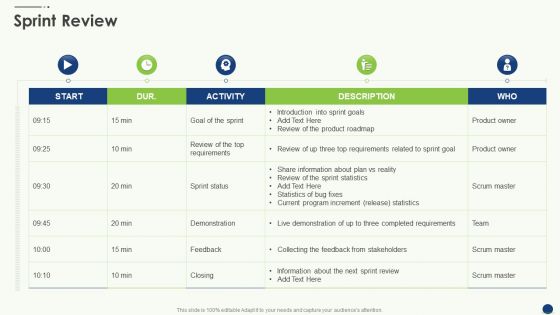
Sprint review scrum artifacts ppt demonstration




Try Before you Buy Download Free Sample Product
 Impress Your
 Audience
 100%
100% Editable
 Save Hours
 of Time


Our Sprint Review Scrum Artifacts Ppt Demonstration are topically designed to provide an attractive backdrop to any subject. Use them to look like a presentation pro.
People who downloaded this PowerPoint presentation also viewed the following :
Sprint review scrum artifacts ppt demonstration with all 2 slides:
Use our Sprint Review Scrum Artifacts Ppt Demonstration to effectively help you save your valuable time. They are readymade to fit into any presentation structure.
FAQs for Sprint review scrum
So basically you're showing stakeholders what you actually shipped that sprint and getting their honest feedback. Pretty straightforward. Then you take all that input and figure out what needs to go in your product backlog next - like, did we nail it or are we way off? Honestly, it's one of the few meetings that's actually useful because you're not just talking about work, you're showing real stuff. The whole point is making sure you're building what people actually want. Use whatever feedback you get to plan your next sprint priorities. Way better than those endless status update meetings, right?
Dude, skip the PowerPoint slides - nobody wants to sit through another boring deck. Get your product owner or actual users in there to mess around with what you built. Let them click stuff and see how it works for real. Walk through scenarios that matter to them, you know? I always tell people to keep it chatty and take questions as they come up instead of that awkward "questions at the end" thing. Oh, and be straight up about what's actually finished vs what's still rough around the edges. Trust me, they'd rather know the truth upfront than get surprised later.
Definitely need your Product Owner and any actual users or customers who can give real feedback. The dev team presents their stuff, obviously. Budget holders and decision-makers should come too - they get weirdly excited seeing demos. Oh, and anyone who actually influences what gets built next. Skip the random meeting lurkers though. You want people who can either make decisions or give useful input, not just warm bodies. Short sentences work better than long ones for demos anyway. Send recordings to important folks who can't make it live.
So sprint review feedback basically becomes your roadmap for what's next. Stakeholders will call out bugs, missing features, stuff that doesn't make sense - and that goes straight into backlog changes. You'll end up reprioritizing user stories or adding new acceptance criteria based on what people actually say they need. Sometimes it completely changes your whole direction, which honestly can be frustrating but also exciting? The trick is writing everything down right away and then hash it out with your PO. They'll help figure out how this affects your next sprint goals. Real user needs usually beat our assumptions anyway.
Honestly, ditch the boring demo format and get people actually clicking through stuff themselves. I learned this the hard way after way too many glazed-over faces in meetings. Have stakeholders test real scenarios they'd face - way more engaging than just showing off what you built. Throw in specific questions about features as you go. Timebox discussions though, or you'll spend 20 minutes debating button colors (been there). The whole point is collecting actual feedback for your backlog and next sprint. When people feel heard, they don't zone out as much.
So the Sprint Review is where you show off what you actually built - demo time for stakeholders and getting their feedback on the product. But the Retrospective? That's totally different. Just your team, way more honest conversations about how things went. What worked, what sucked, how to do better next time. Honestly, some of my best process improvements came from those retro sessions. Review = "look what we made!" Retro = "how do we work better together?" Don't skip either one though - they're both pretty essential for keeping sprints from going off the rails.
Honestly, start with just tracking who actually shows up to your Sprint Reviews - empty seats tell you everything. The feedback quality matters way more than quantity though. Are stakeholders giving you real input or just nodding along saying "looks good"? That's usually code for "I wasn't paying attention." I'd also watch how many backlog items get shuffled around after each demo, plus maybe throw in some satisfaction surveys if you're feeling fancy. Oh, and definitely track how long it takes to actually implement their feedback - that's where you'll see if this whole process is working. Don't go crazy measuring everything at first.
Screen sharing is your best friend here - everyone needs to see what you're actually showing off. Test your demo setup first because crashes during the review are the absolute worst. Get people talking! Have them drop questions in chat or jump on voice to give feedback as you go. Honestly, timing is everything - pick a slot when most folks can join live, but definitely record it for the stragglers. Your team should get excited about their work, even if it's just through a screen. Oh, and send the agenda out the day before so people aren't going in blind.
So the PO is basically running the whole Sprint Review thing. They present the sprint goal and demo what got done to stakeholders. All those "wait, what about this feature..." questions? Yeah, that's their problem to handle. Only they get to decide if stories actually hit the acceptance criteria - nobody else can override that call. Based on what stakeholders say, they'll shuffle around backlog priorities for next sprint. Oh, and if you're doing this role, definitely come with real examples of how the work actually adds value. Trust me, stakeholders eat that stuff up way more than vague progress updates.
Dude, definitely use visuals in your Sprint Review - makes such a huge difference. Live demos are gold, honestly way better than just talking through features. Screenshots showing before/after states work great too, or quick screen recordings if you can't do it live. For the metrics stuff, throw in some charts showing velocity or burndown data. Non-tech stakeholders love seeing user flow diagrams since it helps them actually get what you built. Keep it focused on what you accomplished though, not all the nitty-gritty technical stuff that'll make their eyes glaze over.
Oh man, the usual suspects: people bail on meetings, you end up demoing half-broken stuff, and everyone gets lost in technical weirdness instead of focusing on actual business impact. Send really specific invites with clear agendas - like what you're showing and what decisions need to happen. Only demo things that actually work, even if they're ugly or missing features. I learned this the hard way lol. Keep asking "does this help users?" whenever conversations drift toward code stuff. Make these sessions worth people's time and they'll stop treating them like optional calendar filler.
Sprint Reviews are honestly game-changers for keeping everyone on the same page. Instead of relying on those vague status emails (you know the ones), you're actually getting stakeholders and devs together to look at real working software. Way more effective. The key is making them feel like discussions, not just boring demos where one person talks the whole time. People need to feel like they can jump in and give feedback that'll actually shape what you build next. Oh and the transparency factor is huge - you can't hide behind "it's almost done" when everyone's looking at the actual product. Makes those tough conversations happen naturally.
Just document them right in the meeting - I dump everything into our shared board as we go. Each action needs someone's name on it plus an actual date, not some wishy-washy "we'll get to it eventually" nonsense. Here's what works: bring them up during standups or sprint planning so they don't vanish forever. Been burned by that too many times! Try adding an "Action Items" column or use tags to separate them from regular stories. Having your Scrum Master chase people down usually does the trick - they're already herding cats anyway, so what's a few more follow-ups?
Just stick it in whatever tool you're already using for your backlog - no need to complicate things. Write down the main stakeholder feedback and any backlog changes that came up. Decisions about next steps too, obviously. Honestly, I always throw in a quick "what worked/what sucked" section because why not? The whole point is making sure everyone can find this stuff later when you're sitting there going "wait, what did they actually want again?" Don't get fancy with formatting. Keep it simple and searchable. Trust me, you'll be grateful when sprint planning rolls around and your memory's fuzzy.
When your team gets the hang of Agile, Sprint Reviews totally evolve. Instead of just demoing features, you'll dive into why stuff matters for users and business goals. Stakeholders start asking smarter questions about roadmap stuff rather than nitpicking button colors (okay, that still happens sometimes). Your team becomes way better at running these meetings too - more interactive, focused on real impact. Oh, and here's something useful: track the feedback themes that pop up repeatedly. That's where you'll find your goldmine of product insights. Those patterns tell you everything.
-
Easy to edit slides with easy to understand instructions.
-
Helpful product design for delivering presentation.
-
Use of icon with content is very relateable, informative and appealing.
-
Colors used are bright and distinctive.