


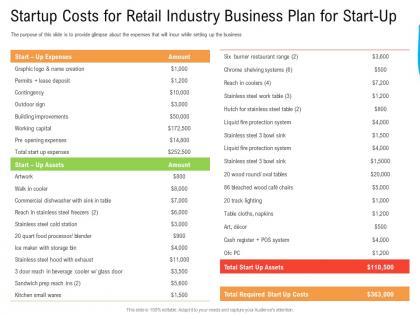
Start up costs for retail industry business plan for start up ppt mockup




Try Before you Buy Download Free Sample Product
 Impress Your
 Audience
 100%
100% Editable
 Save Hours
 of Time


The purpose of this slide is to provide glimpse about the expenses that will incur while setting up the business
People who downloaded this PowerPoint presentation also viewed the following :
Start up costs for retail industry business plan for start up ppt mockup with all 2 slides:
Use our Start up Costs For Retail Industry Business Plan For Start Up Ppt Mockup to effectively help you save your valuable time. They are readymade to fit into any presentation structure.

FAQs for Start up costs for retail industry business plan for start
Typical retail start-up costs include inventory, store fixtures and equipment, lease deposits, marketing and branding, permits and licenses, and initial working capital. These expenses vary significantly by business type and location, with many retail entrepreneurs finding that strategic planning reduces unexpected costs, streamlines operations, and ultimately delivers faster profitability and competitive advantage.
Location and rental expenses typically represent 20-30% of a retail store's start-up budget, significantly influencing initial capital requirements through security deposits, first-month rent, and potential renovation costs. Prime locations command higher rents but deliver greater foot traffic and sales potential, with many retailers finding that strategic location investments ultimately enhance customer acquisition, brand visibility, and long-term profitability.
Essential equipment costs include point-of-sale systems, security equipment, display fixtures, storage solutions, and basic technology infrastructure, while inventory investments vary significantly by retail sector and target market size. Smart retailers typically allocate 25-40% of startup capital to initial inventory and 15-25% to equipment, with many successful ventures finding that flexible inventory management and scalable equipment choices enable faster market entry and sustainable growth.
Entrepreneurs can accurately estimate permit and license costs by researching local business licensing offices, consulting with industry associations, reviewing municipal fee schedules, and connecting with other retail business owners in their area. These research methods help identify required permits like business licenses, sales tax permits, zoning approvals, and health department certifications, with many entrepreneurs finding that early cost planning prevents budget overruns and accelerates their store opening timeline.
Market research enables retail entrepreneurs to accurately forecast start-up expenses by identifying location costs, inventory requirements, competitive pricing strategies, and target customer spending patterns. Through comprehensive market analysis, businesses can determine optimal store sizes, staffing needs, and marketing budgets, while uncovering hidden costs like permits and insurance, ultimately delivering more realistic financial projections and strategic resource allocation.
Businesses should account for staffing costs by calculating initial hiring expenses, training investments, first-quarter salaries, benefits packages, and payroll taxes in their retail start-up plans. These comprehensive staffing budgets typically represent 15-25% of total start-up capital, with many retailers finding that frontloading employee development costs ultimately delivers better customer experiences and operational efficiency.
Hidden costs include inventory shrinkage, point-of-sale system maintenance, employee training programs, business insurance premiums, and regulatory compliance fees. These overlooked expenses can significantly impact cash flow, with many new retailers finding that operational costs like utilities, security systems, and ongoing marketing campaigns often exceed initial projections by 20-30%.
Technology investments like POS systems significantly impact retail start-up costs through initial hardware expenses, software subscriptions, and integration fees, typically ranging from $1,200 to $5,000 for comprehensive systems. While these upfront costs increase initial capital requirements, modern POS solutions streamline inventory management, automate sales tracking, and enhance customer experiences, with many retailers finding that improved operational efficiency and reduced labor costs provide strong returns within the first year.
Entrepreneurs can minimize start-up costs through lean inventory management, shared workspace arrangements, digital marketing over traditional advertising, strategic supplier partnerships, and phased product launches. These approaches streamline initial investment by reducing overhead, optimizing cash flow, and leveraging cost-effective technologies, with many retail startups finding that gradual scaling ultimately delivers sustainable growth while maintaining operational quality and competitive positioning.
Marketing and advertising expenses typically represent 3-7% of projected first-year revenue in retail startup budgets, encompassing digital advertising, social media campaigns, grand opening promotions, and local community outreach initiatives. These investments prove essential for building brand awareness and driving initial foot traffic, with many successful retailers finding that strategic marketing allocation during launch significantly accelerates customer acquisition and establishes competitive market positioning.
Retail start-up financing options include traditional bank loans, SBA loans, angel investors, venture capital, crowdfunding platforms, and personal savings or credit lines. These methods differ significantly in approval requirements, interest rates, equity retention, and repayment terms, with many entrepreneurs finding that combining multiple sources, such as personal investment with bank financing, delivers greater flexibility and reduces individual financial risk while maintaining operational control.
A contingency fund is crucial for retail businesses, as start-up costs typically exceed initial projections by 20-30% due to unexpected expenses like equipment repairs, permit delays, or inventory fluctuations. This financial buffer enables retailers to navigate unforeseen challenges while maintaining operational momentum, with many successful retail ventures finding that adequate contingency planning ultimately delivers competitive advantage and sustained growth.
E-commerce significantly reduces traditional retail start-up costs by eliminating physical storefront expenses, minimizing inventory requirements, and streamlining operational overhead through automated systems and digital marketing channels. While initial technology investments and digital infrastructure present new considerations, many retail entrepreneurs find that online platforms enable faster market entry, lower barrier costs, and scalable growth models, ultimately delivering competitive advantages and enhanced customer reach.
Entrepreneurs can significantly reduce inventory costs by purchasing refurbished equipment, wholesale merchandise, liquidation stock, and seasonal overstock from manufacturers or distributors. Through bulk buying cooperatives and strategic partnerships with suppliers, retailers achieve 30-50% cost savings while maintaining quality standards, with many small businesses finding this approach essential for competitive pricing and improved profit margins.
Key financial metrics include cash flow projections, break-even analysis, inventory turnover ratios, gross profit margins, and operating expense ratios. These metrics enable retail entrepreneurs to track initial capital requirements, monitor monthly burn rates, and assess profitability timelines, with many new retailers finding that comprehensive expense tracking ultimately delivers better resource allocation and faster path to sustainable operations.
-
Excellent template with unique design.
-
Colors used are bright and distinctive.
-
Very unique and reliable designs.
-
Great experience, I would definitely use your services further.