

Succession Planning Guide To Ensure Business Continuity Strategy CD




Try Before you Buy Download Free Sample Product
 Impress Your
 Audience
 100%
100% Editable
 Save Hours
 of Time


The Succession Planning Guide to Ensure Business Continuity is a comprehensive resource that offers business owners and managers a framework for maintaining uninterrupted business operations in the event of a leaders unexpected or planned departure. This guide provides a sense of security, reassuring you that your business is prepared for any eventuality. It begins with an introduction to succession planning and emphasizes its importance in maintaining business continuity. It then delves into the business succession planning process, detailing each phase planning, implementation, and post-implementation. This provides businesses with a blueprint to follow when creating their succession plans. The guide also stresses the significance of seeking professional assistance in succession planning. It emphasizes the benefits of working with attorneys, accountants, and financial advisors who possess the expertise. This guide is here to support you and guide you through the complex succession planning process. Lastly, the deck explores the impact of succession planning on businesses. It highlights how effective succession planning can positively impact employee retention and engagement rates. This guide is not just a resource it is a tool that empowers businesses to gain a competitive edge in their industry. Download it now.
People who downloaded this PowerPoint presentation also viewed the following :
Content of this Powerpoint Presentation
Slide 1: This slide showcase the title Succession Planning Guide to Ensure Business Continuity. Sate your Company name.
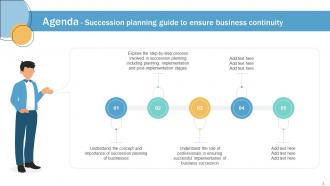
Slide 2: This slide showcase title Agenda - Succession planning guide to ensure business continuity.
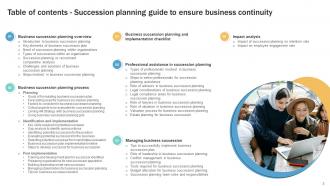
Slide 3: This slide exhibit Table of Content.
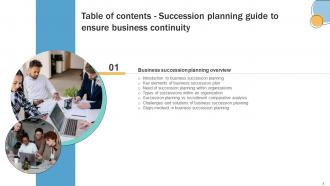
Slide 4: This slide exhibit Table of Content: Business succession planning overview.
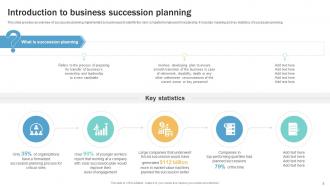
Slide 5: This slide provides an overview of succession planning implemented by businesses to identify the next competent employee for leadership.
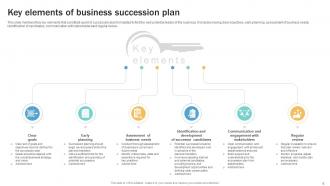
Slide 6: This slide mentions they key elements that constitute a part of succession plan formulated to find the next potential leader of the business.
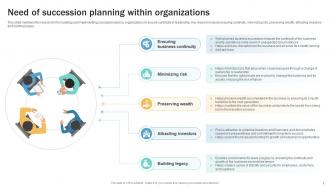
Slide 7: This slide mentions the reasons for formulating and implementing succession plan by organizations to ensure continuity in leadership.
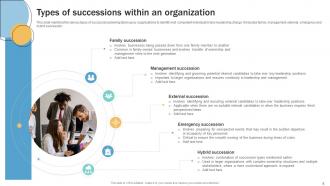
Slide 8: This slide mentions the various types of succession planning taken up by organizations to identify next competent individual to take leadership charge.
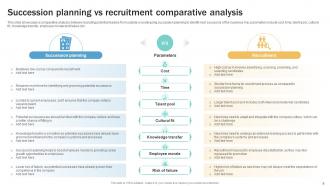
Slide 9: This slide showcases a comparative analysis between recruiting potential leaders from outside or undergoing succession planning to identify next successor of the business.
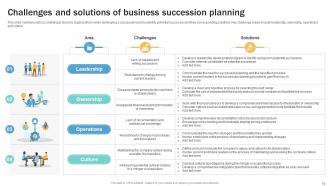
Slide 10: This slide mentions various challenges faced by organizations when developing a succession plan to identify potential successor and their corresponding solutions.
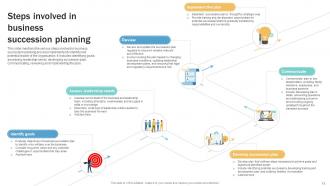
Slide 11: This slide mentions the various steps involved in business succession planning process implemented to identify next potential leader of the organization.
Slide 12: This slide exhibit Table of Content: Business succession planning process- Planning
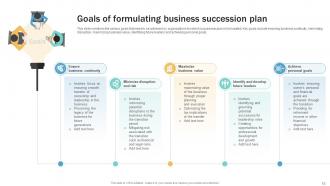
Slide 13: This slide mentions the various goals that need to be achieved by organizations for which succession plan is formulated.
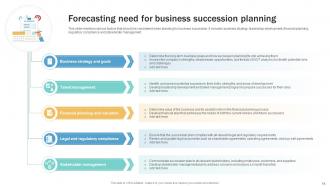
Slide 14: This slide mentions various factors that should be considered when planning for business succession.
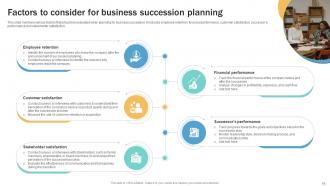
Slide 15: This slide mentions various factors that should be evaluated when planning for business succession.
Slide 16: This slide mentions various instances that are evaluated when planning business succession within an organization.
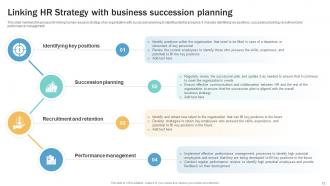
Slide 17: This slide mentions the process for linking human resource strategy of an organization with succession planning to identify potential prospect.
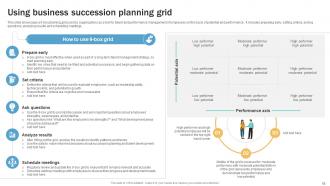
Slide 18: This slide showcases a 9 box planning grid used by organizations as a tool for talent and performance management of employees on the basis of potential and performance.
Slide 19: This slide exhibit Table of Content: Identification and implementation
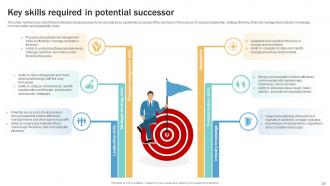
Slide 20: This slide mentions key skills that an individual should possess to be considered as a potential successor of the business in the long run.
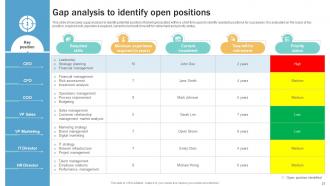
Slide 21: This slide showcases a gap analysis to identify potential positions that will get vacated within a short time span to identify available positions for succession.
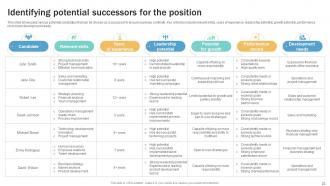
Slide 22: This slide showcases various potential candidates that can be chosen as a successor to ensure business continuity.
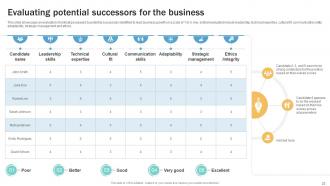
Slide 23: This slide showcases an evaluation of skillset possessed by potential successors identified to lead business growth on a scale of 1 to 5.
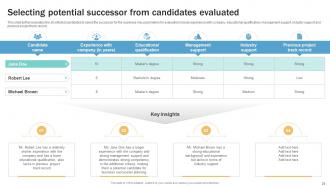
Slide 24: This slide further evaluates the shortlisted candidates to select the successor for the business.
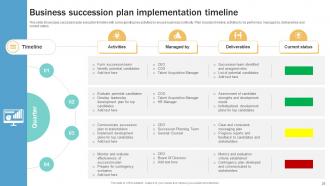
Slide 25: This slide showcases succession plan execution timeline with corresponding key activities to ensure business continuity.
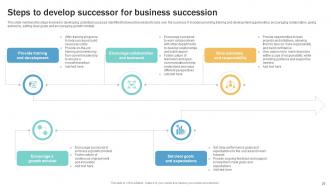
Slide 26: This slide mentions the steps involved in developing potential successor identified that would be elected to take over the business.
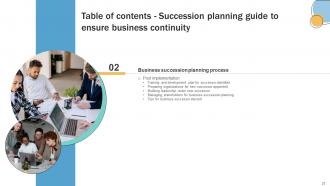
Slide 27: This slide exhibit Table of Content: Post implementation.
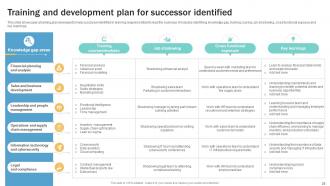
Slide 28: This slide showcases a training plan developed to help successor identified in learning required skillset to lead the business.
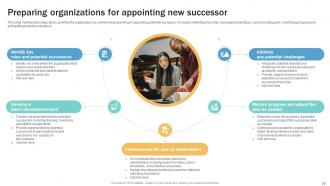
Slide 29: This slide mentions the steps taken up within the organization as a whole when planning for appointing potential successor.
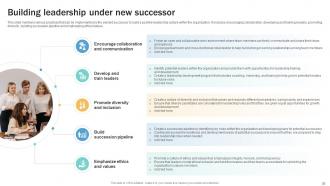
Slide 30: This slide mentions various practices that can be implemented by the elected successor to build a positive leadership culture within the organization.
Slide 31: This slide mentions various steps involved in managing stakeholders to prepare them for a new successor taking over within the organization.
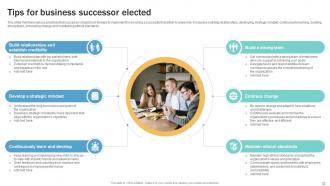
Slide 32: This slide mentions various practices that successor should look forward to implement for ensuring a successful transition to anew role.
Slide 33: This slide exhibit Table of Content: Business succession planning and implementation checklist.
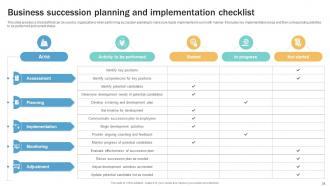
Slide 34: This slide provides a checklist that can be used by organizations when performing succession planning to make sure it gets implemented smoothly.
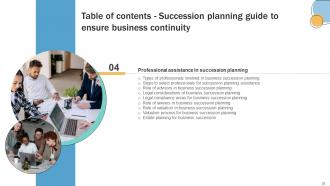
Slide 35: This slide exhibit Table of Content: Professional assistance in succession planning.
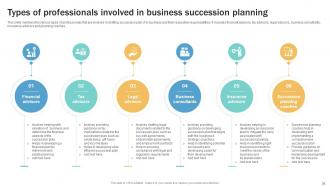
Slide 36: This slide mentions the various types of professionals that are involved in drafting succession plan of a business and their respective responsibilities.
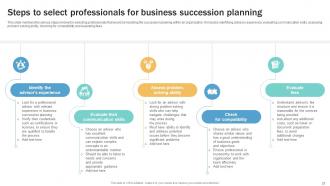
Slide 37: This slide mentions the various steps involved in selecting professionals that would be handling the succession planning within an organization.
Slide 38: This slide highlights the role of professional advisors when succession planning takes place in an organization.
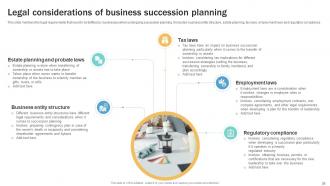
Slide 39: This slide mentions the legal requirements that need to be fulfilled by businesses when undergoing succession planning.
Slide 40: This slide highlights various legal laws that need to be followed when businesses develop a succession plan to ensure continuity.
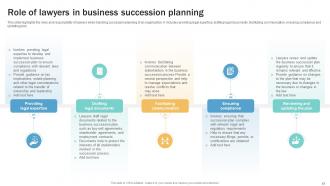
Slide 41: This slide highlights the roles and responsibility of lawyers when handling succession planning of an organization.
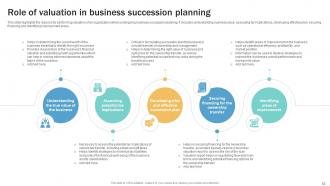
Slide 42: This slide highlights the reasons for performing valuation of an organization when undergoing business succession planning.
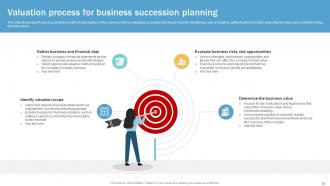
Slide 43: This slide showcases the process involved in performing valuation of the business when undergoing succession planning.
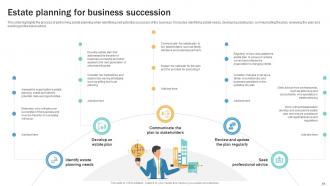
Slide 44: This slide highlights the process of performing estate planning when identifying next potential successor of the business.
Slide 45: This slide exhibit Table of Content: Managing business succession.
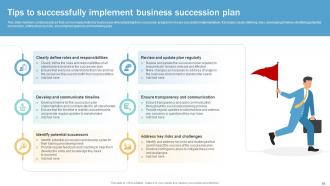
Slide 46: This slide mentions certain practices that can be implemented by businesses when planning their succession program to ensure successful implementation.
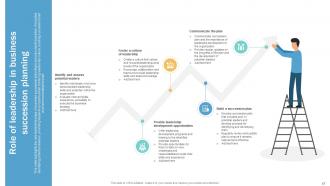
Slide 47: This slide highlights the role leadership plays in business succession planning to ensure smooth transition.
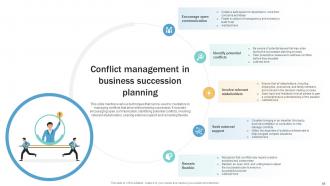
Slide 48: This slide mentions various techniques that can be used by mediators in managing conflicts that arise while planning succession.
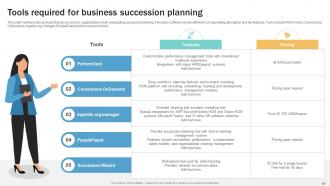
Slide 49: This slide mentions various tools that can be used by organizations when undergoing succession planning.
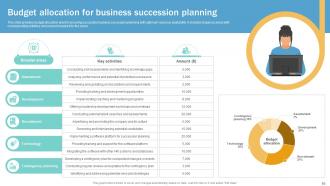
Slide 50: This slide provides budget allocation plan for ensuring successful business succession planning with optimum resource availability.
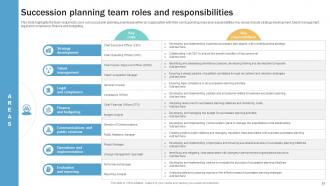
Slide 51: This slide highlights the team required to carry out succession planning seamlessly within an organization with their corresponding roles and responsibilities.
Slide 52: This slide exhibit Table of Content: Impact analysis.
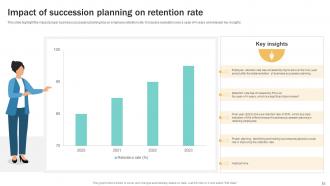
Slide 53: This slide highlight the impact proper business succession planning has on employee retention rate.
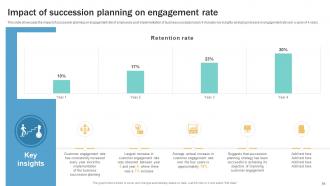
Slide 54: This slide showcases the impact of succession planning on engagement rate of employees post implementation of business succession plan.
Slide 55: This slide shows all the icons included in the presentation.
Slide 56: This slide is titled as Additional Slides for moving forward.
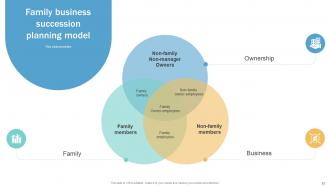
Slide 57: This slide showcase title Family business succession planning model.
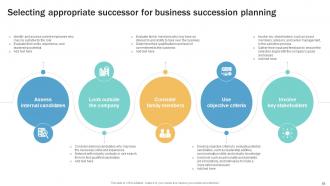
Slide 58: This slide showcase title Selecting appropriate successor for business succession planning.
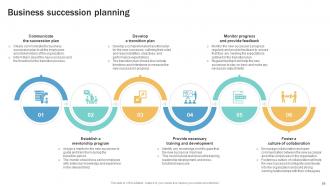
Slide 59: This slide showcase title Business succession planning.
Slide 60: This is About Us slide to show company specifications, services etc.
Slide 61: This is Our Vision, Mission & Goal slide. Post your Visions, Missions, and Goals here.
Slide 62: This slide provides 30 60 90 Days Plan with text boxes.
Slide 63: This slide shows Post It Notes for reminders and deadlines. Post your important notes here.
Slide 64: This slide depicts Venn diagram with text boxes.
Slide 65: This slide showcase Comparison.
Slide 66: This is a Thank You slide with address, contact numbers and email address.
Succession Planning Guide To Ensure Business Continuity Strategy CD with all 74 slides:
Use our Succession Planning Guide To Ensure Business Continuity Strategy CD to effectively help you save your valuable time. They are readymade to fit into any presentation structure.

















FAQs for Succession Planning Guide To Ensure Business
First thing - figure out which roles are make-or-break for your company and what skills those jobs actually need. Look around at who you've got internally. You might be shocked at how ready some people already are! Create development plans with real deadlines and pair them up with mentors. Oh, and this is crucial - write down all that weird institutional knowledge before Karen from accounting retires and takes 20 years of processes with her. Have some external candidates in mind too, just in case. Honestly, most companies wait way too long to start this stuff. Good succession planning isn't something you can rush.
Start with your top performers who actually hit their numbers and show they can lead already. Look for the ones mentoring others or jumping on tough projects - those are your best bets. Don't sleep on the quieter people though; sometimes they're building relationships you don't even see. Honestly, the loudest person in the room isn't always leadership material. Give them stretch assignments and get 360 feedback to see how they really handle pressure. Cast wide at first, then watch how they perform when you actually put them in leadership spots.
Honestly, mentoring is huge for succession planning. You can't just tap someone on the shoulder and expect them to magically know how to lead, you know? Current leaders need to actually transfer their knowledge - the real stuff, not just what's in the handbook. Decision-making skills, company culture, all those unwritten rules that matter. Plus it builds trust between the old guard and new people coming up. My advice? Start pairing your promising folks with current leaders way before you actually need them to step up. Even if it's like 3-4 years out, doesn't matter.
Honestly, most companies totally mess this up by treating succession planning like some separate thing. During your regular performance reviews, that's when you spot high-potential people. Then actually use your training programs to prep them for bigger roles, not just what they're doing now. Career conversations should include succession stuff too - seems obvious but you'd be surprised how often it gets skipped. Track it with your other talent data. The whole trick is baking it into every talent decision you make. Don't wait until someone quits to panic about replacements.
Honestly, the worst thing you can do is procrastinate on this stuff. Don't wait until someone quits to scramble for a replacement - I've seen that disaster play out too many times. Have multiple people in mind for each role, not just one "golden child" who might bail anyway. Also, actually tell your potential successors what you're thinking! How else can they get ready? Document everything too, otherwise it's just this weird guessing game for everyone involved. Oh, and start those career conversations now with your high-potential people. Find out what they actually want.
Bare minimum? Once a year. But that's honestly pretty risky if you ask me. Big changes like people leaving or getting promoted should trigger updates right away - don't wait around for your annual cycle. I'd do a quick quarterly check too, just to see if your key people are still there and actually growing. These plans are useless if they're based on your org chart from six months ago. Put a reminder in your calendar now (seriously, do it) and make sure someone actually owns keeping this current.
Honestly, timing is everything with this stuff. Be upfront about why you're doing succession planning - growth opportunities, not layoffs (trust me, people will freak otherwise). Share the big picture process with everyone but keep individual details under wraps until you're ready. Frame it around career development paths rather than just "who replaces who." Oh, and don't just announce once then go radio silent - that's the worst. Regular updates keep people calm. Make sure your managers can answer questions consistently too, because nothing tanks trust faster than mixed messages from leadership.
Honestly, the data side of succession planning is a game changer. Most HRIS systems already have features you're probably not using - I'd start there first. AI tools can spot flight risk patterns and high-potential people way better than we can manually (which is slightly terrifying but whatever). Your talent management platform tracks performance and skills automatically, so you're not just winging it based on hunches anymore. Skills gap analysis shows exactly what training successors need. The algorithms are weirdly good at catching stuff we'd miss.
Track internal promotion rates first - that's your biggest indicator. How fast can you fill critical roles when someone bolts? That time-to-fill metric will save your butt. Also watch if your high-potential people are actually sticking around, because what's the point of developing talent that just leaves anyway? Check how new promotions perform in year one too. Oh, and don't ignore engagement scores for your pipeline - if people aren't excited about growth opportunities, your whole plan's basically dead in the water. Start there and adjust as needed.
Start by looking at who's actually in your succession pipeline right now - I bet it's pretty predictable. Hunt for high-potential people from underrepresented groups early, then build real development paths for them. Don't let committees default to the usual faces they're comfortable with. Set actual diversity targets for leadership spots and track the numbers. Oh, and make sure your succession committee itself is diverse - they'll catch blind spots you'd totally miss. Mentorship programs help too, connecting diverse employees with senior leaders. Honestly, most companies think they're doing this but aren't really.
Dude, succession planning is tricky legal stuff. Get your employment contracts locked down tight first - you don't want people bailing with your secrets. Tax implications are huge too, especially with ownership transfers or stock options. Industry regulations can be a total nightmare depending on what you do. Board transitions bring fiduciary duty headaches on top of everything else. Seriously though, loop in your lawyers way before you need them. I've seen too many people wait until the last second and it's always a mess.
Don't wait until someone quits to think about succession planning - make it part of your regular routine. Map out 2-3 backup people for each critical role. Document all the important stuff now: processes, key relationships, who handles what. Cross-training is huge. Give promising employees different assignments so they're not stuck in one box. I learned this the hard way when our finance person left and nobody knew our banking setup. Review your plans every quarter because people grow and change. It's way better than panicking when someone gives notice.
Honestly, your company culture is gonna make or break succession planning. When people actually care about developing others and there's real mentoring happening, knowledge gets shared naturally. But those cutthroat environments where everyone's protecting their turf? Yeah, nobody's training their replacement willingly. Trust matters huge here too. If your culture is transparent, you can have real talks about who's ready for what role and where the gaps are. Otherwise it just becomes another pointless HR thing people roll their eyes at. I'd say work on the culture stuff first - the fancy processes won't mean much without it.
You absolutely need your current leaders weighing in on succession planning. They see the real skills gaps and know what each role actually demands. Ask them regularly about critical competencies and upcoming challenges successors will hit. Honestly, they often spot talent that HR completely overlooks - sometimes the best candidates don't look great on paper. Get this feedback through structured interviews, not random hallway chats (trust me on this). Their insights help you figure out who has real potential. Then you can build development programs that actually target what matters instead of generic leadership training.
GE was crazy good at this - they built such a solid leadership pipeline that competitors literally hunted their people. You've got Apple too, where Cook wasn't some surprise pick. They'd been preparing him for years before Jobs stepped down. Johnson & Johnson does this smart thing where they move their rising stars between different divisions, so they get well-rounded experience. Here's what's wild though - all these companies started planning like 5-10 years out, not when someone's walking out the door. For you guys, spot your potential successors early and throw them into challenging roles. That's how you'll know if they can actually handle it.
-
A library of engaging, customizable and content-ready templates.
-
Innovative and Colorful designs.