

Supply chain management systems overview powerpoint presentation with slides





Try Before you Buy Download Free Sample Product
 Impress Your
 Audience
 100%
100% Editable
 Save Hours
 of Time


When it comes to business than supply chain management indeed is the most important aspect for a business. You could take all your supply chain systems a step further with our complete PowerPoint slide deck. Here are few ways to do this. You can download this PPT model to make your employees familiar with important but some lesser known aspects about chain supply. Furthermore, this PPT sample file assists to thoroughly illustrate a SCM framework thereby enabling a company to adopt quickly as per market demands. Not finished yet! As to give an edge to your PowerPoint presentation we have included exclusive PPT templates explaining Components of the Supply Chain, Flow in Supply Chain, Problems and Technology in Supply Chain. Best part is that before downloading you can simply click to take a short and snappy look of our presentation deck. Guide their growth with our supply chain management ppt Deck. Empower them to achieve their goals.
People who downloaded this PowerPoint presentation also viewed the following :
Content of this Powerpoint Presentation
Slide 1: This slide introduces Supply Chain Management. State Your Company Name and get started.
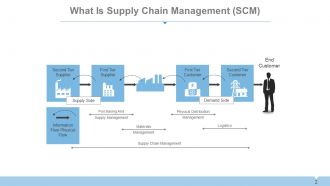
Slide 2: This slide presents What Is Supply Chain Management (SCM) with the following points- End Customer, Information Flow Physical Flow, Second Tier Customer, First Tier Customer, Demand Side, First Tier Supplier, Second Tier Supplier, Supply Side.
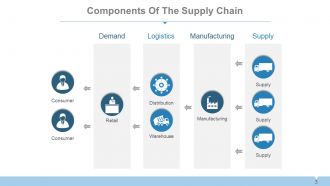
Slide 3: This slide presents Components Of The Supply Chain- Manufacturing, Logistics, Demand, Consumer, Retail, Distribution, Warehouse.
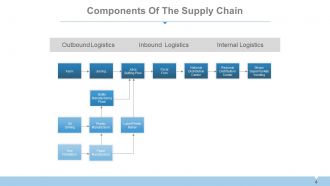
Slide 4: This slide also presents Components Of The Supply Chain categorised as- Inbound Logistics, Internal Logistics, Outbound Logistics.
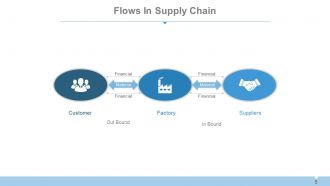
Slide 5: This slide showcases Flows In Supply Chain.
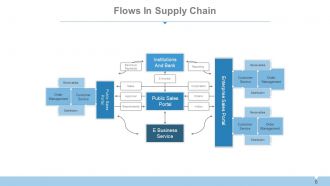
Slide 6: This slide too showcases Flows In Supply Chain from Public Sales Portal to Enterprise Sales Portal.
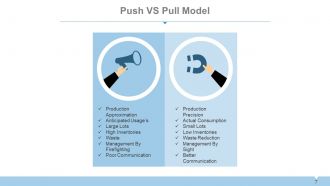
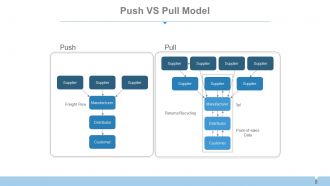
Slide 7: This slide presents Push VS Pull Model divided into- Production Approximation - Production Precision, Anticipated Usage’s - Actual Consumption, Large Lots - Small Lots, High Inventories - Low Inventories, Waste - Waste Reduction, Management By Firefighting - Management By Sight, Poor Communication - Better Communication.
Slide 8: This slide presents another variation of Push VS Pull Model with the following points- Customer, Distributor, Manufacturer, Supplier.
Slide 9: This slide shows Order Fulfillment Process for Supply Chain management.
Slide 10: This slide also showcases Order Fulfillment Process for Supply Chain management divided into-. Customer, Sales Deptt., Credit & Billing, Shipping.
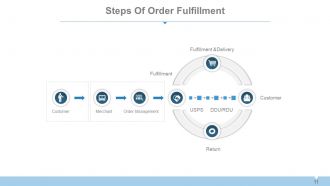
Slide 11: This slide displays Steps Of Order Fulfillment starting from- Customer, Merchant, Order Management, Return, Fulfillment, Fulfillment &Delivery.
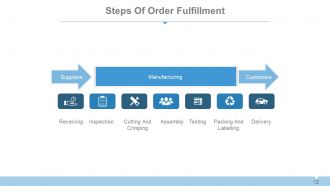
Slide 12: This slide too displays Steps Of Order Fulfillment starting from- Receiving, Inspection, Cutting And Crimping, Assembly, Testing, Packing And Labelling, Delivery.
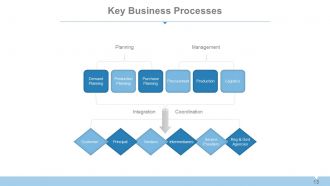
Slide 13: This slide presents Key Business Processes with the following points- Production Planning, Demand Planning, Logistics, Principal, Vendors, Intermediaries, Service Providers, Reg.&.Govt Agencies, Procurement, Production, Purchase Planning, Customer.
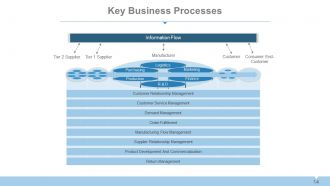
Slide 14: This slide also shows Key Business Processes with the following points- Information Flow: Purchasing, Logistics, Marketing, Production, R & D, Finance, Tier 1 Supplier, Tier 2 Supplier, Consumer End-Customer, Customer, Manufacturer, Product Development And Commercialization, Return Management, Customer Relationship Management, Customer Service Management, Order Fulfillment, Manufacturing Flow Management, Supplier Relationship Management, Demand Management.
Slide 15: This slide presents Problems In The Supply Chain. State problems, difficulties here.
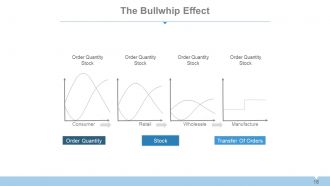
Slide 16: This slide presents The Bullwhip Effect in terms of - Order Quantity Stock for- Manufacture Consumer Retail Wholesale.
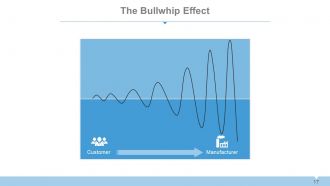
Slide 17: This slide showcases The Bullwhip Effect from Customer to Manufacturer.
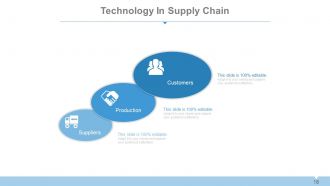
Slide 18: This slide shows Technology In Supply Chain with- Customers, Suppliers, Production.
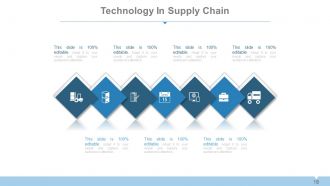
Slide 19: This slide shows Technology In Supply Chain with imagery and text boxes to state the role of technology.
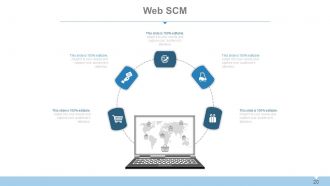
Slide 20: This slide presents Web SCM. State your web based aspects here.
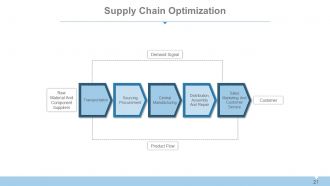
Slide 21: This slide shows Supply Chain Optimization with- Product Flow, Demand Signal, Transportation, Sourcing Procurement, Central Manufacturing, Distribution, Assembly And Repair, Sales Marketing And Customer Service, Raw Material And Component Suppliers, Customer.
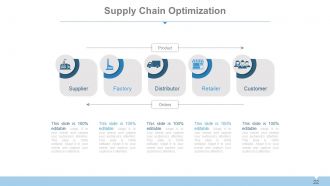
Slide 22: This slide shows Supply Chain Optimization with- Supplier, Factory, Distributor, Retailer, Customer, Product, Orders.
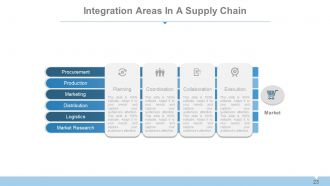
Slide 23: This slide shows Integration Areas In A Supply Chain with the following points- Market, Procurement, Production, Marketing, Distribution, Logistics, Market Research, Coordination, Planning, Collaboration, Execution.
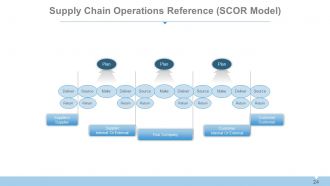
Slide 24: This slide showcases Supply Chain Operations Reference (SCOR Model) with the following points- Plan, Source, Deliver, Make, Return, Customer Customer, Suppliers Supplier, Supplier, Internal Or External, Customer internal Or External, Your Company.
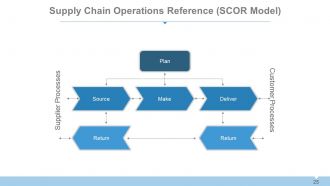
Slide 25: This slide showcases Supply Chain Operations Reference (SCOR Model) with the following points- Customer Processes, Supplier Processes, Plan, Source, Make, Deliver, Return.
Slide 26: This slide shows SCM Implementation Steps. The listed steps are- Assessing Supply Chain Opportunities, Developing An SCM Vision, Developing An SCM Strategy, Creating The Optimum SCM Organizational Structure, Establishing The SCM Information And Communication Network, Translating The SCM Strategy Into Actions in terms of Concept Phase, Conversion Phase, and Execution Phase.
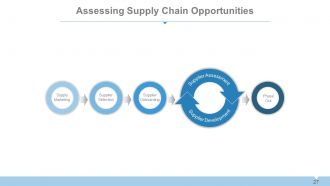
Slide 27: This slide presents Assessing Supply Chain Opportunities with the following points- Supply Marketing, Supplier Selection, Supplier Onboarding, Supplier Assessment, Supplier Development, Phase Out.
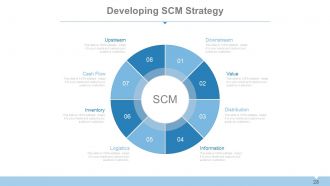
Slide 28: This slide presents Developing SCM Strategy with the following points- Downstream, Value, Distribution, Information, Logistics, Inventory, Cash Flow, Upstream.
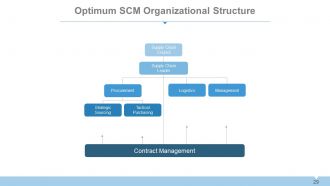
Slide 29: This slide shows Optimum SCM Organizational Structure with- Supply Chain Leader, Procurement, Supply Chain Council, Logistics, Management, Strategic Sourcing, Tactical Purchasing, Contract Management.
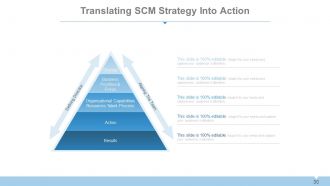
Slide 30: This slide showcases Translating SCM Strategy Into Action with the following points- Strategy, Business Priorities & Focus, Action, Results, Organizational Capabilities Resources Talent Process, Defining Direction, Aligning The Team.
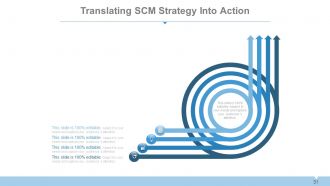
Slide 31: This slide shows Translating SCM Strategy Into Action with imagery and text boxes.
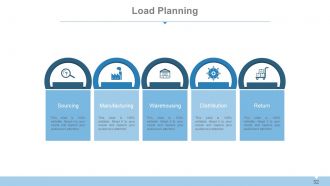
Slide 32: This slide presents Load Planning with- Sourcing, Manufacturing, Warehousing, Distribution, Return.
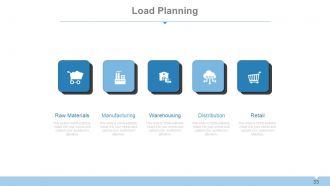
Slide 33: This slide presents Load Planning with the following points- Raw Materials, Manufacturing, Warehousing, Distribution, Retail.
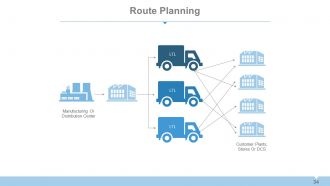
Slide 34: This slide presents Route Planning with- Manufacturing Or Distribution Center, Customer Plants, Stores Or DCS, LTL.
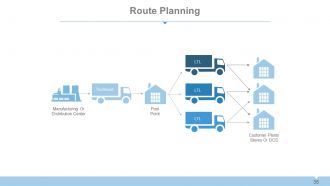
Slide 35: This slide presents Route Planning with- Manufacturing Or Distribution Center, Customer Plants Stores Or DCS, Pool Point, LTL, Truckload.
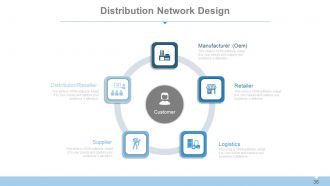
Slide 36: This slide shows a Distribution Network Design with- Customer, Manufacturer (Oem), Retailer, Logistics, Distributor/Reseller, Supplier.
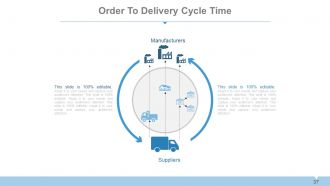
Slide 37: This slide shows Order To Delivery Cycle Time in terms of Manufacturers and Suppliers.
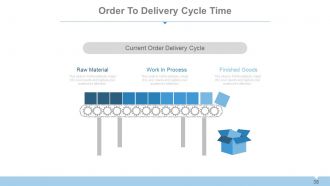
Slide 38: Order To Delivery Cycle Time for Current Order Delivery Cycle for Raw Material, Work In Process, and Finished Goods.
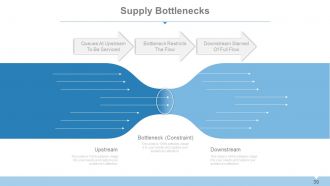
Slide 39: This slide shows Supply Bottlenecks for- Upstream, Downstream, Queues At Upstream To Be Serviced, Bottleneck Restricts The Flow, Downstream Starved Of Full Flow.
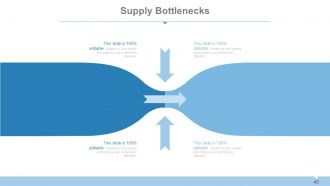
Slide 40: This slide shows Supply Bottlenecks imagery. State bottlenecks here.
Slide 41: This slide is titled Additional Slides to move forward. You may change/alter the content as per need.
Slide 42: This is an Agenda slide. State them here.
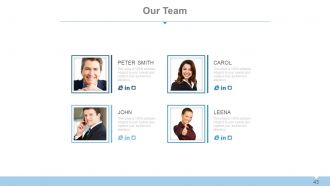
Slide 43: This is Our Team slide with names, designation and text boxes.
Slide 44: This is Our Goal slide. State goals, targets here.
Slide 45: This is our Vision slide. State company vision here.
Slide 46: This is an About Us slide. State team/company specifications here.
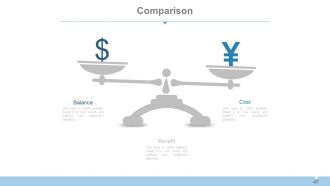
Slide 47: This is a Comparison slide with balance imagery to showcase comparison.
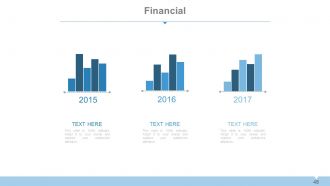
Slide 48: This is Financial scores slide. State financial aspects, results etc. here.
Slide 49: This is a Quotes slide. Convey message, beliefs etc. here.
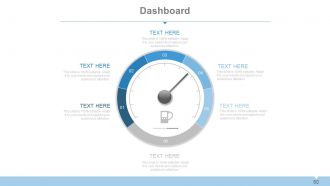
Slide 50: This is a Dashboard slide for showing information, specifications etc.
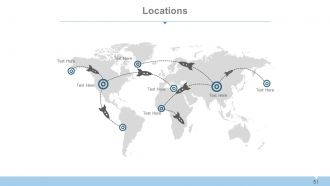
Slide 51: This is a Locations slide of world map top show global marketing, growth, presence etc.
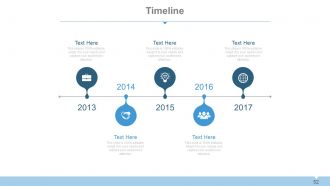
Slide 52: This is a Timeline slide to show milestones, evolution, growth highlights etc.
Slide 53: This is a Post It Notes slide to mark reminders, events etc.
Slide 54: This is a Thank You slide with social media handle images- [email protected], [email protected], [email protected]
Supply chain management systems overview powerpoint presentation with slides with all 54 slides:
Get the go from our Supply Chain Management Systems Overview Powerpoint Complete Deck. Your thoughts will get flagged off.
-
Supply Chain Management
-
What Is Supply Chain Management SCM
-
Components Of The Supply Chain
-
Components Of The Supply Chain
-
Flows In Supply Chain
-
Flows In Supply Chain
-
Push VS Pull Model
-
Push VS Pull Model
-

Order Fulfillment Process
-

Order Fulfillment Process
-
Steps Of Order Fulfillment
-
Steps Of Order Fulfillment
-
Key Business Processes
-
Key Business Processes
-
Problems In The Supply Chain
-
The Bullwhip Effect
-
The Bullwhip Effect
-
Technology In Supply Chain
-
Technology In Supply Chain
-
Web SCM
-
Supply Chain Optimization
-
Supply Chain Optimization
-
Integration Areas In A Supply Chain
-
Supply Chain Operations Reference SCOR Model
-
Supply Chain Operations Reference SCOR Model
-

SCM Implementation Steps
-
Assessing Supply Chain Opportunities
-
Developing SCM Strategy
-
Optimum SCM Organizational Structure
-
Translating SCM Strategy Into Action
-
Translating SCM Strategy Into Action
-
Load Planning
-
Load Planning
-
Route Planning
-
Route Planning
-
Distribution Network Design
-
Order To Delivery Cycle Time
-
Order To Delivery Cycle Time
-
Supply Bottlenecks
-
Supply Bottlenecks
-

Additional Slides
-

Agenda
-
Our Team
-
Our Goal
-
Vision
-
About Us
-
Comparison
-
Financial
-
Quotes
-
Dashboard
-
Locations
-
Timeline
-
Post It Notes
-

Thank You
FAQs for Supply chain management systems overview powerpoint
So you'll need demand forecasting, supplier relationships, inventory optimization, and logistics coordination. Most companies totally bomb the forecasting part though - way trickier than people think. Real-time visibility across your whole chain matters a lot, plus solid communication with everyone involved. Risk management became huge after all the recent supply chain disasters we've seen. Oh and tech integration helps you track everything and pivot fast when needed. But honestly? Map out what you're doing now first, then find your worst bottlenecks before you start throwing new systems at the problem.
So digital transformation basically lets you see everything happening in your supply chain in real time - no more waiting around for those weekly reports that are already outdated. You'll get automated processes and predictive analytics that can actually spot issues before they become disasters. IoT sensors help optimize your inventory and shipping routes, which honestly feels pretty magical when it works right. The coordination between suppliers gets way smoother too. My advice? Don't try to fix everything at once - just pick your biggest headache and digitize that first. Way less overwhelming that way.
Dude, you've gotta start using data analytics for your supply chain stuff. Predict demand, optimize inventory - the basics work amazing. AI handles procurement and route planning automatically, which honestly blows my mind sometimes. The coolest part? Predictive maintenance where it spots equipment issues before things break down. Start simple though - maybe demand forecasting or basic inventory dashboards. Those alone will change how you see everything. I got distracted setting up analytics last week and spent way too long on charts, but the insights are totally worth it. Even basic tools give you crazy visibility into operations you never had before.
Dude, pandemics totally expose how fragile supply chains actually are. When borders slam shut and factories go dark, companies panic and scramble to find backup suppliers fast. Nobody wants to rely on just one source anymore - that's asking for trouble. Building up inventory costs more, sure, but it beats having empty shelves. Companies are also moving production closer to home now. The whole "toilet paper crisis" thing really drove this point home, didn't it? My advice? Map out your key suppliers now and have Plan B ready. Don't wait for the next disaster.
So first thing - spread out your suppliers. Don't rely on just one or two because that's asking for trouble. Get some visibility software that shows you where everything is in real-time, super helpful. Stock up on your most critical stuff as backup inventory. I'd also look into moving some operations closer to home instead of shipping everything from halfway across the world, honestly makes so much sense these days. Start by mapping out who you're currently using and figure out where you're most vulnerable. Build in backups before disaster strikes.
Honestly, it's a game-changer when your suppliers actually know what you're planning instead of just winging it. Share your real sales forecasts with them and they can nail their production timing way better. No more surprise stockouts or sitting on tons of inventory nobody wants. Everyone stops hoarding safety stock too, which saves money across the board. The trust thing builds over time - I've seen partnerships get way stronger once people start being transparent. Just start simple though. Pick your most important supplier and share basic demand numbers first, then expand it once you both see it's working.
Honestly, it's all about finding that sweet spot with your stock levels. ABC analysis helps you focus on what actually matters - your high-value stuff gets priority. I'd set up automated reorder points so you're not caught off guard when things run out. Safety stock is clutch, especially for anything mission-critical. Demand forecasting sounds fancy but it's just predicting what you'll need based on patterns. Real-time visibility across everything is game-changing too. Oh, and definitely audit your turnover rates first - that'll show you where the problems are. Keep tweaking your approach since demand shifts constantly.
Dude, you can't just pick suppliers based on price anymore. Fair labor, environmental stuff, community impact - all that matters now or you'll get roasted online. Remember Nike's sweatshop mess? Yeah, that. Your customers and investors want to know where everything comes from. Honestly, the whole transparency thing is kind of exhausting but whatever. Build these standards into your selection process from day one. Way easier than scrambling for new vendors when some scandal hits. Trust me on this one.
Honestly, IoT sensors are probably your best bet right now - they'll track location, temperature, you name it. Real-time visibility is pretty incredible once you see it working. Blockchain's great too for that unbreakable paper trail everyone wants. Then there's AI helping you sort through all the noise and actually understand what's happening. Don't try doing everything at once though, that's a recipe for disaster. Pick one thing first. If you're shipping anything valuable or temperature-sensitive, I'd start with IoT tracking. The data gets addictive once you realize how much you were flying blind before.
Honestly, forecasting is what makes or breaks your supply chain. Get it right and you'll nail inventory levels, production timing, all that stuff. But man, even tiny mistakes snowball fast. I've seen companies get wrecked by bad forecasts - suddenly you're drowning in inventory nobody wants or scrambling to explain stockouts to angry customers. The trick is pulling data from everywhere you can think of and tweaking your models constantly. Maybe start by figuring out where your current forecasts suck the most? That's usually where the biggest wins are hiding.
Dude, when your supply chain crashes, customers get pissed. Fast. They're dealing with late deliveries, empty shelves, and that awkward "sorry we're out" conversation nobody wants. People won't just wait around forever - they'll bounce to whoever can actually get them what they need. Your reputation takes a hit that lasts way longer than the actual problem too, which honestly sucks. Stock up on your must-have items beforehand and line up backup suppliers. Trust me, you'll thank yourself later when everything goes sideways (and it will).
Honestly, your size is actually your superpower here. Pick 2-3 solid suppliers and go deep with those relationships instead of juggling tons of vendors. You'll get way better communication and pricing than the big guys - I've watched small companies totally smoke their huge competitors just by being faster to adapt. Grab some decent inventory software to keep things lean (cash flow is everything). When supply chain chaos hits, you can pivot in days while big companies are still stuck in committee meetings. Map out who you're working with now and figure out which partnerships actually move the needle. Focus there.
Look at cost, time, quality, and service first. Track your total supply chain costs, on-time deliveries, inventory turnover, and order accuracy. Cash-to-cash cycle time is massive - shows how fast you're turning inventory back into actual money. Don't forget defect rates and supplier scorecards for quality stuff. Here's the thing though - most companies try tracking way too much and it becomes useless noise. Pick maybe 5-7 metrics that'll actually change how you make decisions. What's your biggest headache right now? Start there and build out your dashboard around those pain points. Way more effective than some fancy comprehensive system nobody looks at.
Ugh, regulatory changes are such a pain - they literally make you rebuild your whole supply chain from scratch. New trade rules or environmental standards come out and suddenly you're hunting for different suppliers, rerouting everything, sometimes pulling out of entire markets. Honestly the worst part of supply chain stuff right now. You gotta build flexibility in early though. Spread your suppliers across different regions, have backup plans ready. Oh and start tracking regulatory trends in your main markets now - way better than panicking when something actually drops.
So logistics is basically how all your supply chain stuff actually gets done - the moving, storing, coordinating between steps. Transportation, warehousing, inventory management, order fulfillment. It's the "how" part while supply chain is more the "what" and "where." Without good logistics your supply chain is honestly just a pretty chart that doesn't do anything lol. The thing is, logistics hits every customer interaction you have, so when you make it run smoother you're directly improving service levels and cutting costs. Pretty much the backbone of the whole operation.
-
Helpful product design for delivering presentation.
-
Content of slide is easy to understand and edit.