


Talent Management Strategies For Workforce Development Powerpoint Presentation Slides





Try Before you Buy Download Free Sample Product
 Impress Your
 Audience
 100%
100% Editable
 Save Hours
 of Time


Talent management is the workforce recruitment, selection, and retention, involving a combination of human resource activities across the employee lifecycle. Its primary purpose is to motivate, engage and retain staff to increase productivity. Check out our efficiently designed Talent management strategies for workforce development PowerPoint presentation. It represents critical issues faced by the organization in managing talent and global statistics relating to talents, such as employee experience, turnover rate, talent retention, and employee engagement, enabling managers to understand the current scenario. This performance management system covers organizational effectiveness, workforce staffing, development, and staff management for assessing employee selection, orientation, leadership development, talent gap analysis, and planning. Lastly, it includes selecting talent management software, a budget plan, and the impact of integrating an employee management system, illustrating an increase in productivity and a low employee turnover rate, along with a metric dashboard to measure talent performance. Download our 100 percent editable and customizable template, which is also compatible with Google Slides.
People who downloaded this PowerPoint presentation also viewed the following :
Content of this Powerpoint Presentation
Slide 1: This slide introduces Talent Management Strategies for Workforce Development. State your company name and begin.
Slide 2: This slide states Agenda of the presentation.
Slide 3: This slide presents Table of Content for the presentation.
Slide 4: This slide highlights title for topics that are to be covered next in the template.
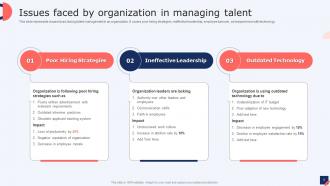
Slide 5: This slide shows Issues Faced by Organization in Managing Talent.
Slide 6: This slide presents Key Challenges Faced During Workforce Management.
Slide 7: This slide displays Statistics Related to Talent Management System.
Slide 8: This slide highlights title for topics that are to be covered next in the template.
Slide 9: This slide represents Implementing Integrated Talent Management System.
Slide 10: This slide highlights title for topics that are to be covered next in the template.
Slide 11: This slide showcases Team Effectiveness Assessment Scorecard to Evaluate Workforce Performance.
Slide 12: This slide shows Engagement Activities Plan for Employee Retention.
Slide 13: This slide highlights title for topics that are to be covered next in the template.
Slide 14: This slide presents Job Analysis for Recruitment and Selection Process.
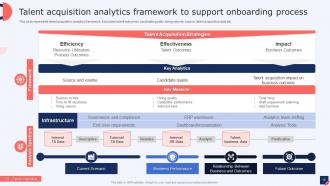
Slide 15: This slide displays Talent Acquisition Analytics Framework to Support Onboarding Process.
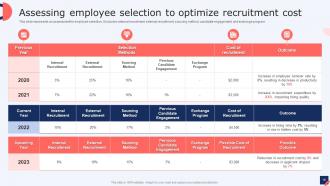
Slide 16: This slide represents Assessing Employee Selection to Optimize Recruitment Cost.
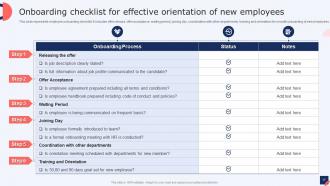
Slide 17: This slide showcases Onboarding Checklist for Effective Orientation of New Employees.
Slide 18: This slide highlights title for topics that are to be covered next in the template.
Slide 19: This slide shows Leadership Development Program with Key Activities.
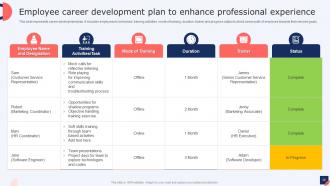
Slide 20: This slide presents Employee Career Development Plan to Enhance Professional Experience.
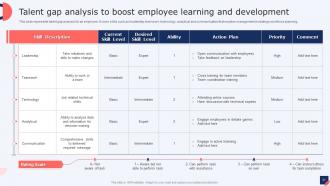
Slide 21: This slide displays Talent Gap Analysis To Boost Employee Learning and Development.
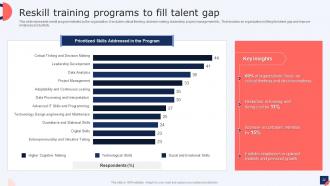
Slide 22: This slide represents Reskill Training Programs to Fill Talent Gap.
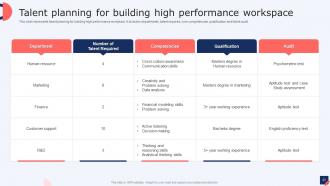
Slide 23: This slide showcases Talent Planning for Building High Performance Workspace.
Slide 24: This slide highlights title for topics that are to be covered next in the template.
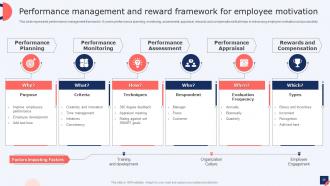
Slide 25: This slide shows Performance Management and Reward Framework for Employee Motivation.
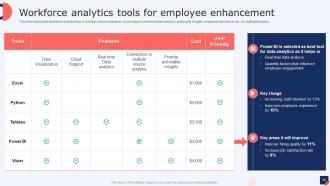
Slide 26: This slide presents Workforce Analytics Tools for Employee Enhancement.
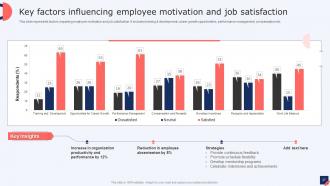
Slide 27: This slide displays Key Factors Influencing Employee Motivation and Job Satisfaction.
Slide 28: This slide highlights title for topics that are to be covered next in the template.
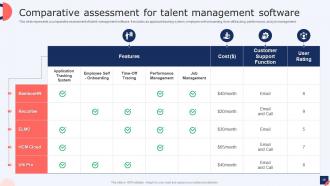
Slide 29: This slide represents Comparative Assessment for Talent Management Software.
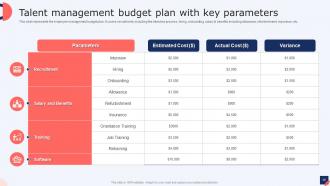
Slide 30: This slide showcases Talent Management Budget Plan with Key Parameters.
Slide 31: This slide highlights title for topics that are to be covered next in the template.
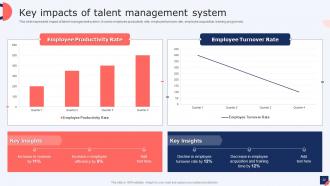
Slide 32: This slide shows Key Impacts of Talent Management System.
Slide 33: This slide highlights title for topics that are to be covered next in the template.
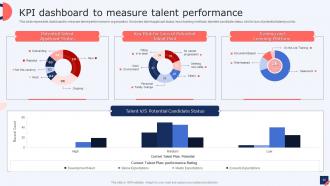
Slide 34: This slide presents KPI Dashboard to Measure Talent Performance.
Slide 35: This slide displays Dashboard to Evaluate Talent Management Metrics.
Slide 36: This slide contains all the icons used in this presentation.
Slide 37: This slide is titled as Additional Slides for moving forward.
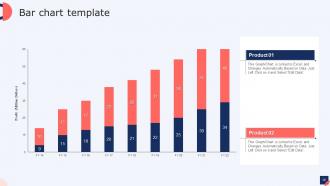
Slide 38: This slide presents Bar chart with two products comparison.
Slide 39: This slide displays Mind Map with related imagery.
Slide 40: This is Our Goal slide. State your firm's goals here.
Slide 41: This slide presents Roadmap with additional textboxes.
Slide 42: This slide provides 30 60 90 Days Plan with text boxes.
Slide 43: This slide shows Post It Notes. Post your important notes here.
Slide 44: This slide depicts Venn diagram with text boxes.
Slide 45: This slide contains Puzzle with related icons and text.
Slide 46: This is a Timeline slide. Show data related to time intervals here.
Slide 47: This is a Thank You slide with address, contact numbers and email address.
Talent Management Strategies For Workforce Development Powerpoint Presentation Slides with all 52 slides:
Use our Talent Management Strategies For Workforce Development Powerpoint Presentation Slides to effectively help you save your valuable time. They are readymade to fit into any presentation structure.























FAQs for Talent Management Strategies For Workforce Development
Look, you've got five main pieces: hiring, developing people, performance reviews, succession planning, and keeping folks around. Most companies totally blow it by treating these like separate things when they should work together. Your hiring should connect to how you develop people, which feeds into who you're grooming for bigger roles. Performance management is where you spot your stars and figure out skill gaps. I'd start by looking at what you already do - you'll probably find a bunch of disconnects. Oh, and map out that whole employee journey from day one to whenever they leave. That's where you'll see the real gaps.
Look for people who bounce back fast when things go sideways and actually speak up with ideas. The quiet ones asking smart questions? Way more promising than whoever's dominating every meeting, trust me. Give them challenging projects across different departments - that's where you'll really see what they're made of. 360 feedback helps track how they're doing. Honestly though, the real test is throwing them something with actual stakes involved. That separates future leaders from people who just nail interviews but freeze when it matters.
Look, engaged employees are honestly everything for talent management. They'll stay longer and work harder - obvious stuff, but it's true. The cool part? They become your unofficial recruiters and bring in great people. But here's the thing - disengaged ones will bolt the moment they get a better offer, which totally sucks after you've invested in training them. I'd definitely run regular surveys and do one-on-ones to check the pulse. Just don't be one of those companies that collects feedback then ignores it. Actually fix what's broken.
Honestly, tech can make hiring way less of a headache. AI screens resumes super fast, and analytics help you spot who's gonna quit before they do. Performance reviews become less awkward when you have actual data backing things up. Those employee engagement tools are clutch too - no more waiting a whole year to find out everyone hates the coffee machine or whatever. Learning management systems track development automatically. I'd start with just one thing though, maybe recruiting since that's usually the biggest pain point. Get that running smooth, then add more stuff. Don't try to overhaul everything at once - trust me on that one.
Start with retention rates and how fast you're promoting people internally - those tell you if talent's actually sticking around and growing. Time-to-fill for key roles matters too, especially if you're always scrambling to backfill positions. Engagement scores from surveys give you the pulse check, though honestly half the time people just click through those things. Track your succession planning coverage - do you have people ready to step up? Performance ratings of your high-potential folks are crucial. Cost-per-hire and training ROI help if finance keeps asking why you're spending so much. Pick 3-4 metrics that match your biggest headaches first.
Honestly, you can't just slap diversity efforts on at the end and call it good. Write job posts that don't alienate people, train your managers on bias (they definitely need it), and actually source from different talent pools. Track everything - application rates, promotions, the whole deal. Hold managers accountable for building diverse teams through performance reviews. Survey employees about whether they feel included. Oh, and make sure development opportunities aren't just going to the same people over and over. Tie D&I goals to career advancement so people actually care about hitting them.
Honestly, it comes down to three things: pay them fairly, give them room to grow, and don't suck as a workplace. Check your salary bands against what's out there - people will bounce for more money, period. Career paths matter too, so show them where they could go next and actually invest in training. Flexible schedules and recognition go way further than most managers think. But here's what really works - sit down with each person regularly and figure out what actually drives them. Everyone's different. Some want promotions, others just want interesting projects or better work-life balance. Then do something about it instead of just nodding along.
Okay so first figure out where your company's actually heading in the next few years. Expanding to new markets? You'll need totally different people than if you're just trying to run things more efficiently. Most companies mess this up - they just hire whoever when someone leaves instead of thinking it through. Map backwards from your business goals to figure out what roles you'll actually need. Then build your hiring and training around those specific gaps. I mean, your people should be part of your strategy, not just warm bodies filling desks. Makes way more sense that way.
Start with structured immersion but don't dump everything on them at once - prioritize what they actually need to know first. Daily check-ins for two weeks help a ton. Pair them with someone who isn't their boss (this is honestly clutch in busy places). Simple checklists they can knock out solo work great too. By week two, give them actual tasks even if they're small ones. Oh and definitely do a 30-day sit-down to fix anything that's not clicking instead of just crossing your fingers it'll work out.
Honestly, ditch the annual review thing - it's brutal for everyone. Monthly or quarterly check-ins are where it's at. Way less stressful and people can actually fix stuff before it becomes a problem. Focus on what they're actually doing, not weird personality assessments (those are the worst). Always connect it back to goals you both agreed on. Oh, and make it go both ways! Let them tell you what's not working too. I swear, some of my best changes came from just asking "what do you need from me?" Those conversations end up being way more productive than the formal review nonsense.
Honestly, investing in leadership development is huge for talent management. Good leaders can spot talent early and actually know how to coach people properly. Your best employees stick around when they respect their manager - that's just facts. Plus these leaders become way better at having those awkward but necessary retention conversations. I've seen it happen where companies lose great people simply because their managers suck at recognizing potential. Employees will literally leave good companies for mediocre ones if it means escaping a bad boss. So yeah, don't treat leadership development like some nice-to-have thing. Make it central to your whole talent strategy.
Honestly, you've gotta flip your whole approach to finding and keeping good people when they're all over the place. Digital onboarding is huge - make that experience smooth. Virtual mentorship works way better than you'd think. Focus on what people actually accomplish, not whether they're online at 9am sharp (that obsession with hours is so outdated anyway). Set up random virtual coffee chats and those cheesy but effective team building things online. Your managers probably need training too since managing remote teams is completely different. Oh, and just ask your remote folks what's broken - they'll tell you exactly what needs fixing.
Oh man, you're gonna hit some real headaches with this one. Cultural differences are brutal - Germans being super direct while that same approach totally bombs in Japan. Time zones make scheduling anything a nightmare. Then there's all the legal stuff that varies by country, different benefit expectations, holiday schedules that never line up. Performance reviews get weird when your team's scattered everywhere too. Honestly though, if you can get managers some solid cultural training and nail down your core processes (while staying flexible locally), you'll save yourself tons of drama down the road.
Just fold succession planning into your normal talent reviews instead of treating it like some separate thing. Figure out which roles would totally screw you if someone bailed tomorrow, then find 2-3 internal people who could potentially step up. Honestly, the annual planning thing never works - you've got to make this ongoing. During performance reviews, talk about where people want their careers to go and how that matches future openings. Cross-training and stretch assignments are your best friends here. Oh, and make the advancement paths visible! People actually stick around when they can see where they're headed.
Dude, forget the ping pong tables - that stuff doesn't work anymore. Give people "innovation time" for passion projects or direct mentorship with your executives. Remote work is expected now, but you could do flexible sabbaticals or skill swaps with other companies. Growth opportunities matter way more than free lunch tbh. Show actual career progression stories from your team. Oh, and get your top performers posting about work on LinkedIn - they're your best recruiters. The candidates worth hiring care about impact and learning new stuff, not perks.
-
I downloaded some of the presentations for work. They were simple to modify and saved me a lot of time and effort.
-
“I've always gotten excellent slides from them and the customer service is up to the mark.”