

Three components of etl process flow model




Try Before you Buy Download Free Sample Product
 Impress Your
 Audience
 100%
100% Editable
 Save Hours
 of Time


Emerge bigger and better with our Three Components Of ETL Process Flow Model. They help you face the brunt of change.
People who downloaded this PowerPoint presentation also viewed the following :
Three components of etl process flow model with all 2 slides:
Employing our Three Components Of ETL Process Flow Model is an excellent habit. They ensure you always deliver.
FAQs for Three components of etl
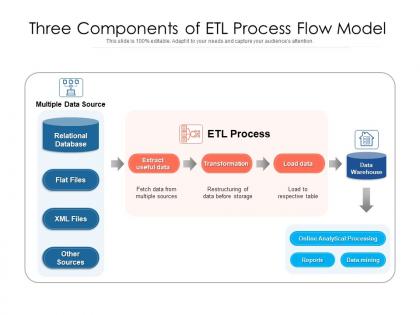
So ETL breaks down into three steps that happen in order. First you extract data from wherever it lives - databases, APIs, random files, you name it. Then comes the transform part where you clean everything up and reshape it to fit your target system. Load is last - that's when you actually put the clean data into your warehouse or whatever. Here's the thing though - if one stage breaks, you're screwed downstream. Like if extraction fails, there's nothing to transform. I always add error handling at each step because debugging ETL issues later is honestly the worst. The whole thing works like a chain reaction basically.
So extraction is just grabbing all your raw data from wherever it lives - databases, APIs, random files, you name it. Transformation though? That's where the real work happens. You're cleaning up messy records, switching data types around, applying whatever business rules you've got, joining stuff together. Honestly, extraction should be the easy part. But transformation... man, that's where you'll be pulling your hair out debugging. Most of your actual logic ends up living there too. I learned this the hard way on my last project lol.
Oh man, data quality issues will absolutely wreck your day - dirty data, duplicates, missing stuff that breaks everything downstream. Performance bottlenecks are brutal too. Try parallelizing the heavy operations if you can. Schema changes? Yeah, they're gonna happen whether you like it or not, so build some flexibility in early. Honestly the best advice I can give you is spend time on validation and error handling upfront. I know it's boring but trust me, you don't want to be debugging pipelines at 2am. Set up monitoring and alerts too - future you will thank present you.
Honestly, start with what you've actually got - how much data, how messy it is, and can your team even code? Some tools need serious programming skills while others are basically point-and-click. Budget's huge too since licensing gets insane quick. Make sure whatever you pick plays nice with your current systems and can grow with you. Oh, and think about support - nothing worse than being stuck at midnight when everything crashes. I learned that one the hard way lol. Test out 2-3 options with a small project first. Don't just pick the shiny one.
Honestly, data quality can make or break your whole ETL process. Garbage in, garbage out - you know how it goes. I'd set up validation rules right from the start during extraction, then do most of your heavy lifting in the transformation stage (that's where you'll catch the weird stuff). Run some final checks before loading too. Oh, and build quality checks into each step instead of trying to fix everything at the end - trust me on this one. Automated profiling helps a ton, plus you'll want solid exception handling for those random outliers that always pop up. Way easier than debugging downstream disasters later.
So basically ETL transforms your data first, then loads it. ELT does the opposite - dumps everything in raw, transforms later. If you're dealing with traditional databases or need super clean data upfront, ETL's probably your move. But honestly? ELT is crushing it right now because cloud storage is dirt cheap and platforms like Snowflake are beasts at processing. I'd go ELT if you've got tons of data and want flexibility to mess around with different transformations down the road. ETL still makes sense for smaller, structured stuff though.
Break everything into small, reusable pieces you can test separately - makes debugging way easier. Error handling and logging are huge, you'll be lost without them when stuff breaks. Incremental processing beats full loads every time for speed. Data quality checks at each step are non-negotiable. Monitor your performance metrics too. Honestly, I've seen so many people skip documentation and regret it later - write down what your transformations actually do. Your 2am future self debugging some random pipeline will definitely appreciate it. Oh, and modular design from the start saves tons of headaches down the road.
So automation basically lets you schedule data loads and monitor everything without constantly checking on it. Start with your daily refreshes and standard transformations - the boring stuff you do all the time. You'll want automated quality checks and retry logic for when things inevitably break. Honestly, don't try to automate everything at once though. Pick one pipeline first, get comfortable with the monitoring setup, then expand from there. Once it's dialed in, you can even auto-scale resources based on data volume. Total game-changer for sanity.
Encryption is your first move - both when data's moving and sitting still. Can't mess around with that stuff. Set up role-based access so random people aren't poking around your pipeline. We made the mistake once of letting dev environments get real customer data... not fun explaining that one. Mask or tokenize everything in non-prod. Log who's accessing what and when - auditors love that trail. Oh, and throw in some data validation checks between stages to catch tampering. Honestly, nail the encryption and access controls first. Everything else you can build on later.
Honestly? Go with cloud first - way less headache. AWS Glue or Azure Data Factory handle the scaling automatically, plus they've got connectors for pretty much everything. No server babysitting required. On-prem gives you more control and can be faster for massive datasets, but the setup is brutal. Pricing's totally different too - cloud charges by usage while on-prem hits you upfront with all that hardware. I mean, unless you've got some crazy security requirements, start with cloud and see how it goes. You can always move later if you really need that extra control.
So basically you're flipping ETL upside down - no more waiting around for batch jobs to run overnight. Data gets transformed while it's streaming through your pipeline. Super cool tech, but honestly? It'll complicate your setup big time. You can't just restart a failed batch anymore, so error handling gets tricky. Storage and validation need a total rethink too. My advice: figure out what actually needs real-time processing first. Most stuff doesn't, and you can always mix approaches. Don't go full streaming just because it sounds fancy.
Don't treat compliance like something you'll figure out later - build it right into your ETL from the start. Mask and encrypt any PII during transformation (trust me on this one). Audit trails are your best friend when regulators show up, so log everything that moves. Auto-purge old data based on GDPR or whatever rules hit your industry. I learned this the hard way, but validation rules should catch bad data before it reaches your targets. Honestly, just think of compliance as part of your code, not some separate headache you'll deal with eventually.
So Netflix's recommendation engine? That's pure ETL magic - processing all your viewing data to nail those "because you watched" suggestions. Walmart does the same thing but for inventory tracking across their stores. Banks like JPMorgan run ETL for fraud detection and compliance stuff. Healthcare systems use it too, pulling patient records from different departments together. Oh and Spotify - they're analyzing your music habits to build those playlists that hit different. Honestly though, don't overthink it. Start with one data source and build from there. You'll figure out what works.
Honestly, ML can make your ETL way smarter. It'll automatically catch bad data and spot weird anomalies as they happen. The algorithms learn patterns in your transformations and suggest which ones work best - sometimes even recommending new data sources you hadn't thought of. Predictive profiling is probably the coolest part though. It finds problems before they mess up everything downstream. I'd say start with just adding anomaly detection to whatever you're already running. Way less overwhelming than trying to rebuild everything at once, and you'll actually see results pretty quick.
Cloud-native ETL and real-time streaming are totally taking over batch processing. The AI stuff for data transformations is actually pretty crazy - it auto-detects patterns and suggests mappings better than I expected. Business users will get their hands on ETL through low-code platforms, which honestly might be a blessing or a curse depending on your team. DataOps is becoming standard too. You'll want version control and automated testing for your pipelines. Start messing around with Kafka now if you haven't already. Also get comfortable with cloud ETL services since that's obviously where this is all going.
No Reviews