


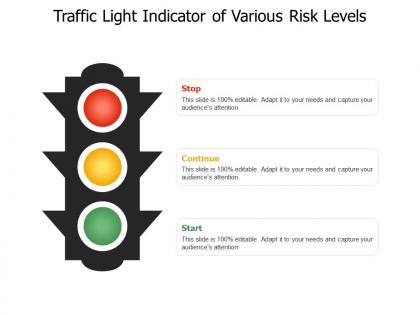
Traffic light indicator of various risk levels




Try Before you Buy Download Free Sample Product
 Impress Your
 Audience
 100%
100% Editable
 Save Hours
 of Time


Folks intimate approval due to our Traffic Light Indicator Of Various Risk Levels. They feel inspired by the display.
People who downloaded this PowerPoint presentation also viewed the following :
Traffic light indicator of various risk levels with all 5 slides:
Enhance goodwill with our Traffic Light Indicator Of Various Risk Levels. Benefit from a build up of friendly feelings.



FAQs for Traffic light indicator of
So basically you wanna map out what could go sideways first - that's your hazard list. Then figure out how likely each thing is and how bad it'd be if it happened. Honestly, the documenting part is boring but you'll hate yourself later if you skip it during audits. Make sure someone owns each risk too, otherwise nothing gets done. Oh and don't treat this like homework you finish once - risks change all the time. I'd just work through them one by one, rank by severity, then set up whatever controls make sense. Pretty straightforward once you get going.
Start with mapping your main processes and ask "what could go wrong?" at each step. Get different teams together for brainstorming - they'll catch stuff you miss since they're dealing with the day-to-day chaos. Look back at old incidents and complaints too. Patterns always show up if you dig. Industry reports are super helpful, though nobody reads them enough. External risks matter just as much - regulatory changes, supply chain mess, economic weirdness that blindsides you. Be systematic about it instead of crossing your fingers. Set up regular risk reviews so it becomes habit, not something you do once and forget about.
So here's the thing - you need both, but for different reasons. Quantitative gives you actual numbers that bosses can wrap their heads around. Dollar amounts, percentages, that kind of stuff. But qualitative catches things like reputation hits or team morale that you can't really put a price tag on. Most people I know mix them together because, let's be real, not everything fits into a neat spreadsheet. Start with qualitative to spot the risks, then crunch numbers where you actually have decent data to work with.
Look, annually is the absolute minimum but you're kinda shooting yourself in the foot if that's all you do. Quarterly makes way more sense for most places. Also bump it up whenever you roll out new systems or have a major incident - don't just stick to your calendar religiously. High-risk industries obviously need to do this more often. I've watched too many companies get completely blindsided because they were doing their yearly check while everything around them was changing. Build it into your regular routine instead of treating it like some big annual event. Seriously, just schedule your next one right now.
Start with risk matrices - just probability vs impact grids. Super straightforward. Risk registers help track everything in one place, plus SWOT analysis covers your basics. Monte Carlo simulations and decision trees get fancy but honestly they're overkill unless you really need them. I'd also do brainstorming sessions and interview some experts to catch stuff you missed. Industry checklists work well too - why reinvent the wheel? Begin with simple tools first. You can always get more sophisticated later once you've got the hang of it.
So basically, risk assessment stops you from making dumb decisions by figuring out what could blow up in your face beforehand. You list out potential problems, then rate how likely they are and how badly they'd mess things up. Way better than just winging it and hoping for the best, honestly. Then you can decide if the potential payoff is worth the headache. I always do this super simple - just grab a piece of paper and brain dump everything that could go sideways with whatever I'm considering. Once you see it all laid out, the decision usually becomes pretty obvious.
Honestly, you're gonna run into three main headaches. First one's bad data - people either don't know what's actually happening or they're hiding the ugly stuff from you. Stakeholder bias is brutal too because everyone swears their project is totally safe (yeah right). Oh, and scope creep will definitely bite you. You'll start with one thing and suddenly you're analyzing risks you never even heard of before. Best thing you can do? Be super clear about boundaries from day one. Don't let people sugarcoat things - push for the real story even when it's awkward. And seriously, pad your timeline because this stuff always takes longer than expected.
So regulatory requirements are basically your non-negotiable checklist - you don't get to skip stuff. Your industry will have specific frameworks you've got to follow: ISO 27001, SOX, GDPR, whatever applies to you. Some of them are pretty rigid tbh, which can be a pain, but at least they give you structure. Oh and document everything according to their exact requirements and timelines - your risk assessment method needs to prove you're compliant. Trust me, you don't want to mess around with missing their documentation standards.
Dude, skipping risk assessment is like walking into a minefield blindfolded. Projects blow up when you don't see problems coming - budgets explode, deadlines get missed, your team's running around like crazy. I watched one project completely crash because nobody bothered mapping out what could go wrong. Your stakeholders lose faith, everyone burns out from putting out fires constantly. Oh, and you'll need way more money and people than you budgeted for just to fix preventable stuff. Honestly? Just pick your top 5 risks right now and figure out how to handle them. Trust me on this one.
Don't wait until after you've made your big strategic decisions to think about what could go wrong. Right when you're setting goals, ask yourself what might tank each one. I learned this the hard way watching teams scramble when stuff hit the fan. For every major initiative, figure out what internal and external threats you're facing. Then build some backup plans - not so many that you're paralyzed, but enough so you've got moves when things inevitably get messy. Next planning meeting? Spend like a third of your time just war-gaming different scenarios.
Get people from different departments involved - they'll spot stuff you'd totally miss. Document everything clearly so it's not just sitting in your head. I'd say quarterly reviews work best to keep things current. Use both numbers and gut feelings for a complete picture, honestly the combo works way better than just one approach. Don't wait for disasters to update your process (learned that one the hard way). Make it systematic instead of just winging it whenever issues pop up. This keeps your assessments actually useful for real business situations.
Tech is honestly a game-changer for risk assessment - way better than drowning in spreadsheets like we used to. Real-time analytics and AI can spot patterns you'd never catch manually, plus they crunch massive amounts of data without the human errors we're all guilty of. The predictive modeling stuff is pretty wild too. I'd start by figuring out what's eating up most of your time right now, then find tools that actually fix those specific headaches. Don't try to automate everything at once though - that's where people usually mess up.
Risk assessment is basically figuring out what could go wrong before it actually does. You map out potential threats and how likely they are - that becomes your blueprint for crisis response. It's like having a fire drill, except way more detailed than those weird office ones where everyone just stands around confused. Crisis management is your actual game plan when stuff hits the fan. The assessment shows you what might happen and how bad it could get. Then your crisis plan is what you DO about it. I'd start by checking if your current risk assessments actually match your crisis plans - sometimes there's a weird disconnect there.
First thing - figure out what risks actually hit your industry hard. Tech companies worry about cyber stuff, manufacturing deals with supply chain nightmares. Healthcare's got totally different headaches than retail, you know? Don't just grab some random template online either. Build your risk assessment around what matters for YOUR sector specifically. Industry associations are goldmines for this - other people who've been through the same crap can save you tons of headaches. Use their data and benchmarks when you're scoring how likely things are to happen. That real-world experience beats textbook theory every time.
So once you've done your risk assessment, rank everything by how bad it could get and how likely it is to happen. Focus on the scary stuff first - you know, the things that would actually mess up your project. Then figure out how to either stop these risks from happening or at least make them less painful if they do. Here's the thing though: you absolutely have to put someone in charge of each risk and give them deadlines, otherwise nothing gets done. Oh, and check in regularly because risks change as your project moves along.
No Reviews