

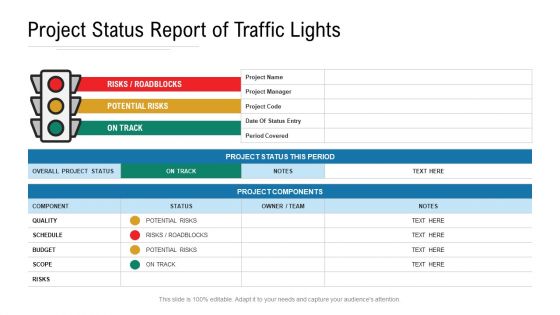
Project status report of traffic lights





Try Before you Buy Download Free Sample Product
 Impress Your
 Audience
 100%
100% Editable
 Save Hours
 of Time


Elaborate on the injunction with our Project Status Report Of Traffic Lights. Enlighten folks about the court's decision.
People who downloaded this PowerPoint presentation also viewed the following :
Project status report of traffic lights with all 2 slides:
Enlighten folks about the court's decision with our Project Status Report Of Traffic Lights. Elaborate on the injunction.
FAQs for Project status report
So we've got three phases running at once, which has been kinda crazy to manage. Hardware installation wraps next month - that's Phase 1. Phase 2 is the software stuff, about halfway done, should be finished by September. Testing starts in August even though Phase 2 won't be totally done yet, which feels risky but whatever. The timeline's been aggressive from day one, honestly. Check the Gantt chart in the project folder for exact dates. Oh, and definitely talk to Maria next week - she's handling the handoff between phases 2 and 3, so she'll know way more about potential hiccups than I do.
So we've got IoT sensors and traffic analytics running to track everything in real-time. Every 30 seconds they're measuring wait times, queue lengths, how much traffic gets through. The dashboard is actually pretty cool - heat maps show where things get backed up. Driver feedback comes through this mobile app too, which is nice. We compare all this against the old data from before we switched on the new system. Oh, and I can totally send you the dashboard link if you want to poke around. The metrics are way easier to read than I expected.
So we've got four KPIs to watch: signal response time (under 2 seconds), system uptime, pedestrian wait times, and traffic flow vs baseline. Honestly, response time matters most - nobody wants to get stuck at a dead light. Your team should really focus on that uptime stuff though, we're shooting for 99.5% reliability. Check the dashboard weekly so you can catch problems early. Oh and speaking of dashboards, ours looks way better than the old system we had - but anyway, yeah just don't let small issues turn into big headaches.
So we've got two main issues right now. The smart sensors are delayed because our vendor's being flaky, and residents are losing their minds over 30-second changes to their commute - honestly, people are so dramatic about traffic! We found a backup supplier though, so we're only pushing the timeline back two weeks. Community meetings are happening to calm everyone down, plus there's that FAQ page floating around. The team's running more simulations to get the timing perfect before we go live. I'd check the project dashboard weekly since everything's moving super fast now.
So we've got three ways people can give feedback on this traffic light thing. Monthly community meetings where folks can complain directly to the team - which honestly they're gonna do anyway. There's an online portal too for suggestions and tracking responses. Local businesses are getting special attention since they're already pretty fired up about the timing changes (can't say I blame them). The steering committee reviews everything weekly and promises to get back to people within 10 days. I'd tell your stakeholders to stick with the online portal though - creates a record so stuff doesn't disappear into the void.
So they've got this AI thing that actually changes the light timing based on how busy traffic is right then. Pretty wild. There's sensors everywhere detecting pedestrians and bikes, plus newer cars can literally communicate with the lights somehow. Machine learning predicts when rush hour's gonna hit and stuff - honestly didn't think we'd see this kind of tech in our boring little city but here we are. You should definitely drive through that test spot on 5th Street, the wait times are way better now. Makes my commute less painful for sure.
So that traffic light thing should help flow by like 15-20% during rush hour, plus accidents could drop 30% from what they've seen elsewhere. Those intersections with just stop signs are honestly a mess right now - people just send it half the time. Smart timing means no more sitting at reds when there's literally nobody coming the other way, which is so annoying. Peak improvements will be at those sketchy spots where everyone's currently winging it. Oh and maybe try different routes once they flip the switch next month - you might find something faster.
So we got hit with this brutal 15% budget cut right in the middle of everything, and then material costs went completely crazy - like way worse than anyone saw coming. The team's doing this phased rollout thing now where high-traffic intersections get done first. Smaller residential stuff? That's getting pushed to next quarter, which honestly sucks but whatever. At least the main functionality is still solid. Your department's probably gonna see some timeline changes though, so don't count on that July date anymore. Sarah should have the updated schedule - definitely worth checking with her.
So we've got the city's traffic engineering department looking over our designs at every big checkpoint. Those regulatory people can be super picky about their standards, but it's actually going pretty well. Plus we hired this certified traffic safety consultant who's checking that we're hitting all the MUTCD requirements and local codes. Our team does these weekly safety walkthroughs - honestly sometimes they feel a bit repetitive but whatever. Check the shared project folder though, there's this compliance checklist that'll show you exactly where we stand on everything. That's probably your quickest way to see what's what.
Dude, data analytics is literally what makes or breaks the Traffic Light Project. You're pulling real-time traffic flow, peak hours, accident hotspots, pedestrian timing - all that stuff tells you where you actually need to intervene instead of just guessing. Which we're usually terrible at, by the way. It helps you figure out which intersections to tackle first and whether your changes actually did anything useful. Without the numbers you're basically throwing money at expensive equipment and hoping for the best. Pull monthly reports so you can catch issues before they snowball into bigger headaches.
So they're doing monthly emails and posting stuff on the city website - that's the main way they'll keep everyone updated. Text alerts are where it's at though, you'll get those for big delays or when traffic gets really messy. There's supposed to be public meetings every few months but who has time for those, right? Their social media has weekly photos if you're into that. Oh, and definitely sign up for emails early because they sometimes give you alternate routes before the chaos actually starts. Way better than being surprised by a blocked street.
So we've got three partners lined up. TechFlow Solutions is doing the AI software that makes the lights actually smart, and Green Infrastructure Inc. is handling the LED units plus maintenance. The city's transportation department took over all the permitting nightmare - honestly such a relief because that paperwork would've killed us. Best part? We cut the timeline in half. Six months instead of twelve, which is huge. Oh, and definitely check out those partnership docs in the shared folder before you talk to stakeholders again. There's some good stuff in there you'll want to know about.
So we're doing longer crossing times and adding those beeping sounds for blind pedestrians. Took ages to get the audible signals approved - bureaucracy is wild. They're also putting in those tactile buttons you can actually feel, plus way clearer crosswalk paint. Oh, and countdown timers so people know how much time's left to cross. Super helpful honestly. If residents bug you about specific accessibility stuff, just send them to the project portal. We posted the whole compliance checklist there so they can see everything we're doing.
So we're actually learning from past screw-ups this time around. Main Street was a disaster because nobody told residents what was happening - people were furious. Now they're doing tons of community meetings upfront. They also added 20% extra time for weather delays after last winter's mess. Plus utility companies are involved from the start instead of us finding out halfway through that there's a gas line nobody knew about. Should be way smoother, though honestly I'll believe it when I see it. Check that project portal thing weekly just in case.
So they're planning a team lunch when we get all 15 intersections up and running - honestly can't wait for that! Individual shoutouts too for anyone who really crushed it. The metrics they're watching are 95% uptime, 20% better traffic flow, and no safety issues in the first three months. Oh, and definitely start documenting your stuff now since they'll be doing individual reviews at the end. I learned that the hard way on my last project lol. Traffic lights seem boring but this rollout's actually been pretty cool to work on.
No Reviews