


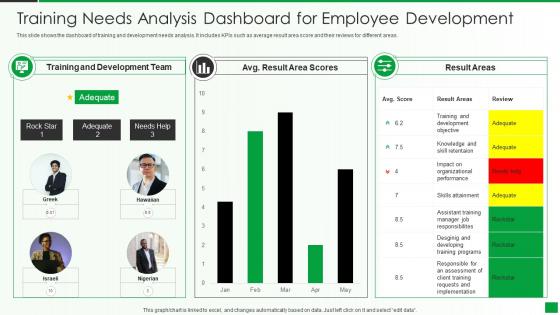
Training Needs Analysis Dashboard For Employee Development




Try Before you Buy Download Free Sample Product
 Impress Your
 Audience
 100%
100% Editable
 Save Hours
 of Time


This slide shows the dashboard of training and development needs analysis. It includes KPIs such as average result area score and their reviews for different areas.
People who downloaded this PowerPoint presentation also viewed the following :
Training Needs Analysis Dashboard For Employee Development with all 1 slides:
FAQs for Training Needs Analysis Dashboard
So basically you're trying to figure out what skills your team actually lacks vs what you assume they need - and trust me, those are often totally different things. A TNA helps you spot those gaps and avoid throwing money at random training that won't help anyone. Sometimes what looks like a training issue is really just crappy processes or outdated tools anyway. Talk to your team leads first - they know exactly where people are struggling. The whole point is making sure your training budget actually fixes real problems instead of just checking boxes. Way more effective than guessing.
Honestly, just compare where people are now vs where they should be - pretty straightforward. First figure out what "good" actually looks like for each role, then see how your team stacks up. Use whatever you've got: watch them work, run some skills tests, look at performance numbers. Here's the thing though - just ask your people directly what they're struggling with! They'll usually tell you the truth. Check if it's happening across multiple teams or just certain folks. I learned this the hard way, but being systematic beats guessing every time. Once you've mapped out those gaps, you can build training that actually works instead of generic stuff nobody needs.
Honestly, surveys are probably your best bet since they're easy to scale up and you get actual numbers to work with. Interviews take forever but they're gold for digging deeper into issues. Focus groups are solid too - people bounce ideas off each other and you catch stuff you'd never think of alone. Oh, and don't forget just watching people do their jobs. Sounds obvious but you'd be surprised what gaps show up that nobody mentions in surveys. Performance data helps too if you've got it. I'd mix maybe 2 or 3 of these methods - gives you a way better picture than just doing one thing.
So here's the thing - a good TNA is basically your GPS for training decisions. You figure out what skills your team's missing that are actually blocking bigger business goals. Like if sales need to jump 20% but your reps can't handle objections... boom, there's your training focus. Way better than just throwing money at random workshops, you know? Map out where performance is falling short compared to what you're trying to achieve as a company. Honestly, it's one of those things that seems obvious once you do it, but most places skip this step and wonder why their training budget disappears into thin air.
Look, employee feedback is huge for your TNA - you can't skip it. They know where they're actually struggling versus what management thinks is the problem (spoiler: usually different things). Get them talking about their day-to-day challenges and what training would genuinely help. Some prefer hands-on learning, others want online modules - you won't know unless you ask. I'd do surveys or maybe focus groups before building anything. Otherwise you're just throwing training at the wall and hoping something sticks, which honestly wastes everyone's time.
Honestly, going digital with your TNA will save you so much headache. Survey tools like SurveyMonkey make collecting feedback from remote teams super easy. Your LMS probably already shows where people are failing modules - that's gold right there. Analytics dashboards reveal patterns you'd never spot manually (I learned this the hard way). AI can even sort through all those messy open-ended responses to find themes. Don't overthink it though. Pick one tool first and expand later, or you'll just create more work for yourself.
Don't automatically assume training is what's needed - that's the classic mistake everyone makes. Talk to the actual workers, not just their bosses, because managers have zero clue what's really happening on the ground. Take your time collecting data too. I see people rush this part constantly and then wonder why their solutions flop. Avoid asking questions that just confirm what you already think you know. Once you've analyzed everything, go back and validate with the people involved. Honestly? Start with nailing down exactly what problem you're trying to solve first.
Honestly, you've got to speak their language. Executives just want the bottom line - ROI, budget, done. But managers? They need the nitty-gritty on skill gaps and timelines. I'd make a simple executive summary first - key findings, what to do next, how much it costs. Department heads get the deeper dive into their team's actual needs. Oh, and dashboards are your friend here - everyone's a sucker for a good visual that tells the story fast. Just be super clear about next steps and who's responsible for what. It's all about making it relevant to what they can actually do something about.
So you want to see if your TNA actually did anything, right? Check skill scores before/after training first. Then look at performance metrics tied to those gaps you found. Employee confidence levels matter too - honestly, that's sometimes more telling than the hard data. Track completion rates and engagement during programs as your early warning signs. But here's the thing - watch for actual behavior changes on the job afterward. That's what really counts. Don't forget business metrics like productivity or quality scores that should've improved if you nailed the right issues originally.
Oh totally - departments are so different it's crazy. Sales needs CRM training and negotiation stuff. IT wants certifications and cybersecurity updates. Then you've got HR and finance with all their mandatory compliance training that nobody else cares about. Honestly, tracking it all is kind of a nightmare. Each team has their own goals and problems they're dealing with day-to-day. I'd say start by actually talking to the department heads first. They'll tell you what's really broken instead of you guessing with some generic approach that won't work anyway.
Look, managers control the purse strings and resources, so you need them on board from day one. Don't design everything first then hope they'll approve it - that's backwards. They see stuff happening on the ground that you might miss sitting in HR. Plus they know what the company's actually prioritizing right now. I've seen too many training programs flop because someone skipped this step. Interview the key managers early and loop them in as you go. Otherwise you'll end up with beautiful training that solves problems nobody cares about.
Don't just do the yearly assessment thing - that's way too slow. Quarterly check-ins with your team work better, plus keep an eye on what competitors are doing. Performance gaps will show you where training's needed. Your customers actually spot skill issues before you do half the time, so talk to them regularly. Exit interviews are gold mines for this stuff (people finally tell the truth when they're leaving). Performance reviews, project wrap-ups, casual conversations - they all reveal gaps. Honestly, most companies overthink this. Pick two methods you can actually stick with and go from there.
Culture is everything when it comes to training needs analysis. People won't admit their skill gaps if they're scared of looking incompetent - you'll just get BS responses. Honestly, I've seen this backfire so many times. Your team needs to feel safe saying "I don't know this stuff" without getting thrown under the bus. Leadership has to actually care about development too, not just pay lip service to it. Otherwise you're basically burning money on fancy reports nobody will act on. Here's the thing - figure out if your culture even wants to learn first. Some places are just stuck in their ways and will fight any change recommendations.
Honestly? Do it every 6-12 months - I've seen too many companies wait a full year and miss major gaps. Tech moves fast so quarterly makes sense there, but stable industries can probably get away with annual reviews. Watch for the obvious triggers though: big org changes, new tech rollouts, when performance starts slipping. Basically anytime your team's skills feel mismatched to what they actually need to do. Oh, and set that calendar reminder now because you'll totally forget otherwise - we all do it.
ADDIE or the 70:20:10 model give you solid structure, but honestly? Sometimes a basic template gets the job done just as well. Articulate Rise and TalentLMS are decent if you want something polished. For collecting data, even Google Forms works fine. Focus on repeatable stuff - same interview questions for everyone, competency matrices, gap analysis templates. I've actually seen teams nail this with just a shared spreadsheet and consistent rating scales. Nothing fancy, but it worked. Pick whatever your people will actually stick with instead of the shiniest tool that'll collect dust.
-
“I required a slide for a board meeting and was so satisfied with the final result !! So much went into designing the slide and the communication was amazing! Can’t wait to have my next slide!”
-
Like always a great experience with you guys. Always there on the drop of hat to help.