

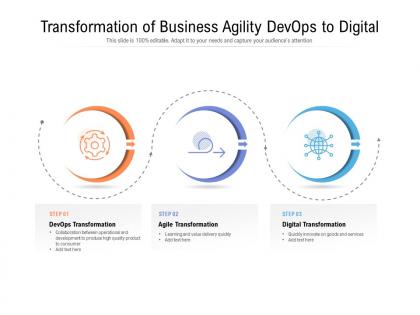
Transformation of business agility devops to digital




Try Before you Buy Download Free Sample Product
 Impress Your
 Audience
 100%
100% Editable
 Save Hours
 of Time


SlideTeam's Transformation of business agility devops to digital ppt presentations are designed to help you transform your business operations and accelerate your digital transformation journey. Our Transformation of business agility devops to digital ppt presentation templates are fully editable and come with a wide range of features that will help you streamline your transformation process and achieve your desired outcomes. With our Transformation of business agility devops to digital ppt presentation templates, you can easily track your progress, identify bottlenecks, and implement strategies that will help you overcome challenges and achieve success.
People who downloaded this PowerPoint presentation also viewed the following :
Transformation of business agility devops to digital with all 2 slides:
Use our Transformation Of Business Agility DEVOPS To Digital to effectively help you save your valuable time. They are readymade to fit into any presentation structure.
FAQs for Transformation of business agility
Okay so first thing - you absolutely need leadership backing you up, plus a solid vision and your team actually bought in. Without those three? You're screwed, honestly. Tech infrastructure and data strategy matter too, obviously. Oh and change management is huge - I've seen amazing tech projects tank because nobody wanted to use the new system. Start with what your customers actually need though, then figure out the tech to fix it. Way better than just throwing digital stuff at problems that don't exist. Pick one small area to test first instead of going crazy trying to change everything.
Start by picking 3-5 metrics that actually matter for your goals. Track the obvious stuff - cost savings, revenue bumps, productivity gains. But don't sleep on the softer metrics like customer satisfaction and how engaged your team is. Those can make or break you long-term, honestly. Oh, and measure regularly throughout the process, not just at the end when it's too late to fix anything. I learned that one the hard way. Time-to-market improvements are huge too if you're in a competitive space. The key is having your baseline locked down before you start so you can see what's actually working.
So basically, IoT gives you eyes on everything happening in real-time - equipment, customers, whatever. Then AI takes all that data and actually turns it into something useful instead of just overwhelming you. Together they're pretty solid for automating stuff and catching problems before they blow up. You can personalize customer experiences way better too. Honestly, I'd just pick one annoying problem you're dealing with and test it there first. Once you see it working, you'll probably find like ten other places to use it.
Dude, I can't stress this enough - culture will absolutely make or break your digital transformation. Seen too many cool tech projects crash and burn because nobody wanted to use them. Your people have to feel safe experimenting with new stuff, even when they screw up (and they definitely will at first). Get leadership actually using the tools themselves instead of just talking about it. Find your early adopters and get them hyped before you roll anything out wide. Oh, and celebrate those small wins! Sounds cheesy but it actually works. Without the right mindset, you're just throwing money at fancy software nobody will touch.
Look, don't wait until the end to think about security - weave it into everything from day one. Encrypt all your data, obviously. Zero trust is clutch because it assumes everyone's sketchy until proven otherwise (paranoid but effective). Your team needs regular security training, and honestly? Run those pen tests before hackers do it for you. Oh, and map out your incident response plan NOW while you're not freaking out. Trust me on this one - scrambling during an actual breach is nightmare fuel. The whole "bolt-on security later" approach is how companies end up in headlines.
Honestly, most companies just throw money at fancy tech without thinking about their people first. That's where everything falls apart. Your team needs to actually understand why you're doing this stuff, otherwise they'll just resist the whole thing. Also, everyone tries to change everything at once - terrible idea. Pick one process and nail that first. Oh, and the whole "we need to digitize because everyone else is doing it" mentality? Super common but totally backwards. Figure out what actual problem you're solving first. Leadership vision matters too - if your executives can't explain the point, you're already screwed. Timeline estimates are always way off, so just expect that.
Get your people involved from day one - don't just drop changes on them out of nowhere. They need to feel like they're part of building something, not having it forced on them. Be super transparent about the "why" behind everything and what's actually in it for them personally. Training is obviously crucial, but here's what most companies mess up - they forget to celebrate the small wins. Those early victories build serious momentum. Oh, and find your tech-savvy employees who are genuinely excited about this stuff. Let them be your unofficial cheerleaders with the skeptics. Trust me, peer influence beats top-down mandates every time.
Look, customer experience should totally drive your digital transformation strategy. I always tell people to start with customer pain points and work backwards - figure out what's actually broken first. Too many companies just grab whatever shiny tech looks cool and then act surprised when nobody uses it. Your customers are basically giving you a free roadmap when they complain about your processes. Just audit where people get stuck in your customer journey. Those friction points? That's literally where you should focus your digital efforts. Way more effective than picking random tools and hoping they'll stick.
Honestly, you've got a huge advantage here - you can move way faster than those corporate giants. Big companies spend months in meetings just deciding what color to make a button. You can test new stuff and pivot in weeks. Start with the customer-facing things first. Better website, social presence, maybe online ordering if that makes sense for your business. Don't try to fix everything at once though - that's a recipe for burnout. Pick 2-3 digital upgrades that actually make customers' lives easier. The whole point is being more accessible and responsive than those slow dinosaurs you're competing against.
McKinsey's 8 Accelerators is pretty solid - covers strategy, talent, all that stuff. MIT CISR focuses more on digital business models if that's your thing. Honestly though, I've watched teams waste months just debating which framework to use. Kotter's 8-step model is good too, especially when people are being resistant to change. My take? Just pick whatever clicks with your leadership team and makes sense for your industry. You don't have to follow it religiously - actually, you probably shouldn't. Adapt as you go and figure out what actually works for your situation.
Dude, regulatory stuff is like hitting speed bumps every few blocks when you're trying to transform digitally. Healthcare, finance, energy - they're all drowning in compliance rules that totally dictate what tech you can actually use. Can't just slap AI or cloud solutions everywhere without thinking about data privacy laws first. Security standards too. Honestly? It's annoying as hell sometimes, but I've seen companies get absolutely wrecked by fines when they ignore this stuff. My advice - build your whole strategy around compliance from the start. Way easier than trying to retrofit everything later when auditors come knocking.
You're gonna need digital literacy for sure - basically being comfortable picking up new tools without freaking out. Adaptability is huge too since everything changes constantly. Data skills are becoming pretty standard now, even for non-tech roles. The learning never really stops tbh, which is simultaneously exhausting and kind of thrilling? Critical thinking becomes super important because you're always trying to figure out the best digital solutions. Communication skills matter more than ever - you'll be collaborating through screens daily. Pick one digital skill you're lacking and just dive in this month.
Dude, collaboration tools are game-changers for digital transformation. They cut out all that annoying back-and-forth email stuff and put everything in one spot - real-time chat, shared docs, the works. Your team can actually get stuff done instead of drowning in version control chaos (seriously, who hasn't been there?). What's really cool is how they knock down those department walls. When you're implementing new systems, everyone can jump in and fix problems together right away. My advice? Pick one solid tool that plays nice with what you already have. Don't go crazy with like ten different platforms - that'll just stress everyone out.
Honestly, agile is a game-changer for digital transformation stuff. Instead of spending forever planning every detail, your teams can test things quickly and pivot when something isn't working. Digital projects have this annoying habit of going off the rails, but agile catches problems early before they become disasters. You break massive transformation projects into smaller sprints - way less overwhelming and stakeholders actually see progress happening. Plus you can adjust when requirements change (which they always do, let's be real). I'd pick one project to start with and see how it goes from there.
Yeah totally! Most companies do this hybrid thing where they keep the old stuff running while slowly building new pieces. Don't rip everything out at once - that's asking for trouble. Start with whatever customer-facing stuff will make the biggest splash, then work backwards. Build some APIs or whatever to connect your legacy systems with the shiny new tools. The trick is figuring out which old systems are absolutely untouchable because they're mission-critical. Document everything though (I know, boring but trust me). Makes it way easier when you're ready to finally kill off the dinosaur systems later.
No Reviews