


Transportation Carrier Management Dashboard For Ecommerce Company




Try Before you Buy Download Free Sample Product
 Impress Your
 Audience
 100%
100% Editable
 Save Hours
 of Time


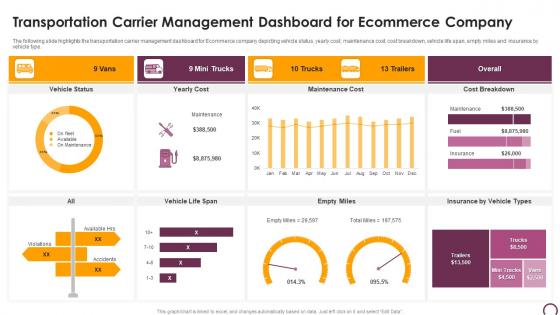
The following slide highlights the transportation carrier management dashboard for Ecommerce company depicting vehicle status, yearly cost, maintenance cost, cost breakdown, vehicle life span, empty miles and insurance by vehicle type.
People who downloaded this PowerPoint presentation also viewed the following :
Transportation Carrier Management Dashboard For Ecommerce Company with all 7 slides:
Use our Transportation Carrier Management Dashboard For Ecommerce Company to effectively help you save your valuable time. They are readymade to fit into any presentation structure.





FAQs for Transportation Carrier Management Dashboard
Route optimization, carrier management, and real-time tracking - those are your must-haves. Freight audit is huge too because carriers mess up billing constantly (learned that the hard way). You'll want inventory visibility and load planning, plus warehouse integration if you're running multiple DCs. Reporting and analytics matter but honestly, start simple. Map out what's actually broken in your current setup first. Then figure out which TMS features would fix those specific headaches instead of buying every feature they're selling you.
So basically, GPS tracking and IoT sensors give you eyes on everything - where your trucks are, how fast they're going, fuel levels, even temperature if you're hauling sensitive stuff. All that info hits your dashboard in real time, which is honestly a game changer because you can actually fix problems as they happen instead of hearing about them way too late. Some systems even use AI to predict issues before they blow up. I'd say start simple with basic GPS if you don't have it yet, then add more sensors as you figure out what you actually need.
So route optimization with data analytics is like having a really smart GPS on steroids. It pulls in tons of info - traffic patterns, delivery times, fuel costs, driver schedules, even weather stuff. The algorithms learn from your past routes and keep getting better at finding the most efficient paths. Honestly the technology has improved so much in just the last couple years, it's kind of crazy. You'll see lower fuel costs and faster deliveries, plus happier customers. I'd suggest testing it on one route first though, see how it works before rolling it out everywhere.
Honestly, start with route optimization software - it's kind of a win-win since you'll cut fuel costs while being greener. Electric or hybrid vehicles work great for shorter routes, though the upfront cost can sting a bit. Max out your load capacity and maybe team up with other companies to consolidate shipments. Oh, and definitely track your carbon footprint alongside your usual metrics. That way you can actually see what's working instead of just guessing where to put your money next. Fleet upgrades don't have to happen overnight either.
Ugh, mixed fleets are such a pain. Maintenance becomes this whole thing - different schedules, parts you gotta stock, service requirements. It's like playing whack-a-mole honestly. Then there's driver training which gets messy fast since everyone needs different certs for different vehicles. Scheduling becomes impossible. Some trucks will be sitting around doing nothing while others get beaten to death. Oh and the utilization rates? Forget about it. Try to standardize within categories if you can - like keep your delivery trucks similar at least. Fleet management software helps too but it's not magic. Still gonna be complicated no matter what.
Dude, e-commerce totally changed the game. Instead of moving big shipments to stores, you're doing a million tiny deliveries to people's houses. Everyone expects their stuff tomorrow (or yesterday, honestly). Real-time tracking is basically mandatory now - people lose their minds if they can't stalk their package. Returns are another headache you didn't have before. Short deliveries need different trucks, smarter routes, the whole thing. My advice? Get some decent route software and start buddying up with local delivery companies. Trust me, trying to handle all that last-mile stuff yourself will drive you crazy.
Look at your delivery routes first - get some route optimization software to cut down on driving time and gas costs. Super annoying when drivers are just circling around inefficiently! Give customers flexible delivery windows so they can actually be home. Failed deliveries suck for everyone. You could also set up pickup spots like those Amazon lockers or partner with local stores. People love real-time tracking and text updates too. I'd start by checking your delivery data to see what's going wrong most often, then fix those issues first.
Honestly, regulations control pretty much everything in transportation these days. Can't just go with whoever's cheapest anymore - you've got to check if carriers meet DOT standards, have the right insurance, follow driver hour limits, all that stuff. Weight restrictions mess with your routes too, plus hazmat rules if you're dealing with that headache. Environmental compliance is another layer now. My advice? Build those compliance checks right into how you pick vendors from the start. Way easier than dealing with violations after the fact, trust me on that one.
Honestly, transportation management is where you'll see the biggest bang for your buck. Route optimization alone cuts delivery times and saves tons on fuel costs. The tracking piece is huge too - no more wondering where shipments are or scrambling when something goes wrong. Plus you can actually predict when stuff arrives, so you don't need as much inventory just sitting there. Oh, and consolidating shipments is basically free money. I'd start by just tracking what you're spending on transport now and how long deliveries take. Then grab some route optimization software - that's usually the easiest first step.
Look, you need a solid mix - cost per mile, on-time delivery rates, fuel efficiency. Those are the basics. Then add customer satisfaction scores and vehicle utilization rates. Safety metrics too (accidents per mile) because dealing with that stuff is a nightmare. Honestly, pick like 5-7 that actually matter for your business. Don't drown yourself in spreadsheets. Delivery accuracy percentages are good too if you're doing a lot of volume. Set up something simple you can check weekly - catches problems before they get ugly.
Look, those silos between shippers and carriers are what's killing your efficiency. Real-time data sharing changes everything - you'll see way fewer empty trucks running around, routes actually make sense, and handoffs don't suck anymore. Honestly, most companies are just sitting on info that could help everyone. Once you start coordinating properly, you can consolidate loads and plan around actual demand instead of playing guessing games. Don't overthink it though - just begin by sharing your delivery windows with your main carriers. You'd be surprised how much smoother things get from that one change.
Dude, autonomous vehicles are gonna flip transportation on its head. Infrastructure needs a complete overhaul since these cars can actually talk to each other and eliminate most crashes. Traffic management? Forget everything you know - AVs can drive way closer together and coordinate routes instantly. The scary part is we'll have this weird mix of human drivers and robots for like a decade. That transition period is gonna be messy as hell. Fleet optimization becomes totally different too. My advice? Don't wait around - start planning for gradual rollouts now because this isn't some distant future thing anymore.
Honestly, start with route optimization - that's where you'll save the most money. Get some transportation management software because doing this manually is such a pain and way more expensive than you realize. Pick 2-3 solid carriers and build real relationships with them so you can negotiate better rates. They'll also have your back when everything goes sideways (which it will). Track stuff like on-time delivery and cost per mile. Oh, and audit what you're spending now first - there's probably some easy wins just sitting there waiting for you to find them.
Honestly, start with a TMS - that's your bread and butter for route planning and carrier stuff. GPS tracking is a must these days, no question. Fleet management tools are clutch for keeping tabs on your vehicles and drivers too. The whole space is kinda overwhelming though, like there's a million different platforms out there. I'd also look into warehouse integration and some decent analytics dashboards. But here's the thing - figure out what's actually breaking first. Don't get caught up trying to fix everything at once or you'll go crazy.
Look, demand basically controls your whole transportation game. High-demand areas? You'll need more trucks and maybe new routes there. Seasonal spikes are honestly the worst part - they completely throw off your capacity planning. I learned this the hard way at my last job. Fleet size depends on how much your demand jumps around too. Different regions need different approaches. Start by mapping where and when you historically see peaks. That data will save you from making expensive mistakes later. Don't overthink the initial analysis though.
-
A fantastic collection of templates. I'll likely use this as my go-to resource for future templates and support.
-
Great product with highly impressive and engaging designs.