


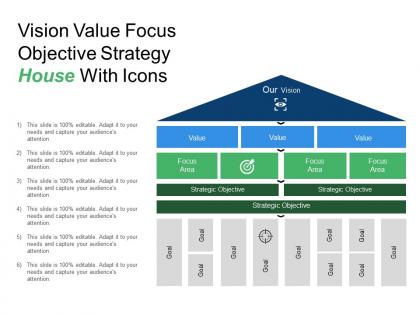
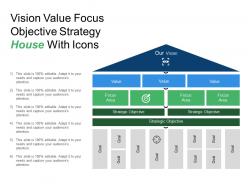
Vision value focus objective strategy house with icons





Try Before you Buy Download Free Sample Product
 Impress Your
 Audience
 100%
100% Editable
 Save Hours
 of Time


Express intangible emotions with our Vision Value Focus Objective Strategy House With Icons. Folks will genuinely believe you care.
People who downloaded this PowerPoint presentation also viewed the following :
Vision value focus objective strategy house with icons with all 5 slides:
Institute judicial inquiries with our Vision Value Focus Objective Strategy House With Icons. Issue guidelines for a fruitful investigation.
FAQs for Vision value focus objective strategy
Look, a good strategic vision needs three things: where you're headed (be specific), why it matters, and how you'll know you made it. Don't fall into that corporate buzzword trap - I've seen way too many vision statements that sound like they were written by committee. Make it concrete enough that people can actually picture it happening. Three to five years out is the sweet spot, not some pie-in-the-sky decade thing. Here's my litmus test: if your team can't explain it back to you using their own words, it's probably too complicated and needs work.
Honestly, just beat the message to death - but in a good way. Drop the corporate speak nobody understands and say it straight. Hit people from every angle: town halls, newsletters, random hallway chats. Your managers need to own it too since they're doing most of the actual talking. I'd test it by randomly asking people to repeat it back - you'll be shocked how garbled it gets sometimes. The trick is saying the same thing over and over without sounding like a broken record. Oh, and make sure it actually means something real, not just buzzword soup.
Honestly, market analysis is what stops your strategic vision from being total BS. Look at where the industry's going, what competitors are up to, and where the real opportunities are hiding. Otherwise you're just guessing - and I've watched so many teams crash doing exactly that. The research helps you catch trends before everyone else does. Plus you'll figure out your actual competitive edge and what customers might want in 3-5 years. I'd start by mapping industry shifts and how customer behavior's changing. Sounds boring but it gives your vision some real teeth, you know?
Quarterly reviews are your best bet these days. Yeah, everyone says annually but things change way too fast now. I've watched companies crash because they held onto outdated 5-year plans for way too long - super painful to see. Build in flexibility from day one instead of treating your vision like gospel. Market shifts happen overnight, competitors do weird stuff, internal drama pops up. Set regular check-ins with leadership and pivot when the numbers don't lie. Better to adjust early than stick with something that's clearly not working anymore.
Ugh, the worst thing you can do is make it super vague like "we'll be the best company ever" - that means literally nothing. Don't try pleasing everyone either. Oh, and involving your team is huge... if they didn't help create it, good luck getting buy-in later. I've seen companies make theirs way too detailed too, which just turns it into some rigid business plan nobody cares about. Copying what Google or whoever did won't work for you. Think about where you actually want to be in like 3-5 years, then figure out how to say that in a way that gets people excited.
Your strategic vision is basically the thing that keeps everyone rowing in the same direction - way more powerful than just chasing quarterly targets. People get genuinely fired up when they can see how their boring Tuesday tasks actually connect to something bigger. It also makes decisions so much easier because you've got this built-in filter for everything from who to hire to which projects matter. Honestly, most company visions are total garbage though. Make yours specific enough that people can actually picture what winning looks like, then bring it up constantly. Don't let it collect dust on some wall poster.
Honestly, data analytics is where you'll see the biggest difference - no more guessing what customers actually want. AI opens up business models I bet you haven't even thought of yet. Digital tools let you test stuff fast and change direction when things aren't working (which happens more than we'd like to admit, lol). The trick is staying curious about new tech. Keep asking yourself "how could this totally flip what we're doing?" Oh, and don't just sit there waiting for some startup to disrupt your whole industry.
Break your big vision down into specific goals for each team - stuff they can actually measure and hit. Weekly check-ins work way better than those boring quarterly meetings (trust me on this). Your KPIs should match what actually matters strategically, not just random busy work. Front-line people need to get how their daily tasks connect to the bigger picture. Communication's huge here. Also set up ways for teams to give feedback upward - sometimes they spot things leadership misses. Monthly alignment reviews keep everyone pointed the same direction. It's honestly pretty straightforward once you get the rhythm down.
Your leadership style totally changes how you build and roll out strategy. Collaborative types get everyone involved in creating the vision - takes forever but people actually buy in. Autocratic leaders? They decide fast but then wonder why nobody's excited about executing it. Honestly, transformational leaders nail this best because they actually get people pumped about the future. But here's the thing - being a visionary means nothing if you can't break it down into steps people understand. I've seen brilliant strategic thinkers completely bomb because they couldn't translate their ideas. Match your style to what your team needs right now.
Mix hard numbers with the touchy-feely stuff - both matter. Revenue growth, market share, customer acquisition rates are obvious ones. But also check if employees actually get the vision when you ask them. Seriously, if they can't explain it back, that's your red flag right there. Customer satisfaction scores and engagement surveys tell you a lot too. Pick maybe 3-5 metrics that actually connect to what you're trying to achieve. Oh, and don't review this stuff monthly - you'll drive yourself crazy. Quarterly's plenty.
Don't set your vision in stone - build wiggle room right from the start. Focus on your core purpose but stay flexible on how you get there. I swear, I've watched so many companies crash because they refused to budge from some plan they made two years ago. Do quarterly check-ins to see what's changed in the market. Your "why" should stay the same, but your tactics? Those need to evolve constantly. Stay super close to customer feedback and set up some early warning signals. That way you're adapting by choice, not scrambling when you're already behind.
Honestly, going global is a total game-changer for your strategy. You're suddenly competing with companies from literally everywhere, which is both terrifying and exciting. Different cultures want different things, regulations vary wildly between countries, and economic conditions are all over the map. The research alone will probably cost you more than you expect - but the growth potential is huge. I'd say pick maybe 2-3 markets that actually make sense for what you're already good at. Don't try to conquer the world right away, that's how companies burn through cash fast.
Your customers are basically telling you where your strategy's broken - listen to them. Look for patterns in what they're actually saying, not just random complaints. I've watched so many companies totally ignore feedback and then act shocked when their big plans crash and burn. Use what they tell you to figure out if you're even heading in the right direction. Their pain points show you what to build next, plus they'll spot opportunities you completely missed. Just don't be one of those companies that only pays attention to the good stuff for presentations - that's useless.
Look, departments working in isolation is honestly the fastest way to tank any big strategy. You need people actually talking to each other from the start. Finance spots budget issues early, operations knows what's realistic timeline-wise, marketing understands the customer angle - nobody has the full picture alone. When teams feel included in planning, they're way more likely to actually execute instead of just nodding along. I'd start simple though - maybe 30-minute cross-department sessions during planning. Sounds boring but you'll be shocked what insights come up that would've blindsided you later.
Start with decent market research - industry reports, customer surveys, that kind of stuff. SWOT analysis really helps too. But here's the thing: most visions crash because people skip talking to stakeholders. Don't do that. Get input from your team AND customers early on. Scenario planning templates are solid for exploring different possibilities. I love using Miro for mapping out how goals connect to actual initiatives (whiteboards work fine too honestly). The trick is mixing hard data with real human feedback. You want something ambitious but not completely divorced from reality, you know?
-
Visually stunning presentation, love the content.
-
Easy to edit slides with easy to understand instructions.