

Warehouse Inbound Performance Analysis Management Dashboard





Try Before you Buy Download Free Sample Product
 Impress Your
Audience
 100%
Editable
 Save Hours
of Time


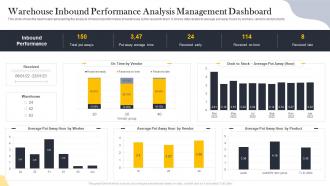
This slide shows the dashboard representing the analysis of inbound performance of warehouse by the research team. It shows data related to average put away hours by workers, vendors and products.
People who downloaded this PowerPoint presentation also viewed the following :
Warehouse Inbound Performance Analysis Management Dashboard with all 7 slides:
Use our Warehouse Inbound Performance Analysis Management Dashboard to effectively help you save your valuable time. They are readymade to fit into any presentation structure.





FAQs for Warehouse Inbound Performance
Track your receipt times first - from when trucks show up until they're unloaded. Put-away speed matters too, plus how accurate your team is at both receiving and placing stuff. Honestly, dock utilization is probably the biggest money drain if you're not watching it. Nobody wants trucks just sitting there. Labor productivity per hour, damage rates during inbound - all that stuff adds up. Oh, and if you're running a WMS, your system counts better match what's actually on the shelves or you're screwed. Start there, check daily, set up some alerts.
Dude, get barcode scanning set up first - it'll cut your receiving time in half, no joke. Manual data entry is where all your errors come from, and scanning just wipes that out completely. The system updates inventory automatically, creates put-away tasks, validates against POs. RFID is cool but honestly way too expensive unless you're moving serious volume. Even a basic handheld scanner makes a huge difference. We tried it and immediately could handle way more shipments with the same crew. Start simple on your dock - you'll wonder why you waited so long to do this.
Training your team is honestly the biggest game-changer for inbound ops. Good training on receiving, inventory systems, and safety cuts down on so many headaches - I've seen places shave 30% off their receiving times just from decent programs. Don't make it a one-and-done thing though. Cross-train people too because someone's always gonna call out at the worst possible moment, right? Figure out where you're getting jammed up most and hit those spots hard with training. Peak season will thank you later.
Honestly, standardized procedures are a game changer - they just wipe out all that confusion that bogs teams down. Your crew follows identical steps each time: same staging spots, labeling that's consistent, quality checks done the exact same way. New people catch on way faster since there's no guessing involved. Processing gets quicker, mistakes drop big time, and you're not constantly going back to fix stupid errors. Oh, and the training time shrinks too which is huge. I'd start by writing down whatever's working best right now, then get everyone doing those exact same steps.
Honestly, start with getting them on a proper appointment system - random truck arrivals are a nightmare. Tell them your capacity upfront too. Like if you can only handle two trucks at 8am, don't let five show up. Make sure they know your packaging rules beforehand. Trust me, I've seen warehouses waste entire days just fixing mislabeled stuff. Pretty ridiculous when you think about it. Set up regular check-ins to review how they're doing. Communication is everything here - be super clear about what you expect and actually track whether they're hitting those marks.
Oh man, demand swings are the worst for inbound ops. Your team gets slammed when orders spike - suddenly everyone's rushing deliveries, the dock's a disaster, and nobody can keep up. Then you've got dead periods where people are just standing around. Accuracy goes out the window when you're in panic mode, honestly. I've seen places where they're constantly either over or understaffed because nobody saw the volume change coming. Your receiving schedule needs some wiggle room built in. Also - and this might sound obvious - but talk to your suppliers early and often so you're not blindsided.
Honestly, start with your suppliers - get them sending you shipping alerts so you're not scrambling at the dock. Most places I've seen waste forever on receiving paperwork, which is nuts. Speed that up with barcode scanners and maybe cross-dock your high-volume stuff. You'll want to negotiate tighter lead times where you can. Oh, and keep some buffer stock for anything critical because suppliers will let you down eventually. The real game-changer though? Just knowing what's actually coming and when. That visibility alone solves like half your problems.
Layout tweaks can really help your receiving flow - just put those docks near your fastest-moving storage spots. Track where your crew wastes time walking around first, that's gold. Place incoming stuff close to where it actually needs to go instead of making people haul it across the warehouse. Short walks = faster turnaround. Honestly, half the battle is just avoiding forklift traffic jams during busy periods. Map out how products typically move from dock to shelf, then cut out the stupid detours. Focus on fixing your biggest bottlenecks first rather than redesigning everything at once.
Damaged packages and missing paperwork will drive you crazy - those are your main headaches right there. Inventory counts being wrong is another big one. Plus carriers showing up late when you're already swamped. Honestly, just getting a solid receiving process nailed down first will fix most of this mess. Set up some kind of heads-up system so your team knows what's coming. Take photos of busted stuff immediately and scan everything to catch counting mistakes. Oh, and definitely cross-train people because someone always calls out sick at the worst possible moment. Space gets tight during busy seasons too, so plan for that.
Honestly, data analytics is a game-changer for catching stuff you'd never notice otherwise. Track things like how long receiving takes, put-away speed, labor productivity - suddenly you'll see exactly where things get stuck. Yeah, the dashboards look crazy at first, but dig into them and you'll spot your peak times, what's not working, where you need more people. Use all that to fix your staffing and workflows. I always tell people to focus on their biggest headaches first and check progress every week. Way better than just winging it based on hunches, you know?
Honestly, watch for these warning signs - your receiving times start creeping up, inventory counts get messy, and shipments pile up unprocessed. When your team's pulling consistent overtime, that's usually the first red flag I notice. Suppliers complaining about dock scheduling? Yeah, that's bad news too. Those rushed expedited shipments will completely wreck your planned receiving schedule. Here's the thing though - track your dock-to-stock times every week. Seriously, that one number tells you everything about whether you're headed for trouble. These problems snowball fast if you don't catch them early.
Set up a separate area for returns - don't let them mix with new inventory or you'll go crazy tracking everything. Inspect stuff right when it comes back to see what's sellable, what needs fixing, or what's trash. Honestly, speed matters way more than people think here. The longer returns just sit around, the more money you're bleeding and the more space they're hogging. Your WMS should handle reverse logistics (no manual workarounds - trust me on this). Use batch codes or tags for tracking. Each type of return needs its own workflow too.
Dude, you HAVE to get your inventory counts right or everything falls apart. Missing products, wrong putaway spots, receiving mess-ups - it all spirals from there. Your WMS gets screwed up data and then picking becomes a disaster. I worked at one place where guys spent like 3 hours daily searching for stuff that was just logged wrong at receiving. Honestly such a waste. Double-count anything expensive, scan everything with barcodes, and always audit before you close out receipts. Trust me on this one.
Honestly, cross-docking is a game changer if you can pull it off. Basically you skip storage completely - stuff comes in one door and goes right out another. Way faster than the usual warehouse dance. Your handling costs drop, labor hours shrink, and everything moves quicker. The tricky part? You need your inbound and outbound timing locked down tight, plus you've got to see what's coming in real-time. I'd test it first with products that fly off the shelves anyway. Once you nail the rhythm, then roll it out wider.
Look, automation doesn't just wipe out jobs - it reshuffles them. You'll definitely need fewer people doing the boring stuff like scanning and sorting. But then you need more skilled folks to run and fix all that fancy equipment. Most companies see around 20-30% fewer workers overall, though it really depends how far you go with it. Training your current team is way cheaper than starting fresh with new hires. Plus you'll probably need some tech specialists too. Oh, and start planning this transition stuff early - trust me on that one.
-
Easily Editable.
-
Really like the color and design of the presentation.