


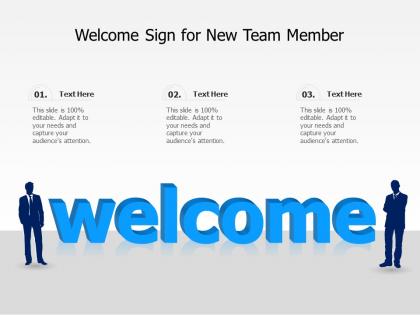
Welcome sign for new team member




Try Before you Buy Download Free Sample Product
 Impress Your
 Audience
 100%
100% Editable
 Save Hours
 of Time


End disputes that are holding back growth with our Welcome Sign For New Team Member. Intervene in the impasse.
People who downloaded this PowerPoint presentation also viewed the following :
Welcome sign for new team member with all 2 slides:
Invite applause with our Welcome Sign For New Team Member. Folks will gladly indicate their appreciation.
FAQs for Welcome sign for
So you'll need four main things for good onboarding. First, get paperwork and IT stuff done before they even start - saves everyone headaches. During week one, do proper intros and explain company culture. Training is where most places totally screw up though. Pair new hires with a mentor and actually map out their first 90 days instead of just throwing them in. Oh, and don't forget regular check-ins for feedback. Honestly, if you nail these basics your retention will improve big time.
Honestly, visuals beat boring text walls every time. Your new hires will actually pay attention to slide decks and flowcharts instead of zoning out. Our brains just process pictures better - it's basic psychology or whatever. Templates keep everyone on the same page too, which is super helpful when you've got multiple departments doing their own thing. The time savings alone are worth it since you're not rebuilding everything for each person. Oh, and definitely start with whatever topics you explain most often. Those are your biggest wins.
Look, culture literally makes or breaks those first few weeks. When it's strong, new people get the real deal - not just job duties but how stuff actually works around there. You know what I mean? Like who to ask for help without seeming clueless, or which meetings actually matter. Honestly, I've seen too many places just hand over a boring handbook and call it good. That's useless. Your onboarding should let them experience the culture through real conversations and interactions. Otherwise they'll spend months figuring out unwritten rules that could've been obvious from day one. Coffee chats help more than people think.
Honestly, digital onboarding tools are a game changer. Start with platforms that handle all the boring paperwork automatically - saves everyone time. Video calls for those first introductions beat endless email threads every single time. You can set up virtual office tours and use interactive checklists so new people aren't totally lost their first week. Learning management systems work great for training modules they can do whenever. Oh, and definitely create dedicated Slack channels just for newbies - instant community vibes. Map out what you're doing now first, then figure out which manual stuff you can ditch.
Track how fast new people hit their performance goals - that's your time-to-productivity metric. Also watch 90-day retention rates and how satisfied managers are with new hire readiness. Those early engagement scores matter way more than people think, honestly. I'd also measure onboarding task completion and do quick pulse surveys at 30, 60, and 90 days. Mix the hard stuff like retention with softer metrics like confidence levels - you need both. Oh, and don't go crazy with data. Pick 3-4 things you can actually improve based on the results.
Honestly, storytelling makes such a huge difference in onboarding! Instead of boring bullet points about policies, share actual employee stories - like how Sarah from marketing tackled that crazy client situation last year. Real customer wins work great too, or even how the company started. People remember stories way better than dry procedures. I mean, wouldn't you rather hear about someone's actual experience than read through another policy manual? Try swapping out 2-3 of those snooze-fest sections with narrative examples. New hires can actually picture themselves succeeding when they hear specific stories about people who've been there.
Honestly? Don't dump everything on them day one - that's how you lose people fast. I've watched companies do the whole "figure it out yourself" thing where new hires just sit there confused. Such a waste. Start with culture and relationships first, then add the technical stuff gradually. Get them a real mentor, not someone who's just "around if you need help." Oh, and set actual 30-60-90 day goals so they know what winning looks like. Most places skip the relationship building and jump straight to tasks, which is totally backwards if you ask me.
Get feedback from new hires after week one, then again at the month and quarter marks. Quick surveys work great, or just grab them for informal chats. Ask what confused them or felt rushed - trust me, they'll remember every awkward moment way better than you do. Look for patterns in their responses and fix the stuff that keeps coming up. The trick is actually doing something with what they tell you, not just collecting it. Update your training docs, tweak timelines, whatever needs fixing. I'd review all the feedback quarterly and make changes then - keeps things from getting overwhelming.
Dude, startup onboarding is a total mess compared to big companies. You're literally making it up as you go - no HR department, no fancy training programs, half the time you don't even have proper documentation written down anywhere. New people just get thrown in and figure it out, which sometimes works but can be brutal. The whole "move fast" mentality means you can't spend weeks getting someone up to speed either. My advice? Start simple with basic checklists and pair new hires with someone who knows what's going on. Even that basic stuff will save you so much stress down the road.
I'd create different tracks for each role, honestly. Sales people need the CRM deep dive and customer personas. Engineers want technical architecture stuff and dev setup. Marketing gets brand guidelines and campaign processes - that kind of thing. Everyone still gets the basic company info (values, benefits, who's who), but then it splits into job-specific modules. Way better than making engineers sit through sales training they'll never use, right? I always start by figuring out what skills each role actually needs first, then build sessions around those. Makes the whole thing less painful.
Start with the basics - harassment training, safety stuff, and your company's conduct rules. Data privacy is huge too, especially if you're dealing with customer info or whatever. Oh, and don't skip the industry regulations like HIPAA if you're in healthcare. Cybersecurity training is pretty much mandatory now since that's how most places get screwed over. Yeah, compliance modules are boring as hell, but better to knock them out early than deal with drama later. Make sure you track who completes what - trust me, HR will need those records eventually.
Honestly, progress bars work really well - people love seeing that completion percentage go up. Throw in some badges when they finish modules, maybe a point system too. Interactive quizzes are solid because you get that instant "yes, I got it right" moment. Leaderboards can be fun but watch out, some people get weirdly competitive about onboarding lol. I'd start basic with just tracking progress and badges first. You can always add fancier stuff later once you see what actually motivates your team. The whole point is making it feel less like homework and more like... well, not homework.
Honestly, mentors are lifesavers for new hires. They're the ones who'll show them where the good coffee is and who to actually call when the printer dies (because yeah, IT takes forever). New people are scared to ask managers the "obvious" stuff, so mentors fill that gap. They also help decode all the weird office politics and unspoken rules every company has. Don't just assign whoever's free though - you want someone patient who knows people around the office. Oh, and give your mentors some basic guidance first. Otherwise they might just wing it and that helps nobody.
Check your onboarding stuff every quarter - seriously, I've watched companies ignore theirs for like two years and it's painful. Set a calendar reminder right now or you'll forget. Major system changes? Update it immediately. Those screenshots go stale fast, and broken links make new hires think you don't have your act together (which... fair). Someone needs to actually own this process too. Otherwise it just becomes everyone's job, which means it's nobody's job. Three months goes by faster than you'd think, so don't put this off.
Honestly, I'd start with your onboarding docs - scan them for biased language and make sure the examples show different types of people. Pair new hires with diverse mentors instead of just matching people who seem similar. Your current team needs training on inclusive stuff before anyone new shows up though (that's actually huge). Ask for feedback regularly because people will totally tell you what's broken if you bother asking. Oh, and acknowledge different communication styles in your welcome materials - plus cultural holidays and work preferences. Do a quick audit of what you're doing now and pick one thing to fix this quarter.
No Reviews