


Work experience for curriculum vitae ppt slide





Try Before you Buy Download Free Sample Product
 Impress Your
 Audience
 100%
100% Editable
 Save Hours
 of Time


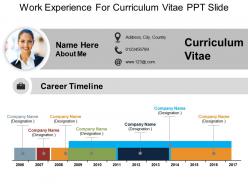
The professional curriculum vitae PowerPoint slide is a professional presentation layout for creating a template. The work experience presentation template based on a modern visual design which can assist job seekers, candidates, or even HR professionals during the hiring process. The professional job experience presentation resume slide helps a user to provide his personal contact information along with his qualifications, experience, achievements as well as social skills information. The work experience resumes PPT template acts as a visual resume profile to illustrate the personal and professional skills as well. The work experience for curriculum vitae PowerPoint template is suitable to showcase the candidate’s proficiency level. The professional work experience resume slide for PowerPoint is an effective presentation tool for recruiting agencies. By using this resume template the recruiting consultants can make compelling presentations for their clients of suitable candidates. For example, presentation of 3 or 4 ideal candidates with their relevant work experiences. In this way, the client can easily compare the candidate's qualifications, experience, as well as social skills to make an informed decision. Connect the facts with our Work Experience For Curriculum Vitae Ppt Slide. Your conclusions will be well founded.
People who downloaded this PowerPoint presentation also viewed the following :
Work experience for curriculum vitae ppt slide with all 5 slides:
Folks enjoy the gala due to our Work Experience For Curriculum Vitae Ppt Slide. It ensures that jubilees are fun.
FAQs for Work experience for curriculum
Honestly, most employers just want three things: can you communicate, show up reliably, and actually want to learn stuff. Being on time and asking smart questions matters more than you'd think. They're also checking if you can solve basic problems and not be weird around coworkers. Look, half of it is just proving you won't need constant babysitting - which sounds harsh but it's true. When you're talking to them, focus on times you've been dependable or learned something new quickly. Team project stories work great too. Don't try overselling technical skills you don't actually have yet.
Numbers are your best friend here - "boosted sales 15%" hits way harder than "helped with sales." Start with strong action words and focus on what you actually accomplished, not just boring job duties. Most resumes suck because they read like job descriptions! Tailor each version to match what they're looking for. Don't have much work experience? Throw in internships, volunteer stuff, even big school projects. Oh, and honestly? If a line isn't proving your worth, cut it. Every bullet should make them think "we need this person."
Dude, focus on jobs where you actually *did* something measurable - boosted sales, cut costs, fixed broken processes. Numbers are your friend here. Leadership stuff is gold, even if you just trained one person or ran a tiny project. Don't sleep on customer service experience either - I know it sounds boring but it shows you can handle difficult people and communicate clearly. Here's the thing: after writing each bullet point, ask yourself "so what?" If you can't answer that with real impact, rewrite it. Stop listing what you were supposed to do and start showing what you accomplished.
Dude, volunteering is seriously underrated for building your portfolio. It lets you show off leadership and problem-solving skills that regular jobs might not give you the chance to develop. Plus employers love seeing that you actually give a damn about something beyond just getting paid. Pick volunteer work that matches your career goals or helps fill gaps in your resume - like if you need more project management experience or whatever. Oh and definitely track what you accomplish, just like you would with any other job. Don't downplay it when you're talking to potential employers either.
Honestly, internships are like your trial run before jumping into the real world. You can mess up without huge consequences and actually get guidance from people who know what they're doing. Most companies expect you to have experience now (which is ridiculous but whatever), so internships help you check that box. They're also great for figuring out what you actually want to do - I know people who completely changed directions after realizing their "dream job" sucked. You'll build connections and learn skills that classes don't really teach. Just don't settle for busy work though.
Dude, honestly most employers just want to see what you can actually do, not where you learned it. Start with volunteering or reach out to nonprofits in your area - they're usually desperate for help. Freelance projects work great too. Even personal projects count if you can explain what problems you solved and the results you got. Small businesses are another good option since they often need stuff done but can't afford agencies. Online courses with real assignments aren't bad either. Oh, and once you nail one project, it's way easier to land the next one.
STAR method is your friend here - situation, task, action, results. Way better than just word-vomiting about random stuff you've done. Numbers are gold, so "boosted sales 30%" hits harder than "helped with sales growth." Pick stories that actually match the job though. Like, don't ramble about customer service wins if you're going for a dev role - seems obvious but people do it all the time. Practice maybe 3-4 solid examples beforehand. Trust me, your brain goes blank when you're nervous and scrambling to remember specifics mid-interview sucks.
Honestly, remote internships can be amazing for your career. You'll get really good at digital collaboration, which is huge right now. Plus you're not stuck with companies just in your area - the whole world opens up. The flexibility is nice too since you can potentially do more projects or even multiple internships (though that might be crazy ambitious lol). Yeah, you miss out on some of that random office small talk networking. But your written communication skills will get so much better, and you learn to manage yourself independently. Those virtual coffee chats? Actually treat them seriously - they're just as real as in-person ones.
Look, you're gonna feel lost at first - new systems, not knowing anyone, the whole deal. But here's the thing: they expect you to mess up! That's why you're an intern lol. Ask questions constantly and write everything down, even the stupid stuff. Don't eat lunch alone either - sit with different people when you can. I'd focus on small wins each day instead of trying to be the star employee right away. Oh and your supervisor? Actually use them - they want you to succeed way more than you think.
Honestly, it's all about building real relationships that'll help you down the road. Most jobs never even get posted - crazy, right? So when you connect with coworkers, bosses, or clients, you're basically creating your own personal job alert system. Your old manager might hit you up months later because they remembered how solid you were. People hire who they know and trust. I'd focus on actually being helpful and memorable at work, then keep in loose touch through LinkedIn or whatever. Even just a quick "hey, saw your company's doing well" message works. It pays off way more than you'd think.
Dude, working abroad is such a game changer. You'll pick up language skills and build this crazy valuable international network. The cultural intelligence thing sounds fancy but it's real - employers eat that stuff up. Plus you just become way more adaptable and confident, which honestly makes you stand out from people who've only worked in one country. Problem-solving gets easier too when you've dealt with different work styles. Oh, and start looking into visa stuff ASAP because that process is painfully slow. International job boards are your friend here.
Oh totally, mentorship is a game changer. You get instant feedback instead of wandering around confused for months. Good mentors show you how your daily work actually connects to the real world - which honestly, nobody explains when you're starting out. They'll also give you a heads up about mistakes before you make them. Such a time saver. The confidence boost is huge too since they can tell when you're ready for harder stuff. Just make sure you find someone who genuinely wants to help, not someone looking for free labor basically.
Oh absolutely, work experience can boost your starting pay by like 10-30% compared to fresh grads. Relevant internships obviously help the most, but honestly even that random coffee shop job matters - it shows you get how workplaces function. Companies don't want to babysit new hires, so any experience makes you less risky. When you're negotiating, connect your past roles to what they need. I learned this the hard way - always mention specific things you accomplished with actual numbers if possible. Don't lowball yourself just because you're "entry level."
Oh absolutely! Personal projects and freelance gigs are perfect for filling resume gaps. You get to show off skills that regular jobs might not cover, plus it proves you can take initiative without someone breathing down your neck. What I love about it is you actually choose projects that match where you want your career to go - way better than whatever random stuff your boss dumps on you. Just make sure you list them with real numbers and results like any other job. Honestly? Sometimes freelance work takes way more hustle than a typical 9-to-5 anyway.
Dude, you get SO much clarity once you're out of a job - way more than when you're stuck in the daily grind. All that emotional stuff isn't clouding everything anymore, so you can actually see patterns in how you work best. Like, did collaborative projects energize you or drain you? What kind of feedback actually motivated you vs made you want to hide? I swear you'll notice skills you didn't even realize you picked up. The environments where you thrived vs just survived become super obvious too. Definitely write this stuff down though - it's incredibly useful for targeting your next role and nailing interviews.
-
Best way of representation of the topic.
-
Topic best represented with attractive design.