


Youtube investor funding elevator pitch deck ppt template




Try Before you Buy Download Free Sample Product
 Impress Your
 Audience
 100%
100% Editable
 Save Hours
 of Time


Introducing our Youtube investor funding elevator pitch deck PPT template. Throw light on Youtube as a content sharing platform with the help of our video sharing investment PowerPoint deck. This Youtube sponsoring assistance PPT theme addresses the purpose, brand, and culture of the company as a video sharing platform. This ready-to-use youtube finance PowerPoint design contains a slide that discusses the potential market size of the company. Assimilating this online content funding PPT layout will help you with determination of the subscription based paid membership services offered by youtube. Incorporating this particular e-commerce investment PPT theme allows you to display the key members of the youtube founding team. This constructive youtube financing PowerPoint creative set contains a slide that displays the competitive landscape addressing major competitors existing in the market. Selection of this investor promotion PowerPoint template provides you with the key statistics associated with youtube. Choose this youtube promotion PowerPoint design to showcase organization and assurance. Download this PPT slide to explore true perfection.
People who downloaded this PowerPoint presentation also viewed the following :
Content of this Powerpoint Presentation
Slide 1: This slide introduces Investor Funding Elevator Pitch Deck. State Your Company Name and begin.
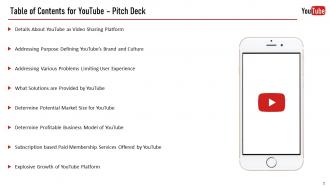
Slide 2: This slide shows Table of Content for the presentation.
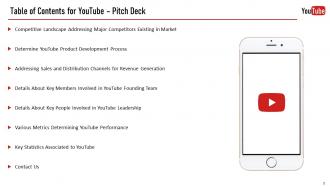
Slide 3: This is another slide continuing Table of Content for the presentation.
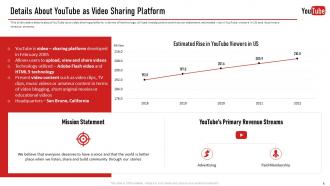
Slide 4: This slide presents YouTube as a video sharing platform, in terms of technology utilized, headquarters and mission statement, estimated rise in YouTube viewers in US and its primary revenue streams.
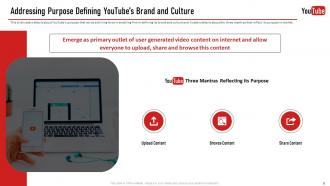
Slide 5: This slide displays YouTube’s purpose that act as a driving force in enabling firm in defining its brand and culture.
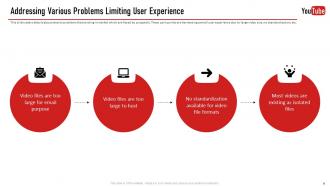
Slide 6: This slide shows several problems that existing in market which are faced by prospects.
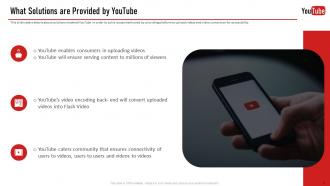
Slide 7: This slide represents solutions rendered YouTube in order to solve issues mentioned by providing platform to upload videos.
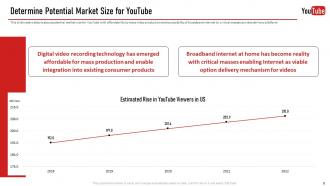
Slide 8: This slide shows potential market size for YouTube with affordability to mass video production and accessibility.
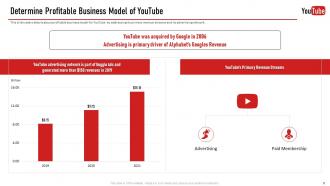
Slide 9: This slide presents profitable business model for YouTube by addressing its primary revenue streams and its advertising network.
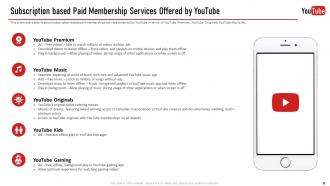
Slide 10: This slide displays subscription based paid memberships services rendered by YouTube in terms of YouTube Premium, YouTube Originals, YouTube Music, etc.
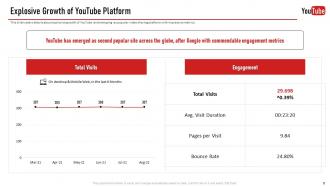
Slide 11: This slide shows explosive growth of YouTube and emerging as popular video sharing platform with impressive metrics.
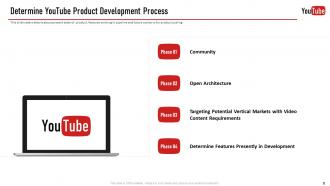
Slide 13: This slide represents present state of product, features existing in pipeline and future scenario for product scaling.
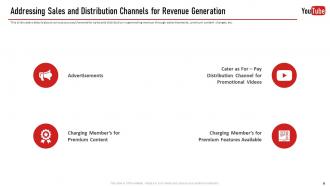
Slide 14: This slide presents various sources/channels for sales and distribution in generating revenue through advertisements, premium content charges, etc.
Slide 15: This slide caters details about key members associated to YouTube founding team.
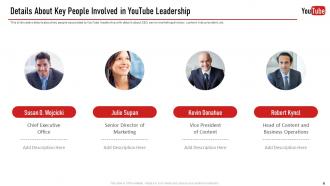
Slide 16: This slide shows key people associated to YouTube leadership with details about CEO, senior marketing director, content vide president, etc.
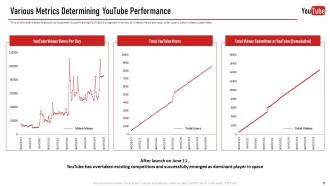
Slide 17: This slide represents various metrics portraying YouTube’s progress in terms of videos views per day, total users, total videos submitted.
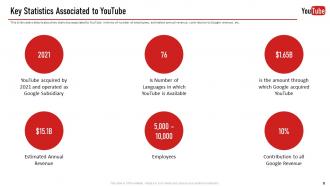
Slide 18: This slide shows key statistics associated to YouTube in terms of number of employees, estimated annual revenue, contribution to Google revenue, etc.
Slide 19: This slide presents Address –YouTube, LLC San Bruno California United States.
Slide 20: This slide displays YouTube Investor Funding Elevator Pitch Deck Icons.
Slide 21: This slide is titled as Additional Slides for moving forward.
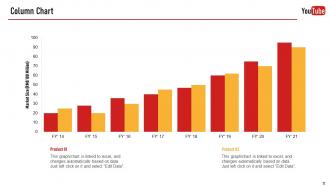
Slide 22: This slide displays Column chart with two products comparison.
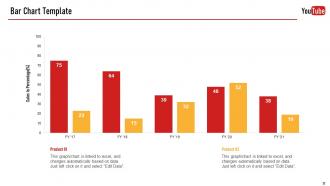
Slide 23: This slide presents Bar Chart Template with two products comparison.
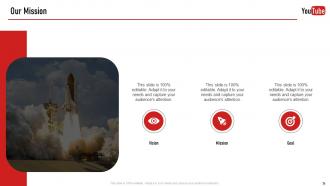
Slide 24: This is Our Mission slide with related imagery and text.
Slide 25: This is About Us slide to show company specifications etc.
Slide 26: This slide shows Post It Notes. Post your important notes here.
Slide 27: This is Our Goal slide. State your firm's goals here.
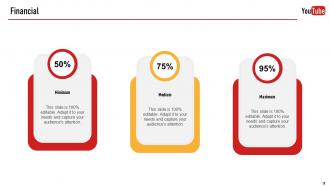
Slide 28: This is a Financial slide. Show your finance related stuff here.
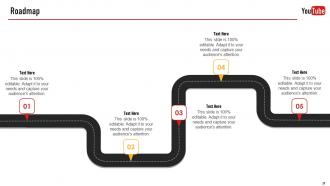
Slide 29: This slide shows Roadmap with additional textboxes.
Slide 30: This is an Idea Generation slide to state a new idea or highlight information, specifications etc.
Slide 31: This slide shows Mind Map with two products comparison.
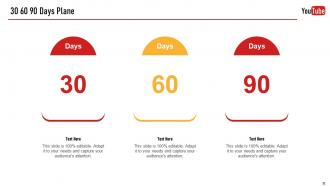
Slide 32: This slide displays 30 60 90 Days Plan with text boxes.
Slide 33: This is a Thank You slide with address, contact numbers and email address.
Youtube investor funding elevator pitch deck ppt template with all 33 slides:
Use our YouTube Investor Funding Elevator Pitch Deck PPT Template to effectively help you save your valuable time. They are readymade to fit into any presentation structure.


FAQs for Youtube investor funding elevator pitch
Honestly, there's a few ways to go about this. VCs who focus on the creator economy are probably your best bet - they actually get the space. Talent agencies with investment arms are another option, or creator-focused funds like Night Media and Jellysmack. Brand partnerships can work too, though that's more sponsorship than real investment. You'll need solid growth metrics and ideally some plan beyond just YouTube ad money. Oh, and don't waste time pitching funds that only work with massive creators if you're still building up. Research which ones actually invest at your level first.
So investors want to see real numbers first - your subscriber count, views, engagement rates, all that stuff. Revenue streams are huge though. Ad money, sponsorships, merch sales, memberships. Basically anything that shows consistent income. Don't forget demographics since that tells them if your audience actually spends money. Growth trajectory matters more than you'd think - I've seen smaller channels get funded just because their numbers keep climbing. Oh and have your content strategy mapped out. Show them how you'll scale up. Come with data that proves this isn't just your weekend hobby anymore.
Honestly, YouTube can screw you over in so many ways. Algorithm changes happen constantly and tank channels overnight. Creators burn out or randomly pivot to different content - happens all the time. Their monetization rules are a joke too, they'll demonetize people for basically anything. Plus niches get saturated super fast these days. There's always that risk the creator says something dumb and kills their whole brand. Oh, and YouTube owns everything, so if they decide they hate the content you're toast. Multiple income streams are a must - can't rely just on ad money.
Honestly, you've got a few solid options for YouTube funding. Start with sponsorships and Patreon - that's your bread and butter right there. Those prove you can actually make money, which matters later. There are creator funds like Jellysmack and Night Media that'll give you cash upfront, but they take a cut of everything forever (kinda sketchy imo). Some people go the angel investor route or crowdfund on Kickstarter for bigger stuff. Oh, and merch obviously - everyone does merch now. Build up those sponsorship numbers first though, then you'll have real data to show the fancier investor types.
So here's the thing - funded channels can mess around with merch, courses, all that stuff because they've got money upfront. You're stuck relying on ads and sponsorships at first, which honestly sucks when you're broke. They get to think long-term while you're just trying to pay bills, you know? My advice? Don't put all your eggs in the ad revenue basket - that's a recipe for disaster. Start building little income streams everywhere. Even like $50 here and there adds up way faster than waiting for some viral video to save you.
Dude, engagement is literally what makes or breaks getting YouTube funding. Investors don't care if you have tons of dead subscribers - they want to see people actually giving a shit about your videos. Watch time, comments, shares, how often viewers come back... that's what they're analyzing. It shows you've got a real community instead of just random people who clicked subscribe once. Plus engaged audiences make way more money through sponsorships and stuff. Honestly, I'd rather have 10K engaged followers than 100K ghosts. Create content that makes people want to comment and discuss - those numbers are what investors use to figure out if your channel's actually worth investing in.
Dude, investors need way more than just "I make money from ads." Show them your growth numbers, who's actually watching your stuff, and other ways you're making cash - sponsorships, merch, maybe courses. Most of these people have zero clue about YouTube honestly, so you'll have to explain the whole creator thing from scratch. Treat it like a real media company. Map out your content schedule, what it costs to make videos, earnings projections for the next year or so. Prove you're building something that'll last, not just hoping for random viral hits. Basic pitch deck with your top videos and engagement stats should do it.
Focus on growth rate and watch time first - those actually matter. RPM shows if they're making decent money per view. Subscriber count is pretty useless without engagement, tbh. Their click-through rates tell you if people actually want to watch, and consistency matters since the algorithm loves reliable creators. Monthly recurring stuff like memberships is gold if they have it. Oh, and check their demographics - some niches just pay way better than others. Ask to see their YouTube Analytics dashboard, that's where the real numbers live. Upload schedule consistency is huge too.
Yeah definitely! MrBeast is the obvious one - he's pulled in millions from Night Media and other VCs to fund those crazy expensive videos. Dude Perfect did something similar, got funding to expand into merch and live shows. But here's the thing - both had massive audiences already. You can't just walk up to investors with 1000 subs, you know? They need to see consistent growth and solid engagement first. Plus a real business plan showing how their money will actually make you more money. Honestly, focus on growing organically first before even thinking about investors.
When investors get involved, you'll definitely lose some creative freedom - they want broader appeal content and consistent posting that's easier to monetize. Plus they'll be watching your metrics like hawks. Some creators actually dig the structure though, gives them resources and focus. Others feel totally boxed in. Honestly, I've seen both work out fine. The trick is being super clear upfront about which creative decisions you keep versus what they can weigh in on. Map out your deal-breakers before signing anything so you don't end up compromising your channel's voice later when the pressure hits.
Dude, first thing - protect your IP rights. Don't let them own your content unless you're getting serious equity in return. Revenue splits need to be super specific about who gets what percentage. I learned this the hard way watching other creators get screwed over... anyway, put EVERYTHING in writing. Handshake deals always end badly when money's involved. Also double-check YouTube's partnership rules and FTC disclosure stuff - they're really cracking down on transparency now. Honestly? Just hire an entertainment lawyer who knows creator stuff. Costs upfront but saves you from nightmare legal drama later.
So basically, brand partnerships show investors your channel makes money beyond just YouTube ads. Those sponsorship deals prove brands actually trust your audience enough to pay you - which is huge. Investors eat that stuff up because it's way more stable than relying on YouTube's crazy algorithm changes. I mean, ad payouts can totally tank overnight. The trick is documenting everything properly when you pitch. Track your renewal rates and metrics from those brand deals. Shows you're not just some flash-in-the-pan creator, you know? Makes the whole investment way less risky for them.
Gen Z has basically ditched regular TV for YouTube - and they've got serious spending power behind them. The 35+ crowd is finally getting into creator content too, especially for stuff like finance and DIY. International markets are blowing up, particularly in places where YouTube IS the main entertainment source. Here's what's wild though - way more women are watching gaming and tech channels now, which used to be total boys' clubs. I'd honestly look for creators who get these shifts and aren't just chasing the same audiences everyone else targets. That's where you'll probably see the biggest returns anyway.
Honestly, you gotta set boundaries from day one about your content and brand voice. Find investors who actually get your niche - those random money-throwers never work out, learned that the hard way. Document your creative standards before any funding talks even start. Then negotiate for creative veto power in contracts. Be upfront about your process while showing them the numbers they want to see. Oh, and regular check-ins help keep everyone aligned. The whole thing works way better when both sides know what they're getting into from the start.
Start with Canva or Slidebean - they've got pitch deck templates made for creators. CreatorIQ and Social Blade are lifesavers for pulling your analytics together so investors can actually understand them. TubeBuddy's really good at showing growth trends too. The weirdest part? Trying to make "my dance video got 2M views" sound like a legitimate business metric lol. Grab a basic financial model from Google Sheets to map out your revenue streams. Practice with other creators first though - they'll tell you when you're using too much creator speak that'll confuse investors.
-
Best way of representation of the topic.
-
I discovered this website through a google search, the services matched my needs perfectly and the pricing was very reasonable. I was thrilled with the product and the customer service. I will definitely use their slides again for my presentations and recommend them to other colleagues.
-
Innovative and attractive designs.
-
Easily Understandable slides.