


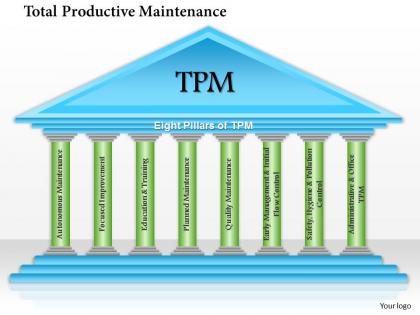
0514 total productive maintenance tpm pillars powerpoint presentation




Try Before you Buy Download Free Sample Product
 Impress Your
 Audience
 100%
100% Editable
 Save Hours
 of Time


Create an enthusiastic audience with our 0514 Total Productive Maintenance TPM Pillars Powerpoint Presentation. Ensure that they are all agog.
People who downloaded this PowerPoint presentation also viewed the following :
0514 total productive maintenance tpm pillars powerpoint presentation with all 5 slides:
You will never know creating animated slides was so easy until you use our 0514 Total Productive Maintenance TPM Pillars Powerpoint Presentation. All the hard work has already been done for you.
FAQs for 0514 total productive maintenance tpm
TPM boils down to six key things. Get your operators doing daily equipment checks - honestly this is where most companies should start. You'll want planned maintenance instead of just fixing stuff when it breaks. Let operators handle the basic maintenance since they're around the machines all day anyway. Save the complex repairs for specialists though. Train your whole team properly so everyone knows what they're doing. Oh, and if you're buying new equipment, apply these principles from day one rather than waiting for problems to pop up. The operator involvement piece is huge - they catch issues way earlier than anyone else would.
So basically TPM makes maintenance everybody's responsibility, not just the maintenance crew's problem. Your operators start doing daily checks and catch stuff early instead of waiting for things to break. Way less chaotic than the old "run it till it dies" approach, honestly. Maintenance guys can focus on the bigger picture and training instead of running around fixing emergencies all day. My buddy at the plant says once you get operators doing those simple daily inspections, you'll spot issues before they turn into expensive headaches. Takes some getting used to but beats constantly putting out fires.
Look, your operators ARE the key here. TPM falls apart without them buying in. Instead of just running machines till they break, they need to own the equipment. Those front-line guys? They're gonna hear weird noises way before anyone else does. Train them on basic maintenance stuff - daily checks, minor repairs, that kind of thing. The whole mindset has to flip from "maintenance department's problem" to everyone pitching in. People hate changes they didn't help make, so get them involved early. You'll be shocked at how much they actually know once they start suggesting improvements.
Yeah totally! TPM isn't just for factories - you can use it anywhere you've got critical equipment. Hospitals do it with medical devices, tech companies with servers, logistics with their fleet. The basics are the same: preventive maintenance, getting operators involved, always improving. I actually saw this work really well at a data center once. They focused on server uptime, cleaning schedules, training people to catch problems early. Pretty smart approach honestly. Start with whatever equipment would hurt most if it broke down, then build maintenance routines around those first.
Definitely focus on OEE first - that's your bread and butter since it rolls availability, performance, and quality into one number. MTBF is solid too, plus maintenance costs as a percentage of replacement value. Honestly, if your OEE is below 70%, you've got some real issues to sort out. Shoot for 85% or higher if you can. Oh, and don't forget the people side - track employee suggestions per person and training hours. TPM falls apart without operator buy-in. I'd start simple with just OEE and MTBF, then layer on the rest once you're comfortable with those.
So TPM basically flips the script from "oh crap, it broke" to actually preventing stuff before it dies. Your operators start doing daily checks instead of just running equipment into the ground - honestly, this part makes such a difference. Catching small problems early beats those nightmare 3am emergency calls every time. You'll schedule maintenance during normal hours rather than scrambling when everything falls apart. The whole continuous improvement thing helps you spot which equipment is your weak link. Start with those operator checks though - even tiny issues found early can save you from massive headaches later.
Honestly, get your people right on the equipment first - that's when TPM actually makes sense. Mix some classroom stuff with real maintenance work so they can connect the dots. Your operators are usually way better at explaining things than the managers, so use them! The key thing is explaining WHY you're doing TPM, not just the steps. Once they realize it prevents those 2am breakdown calls, they're totally on board. Oh and definitely do refresher sessions - people forget stuff. Visual guides posted around the shop floor help too, something they can quick reference when they're actually working.
So basically, all three methods hate waste and love fixing problems - that's why they work great together. Your TPM equipment data becomes perfect input for Six Sigma DMAIC projects. When operators do their maintenance routines, they're already collecting the info you need for Lean events. The autonomous maintenance piece fits right into 5S too. I'd honestly just start by looking at what you're already doing and see where things connect. Your downtime analysis from TPM? That's gold for finding root causes in Six Sigma work. Once you get the rhythm going, it feels pretty natural.
Honestly, the worst part is dealing with people who hate change - and that's like 90% of your workforce. Operators will complain that maintenance isn't their thing, while management freaks out about training costs. Your data systems probably suck too, which makes tracking anything a nightmare. Plus coordinating between departments? Good luck with that mess. Start with one small area first though - get some quick wins to show off. Makes everything way easier when leadership can actually see results instead of just hearing promises. Oh, and make sure your boss is obviously backing this or you're screwed.
So IoT basically turns your maintenance program into something way smarter. Instead of those scheduled checkups, you're getting live data on vibration, temp, all that stuff 24/7. Honestly, it's pretty cool - your equipment can literally tell you when something's off before it breaks down completely. The predictive stuff helps you plan maintenance based on what's actually happening, not just calendar dates. You get these dashboards that show everything in one place too. My advice? Start with one machine that's critical, throw some sensors on it, and see how much the data changes your whole approach.
Dude, TPM is actually worth it. Most companies cut maintenance costs by 5-15% and boost equipment effectiveness around 10-25%. That's real money we're talking about. Your team stops running around putting out fires all the time, which honestly makes everyone's life better. Less emergency repairs, way less surprise downtime, and equipment that doesn't crap out as often. The inventory savings are solid too - you're not panic-buying parts anymore. ROI usually hits within 12-18 months. Just track your current downtime costs first so you can actually prove it worked later.
You gotta actually show up on the floor and talk to your operators - like, really listen to their ideas. When they see you implementing the good suggestions fast, that changes everything. Celebrate those small wins too. I've watched so many "improvement initiatives" die because leadership treats them like flavor of the month. TPM can't be that. Make it part of your regular conversations, remove barriers when people hit roadblocks. Honestly? Pick just one area first and be super present there. Once your team realizes you're genuinely invested and not just checking boxes, they'll start thinking differently about improvements.
There's a bunch of software out there for TPM stuff. CMMS platforms like Fiix and UpKeep are pretty solid - they do work orders, scheduling, asset tracking, the whole deal. You could also look at dedicated TPM tools or those modules in big ERP systems like SAP. Honestly though, those fancy dashboards can be overkill and confuse your team more than help. Sometimes simple works better anyway. Start with shared calendars, Monday.com for checklists, or yeah even spreadsheets work fine. Build the habits first with whatever your people will actually stick to, then get fancier later if you need it.
Look, TPM hits all three OEE areas at once. Your operators catch problems early with daily checks, so you don't get those random shutdowns that wreck availability. Performance goes up because machines actually run at proper speeds instead of struggling along. Quality improves too - clean, calibrated equipment just makes fewer bad parts. Most places I've seen get 10-25% better OEE in year one, which is honestly pretty solid. Oh, and definitely track your current numbers first so you can prove it's working when you roll this out.
So autonomous maintenance is where your operators do the basic upkeep instead of waiting for maintenance guys. Think cleaning, lubing, quick inspections - stuff like that. Honestly, it makes total sense because who knows those machines better than the people running them all day? Plus they catch problems way earlier. Your maintenance team gets freed up for the complicated fixes while downtime drops. Oh, and response time is way faster obviously. I'd say start with just one machine though - don't go crazy training everyone at once. Baby steps work better.
-
Thanks for all your great templates they have saved me lots of time and accelerate my presentations. Great product, keep them up!
-
Graphics are very appealing to eyes.