


0714 borrelia burgdorferi medical images for powerpoint





Try Before you Buy Download Free Sample Product
 Impress Your
 Audience
 100%
100% Editable
 Save Hours
 of Time


Dangle the carrot for your audience. Bait them with our 0714 Borrelia Burgdorferi Medical Images For Powerpoint.
People who downloaded this PowerPoint presentation also viewed the following :
0714 borrelia burgdorferi medical images for powerpoint with all 9 slides:
Our 0714 Borrelia Burgdorferi Medical Images For Powerpoint bring out the genius in you. Your exceptional aspects come to the fore.
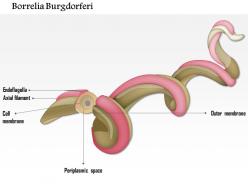






FAQs for 0714 borrelia burgdorferi medical
Borrelia burgdorferi transmits primarily through infected Ixodes ticks during blood feeding, with white-footed mice and deer serving as key reservoir hosts in complex enzootic cycles. These transmission dynamics create significant ecological implications for public health surveillance, with many healthcare organizations and environmental agencies finding that understanding tick population distribution, host animal migration patterns, and seasonal activity cycles enables more effective Lyme disease prevention strategies and risk assessment protocols.
Borrelia burgdorferi's life cycle varies significantly across host species, with reservoir hosts like white-footed mice maintaining chronic infections while incidental hosts such as humans develop acute symptoms and cannot sustain long-term bacterial persistence. These differential host responses influence transmission dynamics, with reservoir species enabling tick-to-tick transmission cycles while humans represent epidemiological dead ends, ultimately affecting disease surveillance strategies and public health interventions.
Ticks serve as the primary vectors for Borrelia burgdorferi transmission, with Ixodes species acting as reservoirs that acquire the bacteria from infected wildlife hosts like deer and rodents. Through their feeding cycle, these ticks facilitate disease spread across geographic regions, with many public health organizations finding that understanding tick population dynamics, seasonal activity patterns, and host preferences enables more effective surveillance strategies and targeted prevention programs.
Lyme disease caused by Borrelia burgdorferi typically presents with erythema migrans (the characteristic bull's-eye rash), fever, headache, fatigue, and muscle aches in early stages. Without treatment, the infection can progress to joint inflammation, neurological complications like facial palsy and meningitis, and cardiac abnormalities, with many patients experiencing arthritis in large joints, particularly knees.
Borrelia burgdorferi evades host immune responses through antigenic variation, complement resistance mechanisms, and strategic tissue migration patterns that minimize detection. These bacterial strategies enable persistent infections by altering surface proteins, neutralizing immune factors, and establishing residence in immunologically privileged sites, ultimately delivering chronic disease progression while presenting significant diagnostic and treatment challenges for healthcare systems.
**INPUT**: What molecular techniques are available for the detection of Borrelia burgdorferi in clinical settings? **OUTPUT**: Molecular techniques for detecting Borrelia burgdorferi include PCR amplification, real-time qPCR, DNA sequencing, multiplex PCR, and loop-mediated isothermal amplification (LAMP). These advanced diagnostic methods enhance clinical accuracy by enabling rapid pathogen identification, reducing false negatives, and streamlining laboratory workflows, with many healthcare institutions finding that molecular approaches deliver faster patient diagnosis and more targeted treatment protocols.
Treating Borrelia burgdorferi infections presents challenges including antibiotic resistance development, chronic symptom persistence, diagnostic delays, varied clinical presentations, and treatment duration complexities. These complications impact patient outcomes by extending recovery periods, increasing healthcare costs, and requiring specialized monitoring protocols, with many healthcare systems finding that early detection and comprehensive treatment strategies ultimately deliver better patient experiences and reduced long-term complications.
Climate change expands Borrelia burgdorferi's geographic range by creating warmer temperatures that extend tick survival periods, increase reproduction rates, and enable colonization of previously unsuitable northern regions. These environmental shifts allow infected tick populations to establish in new territories across North America and Europe, ultimately delivering longer transmission seasons and broader endemic zones, with public health organizations increasingly monitoring these expanding risk areas.
Vaccine development for Borrelia burgdorferi has progressed through next-generation approaches including recombinant outer surface proteins, multi-antigen formulations, and novel adjuvant systems that target different bacterial surface components. These advanced strategies enhance immune response effectiveness by incorporating broader strain coverage, improved safety profiles, and longer-lasting protection, with clinical trials increasingly demonstrating promising efficacy rates across diverse patient populations.
Genetic diversity within Borrelia burgdorferi populations significantly affects disease transmission dynamics by influencing host immune evasion, vector competence, and pathogen virulence across different geographic regions. This diversity enables the bacteria to adapt to various tick species and mammalian hosts, ultimately creating complex transmission patterns that vary by strain, with public health organizations increasingly recognizing that understanding these genetic variations is crucial for developing targeted prevention strategies.
Emerging research trends in Borrelia burgdorferi include advanced genomic sequencing, biomarker development, novel diagnostic technologies, antimicrobial resistance studies, and personalized treatment protocols. These research approaches enhance understanding by identifying strain variations, improving early detection capabilities, and developing targeted therapies, with healthcare institutions increasingly finding that integrated diagnostic platforms deliver faster patient outcomes and more effective treatment strategies.
Public health initiatives can better educate communities through targeted awareness campaigns, community workshops, healthcare provider training, school-based education programs, and digital outreach strategies. These approaches enhance prevention by promoting tick-safe practices, early symptom recognition, and protective behaviors, with many endemic regions finding that comprehensive education significantly reduces infection rates while improving community health outcomes.
Alternative animal hosts serve as crucial reservoir species for Borrelia burgdorferi, including white-footed mice, chipmunks, shrews, and various bird species that maintain bacterial populations between tick feeding cycles. These diverse hosts enable the pathogen to persist across different ecosystems and geographic regions, with many wildlife populations sustaining transmission networks that ultimately increase human exposure risk in endemic areas.
Co-infection with pathogens like Babesia, Anaplasma, and Ehrlichia significantly complicates Borrelia burgdorferi management by requiring multi-drug treatment protocols, extended therapy durations, and enhanced diagnostic approaches. Healthcare systems increasingly recognize that co-infected patients present atypical symptoms and treatment resistance, with many infectious disease specialists finding that comprehensive pathogen screening and tailored antimicrobial combinations ultimately deliver improved patient outcomes.
Future research directions for Borrelia burgdorferi pathogenesis include advanced genomic sequencing, host-pathogen interaction mapping, immune evasion mechanisms, biofilm formation studies, and chronic infection pathways. These research approaches streamline diagnostic development, enhance treatment protocols, and accelerate therapeutic innovations, with healthcare institutions and pharmaceutical companies finding that comprehensive pathogenesis understanding ultimately delivers more effective patient outcomes and competitive clinical advantages.
-
Excellent design and quick turnaround.
-
Excellent work done on template design and graphics.