


Employee Productivity And Efficiency Graph For Last Professional Development Training




Try Before you Buy Download Free Sample Product
 Impress Your
 Audience
 100%
100% Editable
 Save Hours
 of Time


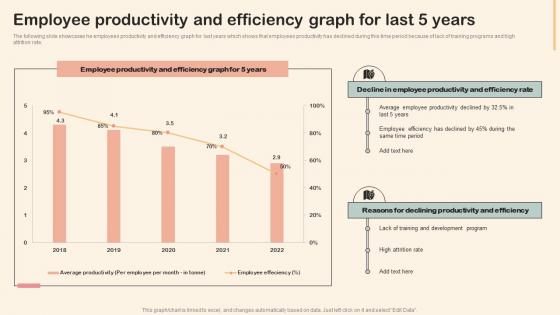
The following slide showcases he employees productivity and efficiency graph for last years which shows that employees productivity has declined during this time period because of lack of training programs and high attrition rate.
People who downloaded this PowerPoint presentation also viewed the following :
Employee Productivity And Efficiency Graph For Last Professional Development Training with all 7 slides:
Use our Employee Productivity And Efficiency Graph For Last Professional Development Training to effectively help you save your valuable time. They are readymade to fit into any presentation structure.





FAQs for Employee Productivity And Efficiency Graph For Last
Dude, visualization tools are a game changer for productivity. Charts and graphs make data so much easier to understand than boring spreadsheets. I've watched presentations get cut in half just because good visuals explained everything instantly. People actually listen when they can see patterns instead of staring at endless rows of numbers. Honestly, spreadsheets are where attention spans go to die. You'll spend way less time explaining stuff and more time solving actual problems. Just try turning your next data mess into a simple chart - the difference is huge and you'll wonder why you waited so long.
Dude, engaged employees are like night and day compared to checked-out ones. When people actually care about their work, they'll solve problems on their own instead of you having to babysit everything. Plus they help each other out way more. The creativity difference is insane too - engaged folks come up with solutions you'd never think of. But when someone's mentally clocked out? They do the absolute minimum and honestly bring everyone else's vibe down. I've seen it kill whole team dynamics. Check how connected your people feel to what they're doing - that's where real productivity starts.
Honestly, good time management is a game changer for actually getting stuff done. You know that feeling where you're busy all day but didn't accomplish anything important? Proper prioritizing fixes that. I swear by time-blocking - sounds boring but it works. The Pomodoro technique is solid too if you can't focus for long stretches. Here's what I'd do first: track your time for a week. Seriously, write it down or use an app. You'll be shocked where hours disappear (hello, random internet rabbit holes). Find what clicks with how your brain works, then stick with it.
Honestly, it totally depends on what your team does day-to-day. Focus on outcome stuff first - like did they hit their goals, finish projects on time, quality of work. Way better than just counting hours (though sometimes you need that to spot where things get stuck). Sales teams? Revenue per employee is obvious. But here's the thing - numbers only tell you so much. I always combine the data with actual conversations because people aren't spreadsheets, you know? Just pick 2-3 metrics that really show success for each role and stick with tracking them consistently.
Honestly, remote work makes most people way more productive - like 13-50% better depending on your job. No commute drama, fewer random interruptions, plus you can actually work when you're most alert. But here's the thing - some of us just need that office energy to function (guilty as charged). It really comes down to whether you thrive with structure or prefer doing your own thing. Your home setup matters too. I'd say track what you get done over a couple weeks both ways and see which one actually works for you.
Honestly, distractions are the worst - social media, notifications going off every two seconds, that coworker who won't stop talking about their weekend. Then there's the whole unclear priorities thing where you're juggling everything at once. I'd start by tracking your time for a week (trust me, it's eye-opening). Try time-blocking for focused work and set specific times to check messages. Also, definitely have that awkward conversation with your manager about realistic deadlines - better than burning out. Figure out what drains you vs. what actually gets you going.
Honestly, your leadership style makes or breaks team motivation. I've watched micromanagers absolutely destroy entire departments - it's brutal. People just shut down creatively. But when you give folks autonomy with clear direction? That's where the magic happens. Being collaborative instead of controlling usually gets you way better results. Each person responds differently though, so you kinda have to figure out what clicks for each team member. Maybe just ask them straight up what kind of support helps them crush it at work.
Honestly, start by figuring out what's eating up most of your time - those boring, repetitive tasks are goldmines for automation. Project management tools can handle task assignments automatically, and chatbots deal with basic customer questions so your team isn't stuck answering the same stuff over and over. Cloud platforms are game-changers too - no more emailing files back and forth or dealing with version chaos. Real-time data insights help you make decisions faster instead of waiting around for reports. I swear, once you automate even one annoying process, you'll wonder why you didn't do it sooner.
Honestly, I'd start with a team survey first - see what they actually think they need. Time management and project management stuff like PMP or Agile are solid bets. Communication workshops can totally change team dynamics, I've watched it happen. Don't overlook digital skills training either, especially if people are still figuring out Slack or whatever PM tools you use. Leadership programs help everyone, not just managers - better delegation makes life easier for everybody. Oh, and stress management workshops are underrated but super helpful. The survey thing will show you where to spend your budget for maximum impact.
Oh man, culture makes such a huge difference for productivity. When people feel valued and trusted, they just naturally put in more effort - it's wild how much of a difference it makes. Toxic environments? Even your best people will either check out mentally or burn themselves out trying. But get the culture right and you'll see people actually taking initiative, collaborating without being forced to, and genuinely caring about the work. Less people quit, engagement goes up, better problem-solving - the whole nine yards. Honestly, I'd start by watching how your managers communicate in meetings and whether anyone actually listens when people speak up.
Honestly, frequent bite-sized feedback beats those dreaded quarterly dumps every time. Focus on catching people doing stuff right instead of making laundry lists of what's broken - that just stresses everyone out. I'd stick to one or two things per conversation and make it actionable. Quick weekly check-ins work way better than formal review drama. Project retrospectives are gold too. The whole point is making it feel like normal conversation, not some performance evaluation nightmare. Pick your battles and keep it specific.
Honestly, start with "do not disturb" hours - no meetings or random messages during focus time. Game changer, I swear. Then maybe set up some quiet zones and push headphones for deep work. Oh, and move your printer somewhere else if it's near people's desks (learned that one the hard way). Ground rules help too - like keeping the chatting to a minimum during crunch time. Plants or little dividers work great if you've got the space. Don't try everything at once though. Pick two things and see how it goes first.
Your workspace setup really does make or break your day. Lighting's huge - bad lighting literally drains your energy and hurts your eyes. Temperature's another big one (can't focus when you're shivering, right?). Open layouts are great for collaboration but honestly, they can be distracting as hell. We just got some sound panels at work and wow, what a difference. You need that sweet spot between open areas for teamwork and quiet corners for deep work. Maybe walk around your space tomorrow and notice what's actually bugging you throughout the day?
Your brain and productivity are totally connected - I learned this the hard way last year. When I'm stressed or anxious, my focus goes out the window. Can't make decisions properly, zero energy, and honestly I just end up doom-scrolling instead of working. Burnout's even worse because you're physically there but mentally checked out. Here's what actually works though: take real breaks (not just scrolling your phone), set some boundaries around work hours, and use your vacation days! Even small changes help. Maybe start with one thing this week? Trust me, your future self will thank you.
Honestly, collaborative tools are a lifesaver for cutting through all those messy email threads. Everything lives in one spot - your files, conversations, project updates, the whole thing. Real-time chat means you can actually get answers instead of waiting around for replies. No more digging through your inbox wondering if Sarah ever responded about the budget stuff. Your team can see what's happening without scheduling yet another status meeting (we all hate those anyway). Progress tracking becomes way more transparent too. I'd pick one tool that fixes your worst headache first - maybe file sharing or task management - then build from there.
-
The Designed Graphic are very professional and classic.
-
Understandable and informative presentation.