


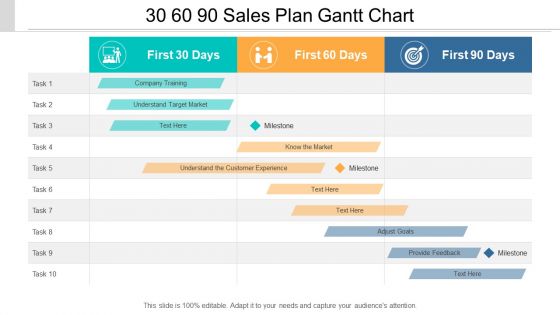
30 60 90 sales plan gantt chart





Try Before you Buy Download Free Sample Product
 Impress Your
 Audience
 100%
100% Editable
 Save Hours
 of Time


Be jovial about it with our 30 60 90 Sales Plan Gantt Chart. Inject a dose of humor into the discussion.
People who downloaded this PowerPoint presentation also viewed the following :
30 60 90 sales plan gantt chart with all 5 slides:
Inject a dose of humor into the discussion with our 30 60 90 Sales Plan Gantt Chart. Be jovial about it.

FAQs for 30 60 90 sales
Honestly, your first 90 days are make-or-break territory. Start with 30 days learning everything - your accounts, products, the whole landscape. Next month? That's relationship time. Build your pipeline but don't rush it. Most reps totally blow this part and then wonder why nobody trusts them later. Days 61-90 is when you actually start closing stuff. Set real metrics for each phase - not just fluffy goals. Figure out who the key players are early on. Oh, and definitely schedule weekly check-ins with your manager. Here's the thing though: write this plan down somewhere you'll actually see it. Plans are worthless if they just sit in some forgotten doc.
Most sales teams chase those big quarterly numbers, but honestly? Breaking it into 30-60-90 day chunks is way smarter. You get actual milestones instead of just "hit your quota somehow." First 30 days you're learning the territory and who's who. Next 30 you're building real relationships. Last 30 you're ramping up hard. Way less overwhelming than staring at some massive yearly target. Plus you can pivot fast if something's not clicking - beats realizing you're screwed in month two of the quarter. Map out your next 30 days with daily stuff and watch how much clearer everything gets.
Track activity AND results as you go. First 30 days? Focus on onboarding completion, how many prospects you're reaching, pipeline setup stuff. Month two is when conversion rates matter - are meetings turning into real opportunities? Hit those ramp targets yet? Month three is the real test though. Quota numbers, deal speed, whether you're actually closing decent business. Nobody expects you to kill it immediately (thank god), but patterns should emerge. Definitely do weekly check-ins with your manager. Data tells stories, and you want to catch any red flags early.
Break it down into realistic chunks for each month. First 30 days? Just focus on learning everything - product stuff, CRM systems, shadow the good reps, figure out your territory. Month two is when you start building relationships and making contacts while you're still getting feedback. Then the last 30 days you actually hit sales targets. Most new people jump straight into selling mode and it totally backfires - I've seen it happen so many times. Set specific goals for each phase and check in with your manager weekly. Track everything religiously, even the boring stuff. You'll spot patterns in what works and what doesn't.
Honestly, you can't build a solid 30-60-90 plan without doing your homework first. Research gives you the real numbers – market size, who you're competing against, what buyers actually want. Trust me, I bombed my first quarter because I just made up targets that sounded good. Pretty embarrassing actually. Your first 30 days should be about smart prospecting, not random cold calls. Months two and three? That's when you're building pipeline based on actual data. Do the competitor analysis and customer research upfront. It'll save you from looking like an idiot later when your boss asks why you missed quota.
Honestly, get all your teams talking during that 30-60-90 planning - sales brings market intel, marketing handles lead gen, customer success covers retention stuff. I've watched so many plans crash because everyone stayed in their own lanes (big mistake). Set up regular check-ins where people can actually pivot based on what's working. Your success folks should call out risky accounts while marketing tweaks campaigns from sales feedback. Oh, and make sure everyone gets how their work connects to the bigger sales picture. Shared dashboards help too - keeps progress visible across teams.
Honestly, the biggest trap is setting crazy unrealistic goals right off the bat. You'll just burn out. Be ambitious, sure, but stay grounded in what's actually doable for your territory. Also don't be vague - saying "increase sales" is basically wishful thinking, not a real plan. Get specific about your numbers, activities, deadlines. Map out the actual work too. Want 50 new customers? Cool, but how many calls will that take? I've seen people create these insanely complex plans that just become useless paperwork nobody looks at. Start simple - maybe 3-5 solid, measurable goals per phase and build from there.
Honestly, getting a 30-60-90 plan going forces both teams to actually sit in a room and agree on stuff upfront - which rarely happens otherwise! Marketing has to commit to real lead numbers and quality, while sales promises they'll follow up fast and hit conversion targets. Each phase has check-ins built in, so when marketing's "hot leads" turn out to be garbage (happens more than you'd think), you can fix things quickly. Same goes if sales is dragging their feet on follow-ups. Just get both team leads together for that first planning session and hash it out.
Dude, tech will totally speed up your 30-60-90 plan if you use it right. Set up your CRM to handle follow-ups automatically and ping you about milestones - way better than constantly updating spreadsheets like some kind of data entry robot. Project management stuff like Notion keeps your timeline visual and organized. I'm obsessed with how much time this saves honestly. Sales platforms can automate your onboarding checklist too, which is clutch. Just start with whatever tools your team's already using though - don't overcomplicate it by adding something brand new right off the bat.
Honestly, your 30-60-90 plan needs to match how your industry actually works. B2B software? Those deals drag on forever, so spend your first month building relationships and nailing demos. But if you're in retail or quick transactional stuff, hit the ground running with volume from day one. Finance and healthcare are their own beast - you'll need way more compliance training upfront before you can even touch a customer. The biggest mistake people make is expecting fast results when customers need months to decide. Ask your manager what the last person's wins looked like at each stage.
Just stick with PowerPoint or Google Slides - seriously, don't overcomplicate it. Break it into those three sections (30, 60, 90 days) with actual numbers and specific stuff you'll do. I've watched people waste hours on fancy Canva templates when honestly? A clean, basic slide deck wins every time. Throw in some simple charts if you've got data to show. The design doesn't matter nearly as much as making your goals concrete and measurable - that's what they're really looking for. Keep it short, maybe 4-5 slides tops, so you can just talk through it naturally instead of reading off everything.
Build in regular check-ins from day one - I do weekly for the first month, then every two weeks after. Get feedback from your manager, teammates, even prospects you're talking to. Trust me, I made the mistake of ignoring obvious market signals because I was too attached to my original plan (dumb move). Track what you're hearing and actually change things based on it. Your messaging might need tweaking, or maybe you're targeting the wrong segments entirely. The plan should evolve - that's literally the point. Set up something simple to capture these insights so you don't forget them by your next review.
Honestly, time management is your biggest friend here - you've got crazy tight deadlines to hit. Listen like your life depends on it those first 30 days, especially when learning your territory and customer pain points. Organization skills? Non-negotiable. You're literally building relationships while developing your pipeline AND chasing quota all at once. Adaptability is probably the most underrated skill though - I swear, whatever you think you know going in will change. Communication matters too since you'll be giving updates constantly. Oh, and do yourself a favor - figure out what you're already good at, then pick one thing to work on each month.
Weekly check-ins are honestly your best bet. I know, I know - sounds excessive when you're already drinking from a fire hose. But trust me, 15 minutes every week beats scrambling later. Those first 90 days fly by and stuff changes constantly. After each 30-day chunk, dig deeper and tweak your goals based on what you've actually learned. The whole thing only works if you stay flexible. Oh, and set that calendar reminder right now while you're thinking about it - you'll definitely forget otherwise and then hate yourself when you're behind on everything.
Most SaaS places do this 90-day thing that actually works pretty well. First month is all product training and shadowing the good reps - you're basically a fly on the wall. Month two, you start qualifying leads and hopping on calls but with backup (which honestly saved my butt more than once). Final stretch? You're closing deals solo. The trick is hitting specific targets each phase. Like 5 demos completed or 10 solid leads generated. Really depends on how long your sales cycle is though - if you're selling enterprise stuff, you'll need way more time than someone pushing monthly subscriptions.
No Reviews