


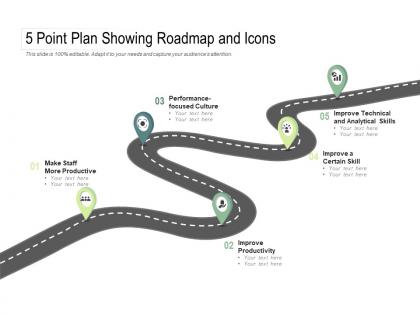
5 point plan showing roadmap and icons




Try Before you Buy Download Free Sample Product
 Impress Your
 Audience
 100%
100% Editable
 Save Hours
 of Time


Stir it up with our 5 Point Plan Showing Roadmap And Icons. Keep your audience in an ebullient mood.
People who downloaded this PowerPoint presentation also viewed the following :
5 point plan showing roadmap and icons with all 5 slides:
Being eccentric sometimes helps. Give vent to your whims with our 5 Point Plan Showing Roadmap And Icons.
FAQs for 5 point plan showing
Honestly, start with a timeline that has clear milestones - that's your backbone. Add your key deliverables, what resources you'll need, and map out dependencies between tasks. The "why" behind each phase is huge because stakeholders get cranky without context. Success metrics are clutch, plus you need risk callouts and some way to track progress. Oh, and definitely include an assumptions section since literally everything changes anyway. Keep it visual though - walls of text kill people's souls. I'd go simple layout first, then tweak it based on who's actually gonna look at this thing.
Dude, colors actually matter way more than you'd think for roadmaps. Green's perfect for done stuff - people just get that it means success. Red should only be for blockers or urgent things, and blue works for future phases since it feels reliable. Orange is clutch for big decisions or pivots because it pops without screaming danger like red does. I swear I've watched presentations bomb just because they used boring black text everywhere. Oh, and definitely stick to the same colors throughout - it creates this visual flow that makes everything click faster. Your brain processes it without even thinking about it.
Make your milestones stand out with diamonds or stars - way better than boring bullet points. I always color-code mine (red for launches, blue for reviews) because it's honestly so much easier to scan. Don't just slap them on random dates though. Put them where stuff actually finishes. Keep the names short but clear - "Beta Release" works better than some long wordy thing. Space them out so you're not drowning in milestones... maybe 3-5 big ones per quarter tops? Oh, and make sure they're things people actually care about, not just your internal deadlines. Nobody wants to celebrate "completed documentation review" or whatever.
Industries totally customize roadmaps around what actually drives their business. Tech companies obsess over feature drops and sprint timelines. Manufacturing? They're all about supply chain milestones and hitting production numbers. Healthcare gets stuck dealing with regulatory approval timelines - honestly such a pain to predict those! Retail syncs everything with seasonal pushes and inventory cycles. You basically need to figure out what makes or breaks success in your space, then build around that. I'd peek at competitor roadmaps first to see their priorities, then tweak based on your specific situation.
Dude, you gotta read the room constantly. Watch their faces - if people look confused or are checking their phones, slow down and explain the "why" better. I've watched so many roadmaps bomb because the presenter just talked AT everyone instead of actually engaging. Ask questions, get their input, address pushback right there in the moment. Short sentences work. But also let some thoughts flow naturally when you're building momentum. Don't just present your roadmap like it's set in stone - make it feel collaborative. That engagement you create during the meeting? That's what determines if they'll actually support your plan afterward.
Start with your big 1-year vision, then work backwards - that's honestly the only way this stuff makes sense. I break mine into quarterly chunks for near-term things and yearly swimlanes for the bigger goals. Different colors help distinguish what's urgent vs what's just important later. Make sure your short-term wins actually connect to those bigger objectives though, not just random busy work that feels pressing. Build in quarterly check-ins because things will definitely shift. The whole point is creating a map where your immediate milestones actually get you somewhere meaningful instead of just keeping you busy.
Don't dump every feature request into your roadmap - that's just noise. Focus on big themes instead. Honestly, vague dates work better than specific ones because things always change and you'll look flaky otherwise. People need to understand *why* you're prioritizing stuff, not just what's coming next. Oh, and definitely test your tech setup beforehand. Nothing kills credibility like scrambling with a broken screen share. Your audience should walk away knowing what winning actually looks like for each milestone.
Your roadmap becomes so much clearer when you visualize the data instead of staring at boring spreadsheets. Color-coded timelines and progress bars show you everything at once - no more digging through text to find what you need. Gantt charts are probably the easiest place to start (though honestly they look intimidating at first). You'll spot bottlenecks right away. Plus your stakeholders won't need those marathon update meetings anymore since they can just look at the visual and get it. Interactive timelines are game-changers for tracking multiple workstreams too.
Think of your roadmap like you're telling a story. Current state = opening scene. Each milestone becomes a plot point building toward your bigger vision. Customer pain points? That's your conflict driving everything forward - makes boring feature updates actually matter. Turn user personas into real characters and show how each roadmap piece helps their journey. I swear this approach works way better than just listing deliverables. Structure it like "here's where we are, here's what's blocking us, here's how we fix it." Connect every single thing back to outcomes people genuinely care about.
Try curved arrows or dotted lines connecting later phases back to earlier ones - I usually go with different colored arrows so feedback doesn't get mixed up with regular forward progress. Small "review gates" work great too, just little milestone boxes where you actually collect and process feedback. Oh, and you could add a separate swim lane that runs parallel to your main dev track, dedicated just to feedback stuff. The whole point is showing information flows both ways, not just in one direction. Honestly, sketch it out first before you commit to anything fancy.
Dude, skip the boring bullet points - nobody remembers those anyway. Go visual instead. Use timelines, swim lanes for different teams, and color-code everything by priority. Honestly, I've sat through way too many roadmap presentations that put everyone to sleep. Keep it under 15 slides max and throw in the dates your stakeholders actually care about. Oh, and send them a one-page summary beforehand so they're not completely lost. Trust me on this - you'll spend way less time explaining stuff if they can actually see where you're headed at a glance.
Honestly, it comes down to how much you can actually predict. Startups need templates that won't break when you pivot (which you probably will) - loose timelines, room to test ideas, space for "oh crap we were totally wrong about this." Established companies can get away with detailed schedules and fixed deadlines because they've got data from past projects. They know what works. If you're early stage, focus on learning stuff over hitting dates. Bigger companies? You'll need templates that deal with all the politics and legacy systems. Just pick what fits your chaos level, not what you think you should be doing.
Oh man, this is so real! Japan and similar cultures want all the context first - like, they need the whole story before you even mention deadlines. Germany? Just give them the dates and deliverables upfront. Don't waste their time. Aggressive timelines motivate some teams but totally backfire in others where it seems disrespectful. Visual layout matters too - hierarchical cultures expect formal charts showing who approves what. I bombed a few international calls learning this stuff the messy way. Quick tip: text your regional leads beforehand asking how they like roadmap reviews structured. Saves you from looking clueless.
Honestly, just watch the room during your presentation. Are people actually engaged and asking real questions, or scrolling on their phones? Dead giveaway right there. After you're done, see if stakeholders can explain back your main priorities without fumbling around. That tells you if your message landed. Also look for those follow-up signals - people scheduling next meetings, committing resources, or having sidebar conversations about it. The whole point is making sure they get why this roadmap matters to *them* specifically. Oh, and definitely send a quick survey within 24 hours while everything's still fresh in their minds.
So I always bake "trend analysis" sections right into my roadmap templates. Create a simple matrix plotting trends by impact vs timeline - honestly feels like playing fortune teller sometimes but whatever works! Do quarterly reviews where you're evaluating which tech is actually gaining steam. Don't just track the obvious industry stuff either. Adjacent trends can totally blindside you from weird angles. The whole thing only works if you make it recurring though. One-and-done trend analysis is basically useless.
No Reviews