


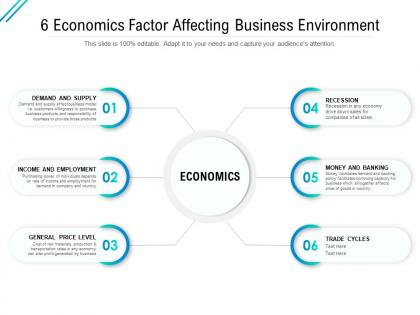
6 economics factor affecting business environment




Try Before you Buy Download Free Sample Product
 Impress Your
 Audience
 100%
100% Editable
 Save Hours
 of Time


Ensure injuries don't happen with our 6 Economics Factor Affecting Business Environment. Advise folks on how to avoid incidents.
People who downloaded this PowerPoint presentation also viewed the following :
6 economics factor affecting business environment with all 2 slides:
Advise folks on how to avoid incidents with our 6 Economics Factor Affecting Business Environment. Be able to ensure injuries don't happen.
FAQs for 6 economics factor
Honestly, start with GDP growth, inflation, and unemployment - those move markets the most. Consumer spending's massive too, like 70% of our economy which is wild when you think about it. Interest rates are obviously key. Manufacturing data and housing starts matter depending on what you're invested in. Corporate earnings reports can make or break individual stocks. If you've got international stuff, currency rates become important too. Don't overwhelm yourself though - pick 2-3 indicators that actually relate to your investments first. Most of this drops monthly so you'll get into a groove pretty quick.
So when inflation hits, people freak out and start cutting back on stuff they don't really need. Like, why buy that new coffee maker when your old one still works? Everyone starts buying store brands instead of name brands, and big purchases like cars just get pushed off indefinitely. Honestly, I think the psychology is huge here - once your grocery bill jumps that much, you question everything. People get paranoid about money losing value, so they either panic-buy before prices go up more or just hoard cash. If you're planning for business stuff, figure out what you sell that's actually essential versus just nice to have.
So basically, interest rates control how much it costs businesses to borrow cash. Low rates? Companies can finance expansions and new equipment way cheaper, which makes these investments super tempting. But when rates jump up, borrowing gets expensive fast. Businesses start second-guessing everything and putting off big purchases because the financing costs kill their profits. Honestly, I've seen so many companies freeze their spending plans when rates spike. If you're thinking about any major investments, definitely check where rates are heading first - it'll save you a headache later.
So currency changes mess with how competitive you are overseas. Weak currency? Your stuff gets cheaper for foreigners to buy, which is great. But then importing materials costs you more - kinda annoying tbh. Strong currency flips this around: exports cost more but imports are cheaper. Honestly, it's like playing whack-a-mole sometimes. If you're thinking about expanding internationally or buying from overseas suppliers, just watch those currency trends. Maybe look into hedging if you're worried about big swings hitting your profits.
So fiscal policy is basically the government using spending and taxes to keep the economy stable. Struggling economy? They'll pump money in or cut taxes to get people spending again. Too hot? Time to pull back and raise taxes - though honestly, politicians hate doing that part. It's like a thermostat but way messier. Central banks handle the other half with interest rates and stuff. The timing is everything though - mess that up and you're screwed. Whenever you're looking at economic news, check what fiscal moves they're making first.
So basically it comes down to supply and demand, right? High demand + low supply = you can charge whatever you want. Like those Travis Scott sneakers that sell out instantly. But flip it around and you're stuck cutting prices just to get rid of stuff. Honestly, most businesses I know completely ignore this and then act shocked when their pricing strategy fails. You gotta stay on top of what your competitors have in stock and watch your own demand signals. I'd check both weekly if I were you - gives you way more room to play with prices when things shift.
So basically unemployment and economic growth move in opposite directions. High unemployment? Growth slows down because people aren't spending money, which hurts demand for everything. It's like a domino effect, honestly pretty brutal to watch happen. Low unemployment usually means the economy's doing well - companies are hiring, people have jobs and money to spend. Makes sense, right? Oh and high unemployment is just wasteful too since you're not using all your workers effectively. I always check both numbers together when I'm looking at economic stuff. Way more useful than just one.
So basically, when the economy's doing well, people feel good about their jobs and blow money on cars, trips, whatever. Makes sense, right? But once a recession hits, everyone freaks out and stops spending. They're terrified of getting laid off, so they hoard cash and skip big purchases. Here's the thing though - this creates a nasty cycle because when nobody's buying stuff, businesses tank even harder. I'd honestly keep an eye on consumer confidence reports if you're trying to predict what'll happen in your market. Those numbers usually shift before you see the full impact hit.
Honestly, globalization's pretty complicated for local businesses. Some companies thrive because they can suddenly sell worldwide and get cheaper materials from overseas. Investment money flows in easier too. But then you've got the flip side - massive international competitors swooping in with lower prices. Traditional local industries often get crushed, and people lose jobs. I mean, it's rough watching a family business that's been around forever suddenly can't compete with some factory overseas. The trick is finding what makes your area special and doubling down on that. Skills training helps people pivot to new work too.
Tech basically helps you do more stuff with the same resources - or less. Automation cuts down manual work, AI speeds up analysis and customer support, cloud computing changed how businesses run entirely. I mean, sometimes the tech feels like more hassle than it's worth, but that's another story lol. Bottom line: costs go down while you can produce more. Short answer for your situation? Invest in tech that either eliminates boring manual tasks or lets you grow without hiring a ton more people. That's where you'll see real returns.
So trade agreements are basically contracts between countries that set up how they'll do business together. They cut down barriers and make things predictable, which is honestly pretty crucial for figuring out trade flows and investment stuff. Remember all that TPP chaos? That whole mess really showed how political these things get. But here's the thing - they directly affect your supply chains and market access. Industries can totally thrive or tank based on these deals. If you're thinking about expanding internationally or changing up your sourcing, I'd definitely check out the relevant agreements first. Could save you major headaches down the road.
Dude, demographic shifts will totally screw with your economic forecasts if you're not careful. Aging populations spend way more on healthcare but way less on random consumer stuff - and obviously there's fewer workers around. Birth rates going up? That means education and kid-related spending later on. I honestly think population migration is one of the hardest things to predict because people just... move wherever. The problem is this stuff happens super gradually, so it's tempting to ignore it in your short-term models. Don't though - age distribution and population trends matter more than you'd think.
When the wealth gap gets too big, everything starts falling apart. Crime goes up. People can't move between social classes anymore - which honestly makes sense when you think about it. The political divide gets worse too. Nobody trusts the government or big institutions because it feels like the system's rigged against regular folks. Rich people get more power while everyone else gets stuck with fewer chances for good education or decent jobs. It all feeds on itself. Eventually you get protests and the whole economy suffers. Worth watching those inequality numbers in your city - they're like a warning sign.
Disasters absolutely wreck economic recovery because they destroy everything - roads, power grids, supply chains. Governments end up throwing money at emergency response instead of growth. Plus people get displaced, businesses shut down (sometimes for good), and nobody's spending money when they're dealing with losing their house or whatever. Look at Hurricane Katrina - that took *years* to bounce back from. The weird thing is, places that were doing well before a disaster hits actually recover way faster. They've got better savings and infrastructure to work with. So if you're looking at recovery patterns, definitely check what the economy looked like beforehand.
So basically the Fed uses interest rates like a gas pedal for the economy. Higher rates make borrowing more expensive, so people and companies spend less money - that cools down inflation. Lower rates do the opposite and get things moving again, but prices can start climbing. It's honestly pretty tricky timing though. Move too fast either direction and you'll either crash the economy or let inflation run wild. I've been watching their announcements lately since it affects pretty much everything investment-wise. Think of it as the world's most high-stakes thermostat.
No Reviews