


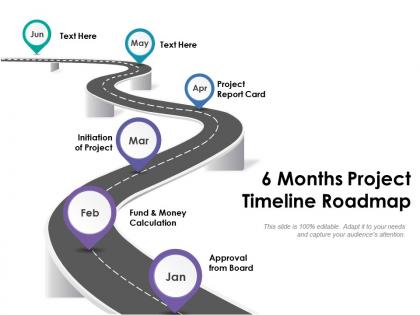
6 months project timeline roadmap





Try Before you Buy Download Free Sample Product
 Impress Your
 Audience
 100%
100% Editable
 Save Hours
 of Time


Our 6 Months Project Timeline Roadmap are known for their usability factor. They have created optimum experiences for many.
People who downloaded this PowerPoint presentation also viewed the following :
6 months project timeline roadmap with all 5 slides:
Cement the deal with our 6 Months Project Timeline Roadmap. Build a firm base for cohesive action.



FAQs for 6 months
So for your roadmap, start with clear goals and work backwards - makes everything click into place. Map out major milestones with realistic deadlines, plus all your deliverables and resources needed. Dependencies are super easy to forget but they're huge - like which tasks need to happen before others can start. Don't skip the boring stuff either: team roles, budget, potential risks. Oh and definitely nail down how you'll communicate with stakeholders throughout. Honestly, the backwards approach saves so much headache later when people start asking "wait, what are we actually trying to accomplish here?"
Think of it like a GPS for your project - keeps everyone from wandering off in random directions. Your whole team gets to see the big picture and how their stuff connects to everyone else's work. No more people working in silos with totally different priorities. Dependencies become super clear too, so Sarah knows her delay affects Mike's deadline next week. Honestly, this saves so much confusion later. I'd probably check in on it weekly during team meetings - things always shift and you'll need to adjust priorities. Way better than everyone just guessing what's important.
So roadmaps - depends what your team's into. Miro and Mural are great if you want something visual and collaborative. I'm kinda obsessed with how clean they make everything look. ProductPlan or Roadmunk work better when you need heavy timeline stuff. Your team already living in Notion? It handles simple roadmaps fine. Hell, even PowerPoint works if you're just presenting to stakeholders. Honestly though, I'd start with whatever tool you're already comfortable with. You can always get fancier later if you need more features.
I'd say monthly works for most projects, but it really depends on your situation. Fast-moving stuff might need updates every couple weeks. The trick is being flexible without giving everyone whiplash from constant changes. Honestly, I've watched teams update their roadmaps way too often and just confuse the hell out of everyone. On the flip side, some roadmaps get so stale they're basically decoration. Pick a rhythm that fits your project's speed and stick with it. Your team will actually appreciate knowing when to expect updates - makes planning so much easier.
Honestly, the worst thing you can do is be super vague about timelines or cram everything into impossible deadlines. Your roadmap shouldn't be carved in stone either - stuff changes constantly. I learned this the hard way when I built one completely solo and missed like... every operational detail that mattered. Get your team involved from the start! Also don't just focus on shiny new features. Dependencies will bite you. Technical debt exists. People have limited time. Keep it realistic, make it collaborative, and actually revisit the thing regularly instead of letting it collect dust.
Get people involved from day one, but don't just grab the obvious suspects. Think users, support folks, anyone who'll actually deal with this stuff later. Those one-way presentation meetings? Total waste of time. Run workshops where people can actually contribute instead. I love using impact/effort grids - makes the tough choices super visual for everyone. Set up regular check-ins to tweak things based on what you're hearing back. The goal is making them feel like co-owners of the roadmap, not victims of your grand plan.
Honestly, risk assessment is just your sanity check before committing to a roadmap. Look at each milestone and ask what could blow up - dependencies, team bandwidth, tech hurdles, whatever. Then pad your timeline accordingly. I can't tell you how many "perfect" roadmaps I've watched crash because someone forgot the backend team was already swamped. Build in wiggle room from the start. List your biggest question marks first and work backwards. Way better to under-promise than scramble later when reality hits.
Dude, visuals are everything for roadmaps. People's brains just process images way faster than walls of text. Color-code your project phases, throw in some progress bars, use icons for different work types. I swear, nothing kills a meeting faster than a roadmap that's basically a novel. Swimlanes keep your workstreams organized without the chaos. Timeline views? Game changer - suddenly everyone gets the dependencies and what comes when. Oh, and those red/yellow/green status dots are clutch. Your stakeholders won't have to play detective trying to figure out what "we're making good progress on the initiative" actually means.
Track both delivery stuff and actual outcomes - you need the full picture. Delivery side: milestone completion, staying on schedule, scope creep. Basically did you ship what you said you would? Then measure user adoption, KPIs tied to your goals, stakeholder happiness. Honestly, vanity metrics are useless - they make pretty charts but tell you nothing. Keep it to 3-5 metrics max that actually show if your roadmap drives business value. Oh and start with whatever your stakeholders care about most, then build from there.
Okay so with Agile, you basically flip your whole roadmap approach. Instead of those super detailed long-term plans, you're working in shorter chunks with way more flexibility. I'd focus on themes and outcomes rather than specific features - honestly, trying to nail down every detail months ahead is kinda pointless anyway. You'll organize around sprints and quarterly goals, but here's the thing: they can actually change based on what users tell you. Build in regular checkpoints where you can pivot if needed. My advice? Map out your big themes for maybe 2-3 quarters, but don't get too granular beyond your next sprint. The uncertainty is actually the point.
Honestly, a good project roadmap saves you from so much chaos with remote teams. Everyone's looking at the same timeline and priorities instead of guessing what they should be doing. No more "wait, what's our deadline again?" conversations every other day. You can update progress without scheduling yet another meeting (thank god), and people actually see how their piece fits the whole puzzle. Plus it's way easier to catch problems early when everything's laid out visually. Just make sure you're doing regular check-ins where people can flag issues - otherwise the thing becomes useless pretty fast.
Oh absolutely, dig through your old projects! Seriously, I used to think every new thing was totally different until I started noticing the same disasters happening over and over. Track where you always blow deadlines and which dependencies screw you up. Scope creep patterns too - that one's brutal. Buffer time becomes your best friend once you see these trends. Also, figure out what actually mattered vs what just felt urgent at the time. Keep a quick "lessons learned" thing after each project wraps up. Honestly makes planning so much less of a guessing game later on.
So basically, roadmaps are the 30,000-foot view - you're looking at big goals and milestones over months. Project plans? That's where you get into the nitty-gritty tasks and who's doing what by when. Roadmaps are great for showing executives the strategic direction (the "what and why" stuff). Plans are for your team to actually execute - all the dependencies, resources, daily tasks. Honestly, I've seen too many people confuse the two and end up either too vague or drowning stakeholders in details they don't care about. Quick rule: roadmap for strategy conversations, detailed plan when people need to know their next action.
Look, start by figuring out how these changes mess with your timeline and what resources you'll need. Communicate with stakeholders right away - nobody likes surprises when deadlines shift. Update your roadmap by moving milestones around and reallocating resources. Less critical stuff might have to wait (which honestly happens more than we'd like to admit). Document everything so you remember why you made these calls later. Here's the thing though - be super transparent about trade-offs. Adding Feature X? Something else gets delayed or cut. Don't finalize anything until everyone's actually on board with the new timeline.
Dude, schedule monthly or quarterly reviews depending on your timeline - just pick one and actually stick to it. Time-boxed milestones work way better than hard deadlines. Always have backup plans for anything critical. I can't tell you how many roadmaps I've seen become totally worthless because people refused to change them. Gather feedback constantly from stakeholders and users, then do something with it. Be transparent when stuff changes - people hate surprises. Oh, and treat your roadmap like it's alive, not set in stone. Those review sessions? That's honestly where everything clicks.
No Reviews