


Ciclo contable presentación de diapositivas




Try Before you Buy Download Free Sample Product
 Impress Your
 Audience
 100%
100% Editable
 Save Hours
 of Time


Sé un distribuidor de esperanza. Canalízala a través de nuestras Diapositivas de Presentación del Ciclo Contable.
People who downloaded this PowerPoint presentation also viewed the following :
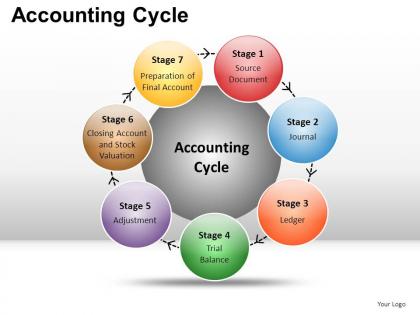
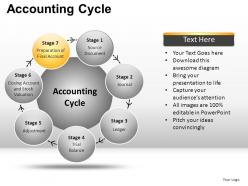
Ciclo contable presentación de diapositivas de PowerPoint con las 11 diapositivas: 1. Identificación de transacciones 2. Análisis de transacciones 3. Registro de transacciones 4. Ajustes 5. Asientos de ajuste 6. Estados financieros 7. Cierre de libros 8. Asientos de cierre 9. Resumen del ciclo contable 10. Importancia del ciclo contable 11. Conclusión
Vamos al grano con nuestras Diapositivas de Presentación del Ciclo Contable. Inculca los conceptos básicos en la mente de tu equipo.

FAQs for Accounting cycle
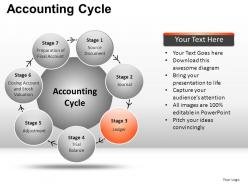
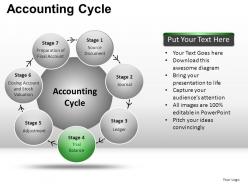
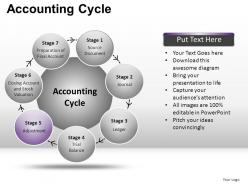
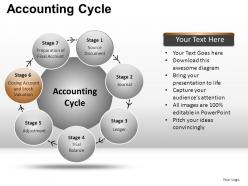
So there are 9 stages that basically flow into each other - you identify transactions, journal them, post to ledgers, do a trial balance, make adjustments, then an adjusted trial balance. After that comes financial statements, closing entries, and a final post-closing trial balance. It's honestly like this never-ending monthly cycle (which sounds exhausting but you get used to it). Each step builds on the last one. Your journal entries become your ledger posts, which create your trial balance and so on. I'd focus on nailing the first few steps before stressing about closing entries - that part's trickier.
So basically, source documents are what start your whole accounting process. Invoices, receipts, bank statements - all that stuff. You need them to create proper journal entries because they show the actual amounts and dates. Trust me, auditors will roast you if you're just making up numbers without backup. I learned that the hard way at my last job lol. Get organized with collecting these from day one. It's such a pain trying to hunt down receipts later when you're preparing statements. They're literally proof of every transaction, so don't skip this step.
So journalizing is where you record every transaction in order with debits and credits - it's literally your starting point for everything. Like a financial diary, but way less fun to write in. All your other accounting stuff depends on getting this part right. The general ledger pulls from here, then your trial balance, then financial statements. Honestly, if you mess up the journal entries, that mistake follows you through the whole process. Super annoying to fix later. Just double-check your debits and credits match up before moving on.
You do adjusting entries right at the end of each accounting period, before putting together your financial statements. They're how you catch stuff like expenses you owe but haven't paid yet, or money you've earned but haven't actually collected. Honestly, they're kind of a pain but super necessary - without them your statements would be totally off. I always do them after recording all the regular transactions for that period. My tip? Block out time every month-end just for reviewing what needs adjusting. Trust me, it'll save you from scrambling later when everything's due.
So trial balances are basically your safety net - they catch math mistakes before you get too far down the rabbit hole. List all your account balances in debit and credit columns. They should match. If not, you've got a problem somewhere. Honestly, I think of it like double-checking your work before turning in an assignment (learned that lesson the hard way in college). It also gives you a clean picture of where all your accounts stand at any given moment. Makes creating financial statements so much less painful later. I'd run one monthly - trust me, small problems are way easier to fix than big ones.
Honestly, automation is a game-changer for accounting cycles. All that tedious data entry and invoice processing happens automatically now. What used to take weeks gets done in days or hours - it's pretty wild. Plus you won't have those stupid errors that always mess up month-end (we've all been there). The software catches discrepancies right away instead of you finding them three weeks later when you're already stressed. Your team can actually do interesting work like analysis instead of just shuffling numbers around all day. I'd start with whatever manual process is eating up most of your time first.
So closing entries are basically how you wipe your temporary accounts clean at period-end. Revenue, expenses, dividends - all that stuff gets transferred into retained earnings. Think of it like hitting reset. Your income statement needs to show just THIS period's results, not everything piled up since forever (total nightmare if you skip this step). The balance sheet gets the correct retained earnings balance too. Honestly, I'd run these before you even think about finalizing statements. Otherwise your numbers will be completely wrong and you'll hate yourself later.
Honestly, accounting mistakes can really screw you over. Your profit/loss numbers get messed up, which means your taxes are wrong too. Regulators hate that stuff. Investors and lenders notice when your books don't add up - trust me, they're watching. The worst part? One small error early on just keeps getting bigger as it moves through each step. It's like a snowball effect but with money. Regular reconciliations help catch things before they blow up. Also, having decent internal controls saves you from major headaches later.
So basically, it's all about timing. Cash-basis is super simple - you record stuff when money actually moves. Got paid? Record the revenue. Paid a bill? Record the expense. Done. Accrual-basis is more complicated (honestly kind of a pain) but way more accurate. You record transactions when they actually happen, not when cash changes hands. So you're dealing with accounts receivable, payable, adjusting entries for depreciation... the whole nine yards. Most bigger businesses use accrual because it shows what's really going on financially, even if the paperwork's more involved.
Honestly, the worst part is when data gets messed up or you miss transactions completely. Month-end is absolute chaos - everyone's stressed and mistakes happen left and right. Manual stuff? Don't even get me started on those errors. What's helped me: set up regular reconciliations and make sure different people handle different parts (separation of duties thing). Get decent accounting software to automate the boring repetitive entries. Oh, and create checklists! Sounds basic but it actually saves you during crunch time. Way better to catch issues now than have your auditor find them later when you're totally screwed.
Think of external audits as someone double-checking your financial homework - but way more intense. They'll test your controls, review journal entries, and trace transactions from beginning to end. Honestly, it can be a pain but it's worth it. Auditors catch mistakes you totally missed and spot weak points in your processes. The best part? You end up tightening your procedures all year long, not just when they show up. It forces you to keep better documentation too, which saves headaches later.
Look, I know accounting sounds boring as hell, but hear me out. Running the full cycle every period gives you clean data you can actually trust. Record everything, close your books properly, and you'll see exactly where money's flowing. Honestly, I've seen too many people make terrible decisions because their books were a mess. You'll catch cash problems before they bite you. Trends become obvious. Plus you'll feel way more confident about spending or cutting costs when you know the real numbers. Just stay consistent with it.
Your accounting cycle is basically what builds all the records you need for taxes. Recording transactions, prepping statements - it all feeds into your tax returns. I missed some entries once and it totally screwed up my filing (never again lol). Closing entries are huge because they lock in your final income numbers. Keep reconciling accounts throughout the year instead of scrambling later. Document everything properly too. Trust me, you don't want to be digging through receipts at midnight in April. Good records = way less stress when tax season hits.
Look, keeping your books current is honestly a game-changer. You'll catch cash flow problems way before they blow up into actual disasters. Monthly closings are your friend here - set deadlines for journal entries and stick to them. Automate whatever you can because manual work sucks. When everything's up-to-date, making decisions becomes way easier since you're working with real data instead of just winging it. Your investors will love the timely reports too. Trust me, you don't want to be that person scrambling come tax season!
Dude, cloud accounting software will save your sanity - QuickBooks, Xero, or Sage are solid picks. They handle journal entries and reconciliations automatically, plus connect straight to your bank feeds. Way better than Excel hell (trust me on this one). For bigger companies, NetSuite or SAP might be worth checking out since they cover everything. I'd start by figuring out what's driving you crazy about your current setup first. Then demo a couple options - sometimes the interface just clicks better with how your brain works, you know?
-
Unique research projects to present in meeting.
-
Awesomely designed templates, Easy to understand.