

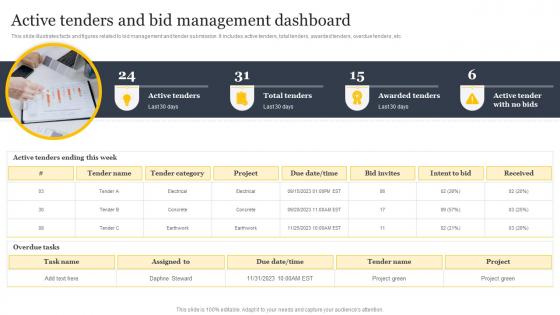
Active Tenders And Bid Management Dashboard




Try Before you Buy Download Free Sample Product
 Impress Your
 Audience
 100%
100% Editable
 Save Hours
 of Time


This slide illustrates facts and figures related to bid management and tender submission. It includes active tenders, total tenders, awarded tenders, overdue tenders, etc.
People who downloaded this PowerPoint presentation also viewed the following :
Active Tenders And Bid Management Dashboard with all 6 slides:
Use our Active Tenders And Bid Management Dashboard to effectively help you save your valuable time. They are readymade to fit into any presentation structure.





FAQs for Active Tenders And
Okay so first thing - get your timeline sorted with clear milestones, then figure out who's doing what. Seriously, if people don't know their role, things fall apart fast. Document management is crucial for tracking requirements and revisions. Set up a solid review process to catch missing pieces before you submit anything. Oh and quality control - go through their requirements like three times because missing something obvious is the worst. I'd honestly create templates now while you're thinking about it, saves you from panicking later when another big opportunity pops up. Team coordination makes or breaks the whole thing.
Honestly, start by making templates for the stuff you use over and over - company info, team bios, those standard responses. Get a shared folder going so people aren't digging through old emails for the latest version (been there, it's painful). Project management tools help track who's doing what and when. Build your supplier relationships now, not when you're panicking for quotes. Soon as a tender drops, jump on it. Don't wait until you've got three days left - that's just asking for trouble. Having all your basic materials ready to tweak makes everything way smoother.
Honestly, good tender management software will change your life. Real-time tracking means no more panicking about deadlines. Your team can actually collaborate instead of drowning in those nightmare email threads we all hate. Document version control becomes automatic, plus you get built-in scoring and compliance tools. Some platforms even use AI now for initial proposal reviews - pretty wild how fast that's developing. If you're still wrestling with spreadsheets (been there!), invest in a decent platform. You'll get hours back every week, I promise.
Honestly, the worst part is getting incomplete submissions - people just ignore half the requirements or give you super vague answers that are impossible to compare. Scoring gets messy too when you're trying to evaluate quality stuff, especially if your team sees things differently. Oh and the time crunch is insane. Everyone wants answers immediately but you can't rush a proper evaluation, you know? Bid protests are scary if your process has holes. My biggest tip? Make really detailed scoring sheets before you start and don't deviate from them - seriously saves so many headaches down the road.
Dude, presentation structure can totally make or break your tender. Evaluators are buried in boring proposals, so yours needs to jump out right away. I've watched brilliant technical teams lose because their docs were impossible to follow - such a waste. Mirror their evaluation criteria exactly and make it brain-dead simple for them to find what they're scoring. Clean visuals, logical flow, executive summary that nails their pain points fast. Put your key differentiators right upfront where they can't miss them. Use clear headings and bullet points. Don't make them hunt for the good stuff.
Set up your scoring criteria first - before any submissions come in. Weight everything based on what actually matters for your project. Look at technical capability (can they deliver?), price and payment terms, past work, and whether they hit your requirements. Timeline stuff too, obviously. Don't just go for the cheapest option though - I've watched that backfire so many times it's not even funny. Check their team's experience and see if they actually understood what you're asking for. Their risk management approach matters more than you'd think. Commercial terms are huge. References tell you everything. Score it all systematically so you're not just going with gut feelings later.
Dude, stakeholder engagement is everything in tender management. Seriously - I've watched brilliant proposals crash because nobody talked to procurement until the last minute. You need your internal teams (legal, finance, ops) actually bought into what you're promising. Map out who's making the real decisions and what keeps them up at night. The client side matters too - they should feel good about picking you. Start connecting with these people way before you touch the proposal. Otherwise you're just guessing what they want, and that rarely works out well.
Okay, first thing - read those requirements like three times because missing something stupid will haunt you. Mirror their evaluation criteria exactly and steal their buzzwords whenever you can. Your executive summary better grab them immediately since half the decision-makers won't read past page one anyway. Back up everything with real numbers and examples from projects you've actually done. The story needs to flow logically from problem to solution. Oh, and submit that thing early! Have someone else check it over first - you'll be too close to catch the obvious mistakes.
Honestly, you've got to weave risk assessment into every single stage of your tender process - right from when you're first eyeing an opportunity through to actually winning the contract. I'd start by spotting the obvious risks early on: financial stuff, technical hurdles, delivery nightmares, legal headaches. Score each one on how likely it is and what damage it could do. Keep risk registers for every tender and get someone to own each risk - don't let them float around unclaimed. Here's the thing though: make reviewing risks a standard part of every tender meeting. Way too many people only think about this when things go sideways. Build your mitigation plans right into your proposals and pricing from the start.
Win rate's the obvious one to start with - tells you if you're actually winning or just spinning your wheels. I'd also watch your bid prep costs and how long you're taking from RFP to submission. Client feedback scores are gold when you can get them. Profit margins on the wins matter too, obviously. One thing people skip - track shortlist rates versus early eliminations. Shows if your initial pitch is decent or completely off base. Honestly, start simple with these basics. You can always add more later, but I've seen teams get so caught up measuring everything they forget to actually improve their submissions.
Oh totally start tracking your tender submissions! Most companies just chuck everything into some random folder after - drives me crazy. Build a simple spreadsheet with your last 10 bids and what you learned from each. Document the wins: pricing approach, team setup, language that clicked. Don't skip the losses either - client feedback is honestly the best intel you'll get. Pull your strongest content into templates so you're not starting from scratch every damn time. Even a basic setup will save you hours later.
Honestly, three big things to watch out for. First, nail down your compliance with procurement regs - public sector stuff is a total nightmare if you mess it up. Can't play favorites with bidders or leak info that gives someone an edge either. Documentation is huge too - save every email, every decision, because someone will probably challenge it later. My cousin learned that the hard way on a city contract last year. Definitely get legal to eyeball your tender docs before they go live. Short sentences help, but also make sure you're covering fair competition requirements throughout the whole process.
Oh man, it's like night and day between industries. Construction tenders are all about technical specs, site visits, safety stuff - and they drag on forever. IT ones? Totally different beast. You're talking software demos, security requirements, integration headaches. The evaluation process is weird too - construction guys want to see your safety record and past projects, but IT folks obsess over innovation and technical chops. I swear the paperwork doesn't even look the same! My advice? Figure out what each industry actually gives a damn about when they're picking vendors, then match that energy.
Honestly, APMP certification is probably your best bet - did their Foundation course last year and it actually helped. Coursera has decent bid writing courses too if you want something cheaper. Your company might already pay for LinkedIn Learning access (worth checking). Look for industry conferences with workshops, though they can be hit or miss depending on the speakers. Start with basic procurement processes and project management stuff, then figure out what you're weakest at. Don't overthink it - most tender skills you'll pick up on the job anyway.
Definitely ask for feedback on every lost bid - seriously, don't skip this step. Most procurement folks will tell you exactly why you didn't win and how you stacked up against others. Yeah, it hurts hearing why you lost, but that's how you spot the real issues with your pricing, technical stuff, or even how you formatted everything. I keep a simple log of all the feedback I get. You start seeing patterns pretty quickly - like maybe your proposals are always too vague or your pricing's off. Then you can actually fix those weak spots before the next one.
-
Great experience, I would definitely use your services further.
-
Thanks for all your great templates they have saved me lots of time and accelerate my presentations. Great product, keep them up!