


Agile values and principles powerpoint presentation slides




Try Before you Buy Download Free Sample Product
 Impress Your
 Audience
 100%
100% Editable
 Save Hours
 of Time


Agile processes promote sustainable development and harness change for the clients competitive advantage. These principles shorten the development cycles to change quickly at a low cost. The agile manifesto comprises four foundational values and supporting principles that lead to software development. The four values of the agile manifesto, such as individuals and interactions over processes and tools, working software over comprehensive documentation, customer collaboration over contract negotiation, and responding to change over the following plan, are covered here. Check out our professionally designed Agile Values and Principles template that will help you process defer decisions. The agile movement methodologies include customer satisfaction with continuous delivery, accommodating changing requirements, frequent delivery of working software, the collaboration between stakeholders, support, trust and motivate people, enabling face to face interactions, measuring software progress, agile process to support consistent development, designing enhances agility, simplicity, self organizing teams, regular reflections for becoming more effective, has been outlined in this template along with the ways it can be performed within the organization. Download the 100 percent editable template and get access now.
People who downloaded this PowerPoint presentation also viewed the following :
Content of this Powerpoint Presentation
Slide 1: This slide introduces Agile Values and Principles. State Your Company Name and begin.
Slide 2: This slide shows Agenda of Agile Values and Principles.
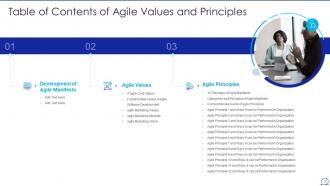
Slide 3: This slide presents Table of Contents of Agile Values and Principles.
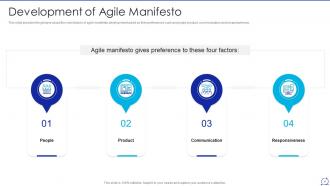
Slide 4: This slide shows main factors of agile manifesto development based on their preferences such as people, product, communication and responsiveness.
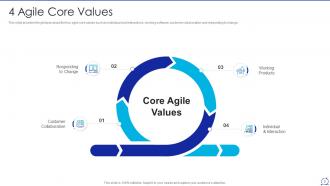
Slide 5: This slide displays four agile core values such as individual and interactions, working software, customer collaboration and responding to change.
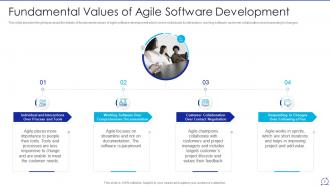
Slide 6: This slide represents Fundamental Values of Agile Software Development.
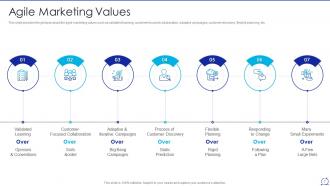
Slide 7: This slide shows agile marketing values such as validated learning, customer focused collaboration, adaptive campaigns, customer discovery, flexible planning, etc.
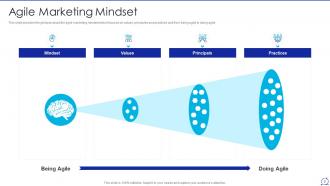
Slide 8: This slide presents agile marketing mindset which focuses on values, principles and practices and from being agile to doing agile.
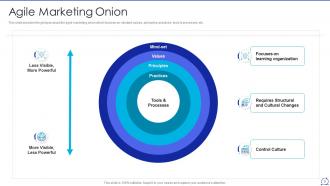
Slide 9: This slide shows agile marketing onion which focuses on mindset, values, principles, practices, tools & processes, etc.
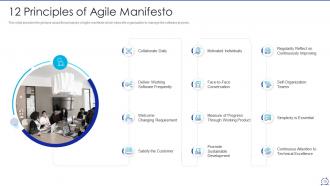
Slide 10: This slide displays principles of agile manifesto which helps the organization to manage the software projects.
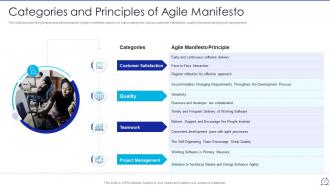
Slide 11: This slide represents principles of agile manifesto based on 4 major categories such as customer satisfaction, quality, teamwork and project management.
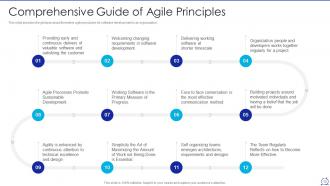
Slide 12: This slide shows Comprehensive Guide of Agile Principles.
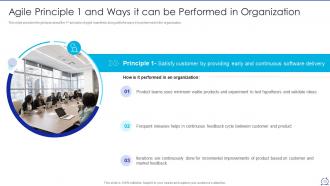
Slide 13: This slide presents 1st principle of agile manifesto along with the ways it is performed in the organization.
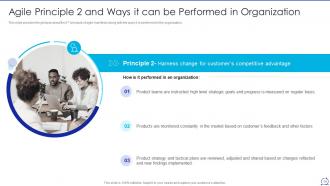
Slide 14: This slide shows 2nd principle of agile manifesto along with the ways it is performed in the organization.
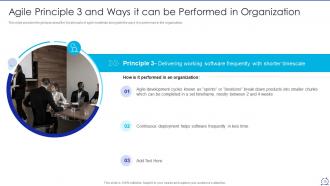
Slide 15: This slide displays Principle 3- Delivering working software frequently with shorter timescale.
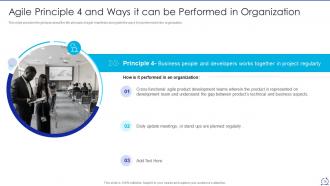
Slide 16: This slide represents Principle 4- Business people and developers works together in project regularly.
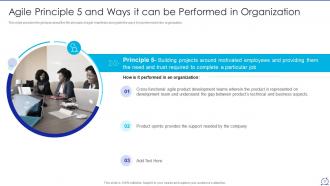
Slide 17: This slide shows Principle 5- Building projects around motivated employees and providing them the need and trust required to complete a particular job.
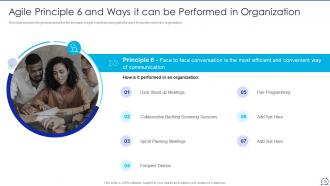
Slide 18: This slide presents 6th principle of agile manifesto along with the ways it is performed in the organization.
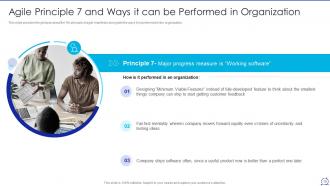
Slide 19: This slide shows Principle 7- Major progress measure is “Working software”.
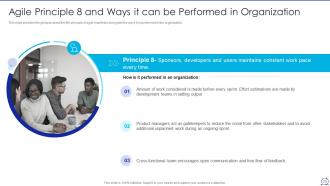
Slide 20: This slide displays Principle 8- Sponsors, developers and users maintains constant work pace every time.
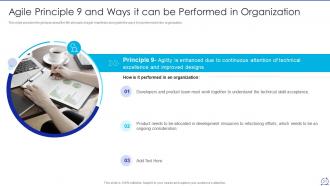
Slide 21: This slide represents Principle 9- Agility is enhanced due to continuous attention of technical excellence and improved designs.
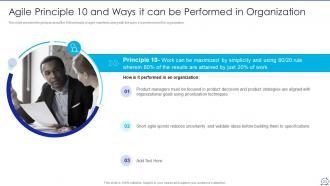
Slide 22: This slide shows Principle 10- Work can be maximized by simplicity and using 80/20 rule wherein 80% of the results are attained by just 20% of work.
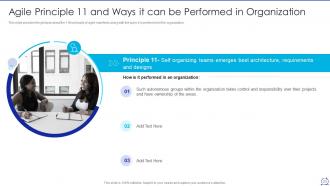
Slide 23: This slide presents Principle 11- Self organizing teams emerges best architecture, requirements and designs.
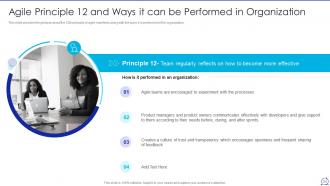
Slide 24: This slide shows Principle 12- Team regularly reflects on how to become more effective.
Slide 25: This slide displays Icons for Agile Values and Principles.
Slide 26: This slide is titled as Additional Slides for moving forward.
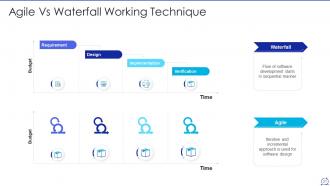
Slide 27: This slide shows Agile Vs Waterfall Working Technique.
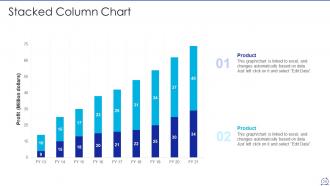
Slide 28: This slide presents Stacked Column Chart with two products comparison.
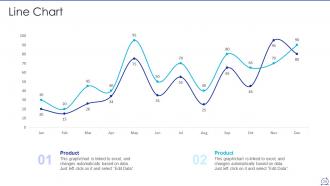
Slide 29: This slide shows Line Chart with two products comparison.
Slide 30: This is About Us slide to show company specifications etc.
Slide 31: This is Our Mission slide with related imagery and text.
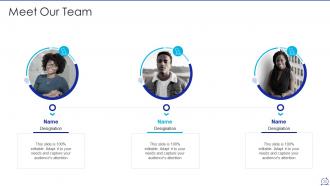
Slide 32: This is Our Team slide with names and designation.
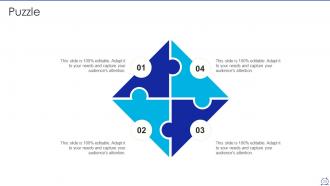
Slide 33: This slide presents Puzzle with related icons and text.
Slide 34: This is a Thank You slide with address, contact numbers and email address.
Agile values and principles powerpoint presentation slides with all 34 slides:
Use our Agile Values And Principles Powerpoint Presentation Slides to effectively help you save your valuable time. They are readymade to fit into any presentation structure.

FAQs for Agile values and principles
So the Agile Manifesto basically has four values that flip traditional PM upside down. People over processes, working software over tons of documentation, collaborating with customers instead of just negotiating contracts, and adapting to change rather than sticking to some rigid plan. Honestly, it makes projects way more flexible and customer-focused. You work in short sprints, get feedback constantly, and pivot when needed - no more spending forever planning every tiny detail upfront. Start with daily standups and retrospectives. Trust me, your team communication will improve almost instantly.
Honestly, agile just forces people to actually talk to each other. Daily standups are huge - I can't stress this enough, they totally change how teams communicate. You're not sitting in silence for weeks then dumping some massive deliverable on everyone. Short sprints keep the feedback loop tight, so if you're building something completely wrong, you'll know pretty quick. The "people over process" mentality actually works too - less email chains, more real conversations. Oh and retrospectives help you catch those awkward team dynamics before they blow up. If you're not doing standups yet, start there. They're honestly game-changers for getting everyone on the same page.
Dude, your customers will be SO much happier with agile. Instead of vanishing for months then dropping some disaster on them, you're showing progress constantly. Regular demos mean they can tell you "nah that's wrong" early when it's actually fixable. Short sprints are key - people get excited seeing real features work instead of just PowerPoints about features. Plus they're getting value right away rather than waiting forever for the big reveal. Honestly, most clients hate surprises anyway. Schedule those demo sessions if you haven't already, seriously makes everything smoother.
So with Agile, you're basically working in these short 1-2 week chunks instead of planning everything upfront. Requirements change - like, they ALWAYS do once people see what you're actually building. But that's fine because you get feedback constantly and can pivot before you waste months on the wrong thing. Honestly, I've seen too many projects fail because they stuck to the original plan when it was clearly not working. Short iterations let you build a little, show it off, then adjust. Way better than the old "build for 6 months then pray" approach. Those requirement changes aren't disasters - they're actually telling you something useful.
Feedback is seriously the lifeline of Agile - without it, you'll spend months building something nobody wants. Get loops going everywhere: standups, sprint reviews, retros, plus regular stakeholder check-ins. Make sure people feel safe speaking up though (being the messenger sucks when everyone shoots you down). Show working software early and often, let team members raise concerns right away, then actually DO something with what they tell you. Oh, and start small - maybe try a mid-sprint demo or some anonymous feedback tool this round. Don't overthink it.
Dude, agile basically makes teams way more innovative because people aren't scared to throw out crazy ideas. You know how "individuals over process" works? Teams actually talk to each other instead of hiding behind protocols. The "respond to change" thing is clutch - you can ditch plans that suck instead of riding them into the ground. Plus building actual prototypes beats endless meetings about requirements (learned that the hard way lol). Quick experiments often turn into our best features. Try asking your team "what's one wild thing we could test this sprint?" You'll be surprised what happens.
So basically, traditional project management is all about planning everything upfront and sticking to it no matter what - very rigid, waterfall style where you can't move to the next step until the previous one's done. Agile's the opposite though. You work in short bursts, get feedback constantly, and pivot when needed. Way less stressful honestly. Instead of tons of documentation and following some plan that's probably already outdated, Agile focuses on actually working software and adapting as you go. Oh, and those shorter planning cycles? Game changer - you'll notice the difference right away.
So basically, instead of drowning in documentation, you're building actual working software that people can click around and test. You'll still write some docs - user guides, tech specs, whatever's actually needed. But skip those massive requirement documents that sit in folders forever unread (honestly, who has time?). Spend that energy coding features that matter. Your stakeholders get to play with real stuff earlier, give better feedback. Way more productive than writing about what you might build someday. Just document enough to support what you've actually made.
Yeah so Agile gets messy when you're dealing with heavy regulation - like FDA approvals for medical devices or aerospace stuff. Waterfall actually works better there since you need all that documentation mapped out from the start. Also nightmare territory: teams scattered across crazy different time zones or those rigid fixed-price contracts where clients won't budge on anything. Honestly, don't force Agile everywhere just because it's trendy. Stick with waterfall for the regulatory headaches, or try hybrid approaches that mix some iterative stuff with structured phases. Match your process to what you're actually dealing with, you know?
Forget the ceremonies for a sec - what actually matters is if your teams are living the Agile values. I'd track customer satisfaction and team velocity trends first. How fast do you respond when things change? Are people collaborating or still stuck in silos? Honestly, team morale tells you everything. Happy teams that can make their own decisions just perform better, period. Also watch delivery frequency and quality over time. Pick metrics that reflect the core stuff: people over process, working software, customer collaboration, responding to change. Don't overthink it though - start with 2-3 that actually matter for your situation.
Honestly, just be upfront about why you're switching and what's in it for them. Nobody likes work surprises, you know? Get people involved early - let them actually help figure out how Agile fits your team instead of just dropping it on them. Training is huge so they don't feel lost with all the new stuff. When people complain (and they will), actually listen and admit it'll be messy at first. Oh, and definitely celebrate the small wins! Like, really make a big deal out of them. It shows people this isn't just another management fad that'll disappear next quarter.
So basically your team gets to figure out how to handle their own work instead of waiting for someone to tell them what to do. People actually care more when they're part of making the decisions - makes sense, right? Plus no more sitting around waiting for approvals from management (ugh, that process is the worst). Everyone becomes way more invested in actually solving problems together. I'd start super small though - maybe let them pick their own sprint goals or decide how they want to run meetings. Then just see what happens and go from there.
Honestly, nothing beats talking face-to-face in Agile - you catch those little reactions and build actual trust. But remote? Video calls are your lifeline. Keep cameras on, share screens constantly, and don't just text everything to death (seriously, some Slack threads go on forever). Quick daily video standups work way better than typed updates. Oh, and virtual whiteboards help recreate that collaborative feel. The trick is making your remote chats feel as natural as grabbing coffee together. You'll miss so much context otherwise.
Honestly, agile is perfect for digital transformation because it's all about rolling with change instead of fighting it. You can't plan everything six months ahead when tech moves this fast - it's like trying to predict what memes will be popular next year. Cross-functional teams work way better than siloed departments, and the whole "people over rigid processes" thing just makes sense with how DevOps operates now. When customer needs shift or some new tech drops, your team can actually pivot instead of being stuck following some outdated roadmap. Look at where your current processes are too slow first.
Break your big project into smaller teams that can still talk to each other. SAFe or LeSS frameworks help maintain the Agile flow at scale - though honestly they can feel pretty bloated sometimes. Regular cross-team meetings are crucial, plus shared backlogs and consistent sprint timing across everyone. Strong product owners make a huge difference here - they'll keep priorities aligned so teams don't just wander off doing their own thing. Each team needs to keep their Agile practices while staying connected to the bigger picture. I'd start by mapping out which teams depend on each other, then set up those coordination points from day one.
-
Helpful product design for delivering presentation.
-
Great designs, Easily Editable.
-
Very unique and reliable designs.