


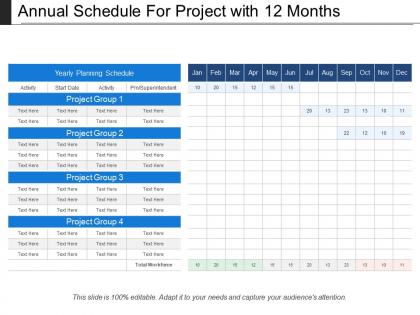
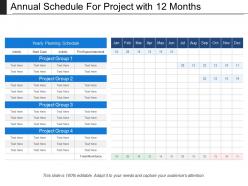
Annual schedule for project with 12 months




Try Before you Buy Download Free Sample Product
 Impress Your
 Audience
 100%
100% Editable
 Save Hours
 of Time


Boost the desire for higher education with our Annual Schedule For Project With 12 Months. It helps encourage academic endeavor.
People who downloaded this PowerPoint presentation also viewed the following :
Annual schedule for project with 12 months with all 5 slides:
Our Annual Schedule For Project With 12 Months have catchy designs. The enthusiasm they create is contagious.


FAQs for Annual schedule for project
Key components include project phases and milestones, resource allocation schedules, budget breakdowns, risk assessment periods, and stakeholder review checkpoints. These elements streamline planning by establishing clear deliverable dates, optimizing team coordination, and enabling proactive risk management, with many organizations finding that comprehensive timelines reduce project delays by up to 30% while enhancing overall execution efficiency.
Visual milestone representation includes Gantt charts with diamond-shaped markers, timeline infographics with highlighted achievement points, progress bars with percentage indicators, and calendar-based layouts with color-coded phases. These visualization methods streamline project communication by clearly marking critical deadlines, deliverable completion dates, and review periods, with many organizations finding that visual milestones enhance team alignment and stakeholder transparency.
**INPUT**: What tools and software are best suited for creating an annual project timeline? **OUTPUT**: Effective annual project timeline tools include Microsoft Project, Asana, Trello, Gantt chart software like Smartsheet, and comprehensive platforms such as Monday.com or Notion. These solutions streamline project management by enabling resource allocation, milestone tracking, and team collaboration, with many organizations finding that integrated dashboards ultimately deliver enhanced visibility and operational efficiency across complex, year-long initiatives. [Word count: 58 words]
Determining appropriate task timeframes involves analyzing task complexity, resource availability, dependencies between activities, and potential risks or bottlenecks. Through strategic project management approaches, organizations can break larger initiatives into manageable phases, allocate realistic buffers for unforeseen challenges, and establish milestone checkpoints, ultimately delivering projects on schedule while maintaining quality standards and operational efficiency.
Common pitfalls include underestimating task durations, failing to account for dependencies between project phases, inadequate resource allocation planning, and insufficient buffer time for unexpected delays. These oversights often result in missed deadlines and budget overruns, with many organizations finding that regular timeline reviews and stakeholder communication help maintain project momentum and deliver successful outcomes.
Incorporate flexibility by building buffer time into major milestones, establishing regular review checkpoints for timeline adjustments, and creating contingency plans for critical deliverables. These strategies enable organizations to adapt quickly when market conditions shift or priorities change, with many project managers finding that quarterly reassessment periods ultimately deliver better outcomes and reduced stress across teams.
Stakeholder input provides critical insights into resource availability, dependencies, priority alignment, and realistic deadline expectations when developing annual project timelines. Through collaborative planning sessions, project managers can identify potential bottlenecks, secure necessary approvals, and ensure timeline feasibility, while stakeholders gain visibility into project scope and deliverables, ultimately enhancing buy-in and accountability.
Prioritizing tasks in an annual project timeline involves assessing project dependencies, business impact, resource requirements, and strategic alignment with organizational goals. Start by identifying critical path activities, high-impact deliverables, and time-sensitive milestones, while considering team capacity and stakeholder expectations, ultimately ensuring projects deliver maximum value and competitive advantage throughout the year.
Effective strategies include regular milestone updates, visual dashboard reporting, quarterly stakeholder meetings, executive summary briefings, and automated progress notifications. These communication approaches enhance transparency and alignment by providing real-time visibility, addressing concerns proactively, and maintaining stakeholder engagement throughout project phases, with many organizations finding that consistent communication ultimately delivers stronger buy-in and smoother project execution.
Gantt charts enhance annual project timelines by providing visual scheduling, dependency mapping, resource allocation tracking, and milestone identification across extended periods. These tools streamline complex multi-phase projects by displaying overlapping tasks, critical path analysis, and progress monitoring, with many organizations finding that visual timeline management significantly improves stakeholder communication and delivery predictability.
Track schedule performance index, milestone completion rates, resource utilization percentages, budget variance, and critical path delays to monitor annual project progress. These metrics enable project managers to identify bottlenecks early, reallocate resources strategically, and maintain deliverable quality, with many organizations finding that consistent monitoring ultimately delivers improved project success rates and enhanced stakeholder confidence.
Seasonal factors significantly influence annual project timelines by affecting resource availability, customer demand patterns, and operational capacity throughout the year. Organizations must strategically align project phases with peak seasons, holiday schedules, and industry-specific cycles, with many companies finding that coordinating launches during optimal periods enhances market reception and maximizes competitive advantage.
**INPUT**: What best practices should I follow when updating an annual project timeline? **OUTPUT**: Annual project timeline updates should include regular milestone reviews, stakeholder communication protocols, resource reallocation assessments, and risk factor evaluations. These practices streamline project management by maintaining transparency, enabling proactive adjustments, and ensuring alignment across teams, with many organizations finding that quarterly reviews and automated tracking systems ultimately deliver improved project outcomes and enhanced operational efficiency.
**INPUT**: How can I align the annual project timeline with organizational goals and objectives? **OUTPUT**: Aligning annual project timelines with organizational goals involves mapping project milestones to strategic objectives, establishing clear KPIs, and conducting quarterly review cycles. This strategic combination enables organizations to prioritize resource allocation, track progress against business targets, and adjust timelines proactively, with many companies finding that systematic alignment delivers improved project ROI and accelerated goal achievement. **Word count**: 58 words
Effective team collaboration techniques include regular stand-up meetings, shared project management platforms, cross-functional workshops, milestone check-ins, and transparent communication channels. These approaches streamline coordination by establishing clear accountability, enabling real-time progress tracking, and facilitating rapid issue resolution, with many organizations finding that structured collaboration reduces project delays while enhancing team productivity and deliverable quality.
-
Topic best represented with attractive design.
-
Great experience, I would definitely use your services further.