


Annual Strategic Planning Powerpoint Presentation Slides





Try Before you Buy Download Free Sample Product
 Impress Your
 Audience
 100%
100% Editable
 Save Hours
 of Time


Our Annual Strategic Planning Powerpoint Presentation Slides are topically designed to provide an attractive backdrop to any subject. Use them to look like a presentation pro.
People who downloaded this PowerPoint presentation also viewed the following :
Content of this Powerpoint Presentation
Slide 1: This slide introduces Annual Strategic Planning. State Your Company Name and begin.
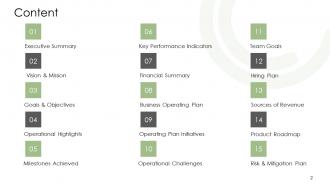
Slide 2: This slide shows Content of the presentation.
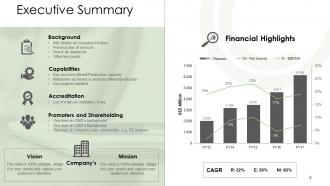
Slide 3: This slide presents Executive Summary describing- Background, Capabilities, Accreditation, Promoters and Shareholding.
Slide 4: This slide displays Our Vision and Mission with related imagery and text.
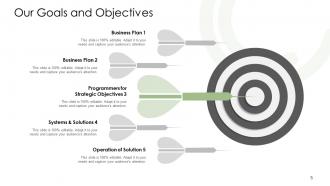
Slide 5: This slide presents Our Goals and Objectives with these of the following stages- Business Plan, System and Solutions, Programmers for Strategic Objectives, Business Plan, Operation of Solution.
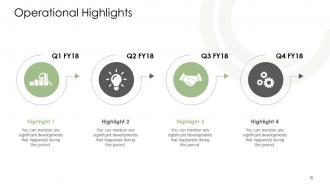
Slide 6: This slide represents Operational Highlights in a timeline form.
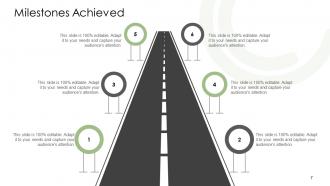
Slide 7: This slide showcases Milestones Achieved with text boxes.
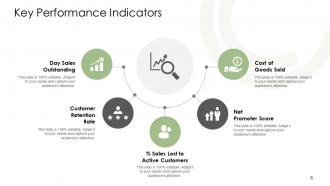
Slide 8: This slide presents Key Performance Indicators which further showcases- Cost of Goods Sold, Net Promoter Score, % Sales Lost to Active Customers, Customer Retention Rate, Day Sales Outstanding.
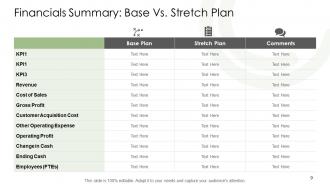
Slide 9: This slide shows Financials Summary: Base vs. Stretch Plan.
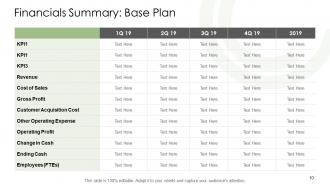
Slide 10: This slide presents Financials Summary: Base Plan.
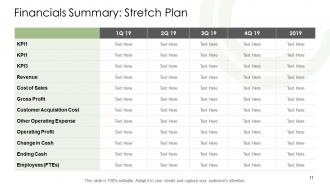
Slide 11: This slide represents Financials Summary: Stretch Plan.
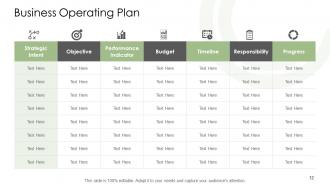
Slide 12: This slide displays Business Operational Plan with categories as- Strategic intent, Objective, performance indicator, Budget, Timeline etc.
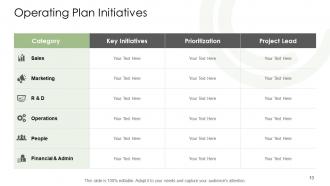
Slide 13: This slide showcases Operating Plan Initiatives in a tabular form with categories, Key initiatives, Prioritization and project leads.
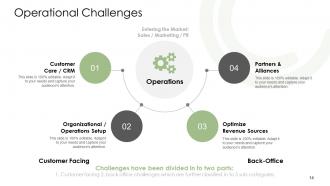
Slide 14: This slide is titled as Operational Challenges which further showcases- Customer Facing, Back-Office, Operations, Entering the Market, Sales / Marketing / PR, Customer Care / CRM, Partners & Alliances, Organizational / Operations Setup, Optimize Revenue Sources.
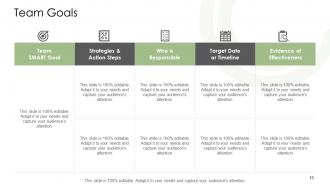
Slide 15: This slide shows Team Goals with a table for different areas.
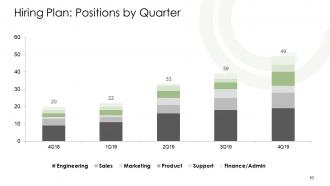
Slide 16: This slide presents Hiring Plan: Positions by Quarter in a graph form with categories as- Finance, support, product and marketing.
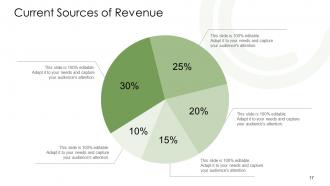
Slide 17: This slide shows Current Sources of Revenue with additional text boxes.
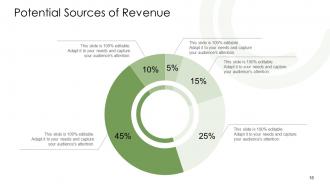
Slide 18: This slide presents Potential Sources of Revenue with the help of pie chart.
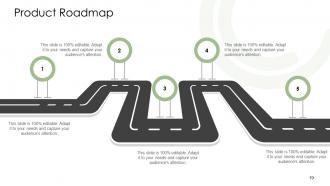
Slide 19: This slide displays Product Roadmap with text boxes to show information.
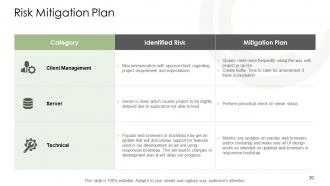
Slide 20: This slide represents Risk Mitigation Plan with Category, Identified risk and mitigation plan.
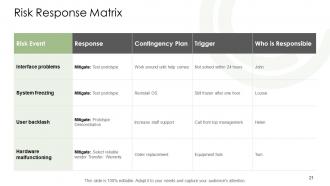
Slide 21: This slide showcases Risk Response Matrix with categories as- Risk event, response, trigger etc.
Slide 22: This slide displays icons for Annual Strategic Planning.
Slide 23: This slide reminds about 15 minutes coffee break.
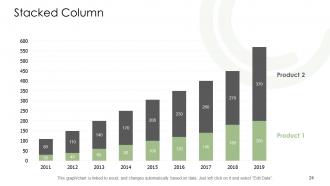
Slide 24: This slide displays Stacked Column chart with two products comparison.
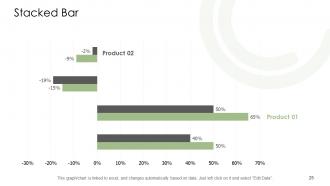
Slide 25: This slide presents Stacked Bar chart with two products comparison.
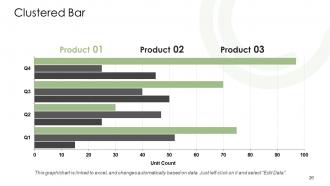
Slide 26: This slide showcases Clustered Bar chart with three products comparison.
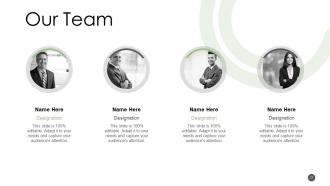
Slide 27: This is Our Team slide with names and designation.
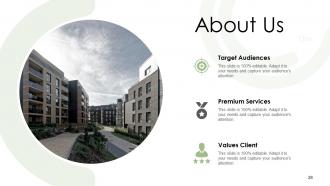
Slide 28: This is About Us slide to show company specifications etc.
Slide 29: This is Our Mission slide with related imagery and text.
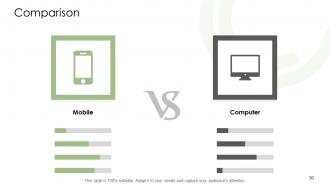
Slide 30: This is a Comparison slide to state comparison between commodities, entities etc.
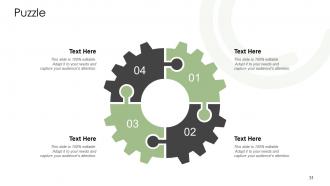
Slide 31: This is a Puzzle slide with text boxes to show information.
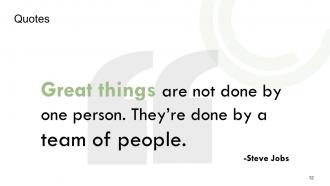
Slide 32: This is a Quotes slide to convey message, beliefs etc.
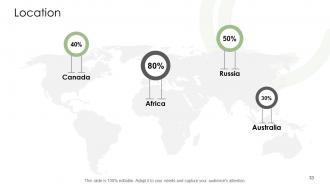
Slide 33: This is a Location slide with maps to show data related with different locations.
Slide 34: This is an Idea Generation slide to state a new idea or highlight information, specifications etc.
Slide 35: This is a Puzzle slide with text boxes to show information.
Slide 36: This is a Venn slide with text boxes.
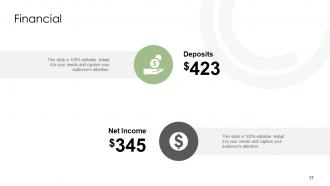
Slide 37: This is a Financial slide. Show your finance related stuff here.
Slide 38: This slide shows Mind Map for representing entities.
Slide 39: This slide is titled as Post it. Post your important notes here.
Slide 40: This is a Thank You slide with address, contact numbers and email address.
Annual Strategic Planning Powerpoint Presentation Slides with all 40 slides:
Use our Annual Strategic Planning Powerpoint Presentation Slides to effectively help you save your valuable time. They are readymade to fit into any presentation structure.



FAQs for Annual Strategic Planning
So you'll need to start with environmental scanning - basically figuring out where you stand right now. Then work on your vision, mission, and goals. Strategy development comes next, followed by implementation planning with regular check-ins. Honestly, the implementation part is where most plans crash and burn. Get your stakeholders involved from day one or you'll regret it later - trust me on this. Build in some flexibility too since everything changes so damn fast now. Focus on aligning your team first though. Make sure everyone's on the same page about current reality versus future goals.
Honestly, you've got to break those big strategic goals into bite-sized pieces that each department can actually work with. Take your high-level stuff and turn it into specific targets for each team, then keep breaking it down until people know exactly what they need to do day-to-day. Monthly check-ins are clutch here – I've seen too many strategies just die after the initial planning meeting because everyone forgets about them. Have teams show how their current projects tie back to the bigger picture. Otherwise you'll drift back into autopilot mode, which happens way more often than leadership wants to admit.
Think of stakeholder analysis as figuring out who you actually need to care about when making big decisions. List everyone who could mess with your plans or get affected by them - bosses, team members, customers, vendors, even those annoying regulatory people. Honestly, most companies skip this step and then wonder why their strategy falls apart. Map out how much power each group has and how interested they'll be in your project. Some will fight you, others might help. The trick is knowing which conversations to have first and who you can safely ignore (at least for now). Saves you tons of headaches later.
Honestly, just pick 3-5 metrics that actually show if your strategy's working - revenue, customer satisfaction, whatever makes sense for your situation. Set clear targets from the start (trust me on this one). Don't wait until the end to check how you're doing. Monthly or quarterly reviews are your friend here. I'd build some kind of simple dashboard to track everything consistently. The worst thing is flying blind and realizing six months later you've been way off course. Oh, and make sure those KPIs directly connect to what you're trying to achieve - sounds obvious but you'd be surprised how often people track random stuff.
Honestly, the worst thing you can do is make some vague wishlist without actual numbers to track. I've watched so many plans crash because executives didn't bother talking to the people who deal with customers daily - like, why would you skip that step? Unrealistic deadlines will kill you too. Oh, and good luck staying focused when that exciting new opportunity pops up in June. Trust me, pick 2-3 solid priorities first. Build real action plans around those instead of trying to do everything at once. Way better than spreading yourself thin across a million different goals.
Honestly, tech makes strategic planning so much less painful. AI tools can spot market trends and run forecasts way quicker than doing everything manually - saves you from drowning in endless spreadsheets. Your team can brainstorm in real-time on collaboration platforms, which beats sitting in stuffy conference rooms for hours. Digital dashboards are great for tracking KPIs and tweaking things on the fly. Oh, and remote work actually makes these tools more valuable than I initially thought. Start with whatever's your biggest headache - maybe data visualization or getting everyone on the same page.
Look, SWOT analysis is just a fancy way to get real with yourself about what's actually going on. You map out your strengths, weaknesses, opportunities, and threats before making any big moves. Otherwise you're basically guessing and might totally miss something obvious - like a huge opportunity or some risk that could bite you later. Think of it as that brutally honest friend who won't sugarcoat things. The cool part? You can use what you're good at to grab opportunities while fixing the weak spots that make you vulnerable. Honestly, just spending like 30 minutes on it saves so much drama down the road.
Honestly, you've gotta bake flexibility right into how you plan stuff. Ditch those crazy long 5-year plans - they're basically useless anyway. Go for shorter cycles instead, like quarterly check-ins where you actually look at what's bombing and what's crushing it. I can't tell you how many teams I've watched cling to their original plan like it's the holy grail. Big mistake. Do scenario planning regularly, watch what's happening outside your bubble, and don't hesitate to change direction when the numbers are screaming at you. Stay locked onto your vision but be loose about the path there.
Your vision shows where you want to end up, mission explains why you exist in the first place. They're like filters for decisions - if an opportunity doesn't fit your mission or push you toward your vision, skip it. I've watched way too many businesses stick these on the wall and forget about them. Big mistake. When you actually use them right, they guide how you spend money and time. Make yours specific enough that they'll actually influence what you choose to do day-to-day. Otherwise you're just writing pretty words that sound good but don't help.
Honestly, just do the impact vs effort thing first - grab those high-impact, easy wins. But watch out for dependencies because some projects need others to happen first, and you'll hate yourself if you create a mess. Also think about who's actually doing the work. Three top priorities needing the same person? That's not gonna work. I make a quick scoring system - strategic fit, potential ROI, how realistic it is. Win some early battles for momentum, but don't ditch the big long-term stuff completely. Oh, and get everyone to rank these together. Super awkward conversations, but when budgets get slashed later they can't complain.
Honestly, don't present some finished plan and expect people to just go along with it. Get everyone involved from the start - have them help spot the problems and opportunities together. Workshops are your friend here, but skip the boring presentations. Break into smaller groups instead of doing those big discussions where the same three people always dominate (you know the type). Be upfront about what feedback you actually want and how you'll use it. People can smell fake consultation from a mile away. Then give them real ownership over pieces they helped create. Works way better than the top-down approach.
Look, external stuff is what keeps your strategy grounded in reality. Market changes, competitors doing weird things, new regulations - they all mess with your perfect plan. Had a client once who completely missed how everyone was shopping on phones now (oops). You've got to stay flexible and actually pay attention to what's happening around you. Short sentences help. But also scan your environment regularly because surprises suck. Pick maybe 3-5 big external things that could hit your business this year and think through different scenarios. It's about finding that sweet spot between what you want and what's actually realistic out there.
So here's the thing about strategic planning - it basically forces you to stop putting out fires for five minutes and actually think ahead. You'll naturally spot gaps between where you're at now and where you want to go, which is honestly where the best ideas happen. The whole process gets departments actually talking to each other (shocking, I know), and those conversations usually lead to some pretty solid "what if we tried..." moments. Oh, and you can bake innovation goals right into your plan instead of hoping it happens by accident. Next time you're planning, maybe carve out some real budget for testing weird ideas.
Honestly, think of it like a 70/30 split. Most of your energy (70%) goes to stuff that pays the bills and keeps things moving. The other 30%? That's for your bigger bets down the road. Here's the thing though - don't let short-term pressure make you do things that totally screw over your future plans. Been there, it sucks. I'd do quarterly check-ins where you literally ask yourself: "Still heading toward those 3-year goals? What needs to change right now?" Sounds super basic but you'd be surprised how often people forget to connect the dots between today and three years from now.
Track stuff like revenue growth, market share, and customer acquisition costs - the usual suspects. But honestly, the leading indicators are where it gets interesting. Pipeline metrics and customer satisfaction scores will tell you what's coming before your financials do. Don't go crazy though - pick maybe 5-7 metrics tops or you'll drown in spreadsheets. Employee engagement matters too since unhappy teams kill everything else. Set up a monthly dashboard review. Make sure everyone gets how their daily work actually moves these numbers. Otherwise you're just collecting data for fun.
-
Great product with highly impressive and engaging designs.