Artificial Intelligence In IT Operations Powerpoint Presentation Slides
Try Before you Buy Download Free Sample Product
Audience
Editable
of Time
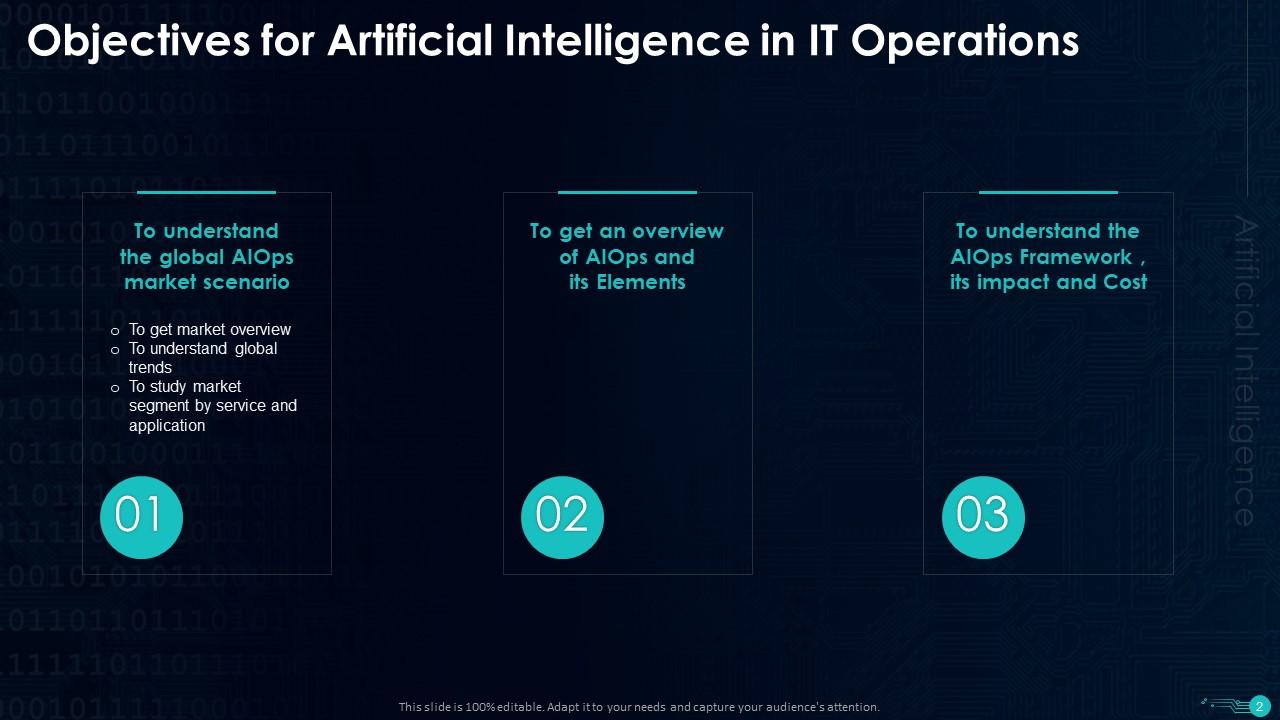
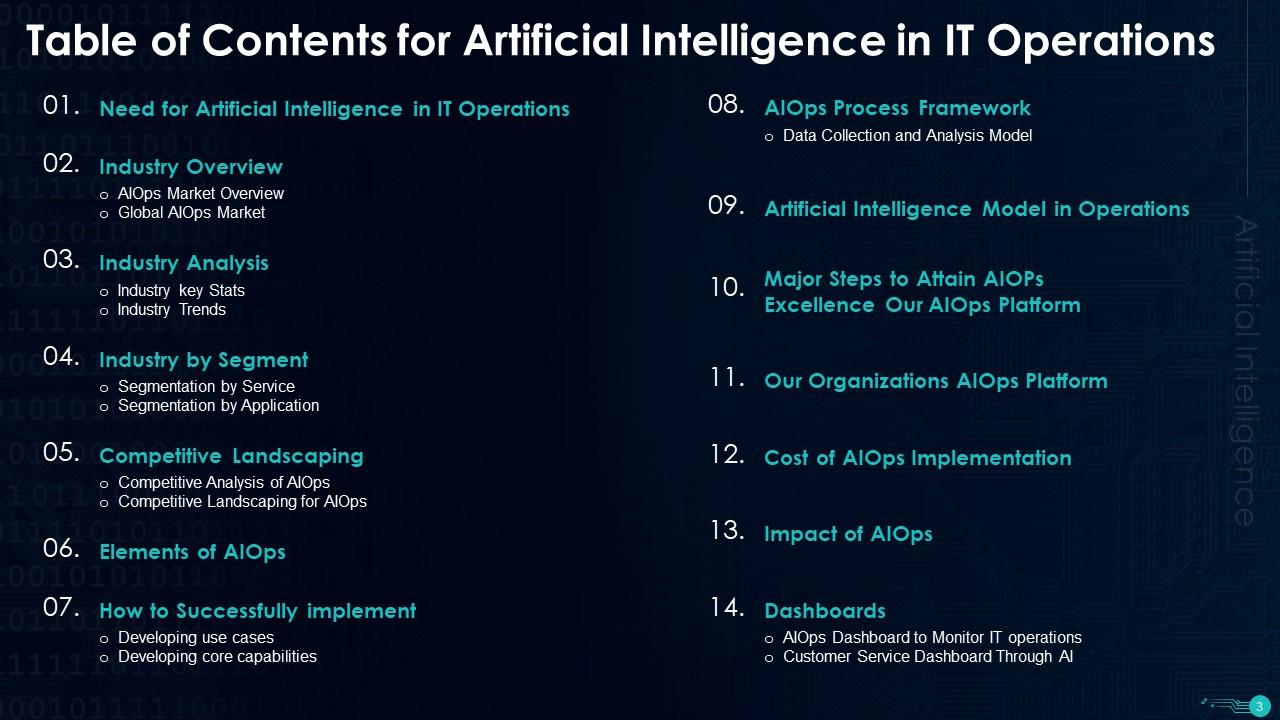
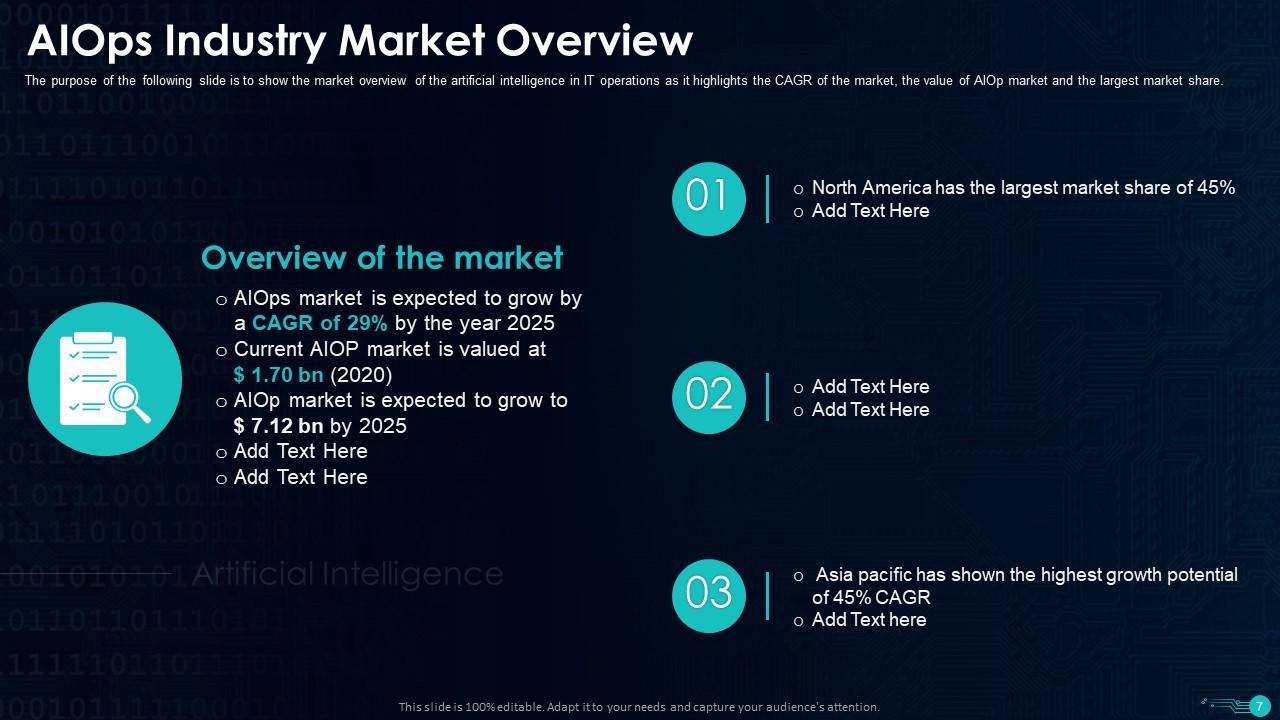
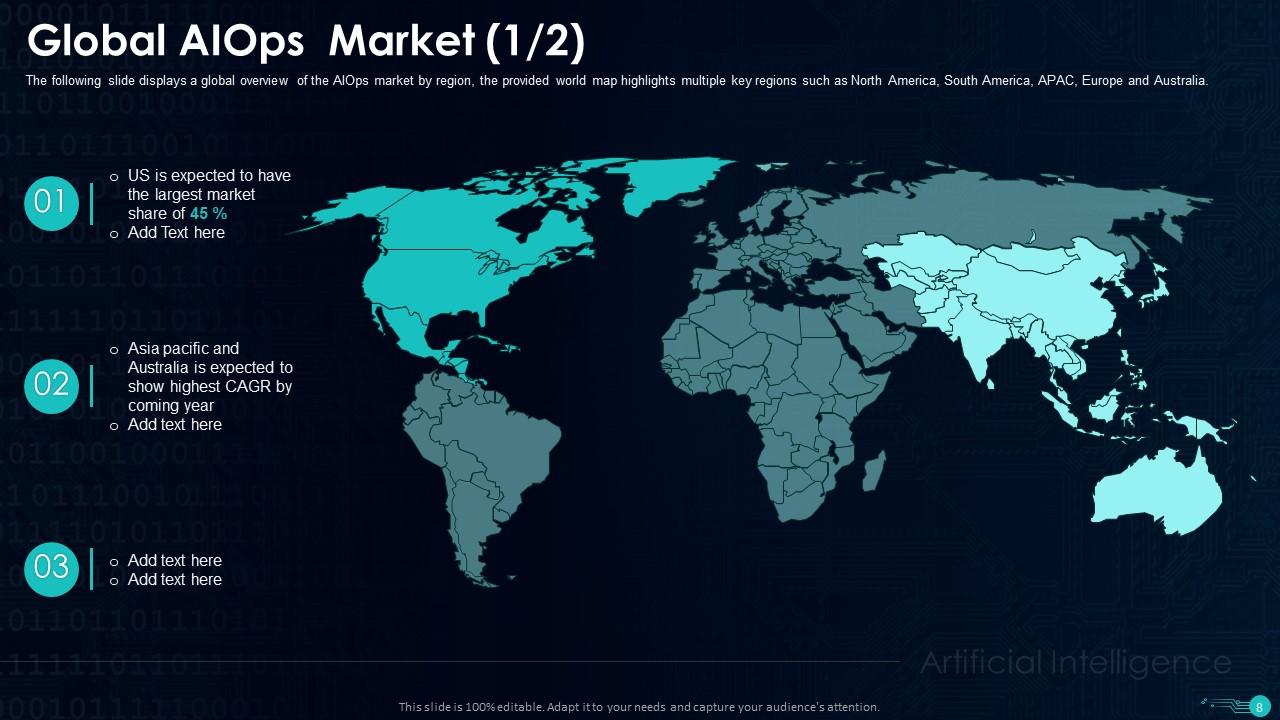
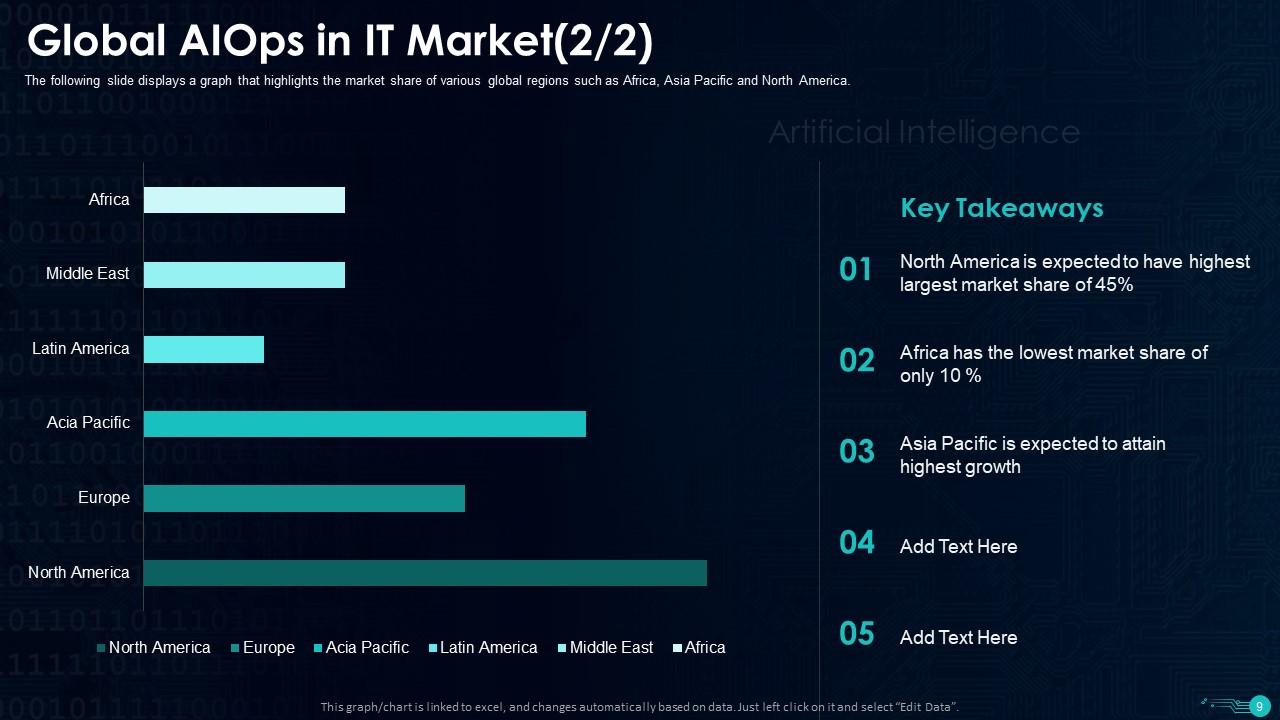
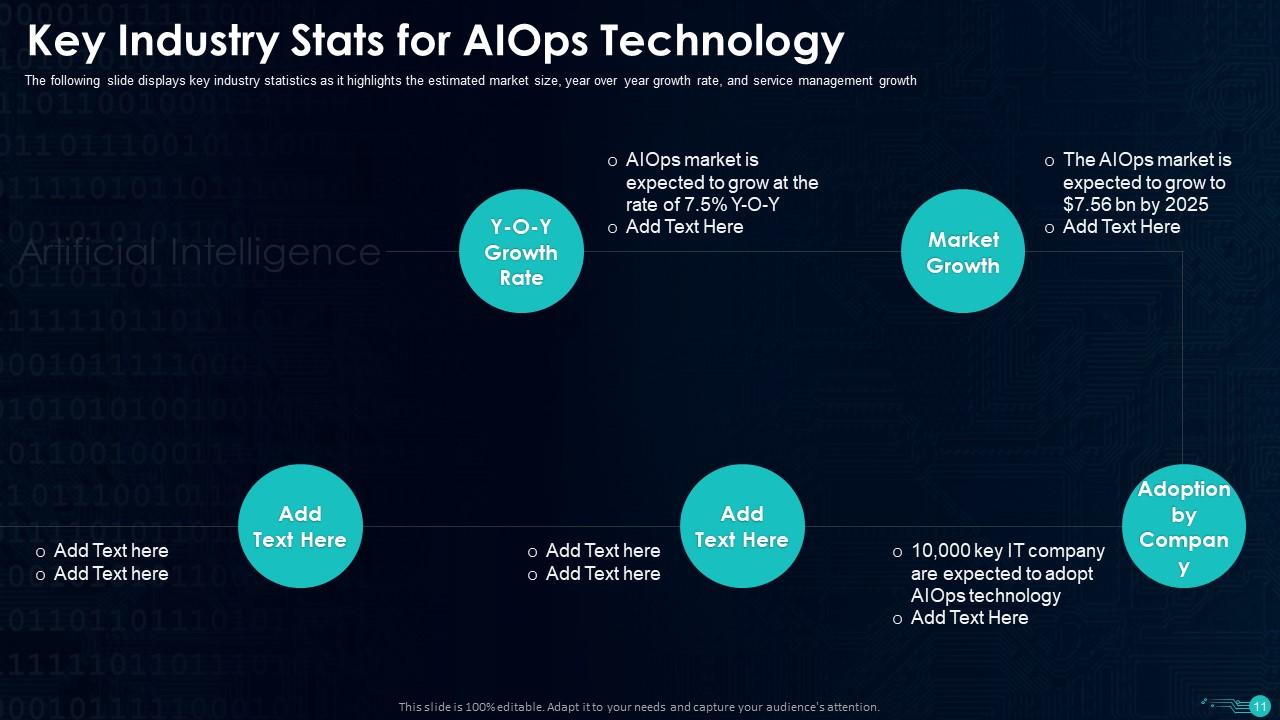
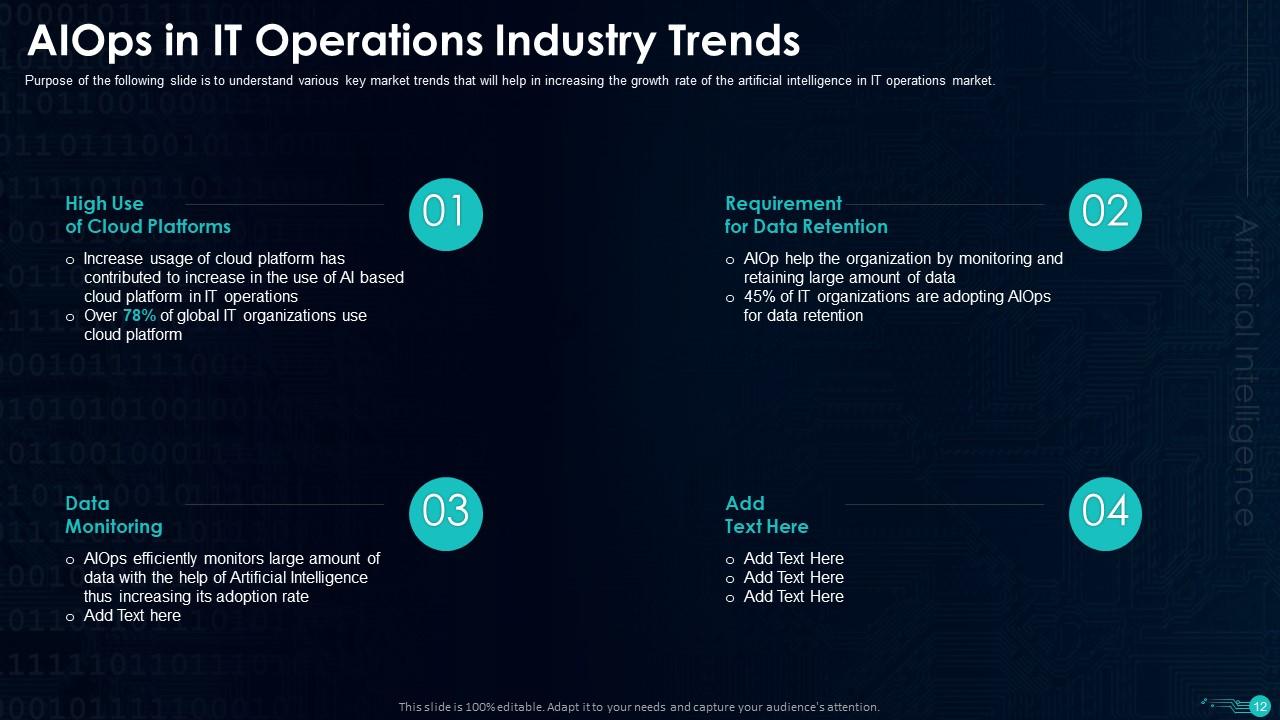
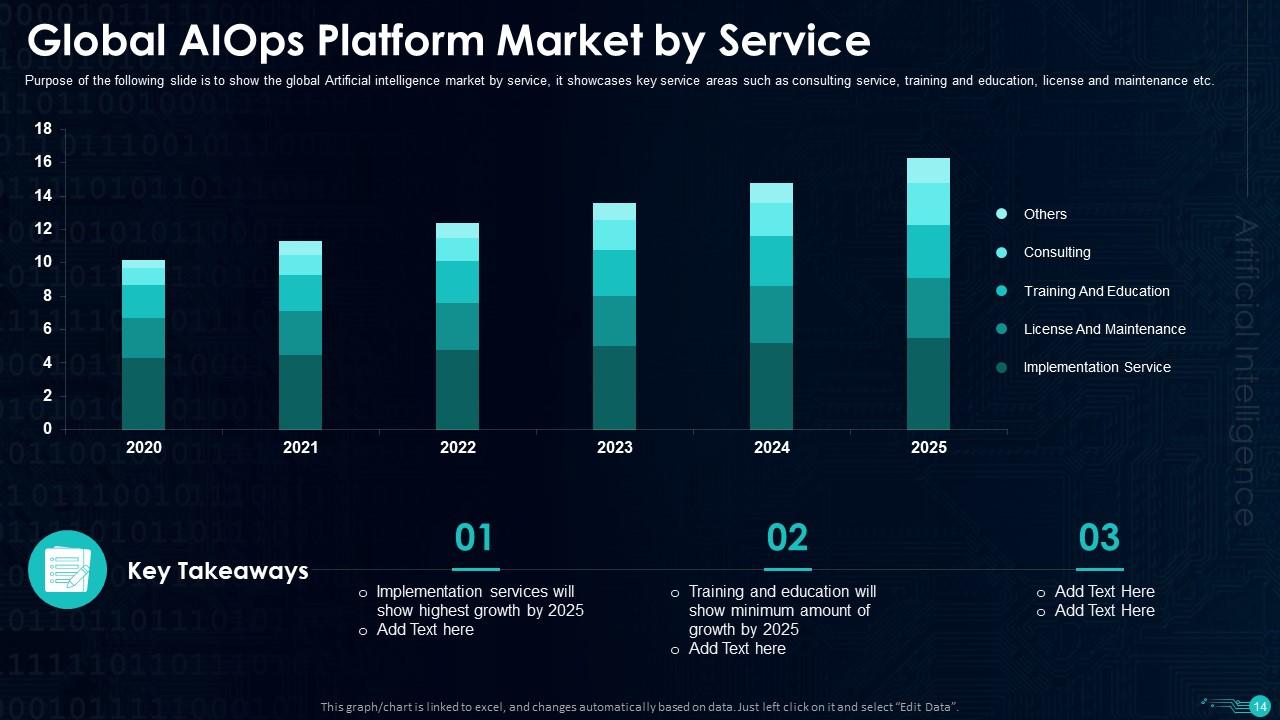
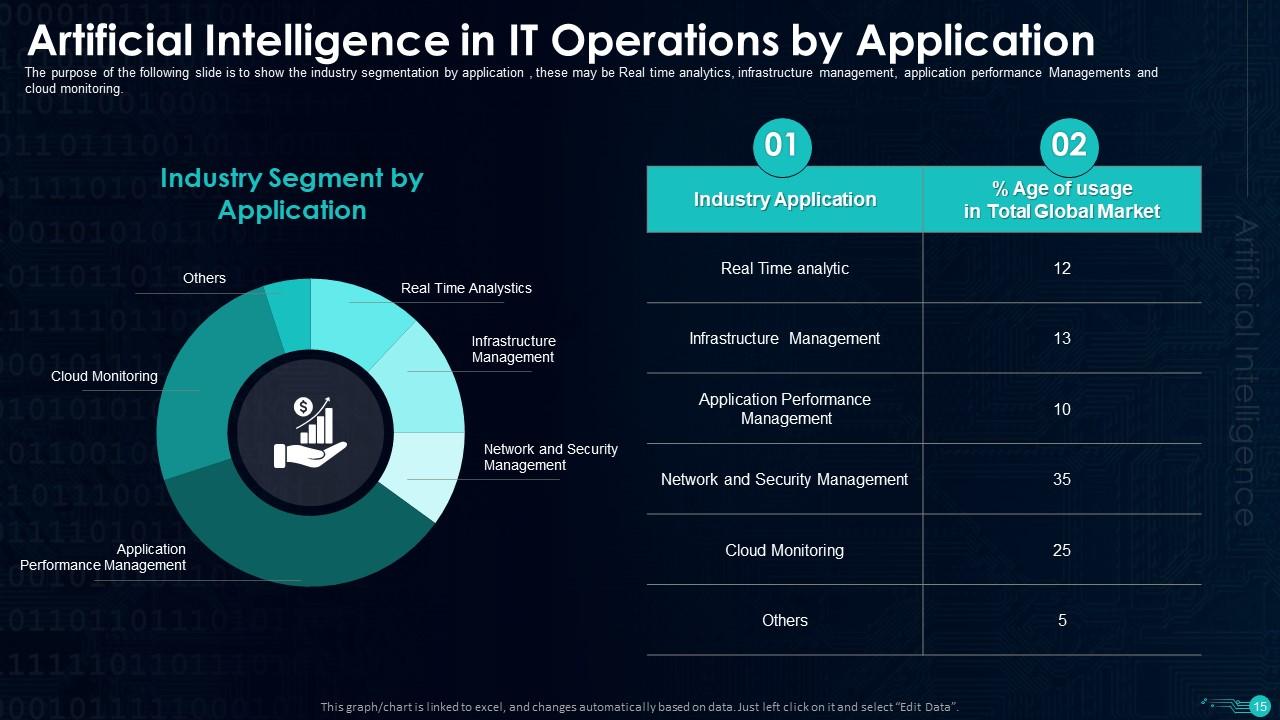
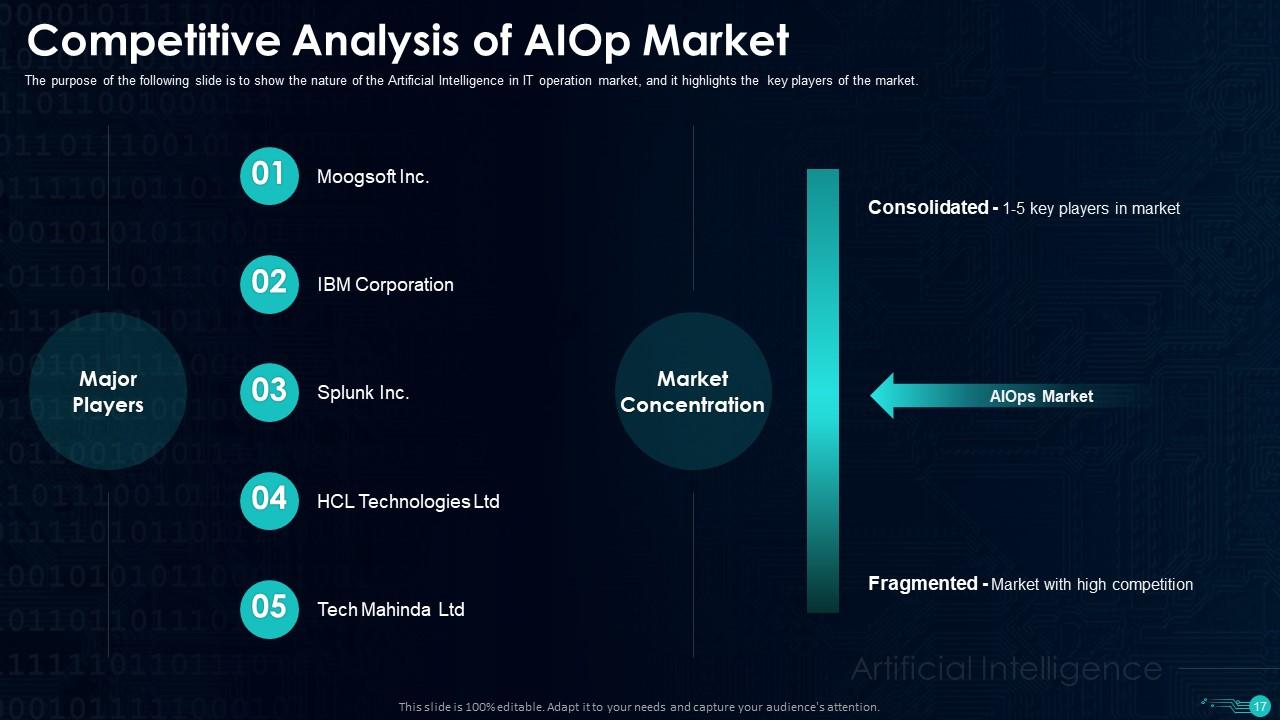
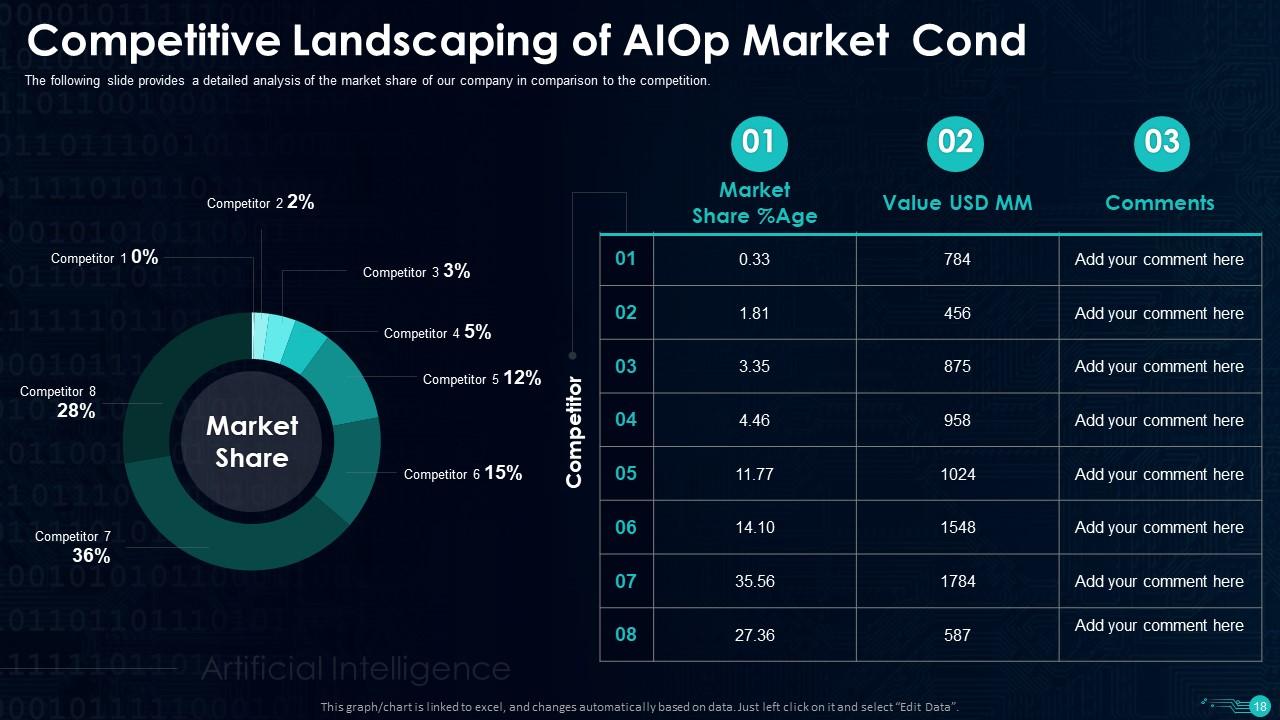
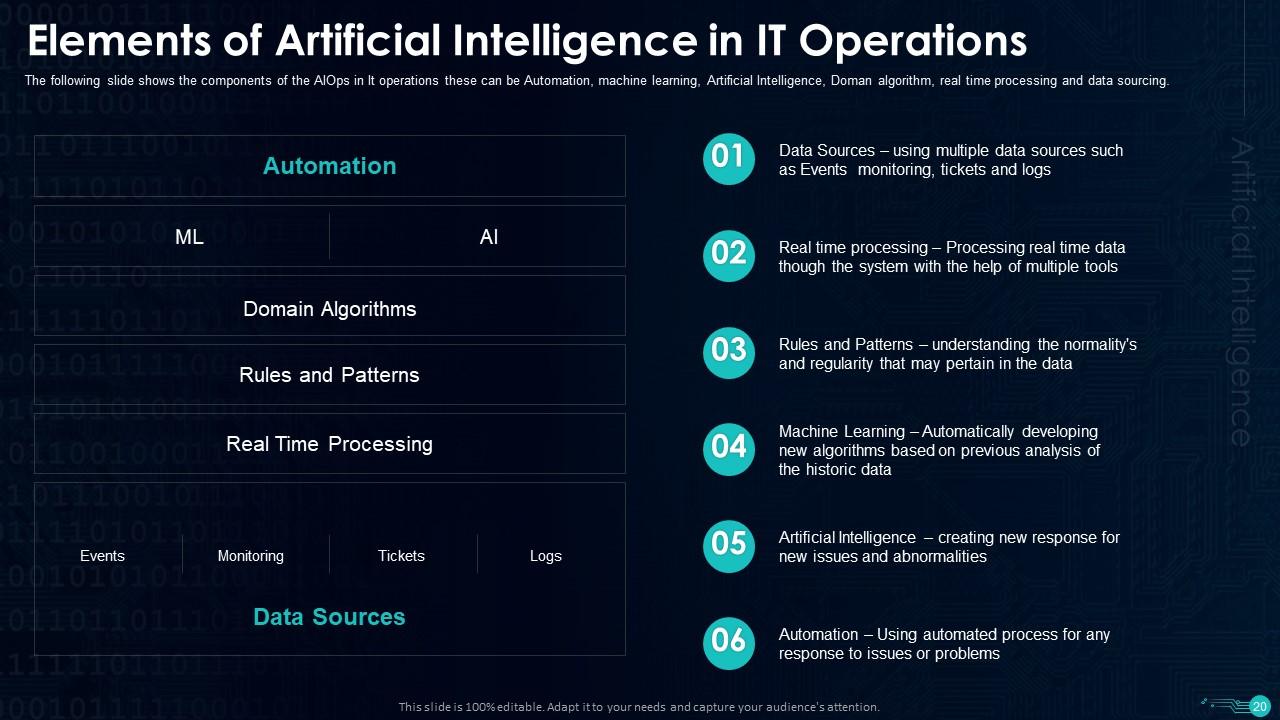
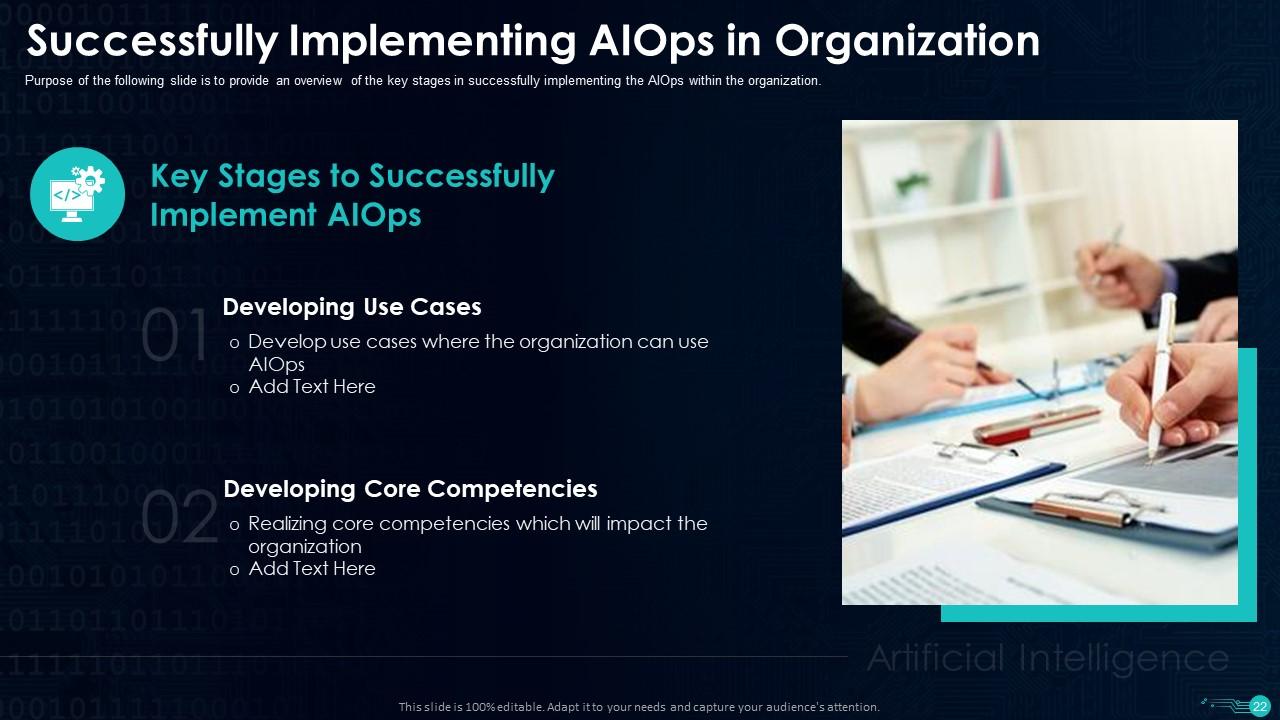
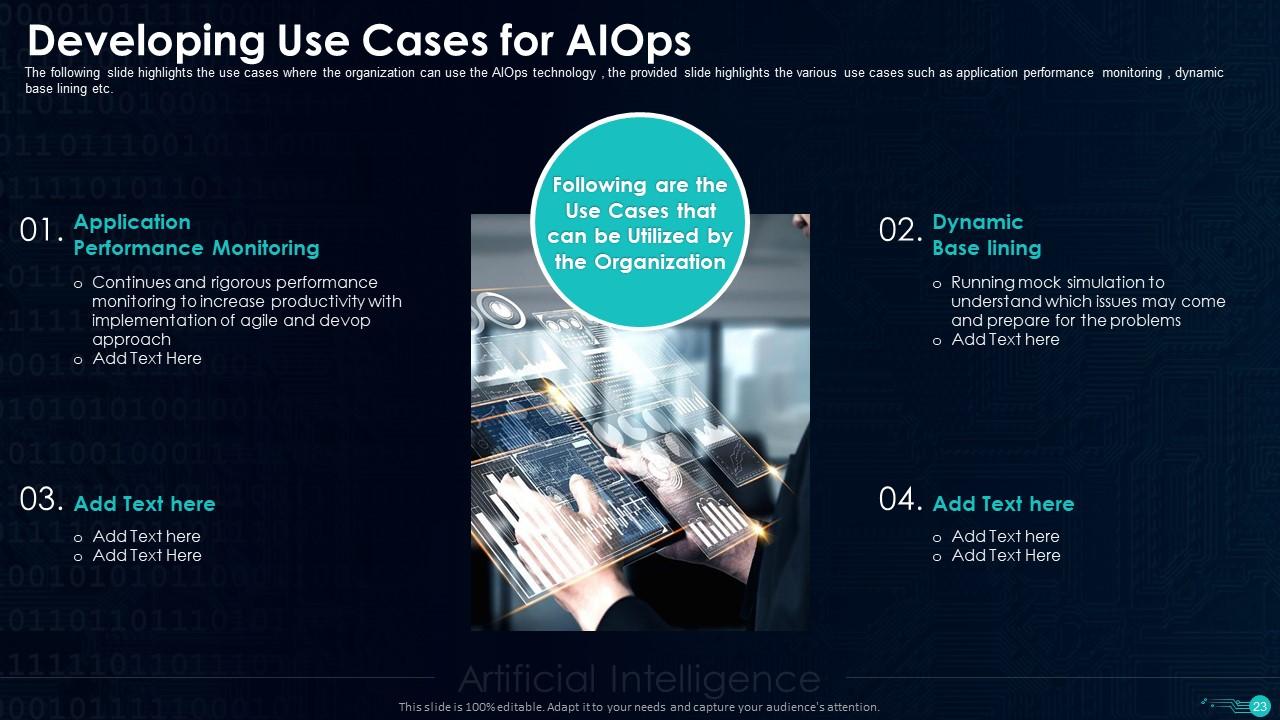
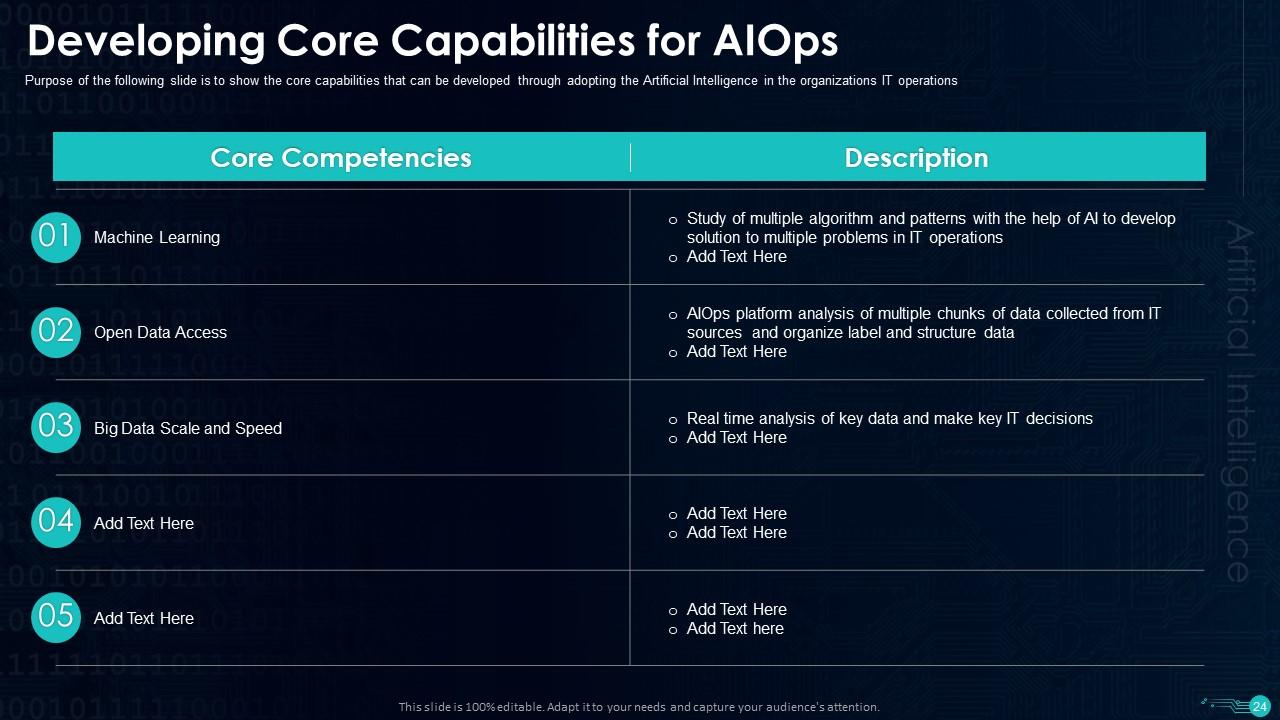
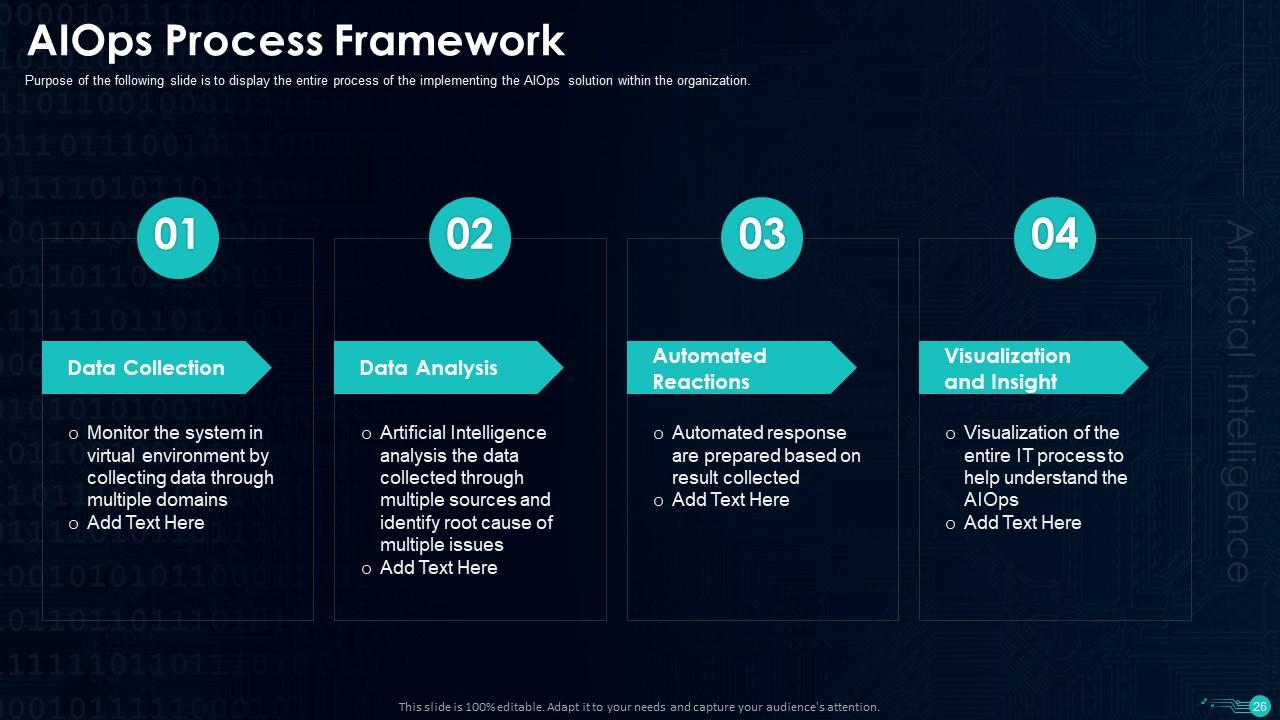
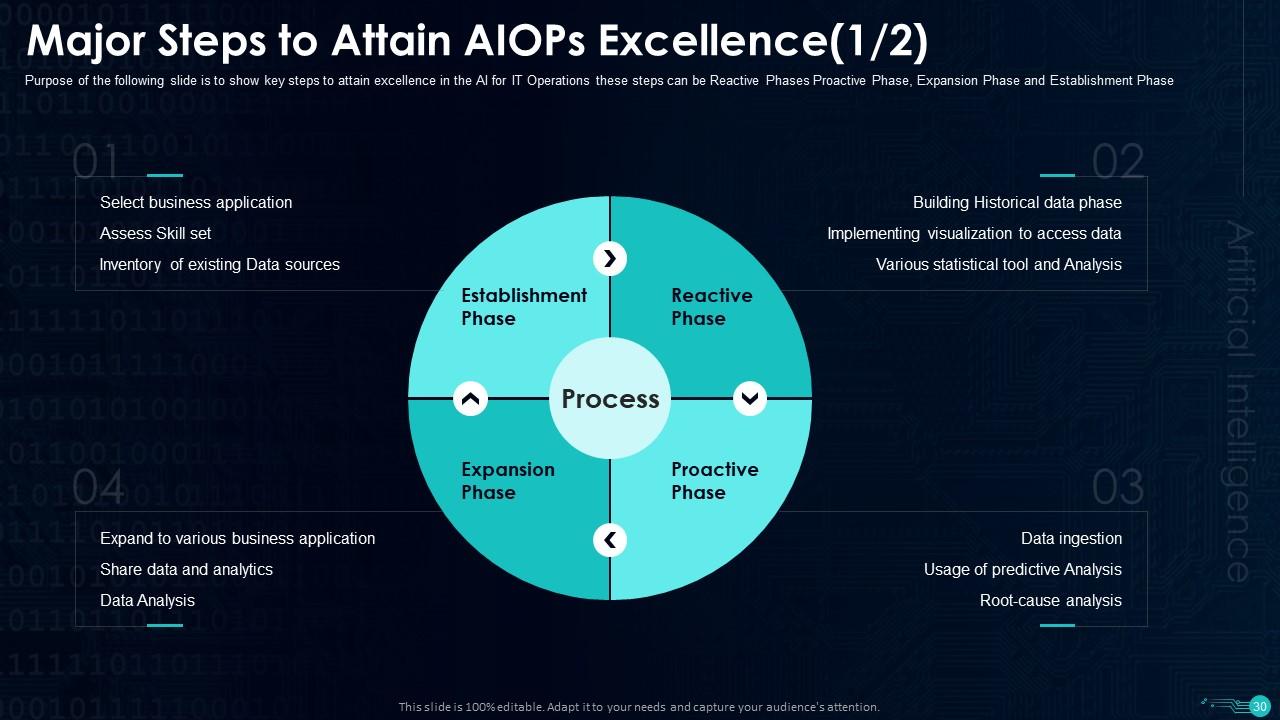
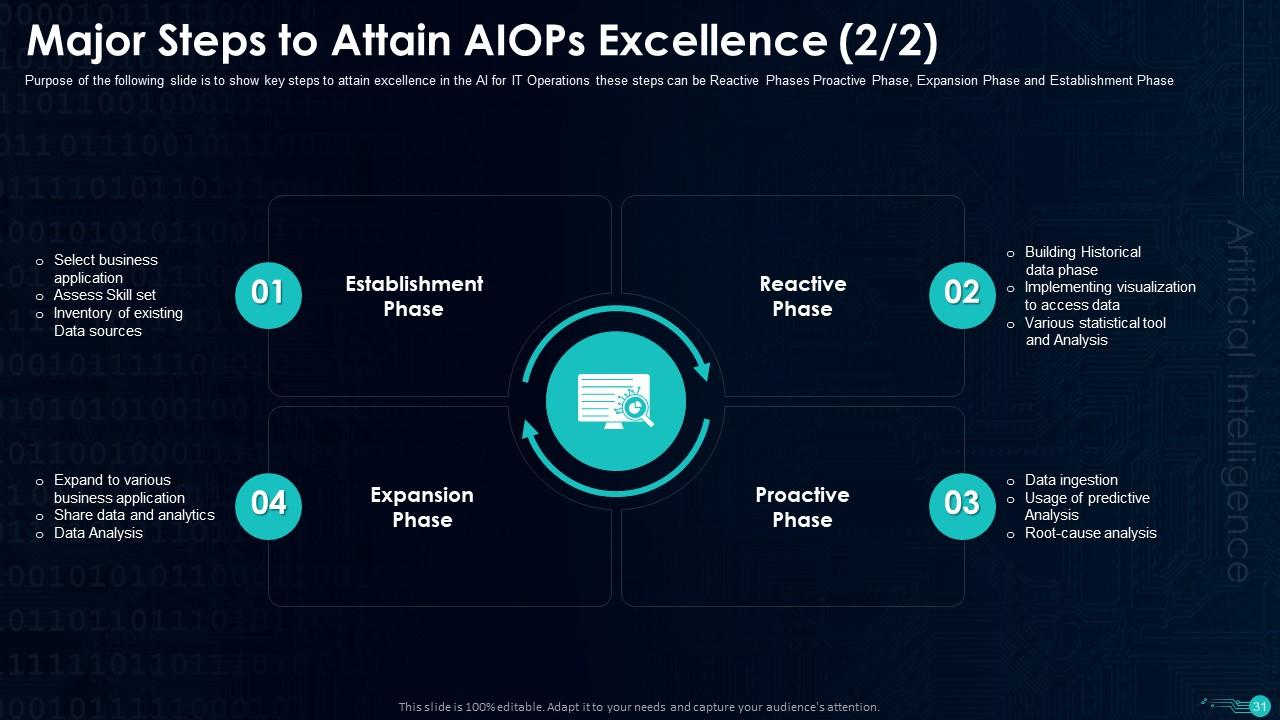
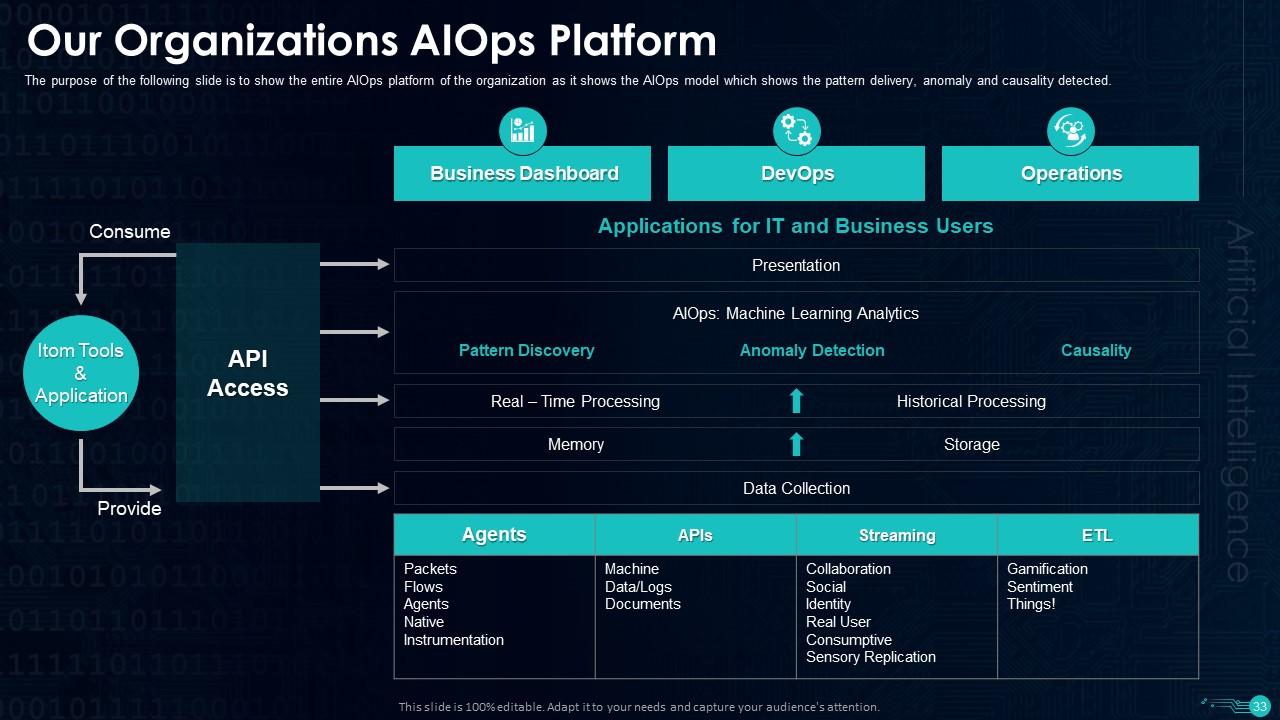
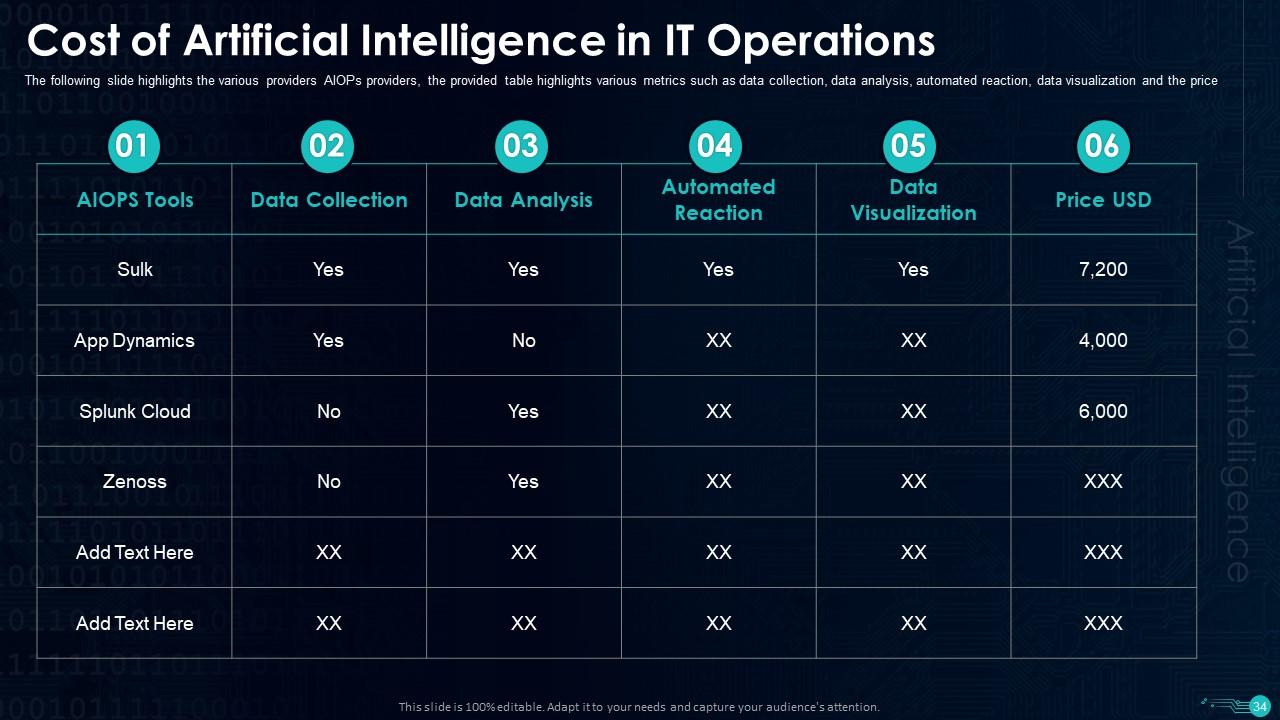
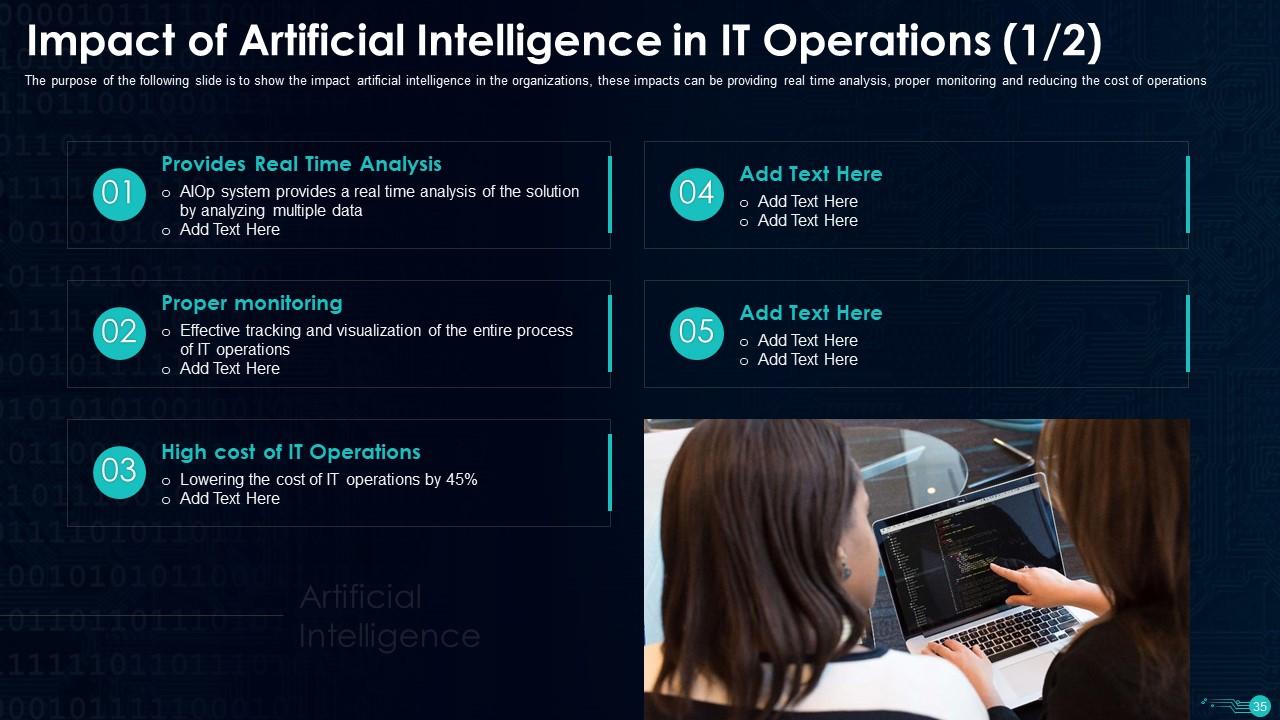
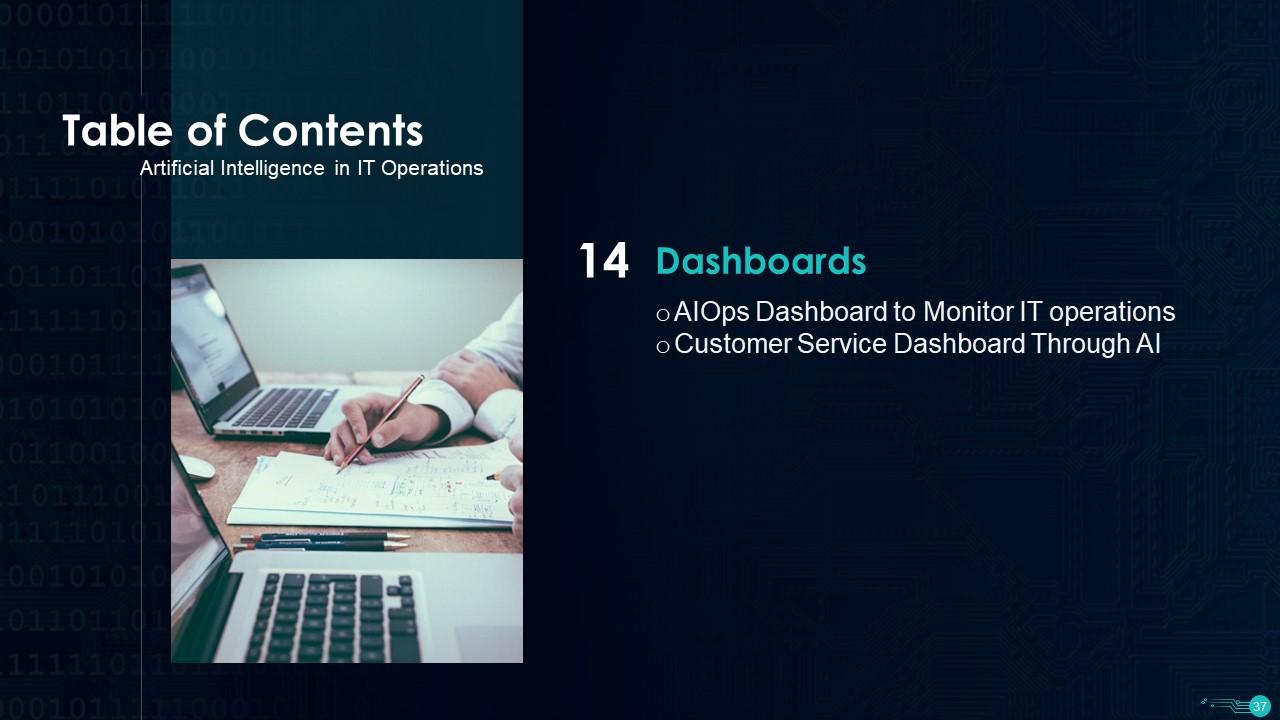
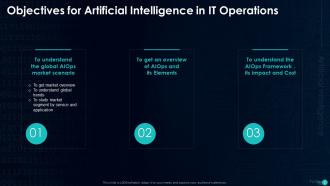
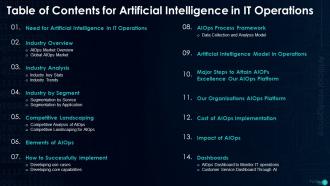
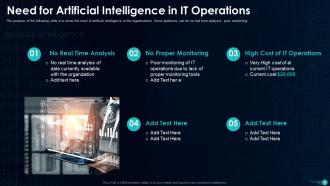
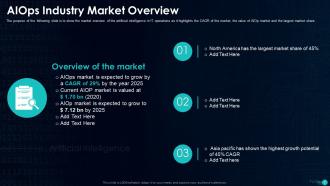
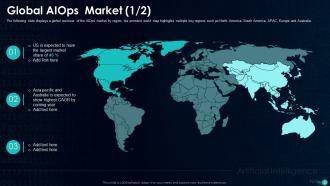
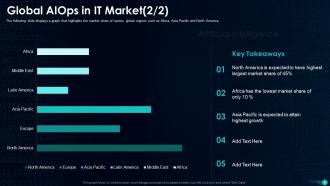
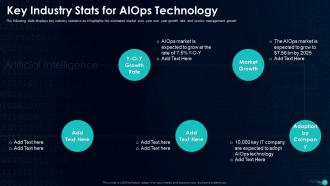
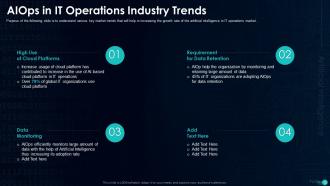
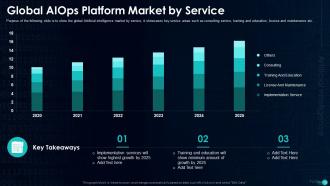
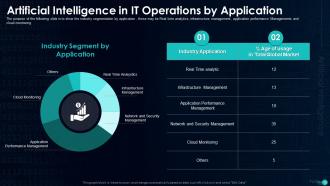
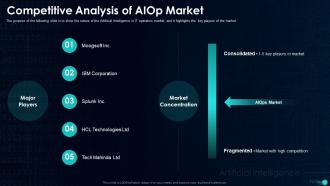
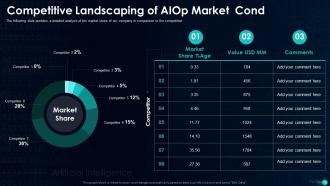
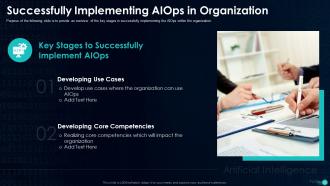
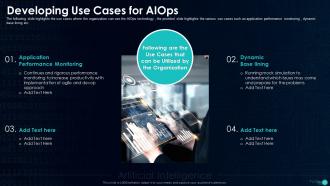
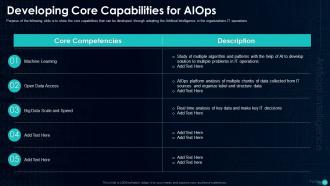
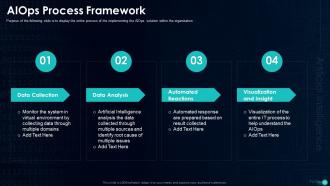
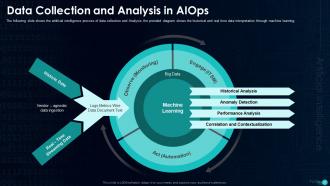
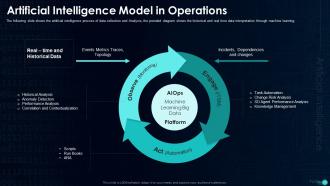
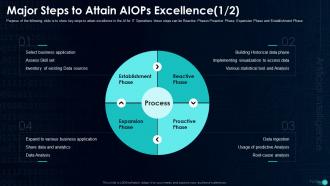
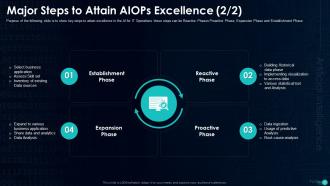
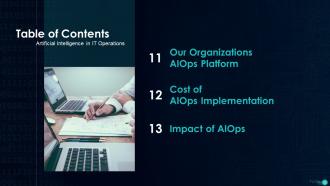
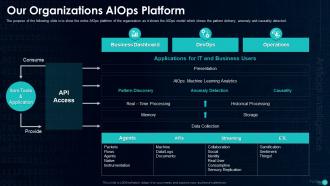
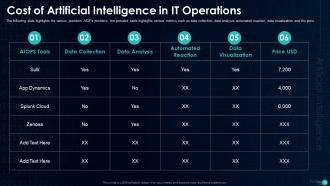
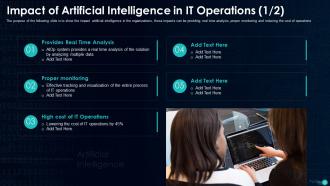
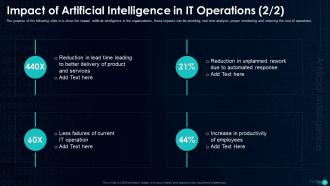
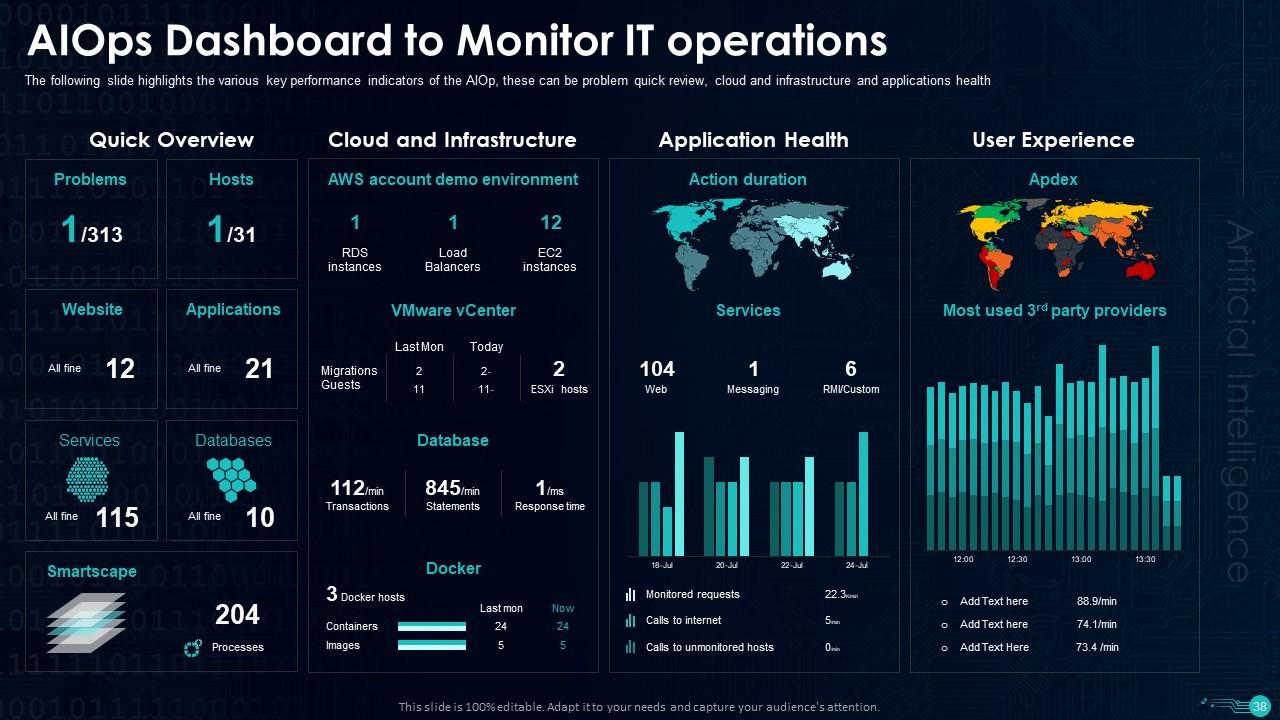
Artificial intelligence in IT Operations are automated tools and software that use big data, AI, and machine learning to solve fundamental IT problems and resolve IT-related issues. Here is a competently designed template on Artificial Intelligence in IT Operations. It highlights the Industry scenario of the AIOps market and provides an implementation guide. Initially, this presentation identifies the need to implement the AIOps within the organization; these needs can be a lack of real-time analysis, proper monitoring tools, and the high cost of the IT process. After this, an overview of the market scenario, key industry trends, and key industry statistics are analyzed. After studying the market scenario, the process of implementation of AIOps, along with Various key elements, is studied. Next, after understanding the elements, an implementation plan for the same is developed; this implementation plan may include developing use cases and realizing the core competencies. Based on these implementation steps, a process framework is developed, and data collection and analysis steps are studied. Once the AIOps framework is developed, the cost of the AIOps platform is studied, and various key vendors are identified. In the end, the impact of artificial intelligence on the IT platform is studied, and with the help of different KPIs or key performance indicators, a dashboard is developed to analyze the AIOps implementation. Download our 100 percent editable artificial intelligence presentation and get access to our highly researched and skillfully designed product.
People who downloaded this PowerPoint presentation also viewed the following :
Artificial Intelligence In IT Operations Powerpoint Presentation Slides with all 60 slides:
Use our Artificial Intelligence In IT Operations Powerpoint Presentation Slides to effectively help you save your valuable time. They are readymade to fit into any presentation structure.
FAQs for Artificial Intelligence In IT Operations
Honestly, predictive maintenance is huge - you'll spot problems before everything goes to hell. AI handles boring incident responses automatically, so no more 3am wake-up calls (your team will worship you). Resource optimization gets way smarter too, analyzing usage patterns to resize stuff without you thinking about it. The monitoring improves dramatically with fewer bogus alerts and better root cause detection. Oh, and start with something simple like log analysis first. Don't try to boil the ocean right away - pick one thing, see how it works, then build from there.
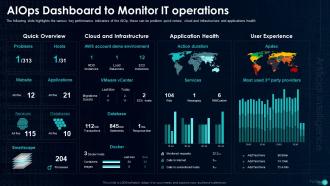
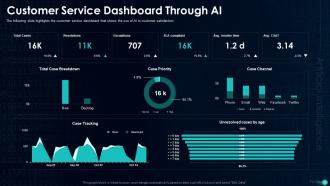
Dude, AI is a game changer for incident response. It spots weird patterns automatically and sorts your tickets before they become dumpster fires. No more manually digging through alerts at ungodly hours - the system connects dots across different platforms and pinpoints root causes way faster. Plus it gets smarter over time, suggesting fixes based on what worked before. Teams are cutting resolution time by like 40-50%, which honestly blows my mind. Your tickets get routed to whoever actually knows that system too. I'd start with automated alert correlation if you're new to this whole thing.
So ML looks at all your infrastructure data and spots patterns that show when stuff's about to break. Your servers, storage, whatever - it learns from past performance and logs to catch problems early. Way better than getting woken up at 3am by alerts, trust me on that one. You can actually plan maintenance instead of playing whack-a-mole with crashes. Historical metrics are gold for this. I'd say start with your most important systems first, then roll it out once you see it working. Beats reactive fixes every time.
Honestly, AI is a game-changer for catching security threats. It processes tons of network data and user activity way faster than any human team could manage. The smart thing about it is how it learns your company's normal patterns - so when someone logs in from a weird location at 3am or starts downloading massive files, it flags that immediately. Traditional rule-based systems miss this stuff all the time. False alarms drop too, which is huge because your IT folks won't start ignoring every alert. Oh, and definitely start with user behavior monitoring first - that's where you'll actually see results quickly.
You should definitely try chatbots for the basic stuff first - password resets are perfect to start with. They work around the clock, which is honestly a lifesaver when someone inevitably locks themselves out at midnight. The bot handles simple requests instantly while your actual IT team sleeps like normal humans. For anything complicated, it just passes the ticket along with all the info already collected. Your techs will thank you since they can finally work on interesting problems instead of "have you tried turning it off and on again" for the hundredth time. Resolution times get way faster too.
Honestly, data quality will probably be your biggest headache - garbage in, garbage out, you know? Most teams don't have people who actually get both AI and IT ops, which is frustrating. Legacy system integration is brutal too. Oh, and executives hate the "black box" thing where nobody can explain why the AI decided something. Your team might freak out thinking they're getting replaced. Start with just one simple use case though. Get a win under your belt first, then build from there. Way easier than trying to boil the ocean right away.
So AI just takes over all the boring stuff you're doing manually right now. Your servers get patched automatically, network monitoring happens in the background, and it'll even handle those basic helpdesk tickets that make you want to scream. The cool part is how it learns - I've seen it flag problems that would've totally slipped past me. Instead of babysitting everything, your team actually gets to work on interesting projects for once. Just don't go crazy at first though. Pick something simple like backup automation and build from there.
Focus on the basics first - MTTD and MTTR should drop if your AI isn't garbage. False positives are huge too because honestly, nothing kills trust faster than constant fake alerts. Business-wise, track incident reduction and uptime improvements. Your team's satisfaction matters more than people think - if they're ignoring the AI because it sucks, you've failed. Oh, and don't go overboard measuring everything day one. Pick maybe 3-4 solid metrics. Cost savings from automation are nice but secondary to whether the thing actually works.
Dude, AI can churn through your operational data insanely fast - way faster than your team ever could. It spots patterns you'd totally miss and actually predicts failures before they happen. Plus it correlates stuff across different systems automatically. The best part? Your team stops doing mindless data work and can focus on bigger picture decisions instead. I'd say start small though - grab one repetitive analysis thing you guys do every week and test if AI can handle it. That's probably the smartest way to dip your toes in without going overboard.
Transparency's your biggest headache - people need to actually understand how these systems make decisions, especially when it impacts their jobs or critical stuff. Bias is another nightmare since AI can unfairly favor certain systems based on wonky training data. And yeah, some IT roles are definitely getting axed, which sucks but it's reality. Set up clear governance policies for AI decisions and audit regularly for bias issues. Oh, and invest in training your current team instead of just tossing them aside. Get your ethics policies written down now before things get messy.
So basically, AI watches your system patterns and predicts what resources you'll need before things crash. Pretty neat, right? It checks historical data plus current workloads to automatically move computing power and memory around. No more wild guessing about capacity planning - I used to hate that part. You get dynamic scaling that ramps up during busy periods and scales back when it's quiet. Saves you from paying for servers just sitting there doing nothing. Honestly, start with some monitoring tools to track your usage patterns first, then build from there.
So AI is basically taking all those tedious ITIL tasks and putting them on autopilot. Think automated incident sorting, chatbots handling the easy stuff, predictive maintenance that spots problems before they crash your systems. The change management and capacity planning get way smarter too since AI can spot patterns in your service data. Honestly, the incident response times are crazy fast now - AI connects dots across your whole infrastructure that would take humans forever to piece together. My advice? Start with whatever repetitive processes are driving your team nuts and see which AI tools can handle those first.
Start by figuring out what data your AI can access and who sees what - data classification is key here. Encryption for everything moving around and stored is non-negotiable. Privacy regs are honestly such a headache, but you'll need audit trails for whatever the AI touches. Don't keep sensitive stuff longer than you have to - set retention policies now. Also document everything (I know, boring but necessary). Regular compliance audits will save your butt later. Oh, and have a kill switch ready if things go wrong fast.
Dude, the self-healing stuff is crazy - infrastructure will literally patch itself before problems even hit. Predictive analytics are getting scary accurate too. Also seeing tons of natural language interfaces, so you can just tell your system "hey, scale this up" instead of hunting through menus. Autonomous incident response is huge right now. My advice? Start small with basic anomaly detection or automated alerts. Don't wait though - I've seen teams get left behind because they thought they had more time. Oh, and AI-powered capacity planning is actually becoming legit useful, not just hype anymore.
Honestly, AI can cut your support times in half and make everything way more personal for customers. Start with chatbots handling the basic stuff - they're pretty good at that now. The predictive stuff is where it gets interesting though. It'll spot problems before customers even know they exist, which is kind of crazy when you think about it. Plus smart routing means no more "let me transfer you" runaround. Your knowledge base actually learns from each ticket too. Agents get real-time suggestions based on similar cases they've handled before. I'd go chatbots first, then add the predictive monitoring once you're comfortable.
-
They had the topic I was looking for in a readymade presentation…helped me meet my deadline.Â
-
I am really satisfied with their XYZ products. Used their slides for my business presentations and now I am taking their help for my son's high-school assignments. Super satisfied!!