


Automation vs artificial intelligence automation ppt powerpoint presentation pictures





Try Before you Buy Download Free Sample Product
 Impress Your
 Audience
 100%
100% Editable
 Save Hours
 of Time


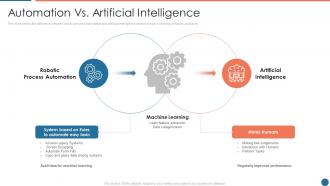
This slide shows the difference between robotic process automation and artificial intelligence based on eachs working, behavior, and tasks.
People who downloaded this PowerPoint presentation also viewed the following :
Automation vs artificial intelligence automation ppt powerpoint presentation pictures with all 6 slides:
Use our Automation Vs Artificial Intelligence Automation Ppt Powerpoint Presentation Pictures to effectively help you save your valuable time. They are readymade to fit into any presentation structure.





FAQs for Automation vs artificial intelligence automation ppt
Dude, the money you'll save alone makes it worth it. Your team stops wasting time on boring repetitive stuff and can actually focus on important projects. Processing gets way faster and more consistent too. Honestly, I think the best part is it never takes breaks - like having workers who don't get sick or need vacation days lol. Customers get served quicker, you can grow without constantly hiring people, and the data insights are pretty solid for making decisions. Oh, and definitely start with just one process first to see how it goes before going crazy with it.
Honestly, just grab Zapier's free plan or IFTTT and start there. Pick whatever repetitive task pisses you off most - maybe leads from your site not making it to your CRM, or forgetting to post on social. Set up one automation this weekend. Takes like an hour max and costs zero. I'd go with email autoresponders first since they're dead simple but save tons of time. Once you see how much easier life gets, you can add more workflows. Even basic scheduling tools are game-changers. The ROI becomes pretty obvious once you're not doing the same boring stuff manually every day.
So basically AI turns your boring automation into something that can actually think. You know how regular automation just moves stuff around? This analyzes patterns and predicts what's coming next. Pretty wild honestly. Start small though - grab one tedious task that usually needs human judgment, like sorting support tickets or catching sketchy transactions. Supply chain optimization is huge too but that's getting fancy. The trick is letting AI handle the decision-making part while you focus on better stuff. It's like having a super smart intern who doesn't need coffee breaks.
Honestly, automation usually helps with both productivity and keeping people happy at work. The trick is rolling it out right. Nobody wants to do boring stuff like data entry all day - let the software handle that while your team focuses on the interesting projects. Yeah, you'll get obvious productivity wins since machines don't need lunch breaks or anything. But here's the thing: people need to feel like they're getting better at their jobs, not worried about being replaced. I'd say get your team involved in picking what to automate first. Then train them on cooler skills they'll actually want to learn.
Manufacturing is getting absolutely demolished - robots are running assembly lines and doing quality checks now. Banking's changing fast too with AI handling customer calls and catching fraud. Then you've got warehouses (Amazon's warehouses are basically robot cities at this point), retail going way beyond self-checkout, and even healthcare automating scans and patient monitoring. My cousin works in logistics and he's already had to learn like three new systems this year. Look, if you're in any of these areas, don't just cross your fingers and hope you'll be fine. Start figuring out how your job might change.
Honestly, automation can be a game-changer for customer service if you don't go overboard with it. Your customers get instant answers to basic stuff, plus it's available all night (which is pretty cool). The trick is letting bots handle the boring FAQ questions while your actual team tackles the messy problems that need a human brain. But here's what I've seen go wrong - companies automate everything and then wonder why people are pissed off when they can't reach a real person. My advice? Start with simple chatbots for common questions, then see how people react before adding more.
Look, you'll hit three big issues: people losing jobs, who gets the axe first, and whether your automated decisions are fair. Don't just dump everyone at once - retrain folks or roll things out slowly. Bias is huge too, especially if you're automating hiring or reviews. Some groups might get screwed over more than others. Be straight with your team about what's happening and why. I mean, nobody likes surprises when their job's on the line. Also, check your current processes for bias before you automate them - you don't want to just make existing problems faster.
Honestly, automation and big data work crazy well together for making decisions. Your automated systems just keep collecting tons of data 24/7, then analytics tools crunch through it all to find patterns you'd miss completely. The automation does all the boring data collection stuff, while analytics spots the actual useful trends. You end up making way better choices because you're working with real-time info instead of just guessing. I'd probably start small though - pick one decision you make all the time and figure out what data could help. Works better than I expected when I tried it.
Oh man, the tech stuff is brutal - your old systems probably won't talk to new automation tools at all. People get weird about it too, thinking they'll lose their jobs or whatever. Data's always a nightmare since it's spread everywhere. Honestly, budgets go to hell because these projects are way messier than anyone expects. Employee pushback is huge - nobody wants to learn new stuff when the old way "works fine." I'd definitely start with something small first, maybe just one department? That way you can actually show it works before going all-in.
Dude, automation is honestly a game-changer for cutting energy waste. Smart HVAC systems adjust based on who's actually in the building instead of just blasting air everywhere. Your manufacturing stuff only runs when it needs to - no more "better safe than sorry" energy burning. Lighting gets way smarter too. I'd focus on whatever's sucking up the most power first since that's where you'll actually notice the savings. Oh, and the predictive maintenance thing is clutch - catches problems before your equipment starts guzzling energy like crazy. Pretty wild how much gets wasted otherwise.
Honestly, focus on stuff machines suck at - creative thinking, reading people, nuanced communication. Don't try to beat AI, just get good at working alongside it. I've been messing around with ChatGPT at work and it's wild how much faster things go when you know what you're doing. Technical skills for managing these systems will be gold too. Short version: become the person who takes AI output and makes it actually useful for humans. Oh, and emotional intelligence is gonna be huge since everyone's freaking out about job security right now.
Track both the obvious stuff (labor costs, fewer mistakes, speed gains) and the fuzzy benefits like happier employees and better customer experience. The fuzzy stuff actually matters more long-term, even though your CFO will roll their eyes at it. Get your baseline numbers before you start, then check the same metrics after 6-12 months. Oh, and don't forget implementation costs when you're calculating ROI - I've seen people conveniently leave those out. Soft savings are where the real magic happens, trust me.
Honestly, AI integration is about to blow up everywhere - think ChatGPT but built right into the tools you already use at work. No-code platforms are getting crazy good too, so even your marketing team can set up their own automations without waiting weeks for IT. Robotic process automation isn't just doing boring repetitive stuff anymore - it's actually making decisions now. Edge computing will handle real-time automation for manufacturing, which is pretty wild. The big thing though? Hyperautomation - basically all these tools talking to each other seamlessly. My advice: start messing around with basic workflow automation now, even small stuff. This shift is happening faster than people think.
So here's what works: automate the boring repetitive stuff - data entry, basic scheduling, those "what are your hours" type questions. But anything emotional or complex? That's where real people matter. I've dealt with way too many awful chatbots that just made me angrier, you know? Map out where customers actually interact with you and figure out which moments need that human touch. Like when someone's pissed off or making a big purchase decision. Those situations need empathy and creative thinking. Basically, robots for the routine, humans for the relationships.
Honestly, most people think automation costs a fortune or you need some computer science degree to figure it out. Not true! You can literally start with one tiny thing that annoys everyone - like data entry or scheduling. I'd pick whatever makes your team groan the loudest. The tools now are actually pretty intuitive, nothing like the nightmare systems from years ago. ROI usually hits way sooner than you'd expect. And here's the thing - it won't magically eliminate jobs overnight. Your people just get to do more interesting stuff instead of mind-numbing tasks. Baby steps work better than going all-in anyway.
-
Design layout is very impressive.
-
It saves your time and decrease your efforts in half.