

Big data analytics powerpoint presentation slides





Try Before you Buy Download Free Sample Product
 Impress Your
 Audience
 100%
100% Editable
 Save Hours
 of Time


Analyze data sets with our content ready Big Data Analytics PowerPoint Presentation Slides. Discover pattern and useful business information with the help of ready-to-use data science PPT visuals. Utilize big data technologies PowerPoint templates to collect, organize and analyze large sets of complex data. Talk about sources of big data such as web, internet of things, media, cloud and so on using predictive analytics presentation deck. The data management PowerPoint complete deck comprises of twenty ready-to-use templates. This professionally designed PPT slides help you to put your messages across in the most effective way. Big data provides valuable insights and through these insights, companies can make better business decisions to gain an edge over their competitors. Additionally, big data technologies PPT slides are apt to present various topics such as an information management system, business intelligence solutions, data management techniques and many more. Thus, download the data architecture presentation deck and make an impressive business presentation. Build an atmosphere for change with our big data analytics ppt. They will hail your fresh approach.
People who downloaded this PowerPoint presentation also viewed the following :
Content of this Powerpoint Presentation
Slide 1: This slide introduces Big Data Analytics. State Your Company Name and begin.
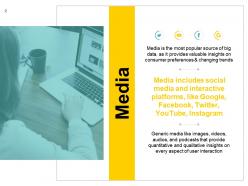
Slide 2: This slide shows Media describing social media and interactive platforms, like Google, Facebook, Twitter, YouTube, Instagram.
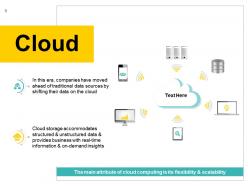
Slide 3: This slide presents cloud with various devices using cloud storage.
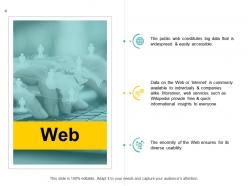
Slide 4: This slide displays Web with related imagery and text.
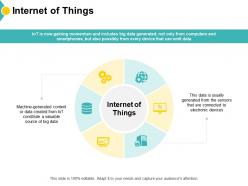
Slide 5: This slide showcases Internet of Things with related icons.
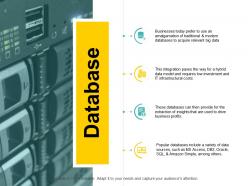
Slide 6: This slide represents Data bases. You can edit or change data as per requirement.
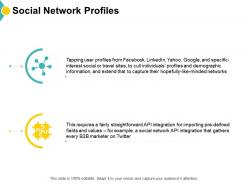
Slide 7: This slide shows Social network Profiles with related imagery and icons.
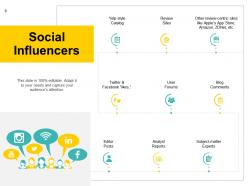
Slide 8: This slide presents Social Influencers like- Editor Posts, Analyst Reports, Subject-matter Experts, Blog Comments, User forums, Twitter & Facebook “likes,” Yelp-style catalog, Review sites etc.
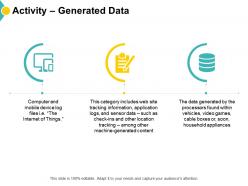
Slide 9: This slide displays Activity-Generated Data.
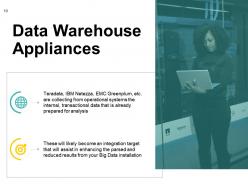
Slide 10: This slide represents Data Warehouse Appliances with related imagery.
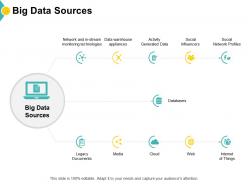
Slide 11: This slide showcases Big Data Sources describing- Web, Cloud, Media, Legacy Documents, Internet of Things, Social Influencers, Activity Generated Data, Data warehouse Appliances, Network and in-stream Monitoring Technologies, Social Network Profiles.
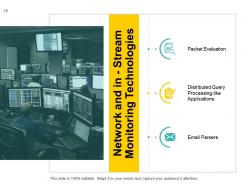
Slide 12: This slide shows Network and in - Stream Monitoring Technologies describing- Packet Evaluation, Email Parsers, Distributed Query Processing-like Applications.
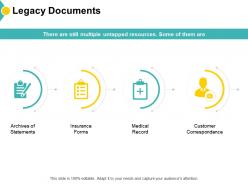
Slide 13: This slide presents Legacy Documents describing- Archives of Statements, Insurance Forms, Medical Record, Customer Correspondence.
Slide 14: This slide displays Big Data Analytics Icons.
Slide 15: This slide is titled as Additional Slides for moving forward.
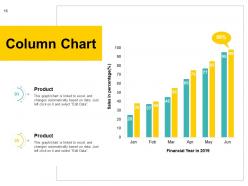
Slide 16: This slide shows Column Chart with two products comparison.
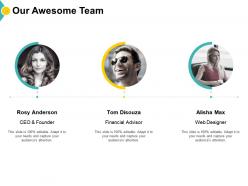
Slide 17: This is Our Awesome Team slide with names and designation.
Slide 18: This is About Us slide to show company specifications etc.
Slide 19: This is an Idea Generation slide to state a new idea or highlight information, specifications etc.
Slide 20: This is a Thank You slide with address, contact numbers and email address.
Big data analytics powerpoint presentation slides with all 20 slides:
Use our Big Data Analytics Powerpoint Presentation Slides to effectively help you save your valuable time. They are readymade to fit into any presentation structure.


FAQs for Big data analytics
So you basically need five things for big data. Data ingestion tools grab stuff from everywhere - that's step one. Storage is next (data lakes, warehouses, whatever). Processing engines like Spark handle the heavy work, though honestly picking between all the options is a nightmare. Analytics tools help you actually see what's happening with your data. Oh and don't forget governance for security stuff. My advice? Map out what data you've got first, then figure out storage needs. Work backwards from there to pick your tech stack. Way easier than jumping straight into tools.
Honestly, big data is pretty amazing for catching patterns you'd never spot otherwise. You can dig into customer behavior, predict what's coming next in your market, that sort of thing. Way better than just guessing or relying on old reports that are probably outdated anyway. The real game-changer is processing huge amounts of info in real-time - helps you segment customers better, forecast demand, even catch problems before they blow up. My advice though? Don't go crazy trying to fix everything at once. Pick one specific problem and start there.
Dude, ML is what actually makes big data worth something. Otherwise you're just hoarding tons of info with no clue what it means. It finds patterns you'd never spot yourself and can predict stuff crazy fast. Way better than old-school analysis methods, honestly. But here's the thing - your data has to be clean first or the algorithms will just make your problems worse. Garbage in, garbage out, you know? Oh and don't try to do everything at once. Pick one specific problem to solve first instead of going nuts with it.
Honestly, data viz is a game changer when you're drowning in spreadsheets. Those endless rows of numbers? Your brain just can't process that mess. But throw it into a simple bar chart or line graph and suddenly patterns pop out everywhere. I've seen people have literal lightbulb moments when they finally see their data visually. Trends become obvious, weird outliers stick out like sore thumbs, and you'll actually know what to do next instead of just... staring at cells hoping for magic. Start basic though - don't get fancy right away.
Honestly? Data quality is your biggest nightmare - everything's messy and scattered across random systems. Finding people who actually get analytics tools is brutal too, especially if you don't have Google's hiring budget. Infrastructure costs will hit you hard when you're dealing with massive datasets. Oh, and don't get me started on privacy regulations - that stuff keeps getting stricter. Storage becomes a whole thing too. My take? Run a small pilot first to show some wins before you blow your budget on fancy enterprise stuff.
So basically, you're collecting tons of info about how customers behave - what they click, buy, even their social media stuff. Honestly, it's kinda scary how much data companies have on us these days. But anyway, you use all that to build detailed profiles of each person. Then you can send super targeted emails, show different website content, make personalized product suggestions - the whole nine yards. The cool part is doing it in real-time, so if someone's behavior shifts, your marketing adjusts right away. Way more effective than generic campaigns.
Privacy's the big one - get real consent and protect people's info properly. Make sure you're transparent about what you're doing with their data. Bias is where things get messy though - I've seen too many algorithms screw over people in hiring or loans because nobody caught the discrimination. Just because you can grab data doesn't mean you own it or should use it freely. Honestly, the best thing? Build ethical checkpoints into every step and get different voices on your team. They'll spot problems you'd totally miss.
Okay so basically big data is just way bigger and faster than regular analytics. Like, Excel craps out at maybe a few thousand rows, but big data handles millions or billions of records at once. Plus it's usually real-time stuff. Regular analysis is more like "I have a theory, let me test it" but big data uses machine learning to find patterns you never would've thought to look for. Honestly the amount of data we create daily is insane. If you're working with anything over a few gigs or streaming data, you probably need big data tools.
Honestly, Netflix is the perfect example - they use your binge-watching habits to decide which shows to make next. Wild that your viewing data influences million-dollar decisions, right? Spotify's recommendation algorithm works the same way with music. Amazon's "people who bought this also bought" thing? That drives like 35% of their sales. Even Walmart uses data to figure out what to stock in different stores - though that's more boring supply chain stuff. Start by studying how these companies track customer behavior. You can totally apply those same concepts to whatever analytics project you're working on.
Definitely encrypt everything - data sitting in storage and moving between systems. Role-based access controls are a must too. Strip out personally identifiable stuff through anonymization before you even touch the data for analysis. Security audits should happen regularly since hackers get more creative by the day. Your team better know GDPR, CCPA, whatever regulations hit your industry. Here's the thing though - don't treat security like an afterthought you can just slap on later. Build it right into your analytics setup from the start. First step? Actually audit what sensitive data you're hoarding and ask yourself if you really need all of it.
Python's probably your best bet to start - pandas and scikit-learn are solid for analysis and ML stuff. Apache Spark is amazing for huge datasets, way better than the old Hadoop tools, but honestly it's kind of a pain to learn at first. R's good too if you're into stats. Cloud storage like AWS S3 or Google BigQuery is clutch since they scale automatically (I learned this the hard way trying to manage my own servers lol). Start simple with Python and pick a cloud platform. You can always throw Spark into the mix later when your data gets massive.
So big data in healthcare is actually wild - you can spot patients who'll likely get complications before they even show symptoms. EHR data combined with lab results and imaging gives you these crazy insights for personalizing treatments. Hospitals use it to predict readmissions too, which honestly saves them tons of money. Population health stuff gets easier when you can see patterns across thousands of cases. My advice? Don't go crazy trying to fix everything. Pick something specific like readmission prediction first. Way less overwhelming and you'll actually see results.
Honestly, healthcare and finance are where it's at right now. Banks are catching fraud instantly, hospitals predict patient complications before they happen - that stuff's genuinely impressive. Amazon's recommendation engine keeps getting scarier good too. Oh, and manufacturing companies can tell when machines will break down before they actually do, which blows my mind. Transportation's big on route optimization now. If you're thinking career switch, I'd probably go healthcare analytics. That field's just insane with opportunities right now, plus it feels meaningful work.
Start with free stuff like Google Analytics or Excel's Power Query - they're actually pretty powerful for basic analysis. Cloud services are great too since you only pay for what you use instead of buying expensive software upfront. Pick one specific problem to solve first, maybe customer patterns or inventory issues, rather than going crazy trying to analyze everything. The learning curve is honestly tougher than the cost these days. Use whatever data you've already got sitting around, then expand once you can show it's actually working. AWS and Google Cloud both have decent starter plans if you need more horsepower later.
Dude, automated ML is where it's at right now - you don't need to be a data scientist anymore to run predictive analytics that actually work. Edge computing's blowing up because companies are tired of slow cloud processing. Non-technical people can finally use these tools without crying, which is wild. Privacy stuff and synthetic data are getting big thanks to all the regulations (boring but necessary). Oh, and quantum computing might flip everything in like 5-10 years. Honestly? Start messing around with automated ML platforms now - that's your best bet for staying relevant.
-
Unique research projects to present in meeting.
-
Attractive design and informative presentation.